Fat 4 Everの「Excercising My P Thang」は、滑らかなG-Funkサウンドと、極端なまでに誇張されたピンプ/プレイヤー像を組み合わせた、1990年代ミッドウェスト・アンダーグラウンドならではの一曲だ。
丸みを帯びたベース、ゆったりとしたドラム、淡く揺れるシンセ、R&B色の強い男性コーラス。表面的には甘く聴きやすいが、ラップで描かれるのは、女性を管理し、金銭を回収し、自分の立場を守り続けるという冷徹な世界である。
実測テンポは約94BPM、楽曲時間は約5分02秒。3人のラッパーによるヴァースを経て、終盤では男性シンガーが大きく前へ出る。ラップ曲として始まりながら、最後はローカルR&Bのような余韻へ移っていく構成も、この曲の大きな魅力だ。
アーティスト紹介
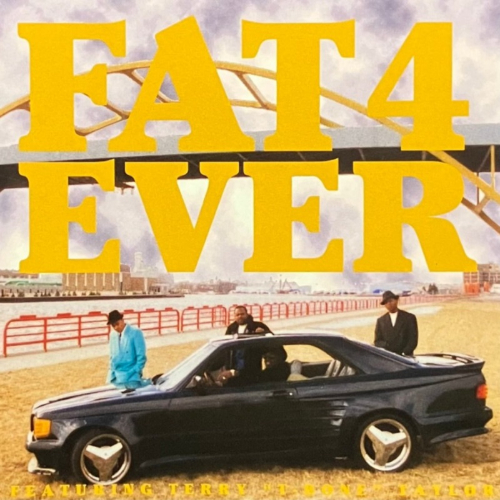
Fat 4 Everは、ウィスコンシン州ミルウォーキーを拠点に活動していたとされるローカル・ラップグループである。
確認されている資料では、グループは以下のメンバーによって構成されていたとされる。
- Black Beauty
- Cocaine
- No Shame
- T-Bone
彼らの代表作として知られるのが、アルバム『Black Cocaine W/ No Shame』だ。
「Excercising My P Thang」は同作の収録曲で、表記上は一般的な“Exercising”ではなく、**“Excercising”**という綴りが使われている。
Fat 4 Everの音楽には、1990年代半ばに全米へ広がった西海岸G-Funkの影響がある。ただし、完成度の高い商業的G-Funkをそのまま再現するのではなく、ローカル録音らしい荒さ、ミッドウェスト特有の重さ、R&Bコーラスの濃さを残している点が特徴だ。
作品背景
「Excercising My P Thang」は、1995年から1997年頃の空気を強く感じさせるミッドウェストG-Rapである。
歌詞の冒頭では、“Black”と呼ばれる人物が、ミルウォーキーのWisconsin Avenueへ出かけ、女性を探そうと話す。相手は彼を本物のピンプではないとからかい、会話は軽いコメディのように始まる。
しかし、その後に続くラップでは、単なる冗談では済まないピンプ的価値観が展開される。
女性を支配し、金を回収し、感情的な関係を避け、自分の“game”を維持する。タイトルにある“P Thang”は、単なる恋愛や遊びではなく、彼らが考えるPimp/Playerとしての行動様式全体を示している。
“Exercise”は通常、身体を動かして能力を鍛えることを意味する。しかし本作ではそれを比喩として使い、
自分のPとしての技術を実践する
ピンプとしての立場を日常的に維持する
自分のgameを使い続ける
という意味へ置き換えている。
第一印象
最初に耳を引くのは、歌詞の攻撃性よりも、むしろトラックの甘さである。
柔らかい鍵盤、奥で揺れる高音シンセ、ゆるやかなベース、穏やかな男性コーラス。ドラムも強く殴りつけるタイプではなく、一定の速度で静かに進む。
そのため、冒頭だけを聴けば、夜のドライブやスロージャムに近い印象を受ける。
ところがラップが始まると、女性を自分の管理下に置こうとする露骨な言葉が次々と現れる。甘いサウンドと乱暴な内容の落差が大きく、この二面性が曲全体を支えている。
単純に心地よいだけのG-Funkではない。
サウンドはロマンティックだが、語り手の倫理観は冷たい。
この矛盾こそが、「Excercising My P Thang」を強く印象に残す。
サウンド分析
ドラム
実測テンポは約94BPM。
90年代G-Funkとしては標準的なミドルテンポで、ラッパーが言葉を詰め込みすぎず、フロウを後ろへ引っ張れる速度になっている。
キックは低く丸い。現代のトラップのように長く歪んだ低音ではなく、短いアタックでベースを支えるタイプだ。
スネアは乾いているが、完全に前へ飛び出すほど強くはない。少し奥へ引いた位置に置かれ、曲の滑らかさを壊さずに2拍目と4拍目を示している。
ハイハットも細かく刻みすぎない。一定間隔の刻みを中心に、ラップの隙間を残している。
ドラムだけを聴けばかなり簡素だが、この簡素さによって、声、コーラス、シンセの動きが目立つ。
ベース
ベースはこの曲の重心を決める重要な要素である。
極端に派手なフレーズではなく、コードの土台をなぞりながら、キックの直後やヴォーカルの隙間に丸い低音を置いていく。
音色は硬質ではなく、やや柔らかい。低域の輪郭を鋭く出すより、トラック全体を下から包み込む役割を担っている。
特にコーラス部分では、男性ヴォーカルの長い音とベースが重なり、R&B的な温かさを生み出す。
一方で、低域が現代的に整理されすぎていないため、キック、ベース、鍵盤の低音が近い帯域で混ざっている。この少し濁った密度が、自主制作G-Rapらしい質感につながっている。
シンセ・メロディ
上物の中心は、柔らかなエレクトリックピアノ系のコードと、高域を滑るシンセである。
コードは大きく展開せず、短い進行を繰り返す。メロディを次々に変化させるのではなく、同じ空気を長く維持するタイプのトラックだ。
高音域では、細く伸びるホイッスル系のシンセが聞こえる。
ただし、典型的な西海岸G-Funkのリードシンセほど前面には出ない。背景で短く揺れながら、曲に湿度と光沢を加えている。
鍵盤のコードには、どこか夜のラウンジを思わせる落ち着きがある。推定上はG♯メジャー周辺の響きが強いが、音源解析による推定であり、正式なキー情報ではない。
明るいコード感でありながら、音色が暗く丸いため、完全な陽気さにはならない。華やかさと薄暗さが同居している。
ミックス・グルーヴ
ミックスは現代的な高解像度ではなく、中域を中心にまとまっている。
ラップ、コーラス、鍵盤が同じ空間で重なり、各パートの輪郭を完全に分離するより、ひとつの塊として聴かせる。
特に男性コーラスは、リードだけでなく複数の声を重ねたような厚みがある。ラップよりも少し遠くに配置され、背景から包み込む。
グルーヴは前へ突進しない。
ドラムが引き、ラッパーもビートの後方へ乗ることで、車が一定速度で街を流していくような感覚を作っている。
西海岸G-Funkの滑らかさを持ちながら、録音にはミッドウェスト・アンダーグラウンド特有の粗さが残る。
ラップ
本作では、声質とフロウの異なる複数のラッパーが順番に登場する。
第1ヴァース
最初のラッパーは、やや高めで鼻にかかった声を持つ。
冒頭で「1年前に失敗した」「1995年だった」と振り返りながら、現在は再び状況が良くなりつつあると語る。
フロウは比較的軽快で、各行の終わりを明確に区切る。荒々しく叫ぶのではなく、話しかけるような調子で自分の行動を説明していく。
内容は極端だが、デリバリーにはどこかコミカルな軽さがある。
“jumping jacks”と女性たちの動きを結びつけたり、“quick”や“last”といった語を使って性的な比喩を展開したりと、タイトルの“exercise”に関係する言葉遊びも含まれている。
ヴァース後半では、
“It took a while, but a brother finally doing some things
Moving some things
Exercising my P thang”
と、自分が再び動き始めたことを宣言する。
ここでは“P Thang”が、単なる性的行為ではなく、金銭、支配、評判を含む生活全体として表現されている。
第2ヴァース
2人目は、自らを“Black Beauty”あるいは“Big Tim”と名乗る。
声は第1ヴァースより低く、発音も重い。ビートの上を滑るというより、各言葉を太く置いていくスタイルである。
このヴァースは性的描写が最も露骨で、女性を完全に対象化した内容になっている。
感情や親密さはほとんど描かれず、語り手は自分が状況を支配していることだけを強調する。
“I’m never sprung”という表現からも分かるように、女性へ感情移入することは弱さとして退けられている。
また、部屋を出る際に金を持っているという描写から、性的関係と金銭的利益が一続きのものとして語られている。
フロウ自体は安定しており、余計な装飾を加えず、低い声で淡々と進む。内容の過激さに対して声が冷静であるため、かえって不穏さが増している。
第3ヴァース
3人目は、再びやや高めの声で登場するが、第1ヴァースよりも密度の高いラップを行う。
このヴァースでは、ピンプの行為が麻薬売買になぞらえられる。
“A nigga selling dope, but ain’t no art in selling dope”
と始まり、商品を売る代わりに、会話力、説得力、心理的な操作を使って女性を動かすことが“game”として語られる。
“conversation”という言葉が繰り返される点が重要だ。
彼らにとってピンプとしての能力は、単に暴力を使うことではない。言葉を使って相手を納得させ、自分の目的へ誘導する技術でもある。
それを語り手は、特別な知識や商売の才能のように誇示する。
後半では、市内を定期的に回り、携帯電話で女性を手配し、自分の評判を維持する姿が描かれる。
さらに、
“Don’t teach her the game”
“Once understood, hoes shouldn’t have to be explained”
という考え方を示し、自分の立場や方法を相手へ完全には教えないことも“game”の一部としている。
このヴァースは、曲中で最も説明的である。第1、第2ヴァースが行動や性的武勇伝を中心にしているのに対し、第3ヴァースは“P Thang”の理屈そのものを語っている。
ボーカル分析
この曲を単なるローカル・ギャングスタラップ以上のものにしているのが、男性シンガーの存在である。
コーラスでは、
“Ooh, exercise my P”
“Exercising my P thang”
という短いフレーズが繰り返される。
ヴォーカルは滑らかで、声を大きく張り上げない。複数の声を重ねたような厚いハーモニーがあり、R&Bグループのコーラスに近い。
言葉自体はピンプ的な自己主張だが、歌い方は甘く、官能的で、穏やかである。
ラッパーたちの乾いた声と、シンガーの湿った声が交互に現れることで、曲に明確なコントラストが生まれる。
終盤の歌唱パート
約3分以降、曲はそれまでのヴァース中心の構成から離れ、男性シンガーが前面へ出る。
ここでは、
- 女性と金を管理する
- 自分のPとしての立場を守る
- 車で夜の街を走る
- 誰にも自分のエネルギーを奪わせない
- 常にgameを維持する
といった内容が、メロディを付けて歌われる。
このパートは通常のフックより長く、ひとつの独立したR&Bセクションに近い。
シンガーは短い言葉を細かく区切るのではなく、母音を長く伸ばす。“Yeah”“Oh”“my P thang”などを繰り返しながら、即興的なフェイクを加えている。
終盤ではラップが完全に後退し、声、鍵盤、ベース、シンセだけがゆっくりと残る。
ラップ曲の締めくくりというより、スロージャムのアウトロを聴いているような感触だ。
歌詞・テーマ
“P Thang”という自己定義
この曲における“P”は、主にPimp、Player、Playaといった意味を重ねた表現と考えられる。
語り手たちは“P”を単なる肩書きではなく、日常的に実践し続けなければならない能力として扱う。
そのためタイトルには“Exercising”という言葉が使われている。
身体を鍛えるように、会話力、性的能力、金銭管理、評判、支配力を使い続ける。それが彼らにとっての“P Thang”である。
失敗からの復帰
第1ヴァースでは、語り手が過去に“fell off”したと語る。
つまり、以前は自分の立場や勢いを失っていたが、現在は再び女性を集め、金を動かし、状況を改善しつつある。
この視点を踏まえると、曲は単なる自慢ではない。
一度失敗した人物が、自分のアイデンティティを取り戻そうとする復帰の歌でもある。
もちろん、その復帰の方法は倫理的に肯定できるものではない。しかし、語り手自身にとっては、“P Thang”を再び実践することが、自信と地位を取り戻す手段になっている。
感情を持たないこと
複数のヴァースで共通するのは、女性へ感情移入しないことを誇る姿勢である。
恋愛感情を持つこと、相手に振り回されること、相手へ自分の方法を教えることは、すべて弱さとして扱われる。
彼らが守ろうとしているのは、自分の感情ではなく、支配者としての立場だ。
その結果、曲の人間関係には対等さがない。
女性は名前や個性を持った人物ではなく、金、性、評判を得るための存在として描かれる。
現代の視点では、明確に女性蔑視的であり、暴力的な価値観を含む。記事として扱う際には、当時のピンプ・ラップ文化を記録する作品であることと、その内容を無批判に肯定することを分けて考える必要がある。
ローカルな地理感覚
冒頭でWisconsin Avenueが言及されることで、この曲は抽象的なG-Funkではなく、ミルウォーキーの具体的な街路へ結びつく。
西海岸G-Funkの音楽語法を使いながら、自分たちの都市名、通り、生活圏を歌詞へ入れる。
これにより、音はカリフォルニアを思わせても、物語の舞台はミッドウェストに残る。
この土地感覚こそ、ローカルG-Rapを聴く醍醐味のひとつである。
サンプリング&トラックメイキング
現時点で、この音源に使用されたサンプルを確実に特定できる資料は確認できていない。
12インチ盤には「Strawberry Letter 23」という表記を含む別ミックスが存在するとされるが、「Excercising My P Thang」の音源そのものが、The Brothers Johnson版「Strawberry Letter 23」を直接使用しているとは断定できない。
少なくとも今回の音源からは、同曲の有名なギターフレーズや主旋律を、明確な形でそのまま引用しているとは判断しにくい。
トラックは、既存曲の大きなフレーズを目立たせるというより、
- エレクトリックピアノ系コード
- 丸いシンセベース
- 高音のホイッスル系シンセ
- シンプルなドラム
- 多重録音された男性コーラス
を組み合わせた制作に聞こえる。
サンプリングの有無については、クレジットや原盤情報がない限り断定を避けるべきだろう。
トリビア
タイトルは一般的な英語の綴りである“Exercising”ではなく、リリース表記では**“Excercising”**となっている。
冒頭にはラップではなく、メンバー同士の短い会話が置かれている。片方がWisconsin Avenueへ出かけると言い、もう片方が「お前はピンプではない」とからかう。この会話によって、曲全体が少し芝居がかった雰囲気で始まる。
歌詞では“exercise”というタイトルに合わせて、“jumping jacks”などの運動に関係する表現が性的な意味へ置き換えられている。
また、曲の最後の約2分は男性ヴォーカルの比重が高く、一般的な3ヴァース+フック型のラップ曲よりも長いアウトロを持つ。
制作メモ
確認できる情報
- アーティスト:Fat 4 Ever
- 曲名:「Excercising My P Thang」
- 楽曲時間:約5分02秒
- 実測テンポ:約94BPM
- 冒頭でWisconsin Avenueへの言及がある
- 複数のラッパーと男性シンガーが参加している
- “Black Beauty”“Big Tim”という名乗りが歌詞に含まれる
- タイトル表記は“Excercising”となっている
音源から判断した聴感ベースの分析
- キーはG♯メジャー周辺の可能性がある
- エレクトリックピアノ系のコードが中心
- 高域にホイッスル系シンセが配置されている
- ベースはシンセベースまたは丸く加工された低音
- 男性コーラスは複数トラックを重ねた可能性が高い
- 終盤の歌唱には即興的なフェイクが含まれる
- ミックスは中域中心で、各音を完全に分離しないローカル録音的な質感
総評
Fat 4 Everの「Excercising My P Thang」は、甘美なG-Funk/R&Bサウンドと、冷酷なピンプ・ラップを同時に成立させた一曲である。
約94BPMのゆったりしたドラム、丸いベース、淡い鍵盤、高音のシンセが、夜のミルウォーキーを流すような滑らかな空気を作る。
その上で、3人のラッパーが、それぞれ異なる声と角度から“P Thang”を語る。
第1ヴァースでは失敗からの復帰、第2ヴァースでは性的支配、第3ヴァースでは会話力や心理操作を含む“game”の理屈が描かれる。
そして終盤には男性シンガーが長く残り、楽曲をラップからスロージャムへ近づけていく。
歌詞には明確な女性蔑視と支配的価値観があり、現在の感覚で無条件に称賛できるものではない。それでも、1990年代のピンプ・ラップがどのような自己像、言葉、音楽的甘さを用いていたかを知る資料としては興味深い。
西海岸G-Funkの華やかさを模倣するだけでなく、ミルウォーキーのローカル性、荒い録音、濃厚な男性コーラスを加えた作品。
「Excercising My P Thang」は、心地よさと不穏さが最後まで離れない、ミッドウェストG-Rapのディープな魅力を伝える一曲である。
エディターズノート
この曲で最も印象的なのは、ラップそのものより、ラップとR&Bの境界が徐々に崩れていく終盤だ。
最初は3人のラッパーが“P Thang”を競うように語るが、最後にはシンガーの声が曲を完全に包み込む。
内容だけを読めば攻撃的で粗暴だが、サウンドは驚くほど優しい。鍵盤もベースもコーラスも、聴き手を拒絶するのではなく、むしろ深く引き込もうとする。
だからこそ、歌詞の冷たさがより強く感じられる。
甘い音楽の中に、支配、金銭、性、評判をめぐる荒い価値観が隠されている。Fat 4 Everは、その矛盾を解決せず、そのまま約5分間鳴らし続ける。
洗練されたメジャー作品とは異なる。しかし、この少し濁ったミックス、長すぎるほどのアウトロ、土地の名前を直接入れたラップには、ローカル盤でしか得られない生々しさがある。
Fat 4 Ever – Excercising My P Thang | Sweet G-Funk Meets the Cold Reality of Midwest Pimp Rap
Fat 4 Ever’s “Excercising My P Thang” is a distinctly 1990s Midwest underground cut, pairing smooth G-Funk production with an exaggerated pimp/player persona pushed almost to its extreme.
Rounded bass, laid-back drums, softly drifting synths, and a male chorus steeped in R&B give the track a sweet, accessible surface. Underneath that sweetness, however, the rappers describe a much colder world—one built around controlling women, collecting money, and constantly protecting their position within “the game.”
The track runs for approximately 5:02 at a measured tempo of around 94 BPM. Three rappers take turns delivering verses before the male singer moves increasingly to the foreground during the final section. What begins as a rap record gradually drifts toward something resembling local slow-jam R&B, and that unusual transition is one of the track’s greatest charms.
Artist Introduction
Fat 4 Ever was a local rap group reportedly based in Milwaukee, Wisconsin.
According to available sources, the group consisted of the following members:
- Black Beauty
- Cocaine
- No Shame
- T-Bone
Their best-known release appears to be the album Black Cocaine W/ No Shame.
“Excercising My P Thang” appears on that release, with the title notably spelled “Excercising” rather than the standard English spelling, “Exercising.”
Fat 4 Ever’s music clearly reflects the influence of West Coast G-Funk, which had spread throughout the United States by the mid-1990s. Yet rather than simply reproducing polished, commercially oriented G-Funk, the group retained the rough edges of local recording, the heavier atmosphere associated with Midwest rap, and a particularly strong emphasis on R&B-style male vocals.
Background
“Excercising My P Thang” strongly evokes the atmosphere of Midwest G-Rap from roughly 1995–1997.
The song opens with a conversation in which someone referred to as “Black” talks about heading out to Wisconsin Avenue in Milwaukee to look for women. The other person teases him, suggesting that he is not really a pimp. The exchange gives the opening an almost comedic, theatrical quality.
Once the actual verses begin, however, the pimp ideology becomes much more serious.
The rappers describe controlling women, collecting money, avoiding emotional attachment, and maintaining their “game.” In this context, the “P Thang” of the title is not merely about romance, sex, or casual fun. It represents an entire behavioral code associated with their conception of being a pimp or player.
Normally, to “exercise” something can mean to use or practice an ability. Here, that idea becomes a metaphor for continually practicing one’s skills as a “P,” maintaining the status of a pimp, and keeping one’s game active.
The title therefore functions almost like a statement of discipline: being a “P” is presented not simply as an identity, but as something that must continually be practiced.
First Impression
The first thing that grabs the ear is not the aggression of the lyrics, but the sweetness of the production.
Soft keyboard chords, high-register synths drifting in the background, relaxed bass, and a gentle male chorus create an unusually warm atmosphere. Even the drums avoid hitting particularly hard, instead moving steadily and calmly beneath the vocals.
Judging only by the instrumental introduction, the track could almost be mistaken for a late-night cruising song or a slow jam.
Then the rapping begins.
Explicit language about keeping women under control immediately clashes with the romantic character of the instrumental. That gap between the sweetness of the music and the harshness of the narrative becomes one of the defining characteristics of the entire record.
This is not simply comfortable, easygoing G-Funk.
The music sounds romantic, while the narrator’s worldview is cold.
That contradiction is precisely what makes “Excercising My P Thang” so memorable.
Sound Analysis
Drums
The measured tempo is approximately 94 BPM.
That places the song comfortably within the mid-tempo range typical of 1990s G-Funk, giving each rapper enough room to avoid overcrowding the beat and to lean slightly behind the rhythm.
The kick is low and rounded. Rather than the long, distorted sub-bass associated with modern trap production, it has a relatively short attack that primarily supports the bassline.
The snare is dry, but it does not aggressively jump out of the mix. It sits slightly farther back, marking the second and fourth beats without disturbing the track’s smooth character.
The hi-hats are similarly restrained. Instead of dense subdivisions, they maintain a relatively straightforward pulse and leave plenty of space around the rappers.
Taken alone, the drum programming is quite simple. That simplicity allows the vocals, harmonies, and synth textures to become the real focal points.
Bass
The bass is one of the most important elements in establishing the track’s center of gravity.
Rather than using flashy melodic runs, it follows the harmonic foundation and places rounded low-end notes between the kick hits and vocal phrases.
Its tone is soft rather than sharply defined. Instead of carving out an aggressively precise low-frequency contour, the bass seems designed to envelop the entire production from underneath.
This becomes particularly effective during the chorus, where sustained male vocals overlap with the bass and create a distinctly warm R&B character.
At the same time, the low end has not been separated with the surgical precision of modern mixing. The kick, bass, and lower frequencies of the keyboards occasionally occupy similar territory.
That slightly cloudy density contributes significantly to the character of an independently produced G-Rap recording.
Synths & Melody
The instrumental foundation is built around soft electric-piano-like chords and high-register synth lines.
The harmony does not develop dramatically. Instead, a short progression repeats throughout much of the song, maintaining a consistent mood rather than introducing new melodic ideas every few bars.
A thin, sustained whistle-like synth can also be heard in the upper frequencies.
Unlike the prominent lead synths commonly associated with classic West Coast G-Funk, however, it rarely dominates the arrangement. It drifts through the background, adding moisture and gloss to the overall sound.
The keyboard chords have a relaxed quality reminiscent of a late-night lounge.
Based on audio analysis, the tonal center may be somewhere around G-sharp major, although this is an estimate derived from the recording rather than confirmed key information.
The harmony itself feels relatively bright, yet the rounded, darker timbres prevent the song from becoming entirely cheerful. Brightness and shadow coexist throughout the production.
Mix & Groove
The mix is not defined by modern high-resolution separation. Instead, much of the record is concentrated in the midrange.
The rap vocals, chorus, and keyboards share the same sonic space. Rather than isolating every element with extreme clarity, the production allows them to blend into a single mass.
The male chorus in particular sounds thick, possibly created through multiple layered vocal tracks. It sits slightly farther back than the rappers, surrounding them from behind rather than competing directly for the foreground.
The groove never rushes forward.
The drums remain relaxed, while the rappers often sit toward the back of the beat. The resulting sensation resembles cruising through city streets at a constant speed.
The track possesses the smoothness of West Coast G-Funk, but the recording retains the rougher texture associated with Midwest underground rap.
Rap Analysis
Several rappers appear throughout the song, each bringing a different voice and rhythmic approach.
Verse 1
The first rapper has a somewhat higher, slightly nasal voice.
He begins by looking back on a period when he had fallen off, referring to 1995 before describing how things are beginning to improve again.
His flow is relatively nimble, with clearly defined endings to individual lines. Rather than shouting aggressively, he explains his actions in a conversational manner.
Despite the extreme subject matter, there is an almost comedic lightness to his delivery.
He also incorporates wordplay connected to the “exercise” concept of the title, using fitness-related imagery such as “jumping jacks” and transforming it into sexual metaphor.
Later in the verse, he declares that after struggling for some time, he is finally back in motion and “exercising” his P thang.
At this point, the “P Thang” clearly represents more than sexuality. It encompasses money, control, reputation, and an entire lifestyle.
Verse 2
The second rapper identifies himself as “Black Beauty” or “Big Tim.”
His voice is lower than that of the first rapper, and his pronunciation carries more weight. Rather than gliding lightly across the beat, he places each phrase down with a heavier presence.
This is the song’s most sexually explicit verse, and women are almost entirely objectified within its narrative.
There is little suggestion of intimacy or emotional connection. Instead, the narrator focuses almost exclusively on demonstrating his control over the situation.
His insistence that he never becomes emotionally attached reveals an important part of the song’s worldview: developing feelings for a woman is treated as a form of weakness.
The connection between sex and financial gain is also emphasized, making the two almost inseparable within the narrative.
Musically, the flow remains controlled and relatively unembellished. The calmness of the rapper’s low voice contrasts with the extremity of what he describes, making the verse feel even more unsettling.
Verse 3
The third rapper returns to a somewhat higher register, but his flow is denser than that of the first verse.
Here, pimping is compared to drug dealing.
The narrator contrasts selling drugs with what he considers the more sophisticated skill of using conversation, persuasion, and psychological manipulation to influence women.
The repeated emphasis on “conversation” is particularly important.
Within the logic of the song, being a successful pimp is presented as something involving more than physical force. It is also portrayed as an ability to manipulate people through language and persuasion.
The narrator boasts about this as though it were specialized knowledge or entrepreneurial skill.
Later, he describes regularly moving through the city, arranging encounters by phone, and maintaining his reputation.
He also stresses the importance of not revealing the full mechanics of “the game,” suggesting that keeping knowledge from others is itself part of maintaining power.
This is perhaps the song’s most explanatory verse. While the first two verses focus more heavily on actions and sexual boasting, the third attempts to explain the underlying philosophy of the “P Thang” itself.
Vocal Analysis
The male singer is one of the elements that elevates this track beyond the feel of a conventional local gangsta-rap recording.
The chorus repeatedly revolves around the central phrase of “exercising” the P thang.
The vocals are smooth and restrained rather than forceful. Thick harmonies give the impression of several voices layered together, recalling the sound of an R&B vocal group.
The words themselves express the same pimp identity found in the verses, yet they are delivered in a sweet, sensual, almost soothing manner.
The dry voices of the rappers and the warmer, more fluid voice of the singer alternate throughout the track, creating a strong contrast.
The Extended Vocal Outro
After roughly the three-minute mark, the song gradually moves away from its verse-driven structure and gives the male singer a much larger role.
Themes already established by the rappers—money, control, maintaining one’s position, driving through the city at night, protecting one’s energy, and keeping the game intact—are now delivered melodically.
This section lasts much longer than a conventional hook and begins to function almost like an independent R&B passage.
Instead of dividing every phrase into short rhythmic units, the singer stretches vowels across the beat and adds improvised vocal embellishments.
As the track approaches its conclusion, the rapping recedes almost completely. Voice, keyboards, bass, and synths are left to drift slowly toward the ending.
It feels less like the conclusion of a rap song than the outro of a slow jam.
Lyrics & Themes
Defining the “P Thang”
The “P” in this song can reasonably be interpreted as carrying overlapping meanings associated with “pimp,” “player,” and “playa.”
The narrators do not treat being a “P” merely as a label. They present it as a set of abilities that must continually be practiced.
That is why the concept of “exercising” is so important.
Conversation, sexual confidence, financial control, reputation, and domination are all treated as skills that must remain active.
Within the narrators’ worldview, that entire system constitutes the “P Thang.”
Returning After Failure
In the first verse, the narrator admits that he had previously “fell off.”
In other words, he had lost some of his momentum or status but is now gathering women, moving money, and attempting to rebuild his position.
Seen from this perspective, the track is not purely a boast.
It also contains a narrative of someone attempting to recover an identity after failure.
The means by which he does so are ethically troubling, but from the narrator’s own perspective, practicing the “P Thang” again represents a way of restoring confidence and status.
Emotional Detachment
One idea appears repeatedly across the verses: emotional attachment to women is something to be avoided.
Falling in love, allowing a woman to influence you, or revealing too much about how your game works are all treated as weaknesses.
What the narrators are protecting is not emotional intimacy, but their position of control.
Consequently, the relationships described in the song are fundamentally unequal.
Women are rarely presented as individuals with identities or agency. Instead, they are framed primarily in relation to money, sex, and reputation.
From a contemporary perspective, the lyrics are clearly misogynistic and contain deeply controlling attitudes. When discussing the record historically, it is important to distinguish between documenting the worldview of 1990s pimp rap and endorsing that worldview uncritically.
Milwaukee Geography
The reference to Wisconsin Avenue immediately anchors the song in a specific Milwaukee environment.
This prevents “Excercising My P Thang” from becoming merely an abstract imitation of G-Funk.
Fat 4 Ever uses a musical language heavily influenced by the West Coast while inserting the names, streets, and social spaces of its own city into the lyrics.
The music may evoke California, but the narrative remains rooted in the Midwest.
That sense of place is one of the great pleasures of exploring regional underground G-Rap.
Sampling & Track Production
At present, there does not appear to be enough verified information to conclusively identify a sample used in this particular recording.
A separate mix associated with the release has reportedly carried a “Strawberry Letter 23” designation, but that alone is not sufficient evidence to conclude that this version of “Excercising My P Thang” directly samples The Brothers Johnson’s recording of “Strawberry Letter 23.”
Based on the audio itself, the famous guitar and principal melodic elements of that song are not clearly quoted in an immediately recognizable form.
Instead, the production sounds primarily constructed from a combination of electric-piano-style chords, rounded synth bass, high whistle-like synth textures, simple drum programming, and layered male vocals.
Without definitive production credits or master-recording documentation, it is safer to leave the question of sampling unresolved.
Trivia
The title is officially presented as “Excercising My P Thang,” using “Excercising” rather than the standard spelling “Exercising.”
The song begins with a short spoken conversation rather than immediately launching into a verse. One participant talks about going to Wisconsin Avenue, while the other jokes that he is not really a pimp. This gives the opening a slightly theatrical quality.
The lyrics also exploit the exercise metaphor through fitness-related expressions such as “jumping jacks,” transforming them into sexual wordplay.
Another unusual feature is the extended final section. The last portion of the song gives considerably more space to the male singer than would normally be expected from a conventional three-verse-and-hook rap arrangement.
Production Notes
Confirmed or Directly Observable Information
Artist: Fat 4 Ever
Track: “Excercising My P Thang”
Running time: approximately 5:02
Measured tempo: approximately 94 BPM
Wisconsin Avenue is referenced in the opening
Multiple rappers and a male singer appear on the recording
The names “Black Beauty” and “Big Tim” are heard in the lyrics
The title is presented with the spelling “Excercising”
Listening-Based Analysis
The tonal center may be somewhere around G-sharp major.
Electric-piano-style chords form a major part of the instrumental foundation.
A whistle-like synth occupies portions of the upper register.
The bass appears to be either synthesized or processed to achieve a particularly rounded tone.
The male chorus was likely built through multiple vocal layers.
The closing vocal performance contains improvised R&B-style embellishments.
The mix is strongly centered in the midrange and avoids completely separating every element, contributing to its distinctly local, independently recorded character.
Overall Assessment
Fat 4 Ever’s “Excercising My P Thang” succeeds by placing sweet G-Funk and R&B production alongside an exceptionally cold strain of pimp rap.
Its approximately 94 BPM drums, rounded bass, soft keyboards, and high-register synths create the sensation of cruising through Milwaukee after dark.
Over that backdrop, three rappers approach the concept of the “P Thang” from different perspectives.
The first verse deals partly with recovering from failure. The second emphasizes sexual domination and emotional detachment. The third expands the concept into a philosophy of “game” involving conversation, persuasion, manipulation, and the maintenance of status.
Then the male singer takes control of the final stretch, gradually transforming what began as a rap track into something much closer to a slow jam.
The lyrics contain unmistakable misogyny and controlling attitudes that cannot simply be celebrated from a contemporary perspective. Nevertheless, the song remains revealing as a document of how 1990s pimp rap constructed its identity through language, masculinity, money, sexuality, and surprisingly sweet musical textures.
Rather than merely imitating the glamour of West Coast G-Funk, Fat 4 Ever brings Milwaukee geography, rough local production, and thick male R&B harmonies into the formula.
“Excercising My P Thang” captures one of the deepest contradictions of Midwest underground G-Rap: the music remains inviting and seductive even while the world described inside it becomes increasingly unsettling.
Editor’s Note
Perhaps the most fascinating aspect of this track is not the rapping itself, but the way the boundary between rap and R&B gradually disappears during its closing minutes.
At first, three rappers take turns asserting their versions of the “P Thang.” By the end, however, the singer’s voice has almost completely enveloped the record.
Read on the page, the subject matter is aggressive and crude. Sonically, however, the track is remarkably gentle. The keyboards, bass, and harmonized vocals do not push the listener away—they draw the listener deeper inside.
That makes the coldness of the lyrics even more striking.
Behind the sweet production lies a harsh worldview centered on domination, money, sex, and reputation. Fat 4 Ever never attempts to resolve that contradiction. Instead, they allow both sides to coexist for approximately five minutes.
This is not the polished sound of a major-label G-Funk production. Yet the slightly cloudy mix, unusually extended outro, and direct references to local streets possess a raw immediacy that is difficult to reproduce outside the world of regional underground rap.
That roughness is not merely a limitation of the recording.
It is part of what gives “Excercising My P Thang” its identity.
コメント