Mr. Peebodieの「Never Give Up」は、滑らかなピアノと女性ヴォーカルに包まれながら、貧困、犯罪、刑務所、家庭崩壊といった厳しい現実を見つめるメッセージ・ソングだ。
約89BPMのゆったりとしたビートには、夜の街を静かに流すようなメロウさがある。しかし、ラップで語られる内容は決して甘くない。
福祉に頼らざるを得ない家庭、路上で消耗する若者、刑務所へ向かってしまう少年たち、被告を最初から犯罪者として見る司法制度。Mr. Peebodieと客演ラッパーは、それぞれ異なる視点から社会の悪循環を描いていく。
その重さを受け止めるのが、Texによる「You got to make it」「Never give up」というコーラスだ。
ここで歌われる“Never Give Up”は、根拠のない楽観ではない。
厳しい現実を知ったうえで、それでも前へ進み続けろと訴える、ストリートからの切実な励ましなのである。
アーティスト紹介
Mr. Peebodieは、カリフォルニア州ストックトンを拠点とするラッパーで、同地のGangsta RapグループDoja Clikにも参加した人物として知られている。
Doja Clikは1993年にストックトンで結成され、Young Ren、Lil Man G、Wizard 1らを中心に始動。その後、Mr. PeebodieやNasty Treyも加わったと記録されている。
ストックトンは、ロサンゼルスやオークランドほど大規模なRapシーンとして語られる機会は多くない。しかし、1990年代には地域独自のGangsta Rap作品が数多く制作されていた。
Mr. Peebodieの音楽にも、派手な商業性より、地元の生活や人間関係を直接言葉にするローカル・ラップらしい姿勢が表れている。
作品背景
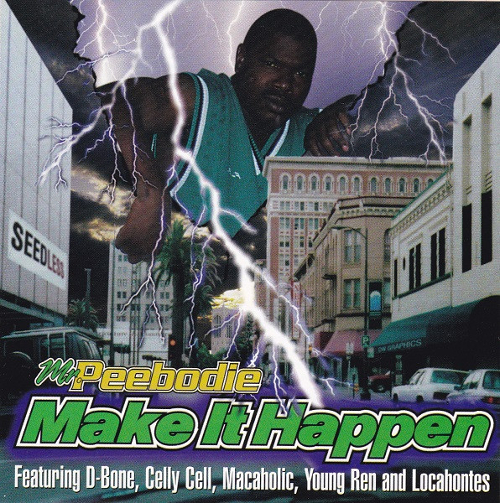
「Never Give Up」は、Mr. Peebodieが1998年に発表したアルバム『Make It Happen』の15曲目に収録されている。

アルバムはSeedless Recordsから発売され、ストックトンのPlatinum Plus Studiosで録音された作品として登録されている。ジャンルはHip Hop、スタイルはGangsta Rapに分類されている。
別のディスコグラフィー資料では、アルバムの制作地域はカリフォルニア州ストックトン、エリアコードは209、プロデューサーはSamとKico、アートワークはDW Graphicsと記録されている。
「Never Give Up」は約3分30秒の楽曲で、Texがヴォーカルで参加している。
ただし、今回確認した資料では、この曲単体のプロデューサーがSamとKicoのどちらであるか、または共同制作なのかまでは特定できない。
第一印象
最初に耳へ入ってくるのは、透明感のあるピアノと、空間を漂う電子音だ。
イントロはかなり長く取られており、ラップが始まる前に楽曲の世界へゆっくり引き込んでいく。明るい希望を表すというより、夜が明ける直前のような静けさと、わずかな不安を含んだ音色である。
ビートが本格的に入ってからも、楽曲は必要以上に強く攻めない。
ドラムは重いが前へ出すぎず、ベースも深い位置で控えめに鳴る。そこへ滑らかな鍵盤と女性コーラスが重なり、ラップの厳しい内容を受け止める柔らかな空間を作っている。
タイトルだけを見れば、力強い自己啓発的な曲を想像するかもしれない。
しかし実際には、社会の底で生きる人々を見つめながら、静かに立ち上がることを促す作品だ。
サウンド分析
ドラム
テンポは音源解析上、約89BPM。
ドラムは90年代西海岸Rapらしい、ゆったりとしたミッドテンポで組まれている。キックは低く丸みがあり、スネアは乾いた音で一定の間隔を刻む。
激しく跳ねるビートではなく、ラッパーの言葉を聞かせるために安定した足場を作るタイプだ。
ハイハットも細かく主張せず、曲全体の落ち着いた空気を維持している。派手なフィルや急激な展開を避け、ほぼ同じグルーヴを繰り返すことで、語られる内容へ意識を集中させている。
その一方で、完全に静的なビートではない。
キックとスネアの間に十分な空白があり、その隙間が独特の揺れを生む。強く踊らせるというより、身体をゆっくり左右に揺らすようなリズムである。
ベース
ベースは深く、丸く、楽曲の底を支えている。
派手なベースラインを演奏するのではなく、キックと連動しながら低音の厚みを補う役割が中心だ。音数を抑えているため、ピアノやヴォーカルの邪魔をしない。
低音にはわずかな粘りがあり、メロウなサウンドでありながら、ストリート・ラップとしての重さを失っていない。
この控えめなベース処理によって、曲は甘いR&Bへ傾きすぎず、最後までGangsta Rapの緊張感を保っている。
シンセ・メロディ
サウンドの中心にあるのは、柔らかいエレクトリック・ピアノ系の鍵盤だ。
高音域では、ベルやチャイムを思わせる澄んだ音が鳴り、低い位置ではゆっくりとしたコードが反復される。音色は美しいが、完全に明るいわけではなく、わずかな寂しさが残る。
さらに背景では、水滴、鳥の声、電子的なさえずりにも聞こえる効果音が配置されている。
これらの音は自然風景を直接描写するというより、重い現実から一時的に離れた精神的な空間を作っているように聞こえる。
曲の後半には、金属的なベルや高音の装飾音が増え、コーラスの余韻を広げていく。
典型的なG-Funkで使われる高音シンセの要素は感じられるものの、鋭いリード・シンセが旋律を支配するタイプではない。中心にあるのはあくまでピアノ、ヴォーカル、低く抑えられたリズムである。
そのため、ジャンルとしてはメロウG-Rap/Gangsta Rapを軸に、G-FunkとR&Bの感触を取り入れた楽曲と捉えるのが自然だろう。
ミックス・グルーヴ
ミックスは、ヴォーカルを中央へ置き、その周囲を鍵盤と空間系の音で包み込む構成になっている。
ラップは比較的近い位置で聞こえるが、コーラスになると音場が一気に横へ広がる。女性ヴォーカルが重ね録りされているため、ひとりの声というより、複数の人物が励ましているような厚みが生まれている。
ビート自体は重いものの、低音を過度に膨らませていない。そのため、歌詞の言葉が埋もれず、ピアノの細かな音も聞き取りやすい。
約89BPMのテンポと広い音の間隔によって、グルーヴには焦りがない。
しかし、その落ち着きは余裕から生まれたものではなく、厳しい現実をひとつずつ言葉にするための慎重な歩幅に聞こえる。
ラップ/ボーカル分析
最初のヴァースでは、Mr. Peebodieと思われるラッパーが、比較的落ち着いた低めの声で言葉を置いていく。
フロウは速さを競うものではない。ひとつひとつの問題を聴き手へ提示するように、明瞭な発音と一定のリズムで進む。
声を荒らげる場面は少ないが、その抑制がかえって内容の深刻さを強めている。
特に印象的なのは、聴き手を外側から批判するのではなく、同じコミュニティの一員として語りかけている点だ。
「なぜ俺たちは自分たちの仲間を粗末に扱うのか」という問いから始まり、若者や親たちへ目を向けていく。説教というより、自分自身を含めた共同体全体への警告に近い。
二番目のヴァースでは、ラップの密度と緊張感が高まる。
声はより荒く、フロウも細かくなり、犯罪歴、収監、裁判、弁護士、司法制度への不信が一気に語られる。
一番目が社会全体を俯瞰する視点だとすれば、二番目は制度の内部へ投げ込まれた当事者の視点である。
この二つのヴァースをつなぐのが、Texによる歌唱だ。
“You got to make it
You can’t fake it
You got to shake it
Don’t take it
And never give up
Keep on moving”
という短い言葉が反復される。
ヴォーカルは力強く叫ぶのではなく、柔らかく包み込むように歌われる。複数の声を重ねたコーラス処理によって、個人的な独白ではなく、コミュニティ全体からの励ましのように聞こえる。
終盤ではコーラスが長く繰り返され、ラップで提示された絶望に対する答えとして機能する。
歌詞・テーマ
この曲の中心にあるのは、社会的な悪循環を断ち切ることだ。
一番目のヴァースでは、まず黒人コミュニティ内部の問題が描かれる。
自分たちの仲間を粗末に扱うこと、働く意欲を失わせる環境、子どもを育てながら福祉制度へ依存せざるを得ない生活、路上で薬物に消耗する若者たち。
さらに、学校へ行くべき少年たちが、刑務所へ入ることを格好いいものだと誤解している現状が批判される。
ここでは、刑務所が一時的な失敗ではなく、人生の大部分を奪う場所として描かれている。
犯罪に関われば、自分だけでなく母親も傷つける。父親や兄弟も同じ道を歩いてきた家庭では、その苦しみが世代を超えて繰り返されてしまう。
“Break the slave mentality”という表現も重要だ。
これは、奴隷制が残した精神的な拘束や、自分たちには別の生き方がないと思い込む意識から抜け出せ、という呼びかけとして使われている。
また、神こそが最終的な裁きを下す存在であり、犯罪や暴力に引き込む者たちの価値観を恐れるべきではないと語られる。
二番目のヴァースでは、視点が司法制度へ移る。
周囲の知人の多くが重罪犯となり、犯罪と刑務所が日常の一部になっている状況。逮捕された人物は裁判所へ連れて行かれるが、裁判官も世間も、最初から彼を有罪と見なしている。
公選弁護人は「勝てる」と言うものの、語り手はその言葉を信用していない。
法廷へ入った瞬間に冷たい視線を浴び、まだ正式な判決が出る前から犯罪者として扱われる。
ここで描かれているのは、単に「犯罪を犯したから罰を受けた」という話ではない。
犯罪へ追い込まれる生活環境、そこから抜け出しにくい人間関係、そして被告に十分な機会を与えない司法制度まで含めた構造的な問題である。
そのため、“Never Give Up”という言葉には二つの意味がある。
ひとつは、貧困や犯罪の誘惑に負けず、人生を諦めるなという意味。
もうひとつは、制度から犯罪者の烙印を押された後でも、自分自身の価値を手放すなという意味だ。
この二重性が、曲を単純な応援歌では終わらせていない。
トリビア/制作メモ
「Never Give Up」は、1998年のアルバム『Make It Happen』の15曲目に収録された約3分30秒の楽曲で、Texがヴォーカルで参加している。
音源は、大きく以下の流れで構成されている。
- イントロ
- 第1ヴァース
- コーラス
- 第2ヴァース
- コーラス
- インストゥルメンタルを残したアウトロ
イントロとアウトロを比較的長く取っている点も特徴だ。
特にアウトロでは、ラップが終わった後もピアノ、ベル、低音、電子的な効果音が残り続ける。明確な結論を言葉で示すのではなく、コーラスのメッセージを聴き手の中へ残したまま曲を閉じていく。
アルバム『Make It Happen』はSeedless Recordsから発売され、ストックトンのPlatinum Plus Studiosで録音された。アルバム単位ではSamとKicoがプロデューサーとして記録されている。
ただし、「Never Give Up」の個別プロデュース担当者は確認できないため、本記事では断定しない。
また、現時点で信頼できるサンプリング情報は確認できていない。そのため、特定楽曲からのサンプリングを使用しているとは断定できない。
総評
Mr. Peebodieの「Never Give Up」は、メロウな西海岸サウンドと社会的なメッセージを結びつけた一曲だ。
滑らかなピアノ、深く沈むベース、抑制されたドラム、Texによる柔らかなコーラス。音だけを追えば、穏やかな夜に似合う心地よいG-Rapとして楽しめる。
しかし、ラップへ耳を向けると、その印象は大きく変わる。
歌われているのは、犯罪、福祉、家庭崩壊、若者の収監、司法制度への不信であり、ストックトンの路上に存在する厳しい現実だ。
それでも曲は、絶望だけで終わらない。
“You got to make it”
“Never give up”
“Keep on moving”
というコーラスが繰り返されることで、社会の悪循環から抜け出す可能性を最後まで手放さない。
この曲の魅力は、現実を美化せず、それでいて人間を見捨てないところにある。
派手なシンセや攻撃的なビートで押し切るGangsta Rapではない。静かなピアノと歌声の中に、コミュニティを立て直そうとする強い意志を閉じ込めた、ストックトン産メロウG-Rapの隠れた一曲である。
今回ご紹介の楽曲の購入はこちらからどうぞ
Mr. Peebodie – Never Give Up | Mellow Stockton G-Rap Facing Poverty, Prison and a Broken System
Mr. Peebodie’s “Never Give Up” is a message-driven street rap track that confronts the harsh realities of poverty, crime, prison, and broken families while surrounding them with smooth piano and soulful female vocals.
Moving at a relaxed tempo of around 89 BPM, the beat carries the mellow atmosphere of a late-night drive through the city.
But there is nothing easygoing about what the rappers have to say.
Families forced to depend on welfare. Young people being worn down by life in the streets. Boys heading toward prison. A justice system that seems to view defendants as criminals before their cases are even decided.
Mr. Peebodie and the guest rapper approach this cycle from different perspectives, gradually revealing a community caught between social pressure, crime, incarceration, and the struggle to survive.
Holding all of that weight together is Tex’s chorus:
“You got to make it.”
“Never give up.”
Here, “Never Give Up” is not an expression of blind optimism.
It is a desperate but sincere message from the streets: understand how difficult reality is, but keep moving forward anyway.
Artist Introduction
Mr. Peebodie is a rapper from Stockton, California, also known for his involvement with the Stockton gangsta rap group Doja Clik.
Doja Clik was formed in Stockton in 1993, originally around members including Young Ren, Lil Man G, and Wizard 1. Mr. Peebodie and Nasty Trey were later documented as joining the group.
Stockton is rarely discussed on the same scale as Los Angeles or Oakland when it comes to California rap history.
Yet throughout the 1990s, the city produced its own distinctive body of local gangsta rap.
Mr. Peebodie’s music reflects that regional character.
Rather than chasing flashy commercial appeal, his work places local life, relationships, social pressure, and the realities surrounding his community directly at the center of the music.
Background
“Never Give Up” appears as the 15th track on Mr. Peebodie’s 1998 album Make It Happen.
The album was released through Seedless Records and is documented as having been recorded at Platinum Plus Studios in Stockton. It is categorized as Hip Hop, with its style identified as Gangsta Rap.
Other discography information identifies Stockton, California as the album’s production location, with the 209 area code attached to the release. Sam and Kico are credited as producers at the album level, while the artwork is credited to DW Graphics.
“Never Give Up” runs for approximately 3 minutes and 30 seconds and features Tex on vocals.
However, the available information does not establish whether this individual track was produced by Sam, Kico, or both.
For that reason, the specific production credit for “Never Give Up” should remain unconfirmed.
First Impression
The first sounds to reach the listener are a clear, delicate piano and electronic textures floating through the background.
The introduction is relatively long, allowing the listener to slowly enter the atmosphere before the rapping begins.
Rather than representing bright, uncomplicated hope, the instrumental carries the stillness of the final hours before sunrise—a peaceful surface with a subtle sense of uncertainty underneath.
Even after the drums fully enter, the track never becomes unnecessarily aggressive.
The drums carry weight without dominating the mix, while the bass stays deep and restrained. Smooth keyboards and female vocals surround them, creating a soft space capable of absorbing the severity of the lyrics.
Judging by the title alone, “Never Give Up” might sound like it should be a forceful motivational anthem.
The actual record is much more reflective.
It looks directly at people living near the bottom of society and quietly urges them to stand back up.
Sound Analysis
Drums
Audio analysis places the tempo at approximately 89 BPM.
The drums follow the relaxed mid-tempo feel associated with much 1990s West Coast rap.
The kick is low and rounded, while the snare lands at steady intervals with a relatively dry character.
This is not a beat designed around explosive bounce.
Its primary purpose is to create stable ground beneath the rappers so that the words remain the main focus.
The hi-hats are similarly restrained, preserving the calm atmosphere rather than filling every available space.
There are few dramatic fills or sudden rhythmic changes.
By maintaining essentially the same groove throughout the song, the production keeps the listener’s attention on the issues being discussed.
At the same time, the beat is not completely static.
There is generous space between the kick and snare, and those open areas create a subtle swing.
Rather than forcing the body to move aggressively, the rhythm encourages a slow side-to-side motion.
Bass
The bass is deep, rounded, and positioned firmly underneath the rest of the track.
Instead of performing a flashy bassline, it mainly works alongside the kick to reinforce the low end.
The limited number of notes keeps it from interfering with either the piano or the vocals.
There is also a slight thickness and lingering quality to the bass tone.
That helps the track retain the weight of street rap even when the surrounding production becomes extremely mellow.
Because of this restrained low-end treatment, “Never Give Up” never drifts completely into soft R&B territory.
The tension of gangsta rap remains underneath the surface from beginning to end.
Synths & Melody
At the center of the production is a soft electric-piano-style keyboard.
In the higher frequencies, clear tones resembling bells or chimes appear, while slower chords repeat underneath.
The sound is beautiful, but it never becomes completely bright.
A trace of sadness remains inside the harmony.
In the background, there are also effects that can resemble water droplets, birds, or electronic chirping.
Rather than literally depicting a natural landscape, these sounds seem to create a temporary mental space removed from the harsh reality described in the verses.
Later in the track, metallic bell tones and higher decorative notes become more noticeable, extending the atmosphere created by the chorus.
There are hints of the high-register synthesizer language associated with G-Funk, but no sharp lead synth dominates the melody.
The real center of the record remains the piano, vocals, and restrained rhythm section.
For that reason, the track is best understood as mellow G-Rap / gangsta rap with touches of G-Funk and R&B, rather than a straightforward G-Funk production.
Mix & Groove
The mix places the vocals in the center and surrounds them with keyboards and spacious atmospheric textures.
The rap vocals sound relatively close to the listener.
When the chorus arrives, however, the stereo field seems to expand.
Tex’s vocals are layered, creating enough thickness to make the hook feel less like a single person speaking and more like several voices offering the same encouragement.
Although the beat has weight, the low frequencies are not exaggerated.
That keeps the lyrics clear while allowing the smaller details in the piano and background textures to remain audible.
At approximately 89 BPM, with wide spaces between the sounds, the groove never feels rushed.
But that calmness does not suggest comfort.
Instead, it feels like a deliberate pace chosen to confront each difficult reality one at a time.
Rap / Vocal Analysis
The rapper who appears to be Mr. Peebodie delivers the opening verse in a relatively low and controlled voice.
His flow is not built around speed.
Instead, he moves at a consistent pace with clear pronunciation, presenting each social problem directly to the listener.
There are few moments when he raises his voice dramatically.
That restraint actually makes the subject matter feel more serious.
One of the most important aspects of his delivery is that he does not criticize the people around him as an outsider.
He speaks as someone who belongs to the same community.
Beginning with the question of why people mistreat their own, he gradually turns his attention toward young people, parents, and families.
It sounds less like a lecture and more like a warning directed at an entire community—including himself.
The second verse increases both the density and tension.
The voice becomes rougher, while the flow grows more tightly packed as the lyrics move through criminal records, incarceration, courtrooms, lawyers, and distrust of the justice system.
If the first verse looks at the community from a broader social perspective, the second sounds like the perspective of someone thrown directly inside the machinery of that system.
Connecting those two viewpoints is Tex’s singing.
The chorus repeats:
“You got to make it
You can’t fake it
You got to shake it
Don’t take it
And never give up
Keep on moving”
The vocal is not shouted aggressively.
Instead, Tex delivers the words with a soft, embracing quality.
Layered chorus vocals make the message sound less like an individual statement and more like encouragement coming from the wider community.
Toward the end of the song, the chorus is repeated for an extended period.
It becomes the answer to the despair described in the verses.
Lyrics & Themes
At the center of “Never Give Up” is the desire to break a destructive social cycle.
The first verse begins by looking at problems within the Black community.
It addresses people mistreating their own, environments that can destroy the motivation to work, families forced to depend on welfare while raising children, and young people being consumed by drugs and street life.
The lyrics also criticize boys who should be in school but have begun to see prison as something admirable.
Prison is not presented as a temporary mistake or a badge of honor.
It is portrayed as a place capable of taking away a major part of a person’s life.
Crime also hurts more than the individual committing it.
A mother suffers when her child is incarcerated.
And in families where fathers, brothers, or other relatives have already followed the same path, that suffering can repeat itself across generations.
The phrase “Break the slave mentality” is particularly important.
Within the context of the song, it functions as a call to escape the psychological restraints left behind by slavery and the belief that no alternative way of living is possible.
The lyrics also invoke God as the ultimate judge, suggesting that people should not allow themselves to be controlled by the values of those who pull them toward violence and crime.
In the second verse, the perspective shifts toward the justice system.
Many of the people surrounding the narrator have become convicted felons, making crime and incarceration feel like ordinary parts of daily life.
Once arrested, a person is taken into court, but the narrator feels that the judge and the wider system have already decided that he is guilty.
A public defender may claim that the case can be won, but the narrator does not trust those assurances.
The moment he enters the courtroom, he feels cold eyes judging him.
Before a formal verdict has even been reached, he believes he is already being treated like a criminal.
What the song describes, then, is not simply a story of someone committing a crime and receiving punishment.
It looks at the environment that pushes people toward crime, the relationships that make escape difficult, and a justice system that the narrator believes does not give defendants a fair opportunity.
That gives the phrase “Never Give Up” two different meanings.
The first is straightforward:
Do not surrender your life to poverty or the temptation of crime.
The second is more complicated:
Even after the system has labeled you a criminal, do not surrender your sense of personal worth.
That double meaning prevents the track from becoming a simple motivational song.
Trivia / Production Notes
“Never Give Up” appears as the 15th track on Mr. Peebodie’s 1998 album Make It Happen. The song runs for approximately 3 minutes and 30 seconds and features Tex on vocals.
The recording broadly follows this structure:
- Intro
- Verse 1
- Chorus
- Verse 2
- Chorus
- Instrumental outro
One notable feature is the relatively generous amount of time given to both the intro and outro.
During the outro in particular, the rap has already ended while the piano, bells, bass, and electronic background effects continue.
Instead of providing a final verbal conclusion, the song ends by allowing the message of the chorus to remain in the listener’s mind.
The album Make It Happen was released through Seedless Records and recorded at Platinum Plus Studios in Stockton.
Sam and Kico are documented as producers at the album level.
However, because a specific individual production credit for “Never Give Up” has not been confirmed, this article does not attribute the track itself to either producer.
No reliable sampling information has currently been confirmed either.
For that reason, no specific sampled song is identified.
Final Thoughts
Mr. Peebodie’s “Never Give Up” connects mellow West Coast production with a serious social message.
Smooth piano, deep bass, restrained drums, and Tex’s gentle chorus create a warm and reflective musical surface.
Judged purely by its sound, the track can be enjoyed as laid-back G-Rap perfectly suited to a quiet night.
Listen closely to the verses, however, and the entire impression changes.
The subjects are crime, welfare, broken families, youth incarceration, and distrust of the justice system—the harsh realities surrounding life in the streets of Stockton.
Yet the song refuses to end in complete despair.
“You got to make it.”
“Never give up.”
“Keep on moving.”
As those words continue to return, the track refuses to abandon the possibility of escaping the cycle it describes.
That is what makes “Never Give Up” so effective.
It never romanticizes reality, but it never completely gives up on people either.
This is not gangsta rap powered by flashy synthesizers or an overwhelmingly aggressive beat.
Instead, it places a determined desire to rebuild the community inside quiet piano, soulful vocals, and mellow production.
“Never Give Up” is a hidden piece of Stockton G-Rap that turns survival into something more than simply staying alive—it becomes the refusal to let poverty, prison, or the system decide how the story ends.


コメント