ウェストコースト・ヒップホップの影響は、必ずしもカリフォルニアの中だけで受け継がれてきたわけではない。
UKを拠点とするSyndromeがRBXとDJ AKを迎えた「Goldrush」は、そのことを分かりやすく示す一曲だ。
2010年に発表された本曲は、華やかに跳ねるタイプのG-Funkというより、低く沈んだベース、ゆったりとしたドラム、暗めのコード感、そしてラッパーたちの重い声を中心に組み立てられている。
今回の音源は約4分45秒。解析ではテンポがおよそ84.7BPMと検出された。
決して極端に遅い曲ではない。しかし体感的なグルーヴは数字以上に重く、ビートの隙間を大きく取ることで、ローライダー的な横揺れとストリートラップ特有の威圧感を生み出している。
特にRBXという存在が加わることで、単なる「G-Funkリバイバル」では終わらない。
90年代初頭のDeath Row周辺を知る声が2010年代のトラックへ入り込み、UKと西海岸の距離を音楽によって縮めている。
アーティスト紹介
Syndromeは、Syndrome AKA The Devious Monk名義でも活動するUKのラッパー。
自身のBandcampでもUKのアーティストとして紹介されており、Devious Recordsを拠点に活動してきた人物である。公式ページでは、Daz DillingerとのプロジェクトやDeath Row周辺のアーティストとの共演を積極的に進めていたことも記されている。
Syndromeの特徴は、アメリカ西海岸のスタイルを単純に模倣するのではなく、実際にその人脈の中へ入り込んで作品を作っている点にある。
後に発表された『International Paperchaser (Daz Dillinger Presents SYNDROME)』というタイトルからも、その方向性は明確だ。
「Goldrush」でもRBXとDJ AKを迎えており、Syndrome自身のUK的な立ち位置と、90年代から続くWest Coast Rapの系譜が直接交差している。
作品背景
「Goldrush」はSyndrome feat. RBX & DJ AK名義の楽曲で、Syndrome公式Bandcampでは2010年6月25日リリース、プロデュースはSLAPUPMILLと明記されている。
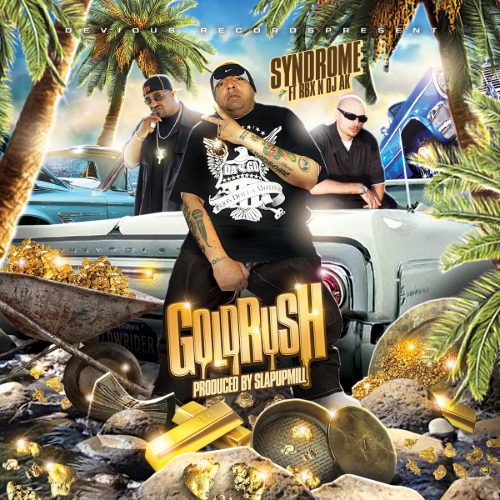
その後、2010年7月26日にはDevious Recordsから『Goldrush (Street Mix) – Single』として配信されている。
Apple MusicではジャンルがWest Coast Rapと分類され、Street Mixを含む2曲、計約9分のシングルとして登録されている。
さらに「Goldrush」は後に『International Paperchaser (Daz Dillinger Presents SYNDROME)』にも収録された。

Amazon Musicでは同アルバム版が約4分47秒と記録されている。
2010年という時期を考えると、本曲の面白さはより際立つ。
G-Funkの商業的最盛期からすでに十数年が経過していた時代に、Syndromeはシンセやベースだけを借りるのではなく、RBXというDeath Row初期を象徴する声そのものを作品へ組み込んでいるからだ。
第一印象
最初に感じるのは「明るいG-Funk」ではなく、暗く、重く、じわじわと前進するG-Funkである。
陽光の下を走るローライダーというより、夜の街灯が流れていく車内。
きらびやかなシンセリードで開放感を作るというより、低域を厚く保ったまま、音数を必要以上に増やさず、空間そのものを重くする方向へ向かっている。
約84.7BPMというテンポも重要だ。
この速度帯では、ドラムを細かく詰め込めば跳ねた印象にもできる。しかし「Goldrush」はそこを急がない。
キックとスネアの間に十分な空間を残すことで、ラッパーの声がトラックの上へ大きく乗る。
そのため聴き手はビートに追い立てられるのではなく、ビートの中へ身体を沈ませる感覚になる。
サウンド分析
ドラム
ドラムは非常に重要である。
約84.7BPMというミッドテンポを基礎に、ビートは基本的に重心を低く保っている。
キックは複雑なパターンを見せつけるタイプではなく、ベースと組み合わさったときの重量を優先している。
一方のスネア/クラップ系のバックビートは、曲の骨格をはっきり提示する。
その結果、リズムは細かく跳ねるのではなく、
ドン――パン――ドン――パン
という大きな周期で身体を動かす感覚に近い。
ハイハットもグルーヴを過度に細分化せず、曲全体の粘りを崩さない。
現代的なトラップのように高速ハイハットで推進力を加える方向とは逆で、空白そのものをリズムとして使っている。
この余白がRBXのような低く存在感の強い声と非常によく合う。
ベース
「Goldrush」の土台を決定しているのは低域だ。
ベースは派手なフレーズを連発するというより、曲の底面を広く支える役割が大きい。
キックと近い位置で動きながら、中低域から低域にかけて厚みを作り、トラック全体を下方向へ引っ張っている。
G-Funkというと、弾むようなファンクベースを想像しやすい。
しかし本曲では、軽快に踊らせるというより、
重量感を保ちながら横方向へ揺らす
という感覚が強い。
この低域処理があることで、上物に派手な変化がなくても曲が痩せない。
むしろ一定の低音圧を保ち続けること自体が「Goldrush」のムードになっている。
シンセ・メロディ
上物は90年代型West Coast Rapとの結びつきを感じさせるが、極端に華やかな構成ではない。
長く伸びる音、薄く漂うコード、輪郭を持った電子音が重なり、低域の上へ暗い膜を張っていく。
重要なのは、メロディそのものを主役にしすぎていないことだ。
G-Funkには高音シンセが明確なフックとして飛び出すタイプも多いが、「Goldrush」はそれよりもムード形成を優先する。
上物が前へ突き出すのではなく、ラップの背後で持続する。
そのため音像には、派手さよりも夜間性がある。
タイトルは「Goldrush」でありながら、サウンドそのものは黄金色に輝くというより、金を追い求める過程の緊張感や欲望を感じさせる暗さを持っている。
なお解析上ではDマイナー周辺との親和性が高く検出されており、この暗めの印象とも整合する。ただしこれは音響解析による推定であり、公式なキー表記ではない。
ミックス・グルーヴ
「Goldrush」はボーカルを非常に重要な楽器として扱っている。
トラックだけを巨大化するのではなく、中域に声がしっかり残るようなバランスになっており、ラップのキャラクターがビートに埋もれない。
特にRBXのような声質の人物が入ると、このミックス方針は大きな意味を持つ。
低くザラついた声と厚いベースは、本来であれば帯域がぶつかりやすい。
しかし声の存在感を中域に確保することで、低音トラックの上でもラッパーの輪郭が残る。
曲のダイナミクスも極端に上下するタイプではない。
大きなブレイクや劇的な転調によって聴かせるのではなく、同じ温度を維持しながらMCの交代によって色を変えていく。
つまり「Goldrush」のグルーヴは、
展開による興奮ではなく、反復による没入
で成立している。
これはクラシックなG-Funkやウェストコースト・ストリートラップが得意としてきた方法でもある。
ラップ/ボーカル分析
「Goldrush」の最大の武器は、異なる声のキャラクターが一つのトラック上で共存することだ。
Syndromeが楽曲の中心に立つ一方で、RBXの参加によって音源全体へ別種の重量が加わる。
RBXはDr. Dre『The Chronic』やSnoop Dogg『Doggystyle』期のDeath Row周辺で知られるラッパーであり、その低く荒れた声質そのものが非常に強い個性を持つ。
「Goldrush」のような低速寄りのビートでは、このタイプの声が特に映える。
無理に言葉を詰め込む必要がなく、一語一語の重さを残したままビートへ置けるからだ。
対してSyndromeの存在は、楽曲を単なる「RBX客演曲」にしない役割を担う。
UK側からWest Coastのサウンドへ接近しているという立場があることで、声の違いそのものが国境を越えたコラボレーションとして機能する。
そしてDJ AKの名前がクレジットされている点も、本曲が単なるビート+ラップではなく、West Coast Hip-HopのDJ文化を意識した作品であることを感じさせる。
全体として、ラップはビートより前へ走らない。
むしろ少し後ろへ体重を預けることで、この曲特有のレイドバック感を強めている。
歌詞・テーマ
タイトルの「Goldrush」は直訳すれば「ゴールドラッシュ」。
そこから連想されるのは、金、成功、富、競争、ハスリング、そして成り上がりである。
Syndromeが後に『International Paperchaser』というタイトルのアルバムを発表していることを考えると、「Goldrush」という言葉は彼の作品世界と非常に相性がいい。
単なる金銭自慢というより、
成功を求めて動き続ける人間の姿勢
そのものを象徴するタイトルとして捉えると、本曲の重く前進するビートとも自然につながる。
重要なのは、サウンドが決して祝祭的ではないことだ。
成功や富を意味するタイトルでありながら、楽曲には緊張感と暗さが残る。
そのため「金を手に入れた後の豪華さ」より、
金を求め続けるストリートの競争
という側面のほうがサウンドからは強く感じられる。
ただし、細かな歌詞のストーリーや個々のラインについては、公式歌詞資料を確認できていないため、ここでは断定しない。
トリビア/制作メモ
本曲のプロデューサーはSLAPUPMILL(Slap Up Mill)。
これはSyndrome公式Bandcampで明記されている確定情報である。
Bandcamp版は2010年6月25日付で公開され、約1か月後の7月26日にはDevious Recordsから『Goldrush (Street Mix) – Single』として正式配信された。
Apple Musicではこの作品を「West Coast Rap」に分類している。
また後に『International Paperchaser (Daz Dillinger Presents SYNDROME)』へ収録されている点も重要である。
SyndromeのBandcampプロフィールには、Daz Dillingerをはじめ、元Death Row系アーティストとのプロジェクトを進めていたことが記載されており、「Goldrush」はその大きな流れの中に位置する一曲と考えられる。
音源解析上では、
約4分45秒
約84.7BPM
Dマイナー周辺の響きが優勢
という特徴が確認できた。
特に84BPM台という速度は、本曲のキャラクターを理解するうえで重要である。
90年代G-Funkの中でも、踊らせるタイプではなく、低速でクルージングさせる楽曲に近いグルーヴを持っている。
総評
Syndrome「Goldrush」の魅力は、単純に「昔のG-Funkっぽい」ことではない。
2010年という時代に、UKのSyndromeがRBXやDJ AKと組み、Slap Up Millのビートを通じてWest Coast Rapの美学を再構築していることに価値がある。
約84.7BPMのゆったりしたビート。
低く広がるベース。
暗いコード感。
必要以上に派手さを求めない上物。
そしてビートの隙間を生かすラップ。
これらが一つになることで、「Goldrush」は古典的なG-Funkの記号を使いながらも、単なる90年代再現にはならない。
とりわけRBXの参加は大きい。
彼の声には90年代Death Row期から続く歴史そのものがあり、その声が2010年代のUK発プロジェクトへ置かれることで、時代と地域を越えた接続が生まれている。
明るいシンセが踊るG-Funkではない。
これはもっと暗く、もっと重く、もっとストリート寄りの一曲だ。
タイトルが示す「Goldrush=富を追う競争」を、煌びやかな成功譚ではなく、低音の中を黙々と進み続けるハスラーの音楽として鳴らしている。
エディターズノート
「Goldrush」を聴いて改めて面白いと感じるのは、G-Funkという音楽がカリフォルニアだけに閉じたスタイルではなかったということだ。
SyndromeはUKのアーティストでありながら、その音楽的視線は明確にアメリカ西海岸へ向けられている。
しかし、ただシンセを鳴らしてG-Funk風に仕上げるだけではない。
RBXという本物のDeath Row人脈を招き、DJ AKを加え、Slap Up Millが低く重いトラックを作る。
その結果、「影響を受けた音楽」から一歩進み、「その文化と実際につながった音楽」になっている。
2010年という時代を考えても、こうしたアプローチは興味深い。
G-Funk黄金期から時間が経過したからこそ、その様式を再評価し、国境を越えて再構築することが可能になった。
「Goldrush」は派手な代表曲というより、そうしたWest Coast Hip-Hopの広がりを知るために掘り下げる価値のある一曲である。
Syndrome – Goldrush feat. RBX & DJ AK | Dark, Heavy G-Funk Connecting the UK and the West Coast
UK-based rapper Syndrome’s “Goldrush,” featuring RBX and DJ AK, is a clear example of how far the West Coast sound had traveled by the beginning of the 2010s.
Released in 2010, the track is not the bright, bouncing variety of G-Funk built around flashy synth leads and an immediately celebratory atmosphere. Instead, “Goldrush” is constructed around a low-slung bass foundation, relaxed drums, darker harmonic textures, and the commanding voices of its rappers.
The version analyzed here runs approximately 4 minutes and 45 seconds, with audio analysis detecting a tempo of around 84.7 BPM.
That is not exceptionally slow on paper. In practice, however, the groove feels considerably heavier than the number suggests. By leaving substantial space between rhythmic elements, the production creates both a lowrider-style side-to-side sway and the intimidating weight associated with street-oriented West Coast rap.
The presence of RBX is particularly important.
His involvement prevents “Goldrush” from feeling like a simple G-Funk revival exercise. A voice directly connected to the early-1990s Death Row era enters a 2010 production, musically narrowing the distance between the UK and the American West Coast.
Artist Introduction
Syndrome, also known as Syndrome AKA The Devious Monk, is a UK rapper associated with Devious Records.
His own Bandcamp identifies him as a UK artist, while his official profile also documents his efforts to work with Daz Dillinger and artists connected to the wider Death Row circle.
What makes Syndrome particularly interesting is that he did not simply imitate the musical language of the American West Coast from a distance. He actively entered that network and created music with artists who were part of the culture that originally shaped the sound.
That direction would later become even clearer with the release of International Paperchaser (Daz Dillinger Presents SYNDROME).
On “Goldrush,” the appearances of RBX and DJ AK create a direct intersection between Syndrome’s position as a UK artist and the lineage of West Coast rap stretching back to the 1990s.
Background
“Goldrush” is credited to Syndrome featuring RBX and DJ AK.
According to Syndrome’s official Bandcamp page, the track was released on June 25, 2010, with production credited to SLAPUPMILL.
It was subsequently released through Devious Records on July 26, 2010 as part of Goldrush (Street Mix) – Single.
Apple Music classifies the release as West Coast Rap and lists it as a two-track single, including the Street Mix, with a total running time of approximately nine minutes.
“Goldrush” was also later included on International Paperchaser (Daz Dillinger Presents SYNDROME).
Amazon Music lists the album version at approximately 4 minutes and 47 seconds.
The timing of the release makes the collaboration particularly interesting.
By 2010, more than a decade had passed since G-Funk’s commercial peak. Rather than simply borrowing familiar synth sounds or bass textures from the genre, however, Syndrome brought RBX himself—a voice closely associated with the formative Death Row era—directly into the project.
That gives “Goldrush” a sense of continuity that goes beyond stylistic imitation.
First Impression
The first thing that stands out about “Goldrush” is that this is not bright G-Funk.
It is dark, heavy, and deliberately slow-moving.
Rather than suggesting a lowrider cruising beneath the California sun, the track feels closer to watching streetlights pass through the windows of a car late at night.
Instead of relying on glittering synth leads to create a sense of openness, the production keeps the low frequencies thick, avoids unnecessary layers, and uses restraint to make the entire sonic space feel heavier.
The approximately 84.7 BPM tempo is important.
At this speed, a producer could easily create a more energetic groove by filling the rhythm with additional percussion. “Goldrush” does the opposite.
There is enough space between the kick and snare for the rappers’ voices to occupy a large portion of the track.
As a result, the listener is not pushed forward by the beat.
You sink into it.
Sound Analysis
Drums
The drums are fundamental to the identity of “Goldrush.”
Built around a midtempo pulse of approximately 84.7 BPM, the beat consistently maintains a low center of gravity.
The kick is not designed around complex rhythmic patterns. Its primary purpose is weight, particularly when combined with the bass.
The snare or clap-based backbeat, meanwhile, clearly establishes the track’s rhythmic skeleton.
The result feels less like a tightly bouncing rhythm and more like a broad:
boom — clap — boom — clap
cycle that encourages the body to move in large, slow motions.
The hi-hats also avoid dividing the groove into excessive detail.
This is essentially the opposite of the approach later associated with modern trap production, where rapid hi-hat patterns often provide much of the forward momentum.
On “Goldrush,” empty space itself becomes part of the rhythm.
That space works especially well with a voice as low, rough, and commanding as RBX’s.
Bass
The low end defines the foundation of “Goldrush.”
Rather than constantly introducing elaborate bass phrases, the bass primarily functions as a wide platform beneath the entire production.
Moving closely with the kick, it creates considerable density through the low-mid and bass frequencies, constantly pulling the track downward.
G-Funk is often associated with elastic, highly animated funk basslines.
Here, however, the objective feels different.
Rather than making the listener bounce lightly, the bass creates the sensation of:
moving sideways while maintaining a constant sense of weight.
Because of this low-end treatment, the track never feels thin even when relatively little is happening in the upper register.
Maintaining that steady bass pressure becomes part of the atmosphere itself.
Synths & Melody
The melodic layers clearly suggest a connection to 1990s West Coast rap, but the arrangement is never excessively colorful.
Sustained tones, lightly floating chords, and more sharply defined electronic textures overlap above the low end, creating a dark layer across the production.
Importantly, the melody is never allowed to dominate the track.
Many classic G-Funk productions use high-register synth leads as unmistakable hooks. “Goldrush” places greater emphasis on atmosphere.
The instrumental elements remain behind the rappers rather than constantly pushing toward the foreground.
That gives the production a distinctly nocturnal character.
Despite the title “Goldrush,” the track itself does not sound golden or radiant. Instead, its darker atmosphere evokes the tension, ambition, and desire involved in the pursuit of wealth.
Audio analysis also suggests a tonal center compatible with D minor, which fits the track’s darker character.
However, this should be understood as an estimate derived from audio analysis rather than an officially published key.
Mix & Groove
“Goldrush” treats the human voice as one of its most important instruments.
Rather than simply making the instrumental enormous, the mix preserves enough space in the midrange for each rapper’s personality to remain clearly audible.
That becomes especially significant when RBX enters the track.
A rough, low-register voice and a thick bass foundation could easily compete for space.
Instead, the vocal presence is maintained through the midrange, allowing the rappers to retain definition even above the dense low end.
The song also avoids extreme dynamic shifts.
It does not depend on enormous breakdowns, dramatic key changes, or sudden structural transformations.
Instead, it maintains essentially the same temperature while allowing changes between MCs to provide variation.
In other words, the groove of “Goldrush” is built on:
immersion through repetition rather than excitement through constant change.
It is a technique deeply connected to classic G-Funk and West Coast street rap.
Rap / Vocal Analysis
One of the greatest strengths of “Goldrush” is the way several distinct vocal personalities coexist over the same production.
Syndrome remains at the center of the record, but RBX adds an entirely different kind of weight.
RBX is widely known for his connections to the early Death Row era, including appearances associated with Dr. Dre’s The Chronic and Snoop Dogg’s Doggystyle. His deep, rough-edged voice has always been one of his most immediately recognizable characteristics.
A slower beat such as “Goldrush” gives that kind of voice plenty of room.
There is no need to overload the instrumental with syllables. Individual words can be placed against the beat and allowed to retain their full weight.
Syndrome, meanwhile, prevents the record from becoming simply “an RBX guest appearance.”
His position as a UK rapper approaching West Coast rap gives the contrast between their voices a larger meaning: it becomes part of the international nature of the collaboration itself.
DJ AK’s presence in the credits also reinforces the track’s connection to the broader DJ tradition within West Coast Hip-Hop rather than presenting the song simply as a rapper performing over a beat.
Throughout the record, the rappers rarely feel as though they are rushing ahead of the instrumental.
Instead, they lean slightly behind the beat, strengthening the relaxed but intimidating character of the groove.
Lyrics & Themes
The title “Goldrush” immediately evokes the pursuit of gold.
From there come obvious associations with money, success, wealth, competition, hustling, and upward mobility.
Considering that Syndrome later released an album titled International Paperchaser, the idea behind “Goldrush” fits naturally within his broader artistic world.
Rather than reading the title only as a straightforward celebration of money, it can also be interpreted as representing:
the mentality of someone who remains constantly in pursuit of success.
That interpretation fits naturally with the heavy, forward-moving instrumental.
Importantly, the music itself never sounds particularly celebratory.
Despite a title associated with wealth and success, the production retains tension and darkness.
Sonically, it therefore feels less like the luxury that comes after achieving wealth and more like:
the street-level competition involved in continuing to chase it.
However, because no verified official lyric sheet was available for this analysis, it would be inappropriate to make definitive claims about specific lines or detailed narrative elements.
Trivia / Production Notes
The producer of “Goldrush” is SLAPUPMILL, also written as Slap Up Mill.
This is confirmed information listed on Syndrome’s official Bandcamp page.
The Bandcamp version was published on June 25, 2010, and approximately one month later, on July 26, the track received an official release through Devious Records as part of Goldrush (Street Mix) – Single.
Apple Music categorizes the release as West Coast Rap.
Its later inclusion on International Paperchaser (Daz Dillinger Presents SYNDROME) is also significant.
Syndrome’s Bandcamp profile describes his work with Daz Dillinger and projects involving former Death Row-associated artists, placing “Goldrush” within a broader pattern of collaborations connecting Syndrome to established West Coast figures.
Audio analysis of the version examined here indicates approximately:
- Running time: 4 minutes 45 seconds
- Tempo: 84.7 BPM
- Tonal character: centered around D minor or a closely related tonal area
The tempo is especially important when understanding the track.
At around 84 BPM, “Goldrush” belongs closer to the slow-cruising side of the G-Funk spectrum than to its more dance-oriented variations.
Overall Assessment
The appeal of Syndrome’s “Goldrush” is not simply that it “sounds like old G-Funk.”
Its real value comes from what happens when a UK rapper in 2010 joins forces with RBX and DJ AK and uses a Slap Up Mill production to reinterpret the aesthetics of West Coast rap.
A relaxed beat at approximately 84.7 BPM.
A wide, low bass foundation.
Dark harmonic textures.
Instrumental layers that resist unnecessary flashiness.
Rappers who understand how to use the empty spaces in the beat.
Together, these elements allow “Goldrush” to employ the vocabulary of classic G-Funk without becoming a simple reconstruction of the 1990s.
RBX’s participation is particularly significant.
His voice carries a direct historical connection to the Death Row era of the early 1990s. Placing that voice inside a UK-led project from the 2010s creates a connection across both geography and time.
This is not G-Funk driven by bright synthesizers dancing above the beat.
It is darker, heavier, and more deeply rooted in street rap.
The “Goldrush” of the title—the competitive pursuit of wealth—is therefore not presented as a glamorous victory lap.
Instead, it sounds like music for a hustler still moving through the low end, steadily pursuing the next opportunity.
Editor’s Note
What makes “Goldrush” especially interesting is the reminder that G-Funk was never destined to remain confined to California.
Syndrome is a UK artist, yet his musical perspective is clearly directed toward the American West Coast.
But this is not simply a case of adding synthesizers to a beat and labeling the result G-Funk.
Syndrome brings in RBX, an artist with authentic ties to the Death Row lineage, adds DJ AK to the equation, and works over a low, heavy production from Slap Up Mill.
The result moves beyond music that was merely “influenced by” West Coast culture.
It becomes music that is directly connected to people within that culture.
That approach is particularly interesting in the context of 2010.
Enough time had passed since G-Funk’s golden era for the style to be reconsidered, rediscovered, and reconstructed by artists working far beyond its original geographic boundaries.
“Goldrush” may not be the most obvious or commercially famous G-Funk record to emerge from that period.
But for listeners interested in understanding how the language of West Coast Hip-Hop traveled internationally—and how artists outside California established genuine connections with figures from its original scene—it is a track well worth digging into.
コメント