プールサイド、バーベキュー、酒、煙、着飾った男女、そして夜が明けるまで続くパーティー。
Nutt-Soの「Pool Party」は、タイトルから想像される夏の開放感を、そのまま明るいリゾート音楽へ変換した曲ではない。
低く沈むベース、硬質な電子音、乾いたドラム、抑揚を抑えたラップ。そこに重なるのは、都会的で少し冷たい質感を持ったファンクである。
約3分41秒の本曲は、プールパーティーそのものだけでなく、朝起きて服を選び、車に乗り、仲間を拾い、オークランド周辺を巡りながら会場へ向かう一日を描いている。
つまり中心にあるのは、単なる宴会の描写ではない。
誰を連れていくのか。
どの車で現れるのか。
街のどこを通り、誰に声をかけるのか。
そして、パーティーでどのように振る舞うのか。
「Pool Party」は、そうした移動、人脈、車、服装、遊び方をひとつの生活文化として描いた、オークランド産のサマー・ストリートファンクである。
アーティスト紹介
Nutt-Soは、カリフォルニア州オークランドを拠点に活動してきたラッパーである。
2PacおよびOutlawz周辺との関係でも知られ、ストリートの緊張感、忠誠、裏切り、生存、仲間との結束といったテーマを扱ってきた。彼の作品には、ベイエリア特有の地域意識と、1990年代後半の西海岸ギャングスタラップが持つ重さが強く刻まれている。
「Pool Party」が収録された『The Betrayal』は、資料上では2000年の作品として整理される一方、1990年代に制作された音源を含むアルバムと考えられている。Discogsでは同作を2000年のThug Rap/Gangsta作品として掲載し、「Pool Party」の演奏時間を3分41秒と記載している。
一部の資料では、アルバムが当初1990年代に計画されながら正式発売に至らず、その後異なる形で流通したと説明されている。そのため、録音時期、初出年、再発年を同じものとして扱わない注意が必要である。
Nutt-Soには重苦しくシリアスな楽曲も多いが、「Pool Party」ではその強面な人物像を保ったまま、仲間、車、酒、女性、音楽に囲まれた休日の側面が表に出ている。
作品背景
「Pool Party」は、アルバム『The Betrayal』に収録された楽曲である。
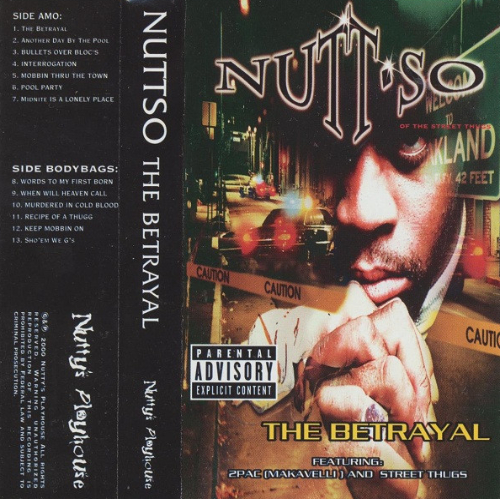
音源の長さは約3分41秒。解析上のテンポは約96 BPMで、倍速感を強調せず、腰を落としてゆっくり進むミッドテンポのグルーヴを形成している。
配信上では、2000年11月7日発売のコンピレーション『Nothin’ but the Cavi Hit: G-Funk Favorites』にも収録されている。Apple Musicでは作詞・作曲者をNutt-Soとし、同コンピレーションの収録曲として掲載している。
ただし、アルバムの版やデータベースによって曲名表記やアーティスト表記に差異が見られる。
一部のDiscogs掲載ページでは「Pool Party」をJ.R.名義で記載し、別の版ではNutt-Soの収録曲として扱っている。
したがって、参加ボーカルの詳細や各ヴァースの正式な担当者については、現時点で確認できる資料だけでは断定を避けたい。
本記事では、提供音源から確認できる内容を中心に、複数の声がどのように曲のパーティー感を作っているかという観点から分析する。
第一印象
最初に耳へ残るのは、明るいメロディよりも、むしろ低音の太さと電子音の硬さである。
「Pool Party」というタイトルから、滑らかなエレクトリックピアノ、華やかなホーン、開放的な女性コーラスなどを想像すると、本曲の入り口は意外に無機質だ。
イントロでは、短い鍵盤コードと高い電子音が規則的に置かれ、その下を丸く膨らんだベースが進んでいく。音数は決して多くないが、一音一音の輪郭が強く、トラック全体に独特の弾力がある。
陽射しを直接描くような明朗さではない。
日中のプールサイドというより、夕方から夜にかけて、人が少しずつ集まり始める時間帯に近い。
車の塗装に街灯が反射し、駐車場には低音が漏れ、酒や煙の匂いが混ざる。そんな都市型のパーティー風景が似合う音である。
また、トラックが必要以上に展開しないことも重要だ。
音色やコードを頻繁に入れ替えるのではなく、同じループを長く維持することで、ひとつの場所に人が集まり続けるような感覚を生み出している。
サウンド分析
ドラム
ドラムは、太いキック、乾いたスネア、細かく刻みすぎないハイハットを中心に構成されている。
キックは深く長く響くタイプではなく、低域の芯を前へ押し出すような音だ。ベースと完全に一体化させるのではなく、それぞれの輪郭を保つことで、ビートに跳ね返るような弾力を与えている。
スネアは高域の抜けが強く、やや電子的で硬い。
このスネアが各小節の中心を明確に区切るため、トラックの上物が少なくてもリズムの骨格は曖昧にならない。
ハイハットは主張を抑え、一定の間隔でグルーヴを支えている。現代的なトラップのような高速ロールや細かな装飾はなく、ラッパーの言葉が前後へ揺れるための余白を残している。
リズム全体は約96 BPM前後だが、体感としては数字以上にゆっくりしている。
これはキックの置き方、ベースの長さ、ラップの後ろへもたれるタイミングによって、ハーフタイムに近い重心が生まれているためだ。
派手に踊らせるのではなく、首と肩を自然に揺らすためのドラムである。
ベース
本曲の中心を担っているのはベースである。
低音は太く、丸みを持ちながらも、各音の立ち上がりには明確なアタックがある。サブベースだけで床を震わせるというより、シンセベースの音程と動きを聴かせる設計だ。
特に印象的なのは、同じ位置に居座るのではなく、小さく下降したり、次のコードへ滑り込んだりする動きである。
このベースラインがあることで、ループ主体のトラックに前進感が生まれている。
楽曲の物語では、登場人物たちが車に乗り、街を巡り、仲間を拾いながらプールパーティーへ向かう。その移動感を最も強く表現しているのが、このベースだ。
ただ重いだけではない。
車体が路面の凹凸に合わせて上下するような、緩やかな揺れを持っている。
また、低域を極端に広げず、キックやラップと共存できる範囲に収めているため、ベースの存在感が強いにもかかわらず、曲全体が濁りすぎない。
シンセ/メロディ
上物は、短く切られた鍵盤コード、高音の電子音、背景の薄いパッド状の響きで構成されている。
鍵盤は豪華な和音を長く伸ばすのではなく、短いコードをリズムの一部として配置する。メロディを歌わせるというより、ベースとドラムの間にアクセントを入れる役割が大きい。
高域では、細い電子音が反復される。
この音は、典型的なG-Funkの長くうねるリードシンセとは少し異なる。旋律的に大きく動くのではなく、点滅する照明やゲーム機の電子音のように、短いフレーズを繰り返している。
その結果、トラックには陽気さと同時に、わずかな緊張感が残る。
コード感にはファンクやR&Bの滑らかさがあるが、音色自体は甘くなりすぎない。低いラップと組み合わせても、曲がラブソングや柔らかなサマージャムへ寄りすぎないよう調整されている。
メロディ
メロディ面で最も大きな役割を果たすのは、フックの男性ボーカルである。
ヴァースでは楽器の反復が中心となるが、フックに入ると歌声が音域を広げ、曲の景色が一気に開く。
歌唱にはゴスペルやファンク、1990年代の西海岸R&Bを思わせる厚みがある。主旋律だけでなく、背後に重なる声や合いの手によって、複数の参加者が一緒に叫んでいるような集団感が生まれている。
フックの中心にあるのは、「ここはプレイヤーたちのプールパーティーであり、楽しむために来ればいい」という招待のメッセージだ。
ヴァースが具体的な行動や移動を語るのに対し、フックはパーティー全体のスローガンとして機能している。
ミックス
ミックスは中低域が厚く、ベース、キック、低いラップが前面に集められている。
現代の音源のように高域を明るく磨き上げた質感ではなく、全体に少し曇ったような密度がある。
しかし、その粗さが曲のローカル感と相性がいい。
ボーカルは完全に独立して浮かび上がるのではなく、トラックの中へ半分沈み込んでいる。そのため歌詞を一語ずつ明瞭に見せるというより、声そのものをグルーヴの一部として聴かせる印象が強い。
フックでは声のレイヤーが増え、中域の密度が一段上がる。
それでも左右へ大きく広げすぎず、正面からまとまって押し寄せるため、屋外の開放感よりも、限られた空間に大勢が集まっている感覚がある。
音量変化は比較的小さく、楽曲全体が同じ熱量を維持する。
この均一さが、パーティーが途切れず続いているような連続性を作っている。
グルーヴ
本曲のグルーヴは、速さではなく「もたれ」によって成立している。
ラップはビートの先頭へ食い込まず、スネアの後ろ側へわずかに体重を預ける。ベースも細かく走らず、各音を十分に残す。
そのため、リズムには急かされる感覚がない。
朝から準備し、車で街を巡り、人を拾い、夕方に会場へ到着し、そのまま夜まで過ごす。
そうした長い一日の時間感覚が、ビートの緩さに反映されている。
ここでの「Pool Party」は、数分だけ盛り上がるイベントではない。
街全体を巻き込んで一日かけて完成する社交の場として描かれている。
ラップ/ボーカル分析
曲は、短いイントロのあと、長めのヴァース、歌唱フック、次のヴァースという流れで進む。
大まかには、複数のラップ・ヴァースと反復されるフックから成る、非常に分かりやすいパーティーラップの構造である。
序盤のラップは、朝起きて服を着て外へ出る場面から始まる。
声は低く、強く叫ばず、会話に近い温度で進んでいく。フロウは一定だが、語尾を伸ばしたり、韻の位置を小節の後ろへずらしたりすることで、単調さを避けている。
特に車種、道、地区、人名を連続して挙げる部分では、ラップが地図のように機能する。
聴き手は説明を受けるのではなく、助手席に乗せられ、移動する景色を横から見せられる。
中盤以降のヴァースでは、人を拾う、連絡を回す、必要なものを用意するという段取りが描かれる。
ここではラッパーが単なる参加者ではなく、街のネットワークを動かす主催者、あるいは案内役として振る舞っている。
終盤のヴァースは、実際のパーティー会場へ視点を移す。
グリルの肉、酒、煙、ゲーム、服装、性的な雰囲気、夜通し続く遊びなど、五感に訴える具体的な描写が増える。
ラップの声色は大きく変化しないが、描かれる対象が移動から滞在へ変わるため、同じフロウでも熱量が上がって聴こえる。
一方、フックの男性ボーカルは、ラップよりも音域が高く、声を複数重ねている。
「It’s all good」という肯定的な言葉を繰り返すことで、曲の緊張を解きほぐし、誰もが参加できる祝祭的な空気を作る。
ただし、完全に無条件の歓迎ではない。
歌詞には「プレイヤー」「ハスラー」「プレイヤーヘイター」といった区別があり、このパーティーにも独自のルールと所属意識が存在する。
明るい歌声の内側に、ストリート社会の序列が残されている点が本曲らしい。
歌詞・テーマ
パーティーへ向かう一日
「Pool Party」の歌詞は、最初から会場の中心へ入るのではなく、準備段階から描き始める。
起床し、服を選び、車を出し、街を流し、仲間へ連絡を入れる。
この導入によって、パーティーは単なる背景ではなく、その日一日の目的となる。
重要なのは、会場へ到着するまでの過程そのものが娯楽として描かれていることだ。
新しい服、目立つ車、街中で交わす挨拶、知人を迎えに行く行為。それらすべてが自己表現であり、コミュニティへの参加表明になっている。
車と地域性
歌詞には車種、道路、地区を示す言葉が繰り返し登場する。
454 SS、Foothill Strip、Oaklandを示す“O”、Friscoなどの固有名詞は、物語を抽象的な夏の風景から具体的なベイエリアの生活圏へ引き戻す。
車は単なる移動手段ではない。
塗装、エンジン、ホイール、走り方によって、持ち主の経済力、趣味、所属、威信を示す装置である。
また、仲間を順番に拾っていく描写は、個人の成功を見せるだけでなく、人とのつながりを可視化する。
一台の車が街を巡るたびに、パーティーの規模が広がっていく。
仲間と社交
本曲では「誰もが誰もを知っている」という感覚が強調される。
これは大規模な商業イベントではなく、地域の人間関係を基盤に成立する集まりである。
入場料を払ってサービスを受けるというより、誰かが酒を用意し、誰かが食事を作り、誰かが音楽を流し、別の誰かが友人を連れてくる。
その共同体的な空気が、「金を持っていなくても楽しめる」といった表現にもつながっている。
一方で、そこにはプレイヤー文化特有の競争もある。
服装、車、女性との関係、振る舞い方などを通して、それぞれが自分の立場を示す。
仲間意識と自己演出が同時に存在している。
快楽と現実
終盤では、酒、マリファナ、性的な表現、裸で泳ぐ場面など、享楽的な描写が増える。
しかし、トラック自体が完全に明るくならないため、歌詞の快楽にはどこか刹那的な響きが残る。
「最後の日のように生きる」という感覚は、単なる大げさなパーティー表現ではない。
日常的に危険や不安定さを抱えるストリートの人間にとって、何事もなく仲間と過ごせる夜そのものが特別な時間である。
昼から始まった集まりが日の出まで続くという展開には、楽しい時間をできる限り終わらせたくない気持ちが表れている。
プレイヤー文化
フックでは、この集まりが「player-style pool party」と表現される。
ここでいうプレイヤーは、単純に女性関係の多い男性だけを指してはいない。
服装、車、金、人脈、話し方、落ち着き、場の読み方まで含めた、ひとつのライフスタイルである。
曲中の主人公たちは、大声で自分の強さを証明しようとしない。
街を知り、人を知り、必要なものを準備し、自然に中心へ入っていく。
その余裕こそが「プレイヤーらしさ」として表現されている。
トリビア
「Pool Party」は、後年の楽曲からサンプリングされた例が確認されている。
WhoSampledでは、Ramirezの「Funked Out Pool Parties」がNutt-Soの「Pool Party」を使用した楽曲として掲載されている。
これは、本曲のフックが単なる曲中のコーラスを超え、後世のアーティストにとって「西海岸のプールパーティー」を象徴する音声素材として機能したことを示している。
一方、「Pool Party」自体が既存曲をサンプリングしているかについては、今回確認できた信頼性の高い資料からは特定できなかった。
トラックにはファンクやR&B由来の語彙があるものの、それだけを理由に特定の元ネタを断定することはできない。
制作メモ
確認できる情報
- 音源の実測時間は約3分41秒
- 解析上のテンポは約96 BPM
- 『The Betrayal』の収録曲として確認できる
- Apple Musicでは2000年11月7日発売のG-Funk系コンピレーションにも収録
- Apple Music上のソングライター表記はNutt-So
- 版によってNutt-So、J.R.など曲のアーティスト表記に差異がある
- Ramirez「Funked Out Pool Parties」にサンプリングされた記録がある
聴感ベースの分析
- ミッドテンポのG-Funk/ベイエリア・ファンク
- 太く動くシンセベースがトラックの中心
- 高音の電子音は長いG-Funkリードではなく、短い反復フレーズ
- ドラムは音数を絞り、ラップの余白を確保
- 中低域が厚く、高域の明るさは控えめ
- ラップとフックで音域と密度を切り替える構成
- 同じループを維持することで、パーティーの持続感を表現
- ヴァースごとに「準備」「移動と招集」「会場での遊び」へ場面が進む
総評
Nutt-Soの「Pool Party」は、プールサイドの陽気さを前面に出しながらも、決して軽薄なサマーチューンにはなっていない。
太いベース、硬いスネア、無機質な電子音、低く落ち着いたラップによって、曲の根底にはオークランドのストリート感が保たれている。
最大の魅力は、パーティーの楽しさだけでなく、そこへ至るまでの行動を細かく描いていることだ。
服を着る。
車を出す。
街を流す。
友人に連絡する。
仲間を拾う。
必要なものを準備する。
そして会場へ到着する。
この一連の流れによって、「Pool Party」は単なるイベント名ではなく、地域の人間関係、車文化、プレイヤー文化、夏の時間感覚をひとつにまとめる言葉となる。
サウンド面では、華麗な展開や派手なソロに頼らず、ベースと反復によって最後までムードを維持する。
フックは親しみやすいが、ヴァースにはローカルな地名や人物関係が詰め込まれている。そのため、初めて聴く人には分かりやすいパーティーソングとして響き、ベイエリア・ラップを深く知る人には地域性の濃いストリート記録として響く。
明るいだけでも、危険なだけでもない。
厳しい日常を背負った人々が、仲間と過ごせる一日を最大限に楽しむ。
「Pool Party」は、そんな瞬間を低音の中へ閉じ込めた、都会的で少し影のあるサマー・ファンクである。
エディターズノート
「Pool Party」という言葉から連想するのは、眩しい太陽、青い水、明るい笑い声かもしれない。
しかし、この曲から見える水面は、真昼の光よりも夕暮れや街灯を反射している。
トラックには楽しさがある。それでも、完全に無邪気ではない。
低く構えたラップと硬い電子音が、ここに集まっている人々がストリートの現実を忘れたわけではないことを伝えている。
だからこそ、フックの「It’s all good」という言葉が強く響く。
何も問題が存在しないという意味ではない。
問題を抱えたままでも、この時間だけは仲間と笑い、食べ、飲み、音楽を鳴らす。その意思を確認する言葉として歌われている。
そして本曲の主役は、豪華なプールや女性だけではない。
街を走る車、電話でつながる仲間、グリルを囲む人々、同じフックを繰り返す複数の声である。
Nutt-Soの「Pool Party」は、一人の成功者が見せる贅沢ではなく、コミュニティ全体で作り上げる一夜を描いた曲なのだ。
Nutt-So – Pool Party | Oakland Summer Street Funk Built on Bass, Cars, and Community
Poolside scenes, barbecue smoke, alcohol, weed, sharply dressed men and women, and a party that carries on until sunrise.
Nutt-So’s “Pool Party” takes the sense of summer freedom suggested by its title, but it does not turn that atmosphere into bright, carefree resort music.
Instead, the track is built around low-slung bass, hard electronic tones, dry drums, and restrained rap performances. The result is a kind of urban funk with a slightly cold, nocturnal edge.
Running for roughly 3 minutes and 41 seconds, “Pool Party” does not simply describe what happens beside the pool. It follows an entire day: waking up, choosing clothes, getting into the car, picking up friends, moving through the Oakland area, and gradually making the way toward the party.
That means the real focus is not just the party itself.
Who are you bringing?
What car are you arriving in?
Which streets are you driving through, and who do you stop to see?
And once you arrive, how do you carry yourself?
“Pool Party” treats movement, social connections, cars, clothing, and leisure as parts of one larger lifestyle. It is Oakland summer street funk built around community, mobility, and player culture.
Artist Introduction
Nutt-So is a rapper associated with Oakland, California.
He is also known for his connections to 2Pac and the wider Outlawz circle, and much of his music has dealt with street pressure, loyalty, betrayal, survival, and solidarity among friends. His catalog carries a strong sense of Bay Area regional identity alongside the heaviness associated with late-1990s West Coast gangsta rap.
The album The Betrayal, which includes “Pool Party,” is generally listed in databases as a 2000 release, although it is believed to contain material recorded during the 1990s. Discogs categorizes the album as a 2000 Thug Rap/Gangsta release and lists “Pool Party” with a runtime of 3:41.
Some sources describe the project as having originally been planned during the 1990s without receiving a full official release at the time, before later circulating in different forms. Because of that history, recording dates, first appearances, and reissue dates should not automatically be treated as the same thing.
Nutt-So is often associated with darker and more serious material, but “Pool Party” reveals another side of his persona without abandoning his street image.
Here, the focus shifts toward friends, cars, alcohol, women, music, and the social side of a day off.
Background
“Pool Party” appears on Nutt-So’s album The Betrayal.
The recording runs approximately 3 minutes and 41 seconds. Audio analysis places the tempo at around 96 BPM, creating a relaxed mid-tempo groove that feels even slower because of its low center of gravity.
Rather than emphasizing double-time momentum, the beat settles into a heavy, unhurried pocket.
The song also appears digitally on the compilation Nothin’ but the Cavi Hit: G-Funk Favorites, released on November 7, 2000. Apple Music credits Nutt-So as the songwriter and lists the track as part of that compilation.
There are, however, discrepancies in artist and track credits depending on the edition or database.
Some Discogs listings attribute “Pool Party” to J.R., while other editions treat it as a Nutt-So track.
For that reason, the exact identity of every vocalist and the official assignment of individual verses should be approached cautiously unless more definitive session or liner-note information becomes available.
This analysis therefore focuses primarily on what can be heard in the supplied recording, especially the way multiple voices contribute to the song’s communal party atmosphere.
First Impression
The first thing that stands out is not a bright melody, but the weight of the low end and the hardness of the electronic textures.
With a title like “Pool Party,” a listener might expect smooth electric piano, celebratory horns, or an open, sunny female chorus.
Instead, the entrance is surprisingly mechanical.
Short keyboard chords and high electronic tones are placed with regularity, while a rounded bass line moves underneath them. The arrangement is not especially dense, yet every element has a strong outline, giving the track a distinctive bounce.
This is not music that paints direct sunlight.
It feels closer to the point between late afternoon and night, when people are gradually arriving and the party is beginning to fill out.
Streetlights reflect off car paint. Bass leaks into the parking lot. Smoke and alcohol hang in the air.
That kind of urban party setting fits the music much better than an idealized daytime resort scene.
The lack of dramatic arrangement changes is also important.
Rather than constantly switching instruments or chord progressions, the track stays committed to a small number of repeating ideas. That repetition creates the feeling of people continuing to gather in the same place, allowing the atmosphere to accumulate instead of constantly resetting.
Sound Analysis
Drums
The drums are centered around a thick kick, a dry snare, and hi-hats that avoid excessive subdivision.
The kick is not the type that produces a long, sub-heavy tail. Instead, it pushes the core of the low frequencies forward with a compact impact.
It does not completely merge with the bass. By allowing the kick and bass to retain separate identities, the production creates a springy sense of movement.
The snare has a strong upper-frequency snap and a somewhat electronic character.
Because it clearly marks the center of each bar, the rhythmic structure remains firm even when the instrumental layers are relatively sparse.
The hi-hats are restrained.
There are no rapid modern trap rolls or heavily decorated patterns. Their purpose is primarily to maintain the pulse while leaving enough space for the rappers to lean backward and forward around the beat.
Although the track sits at roughly 96 BPM, it feels slower than the number suggests.
That comes from the kick placement, the length of the bass notes, and the way the rappers sit slightly behind the beat. Together they create a center of gravity that almost approaches a halftime feel.
These drums are not designed to force the listener onto the dance floor.
They are built to make the head and shoulders move naturally.
Bass
The bass is the central musical element of “Pool Party.”
It is thick and rounded, but the attack of each note remains clear. Rather than relying only on deep sub-bass pressure, the production emphasizes the pitch and movement of the synth-bass line itself.
One of its most effective qualities is that it does not remain fixed in one position.
The line drops slightly, shifts between tones, and slides toward the next harmonic area.
Those small movements keep an otherwise loop-driven instrumental moving forward.
This also connects strongly to the song’s narrative.
The characters spend much of the track driving around, moving through the city, and picking people up on the way to the party. The bass line is the musical element that most strongly expresses that sense of travel.
It is heavy, but not static.
There is a gentle rise-and-fall motion to it, almost like a car body responding to the surface of the road.
The low end is also controlled enough to coexist with the kick and the low-register vocals.
Even though the bass dominates the production, the mix never becomes completely muddy.
Synths / Melody
The upper layers consist mainly of clipped keyboard chords, high electronic tones, and faint pad-like textures in the background.
The keyboards do not hold long, luxurious chords.
Instead, short chord stabs are placed almost like percussion. Their main role is not to carry a melodic statement, but to punctuate the space between the bass and drums.
In the upper frequencies, thin electronic tones repeat throughout the track.
These do not behave like the long, winding lead synthesizers usually associated with classic G-Funk.
Rather than moving through a broad melodic line, they repeat short phrases almost like flashing lights or electronic arcade sounds.
That gives the instrumental a slight sense of tension even within its celebratory setting.
The harmony itself contains some of the smoothness associated with funk and R&B, but the timbres are deliberately prevented from becoming too sweet.
That balance allows the track to support low, grounded rap performances without drifting too far toward romantic R&B or soft summer-jam territory.
Melody
The sung male hook provides the strongest melodic element.
During the verses, the instrumental relies heavily on repetition. When the hook arrives, the vocal range expands and the sonic landscape suddenly opens up.
The singing carries a thickness associated with gospel, funk, and 1990s West Coast R&B.
The lead vocal is reinforced by layered voices and ad-libs, creating the impression of several people shouting or singing together.
That communal quality is essential.
The hook effectively delivers the song’s central invitation: this is a player-style pool party, and the purpose is to come through and enjoy yourself.
Where the verses describe specific movements and actions, the hook works more like the party’s slogan.
Mix
The mix is concentrated heavily in the low and midrange frequencies.
Bass, kick, and low-register vocals occupy much of the foreground.
Compared with modern productions, the upper frequencies are not polished into a highly glossy or brilliant surface. The track has a slightly cloudy density.
That roughness works in its favor.
The vocals do not float cleanly above the instrumental. They sit partly inside it, making the human voice feel like another component of the groove rather than an isolated centerpiece.
The hook increases the density of the midrange because of its layered vocals.
Even there, the voices are not spread excessively across the stereo field. They push forward as a group, creating the feeling of a crowded physical space rather than a wide outdoor panorama.
Dynamic variation is relatively limited.
The track maintains a similar energy level throughout, which helps create the impression of a party that never really stops.
Groove
The groove is defined less by speed than by relaxation and backward weight.
The rappers do not aggressively attack the front edge of the beat. Their delivery often settles slightly behind the snare.
The bass also avoids unnecessary motion, allowing individual notes to remain in place long enough to create weight.
As a result, the rhythm never feels rushed.
The song follows a long day: preparation in the morning, driving through the city, picking people up, arriving in the evening, and continuing the party into the night.
That extended sense of time is reflected in the looseness of the beat.
The “pool party” here is not a brief event built around a few peak moments.
It is presented as a full-day social experience involving the wider neighborhood.
Rap / Vocal Analysis
After a short introduction, the track moves through extended rap verses, sung hooks, and additional verses.
Structurally, it is a straightforward party-rap format built around multiple rap sections and a recurring chorus.
The opening verse begins with waking up, getting dressed, and heading outside.
The voice remains low and controlled. There is little shouting. The delivery feels closer to casual conversation.
The flow is consistent, but small variations in rhyme placement, stretched endings, and delayed cadences keep it from becoming completely flat.
The sections that list cars, roads, neighborhoods, and names are especially effective.
Here, the rap begins to function almost like a map.
The listener is not simply being told where the rapper is going. It feels as if they have been placed in the passenger seat and are watching the landscape move past them.
Later verses describe picking people up, spreading the word, and making sure everyone has what they need.
At this point, the rapper begins to sound less like an ordinary guest and more like an organizer or local guide who understands how the city’s social network operates.
Toward the end, the perspective finally reaches the party itself.
The lyrics become increasingly sensory: meat on the grill, alcohol, smoke, games, clothing, sexual energy, and entertainment continuing late into the night.
The vocal tone itself does not change dramatically, but because the subject moves from travel to arrival, the same relaxed flow begins to feel more energized.
The sung male hook sits at a higher register than the rap and uses layered vocals.
By repeatedly returning to the phrase “It’s all good,” the chorus releases some of the tension established by the darker instrumental textures and creates a more celebratory mood.
However, the invitation is not completely unconditional.
The lyrics still distinguish between players, hustlers, and player haters.
Even this party operates according to its own codes of belonging.
That tension between bright singing and street hierarchy is part of what makes the track distinctive.
Lyrics and Themes
A Full Day Leading to the Party
“Pool Party” does not begin at the center of the celebration.
It begins with preparation.
The narrator wakes up, chooses clothing, gets into the car, cruises through the city, and starts contacting friends.
That structure turns the party into the objective of an entire day rather than a simple backdrop.
More importantly, the process of getting there is portrayed as entertainment in itself.
New clothes, a noticeable vehicle, greetings exchanged across the neighborhood, and stopping to collect friends all become forms of self-expression.
They also signal participation in the local community.
Cars and Regional Identity
Cars, streets, and location references appear repeatedly.
Mentions such as the 454 SS, the Foothill Strip, “the O” for Oakland, and Frisco anchor the track in a specific Bay Area geography.
These details prevent the song from becoming a generic summer fantasy.
The car is more than transportation.
Its paint, engine, wheels, and the way it is driven communicate money, taste, affiliation, and status.
At the same time, the repeated act of picking up friends demonstrates social reach.
As the car moves through the city, the party effectively grows larger.
Friendship and Social Life
The song emphasizes a sense that everyone knows everyone else.
This is not presented as a large commercial event.
It feels like a gathering sustained by local relationships.
One person brings the alcohol. Someone else handles the food. Another person controls the music. Someone else arrives with more friends.
That communal structure is connected to lines suggesting that people can still participate even without much money.
At the same time, player culture introduces an element of competition.
Clothing, cars, relationships with women, and behavior all become ways to display social position.
Community and self-presentation exist side by side.
Pleasure and Reality
Later in the track, references to alcohol, marijuana, sex, and nude swimming become more prominent.
Yet because the instrumental never becomes completely bright or carefree, the pleasure in the lyrics retains a temporary, almost fragile quality.
The idea of living as though it were the last day can be heard as more than exaggerated party language.
For people surrounded by instability or danger, an uninterrupted night spent with friends can carry unusual value.
The fact that the gathering continues from daytime until sunrise suggests a desire to stretch that safe, enjoyable moment for as long as possible.
Player Culture
The hook describes the gathering as a player-style pool party.
Here, “player” is not limited to a man with multiple romantic partners.
It represents a broader lifestyle involving clothing, cars, money, relationships, speech, composure, and social awareness.
The central figures in the song do not need to constantly shout about their toughness.
They know the city, know the people, understand what needs to be prepared, and enter the center of the gathering naturally.
That sense of ease is presented as part of what makes someone a player.
Trivia
“Pool Party” has itself been sampled by later artists.
WhoSampled lists Ramirez’s “Funked Out Pool Parties” as a track that uses material from Nutt-So’s “Pool Party.”
That suggests the hook eventually became more than a chorus inside one song.
For later artists, it could function as a recognizable sonic symbol of a West Coast pool-party atmosphere.
On the other hand, I was not able to confirm through reliable sources that “Pool Party” itself samples a specific earlier recording.
The instrumental clearly uses musical vocabulary associated with funk and R&B, but stylistic similarity alone is not enough to identify a specific source recording.
Production Notes
Confirmed Information
The recording runs approximately 3 minutes and 41 seconds.
Audio analysis places the tempo at roughly 96 BPM.
“Pool Party” is documented as a track associated with The Betrayal.
Apple Music also lists the song on a G-Funk-oriented compilation released on November 7, 2000.
Apple Music credits Nutt-So as songwriter.
Artist attribution differs depending on the edition or database, with Nutt-So and J.R. both appearing in different listings.
The song has been documented as a sample source for Ramirez’s “Funked Out Pool Parties.”
Listening-Based Analysis
The track can be described as mid-tempo G-Funk / Bay Area funk.
A thick, moving synth-bass line functions as the instrumental centerpiece.
The high electronic tones use short repeated phrases rather than long G-Funk lead-synth lines.
The drums are deliberately sparse, leaving room around the rap vocals.
The mix emphasizes the low and middle frequencies while keeping the upper end relatively restrained.
The arrangement creates contrast between the lower, flatter rap verses and the denser, more melodic hook.
Maintaining the same fundamental loop throughout much of the track creates a feeling of continuous party motion.
Narratively, the verses progress from preparation, to driving and gathering people, and finally to activity at the party itself.
Overall Assessment
Nutt-So’s “Pool Party” places the pleasures of a poolside gathering at the center of its story, but it never becomes a lightweight summer record.
The heavy bass, hard snare, mechanical electronic tones, and low, controlled rap delivery preserve a distinctly Oakland street character.
Its greatest strength is the amount of attention given not only to the party itself, but to everything required to reach it.
Getting dressed.
Starting the car.
Cruising the neighborhood.
Calling friends.
Picking people up.
Gathering supplies.
Finally arriving at the party.
Because of this sequence, “Pool Party” becomes more than the name of an event.
It becomes a phrase that connects local relationships, car culture, player culture, and the feeling of summer time in the Bay Area.
Musically, the track does not depend on dramatic arrangement changes or flashy instrumental solos.
Its atmosphere is sustained almost entirely through bass, repetition, and groove.
The chorus is immediately accessible, while the verses are packed with local names, locations, and relationships.
That duality allows the song to work on two levels.
A new listener can hear it as a straightforward party anthem.
Someone deeply familiar with Bay Area rap can hear it as a much more specific record of local street life.
It is neither completely carefree nor entirely threatening.
It captures people carrying the weight of difficult everyday realities while still choosing to make the most of one day together.
“Pool Party” is a slightly shadowed piece of urban summer funk, preserving that moment inside a heavy low-end groove.
Editor’s Note
The phrase “pool party” naturally suggests bright sunlight, blue water, and carefree laughter.
But the surface of the water in this song seems to reflect sunset and streetlights more than the midday sun.
The track is enjoyable, but never completely innocent.
The low-slung rap performances and hard electronic sounds remind us that the people gathered here have not somehow forgotten the realities of the street.
That is precisely why the repeated phrase “It’s all good” carries so much weight.
It does not necessarily mean that nothing is wrong.
Instead, it sounds like an affirmation that even while problems still exist, this particular moment can be reserved for laughing, eating, drinking, smoking, and listening to music with friends.
And ultimately, the real protagonist of “Pool Party” is not the luxury of the pool itself, or even the women surrounding it.
It is the cars moving through the city, the friends connected by phone calls, the people gathered around the grill, and the multiple voices repeating the same hook.
Nutt-So’s “Pool Party” is not simply a fantasy of one successful individual displaying wealth.
It is a song about an entire community coming together to create one memorable night.
コメント