The Graveyardsの「Cunda-Lunda-Haya」は、重く乾いたドラム、粘りつくファンク・ベース、複数のMCによる攻撃的なマイク回し、そして意味よりも響きで耳に残る呪文のようなフックを組み合わせた一曲だ。
実測テンポは約97.5BPM。極端に速いわけではないが、スネアの強い打ち込みと休みなく言葉を詰め込むラップによって、数字以上の推進力を感じさせる。
タイトルでもある“Cunda-Lunda-Haya”は、一般的な英語として意味を読み取れる言葉ではない。実際のフックでも「Cunda」「Lunda」「Haya」に近い音が反復され、明確な文章というより、集団の合図、挑発、掛け声、あるいはリズム楽器として機能している。
そのため本作の魅力は、タイトルを辞書的に理解することではなく、言葉が意味から離れ、音そのものとしてビートに食い込んでいく感覚にある。
アーティスト紹介
The Graveyardsは、1990年代中盤に南フロリダ周辺で活動していたと考えられるローカル・ラップグループである。
確認できる代表作は、1996年にShantell Recordsから発表されたアルバム『Ashes 2 Ashes, Dust 2 Dust』。「Cunda-Lunda-Haya」は同作の11曲目に収録されている。データベース上ではMiamiのGangsta Rap作品として整理されているが、地域についてはMiamiからFort Lauderdaleを含むSouth Florida圏と捉えるのが妥当だろう。
グループ名の“The Graveyards”、アルバム名の『Ashes 2 Ashes, Dust 2 Dust』には、墓地、灰、土、死といった暗いイメージが一貫している。
ただし「Cunda-Lunda-Haya」自体は、陰鬱で内省的なホラー・ラップではない。
むしろ内容は、自分たちのラップ技術、ストリートでの強さ、敵対者への威嚇、地元の仲間との結束を前面に押し出した、荒々しいポッセ・カット型の楽曲になっている。
作品背景
『Ashes 2 Ashes, Dust 2 Dust』は1996年作品で、Shantell RecordsからCDおよびカセットで流通していた記録が残されている。
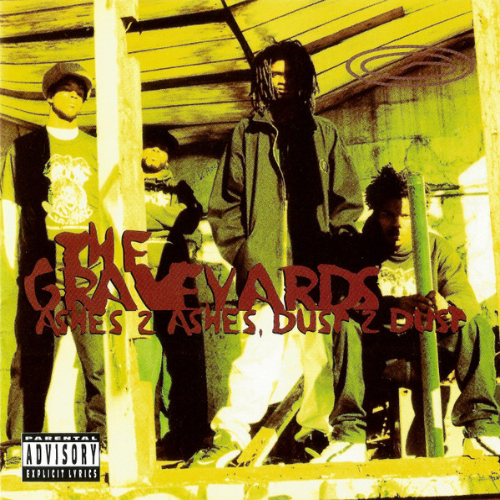
アルバム全体は12曲構成で、「Havoc」「Do Or Die」「Mind Of A Youngsta」など、ストリートの緊張や暴力性を連想させるタイトルが並ぶ。
録音場所については、AllMusicにHollywood Recording, Hollywood, Floridaとの記載がある。地理的にはFort LauderdaleやMiamiから遠くない南フロリダ圏であり、この地域情報は作品のローカル性を考えるうえで興味深い。
1996年という時代は、Atlanta、Memphis、Houston、New Orleans、Miamiなどの南部各都市が、それぞれ異なるヒップホップの語法を形成していた時期である。
まだ後年の「Dirty South」という巨大な括りにすべてが回収される前であり、都市やスタジオ、インディペンデント・レーベル単位の違いが音に濃く残っていた。
「Cunda-Lunda-Haya」にも、洗練されたメジャー作品とは異なる、ローカル録音特有の近さ、荒さ、勢いが刻み込まれている。
第一印象
冒頭から印象を決定づけるのは、何度も繰り返される集団フックである。
「Cunda-Lunda-Haya」と聞こえる音の連鎖が、短いフレーズとして何度もループされ、その合間に別の声が応答する。
ここには、美しいメロディや分かりやすい歌唱はない。
代わりにあるのは、声を打楽器のように使用する感覚だ。
発音の硬い部分がスネアと重なり、母音を伸ばす部分がベースの余韻に絡むことで、フック全体がリズムの一部として成立している。
ビートは比較的シンプルだが、簡素というより、MCの声を前面へ出すために余白を残している印象が強い。
その上で複数のMCが次々に登場し、自分の技量や危険性、クルーの優位性を主張していく。
曲全体から伝わるのは、恐怖というより威圧感と集団的な高揚感である。
サウンド分析
ドラム
実測テンポは約97.5BPM。
基本となるリズムは、硬いキックと乾いたスネアを中心に組まれている。
スネアは2拍目と4拍目を強く意識させる配置で、音の残響は短い。空間を大きく広げるリバーブも控えめで、一発ごとの打撃感を前へ押し出している。
このスネアが曲の骨格である。
音色自体は厚く豪華というより、平たく硬い。しかし、その無骨さがラップの攻撃性とよく合っている。
キックは低く沈み込むというより、中低域に芯を持ち、ベースラインの動きを下から補強する。
現代的なサブベース主体のミックスではなく、キックの輪郭とベースの音程を別々に認識できる、90年代らしい低域設計である。
ハイハットは細かく主張しすぎず、一定の刻みでテンポを維持する役割に徹している。
ビートが過密ではないため、MCが細かな言葉を詰め込んでも、声とドラムが衝突しにくい。
ベース
ベースラインは、この曲のファンク感を支える重要な要素である。
一直線に低音を伸ばすのではなく、短い音を跳ねさせながら反復し、曲に弾力を与えている。
音色には丸みがあるが、柔らかすぎない。
低域だけでなく中低域にも成分があり、小さなスピーカーでも動きが認識できるタイプのベースである。
ベースはコード進行を大きく展開させるというより、同じグルーヴを維持し続ける。
そのため楽曲はドラマティックに変化するのではなく、一定の緊張感を保ちながら、MCの交代によって景色を変えていく。
特にフックでは、反復される声とベースの短いフレーズが一体化し、催眠的な循環を作り出している。
シンセ・メロディ
上物の中心には、短く切られたホーンまたはシンセ・ブラスに近い音色がある。
明るいファンク・ホーンではなく、やや歪みを含んだ鋭いアクセントとして配置されている。
この音が一定間隔で差し込まれることで、ビートに警報音のような緊張が生まれる。
さらに背景では、ワウをかけたギター、あるいはワウ・シンセに近い揺れる音が聞こえる。
曲の後半、とりわけラップが途切れるアウトロ付近では、このワウ系のフレーズがより明確になる。
メロディは豊富ではないが、逆にそれが効果的だ。
音程の展開を抑え、短いフレーズだけを反復することで、ラップの言葉とフックの異様な響きが中心に残る。
ミックス・グルーヴ
ミックスは現代的な基準ではやや中域寄りで、音像も完全に整理されているわけではない。
複数の声、スネア、上物が同じ中域に集まり、部分的には粗く重なる。
しかし、その粗さが欠点だけになっていない。
むしろMCたちが同じ狭い空間へ集まり、マイクを奪い合っているような臨場感を生んでいる。
ボーカルは全体的に前へ出ており、ベースやキックよりも言葉の輪郭が優先されている。
フックでは複数の声を重ね、ヴァースでは一人の声へ切り替えるため、音量差が小さくても構成上の変化が分かりやすい。
グルーヴはレイドバック一辺倒ではない。
ビート自体には粘りがある一方、ラップは前のめりに言葉を押し込む。そのため、演奏は後ろへ引き、声は前へ進もうとする。この引っ張り合いが曲の緊張感を生んでいる。
ラップ/ボーカル分析
「Cunda-Lunda-Haya」では、少なくとも複数の異なる声質を持つMCが確認できる。
全員が同じスタイルで押し通すのではなく、声の低さ、言葉の密度、アクセントの位置を変えることで、一本のビートに複数の表情を与えている。
第1ヴァース
最初のMCは、低めで太い声を持ち、比較的安定したリズムで言葉を運ぶ。
フロウは完全に拍へ揃えるのではなく、文末を少し後ろへ引きながら次の小節へつなげる。
内容は、自分たちのクルー、地元での行動、金、武器、敵対者への攻撃、MCとしての優位性が中心である。
「自分のことは自分で処理する」「偽物や弱者を相手にしない」「仲間とともに乗り込む」といった独立心と集団意識が同時に示される。
興味深いのは、ストリートの暴力性だけでなく、ラップ業界全体を競争相手として見ている点だ。
他のMCだけでなく、カントリーやR&Bまで引き合いに出し、自分たちが幅広い音楽の領域を制圧するかのように誇張している。
これは事実を語るというより、ヒップホップ特有の誇示表現である。
第2ヴァース
次のMCは声がやや高く、語尾を跳ね上げるような発音が特徴的である。
第1ヴァースよりもコミカルで誇張された言い回しが多く、暴力的な比喩と性的な自慢を連続させる。
フロウは音節を細かく刻み、韻を小節の終わりだけでなく途中にも配置する。
1993年を示唆するラインや、自分たちの名前を強調する表現も聞かれるが、固有名詞や略称には判別しにくい部分があるため、正確な人物名までは断定できない。
このヴァースの魅力は、内容の深さより、声のキャラクターと勢いにある。
言葉を投げつけるように発音し、パンチラインのたびに少し間を作ることで、自信と挑発を強調している。
第3ヴァース以降
後半では再び声質が変わり、低く落ち着いたMCと、より甲高く鼻にかかった声のMCが交互に登場する。
一人は「南部のハーブ」「自分たちのスタイル」「他のグループを圧倒する技量」といった地域性を強調する。
もう一人は、自分の姿を消して再び現すという比喩を用いながら、他のMCには真似できない存在であると主張する。
この部分では、言葉遊びがやや強まり、単純な脅しだけではなく、ラッパーとしての技術そのものがテーマになっていく。
各MCのヴァースは長すぎず、フックを挟みながら次の声へ移る。
この回転の速さが、ポッセ・カットとしての楽しさを作っている。
歌詞・テーマ
クルーとしての結束
最も大きなテーマは、The Graveyardsあるいは曲中で示されるクルーの結束である。
歌詞では一人称単数の“I”と、複数形の“We”が頻繁に入れ替わる。
一人ひとりが自分の能力を誇示しながら、最終的には仲間全体の強さへ話を戻す。
つまり、個人のスター性を見せる曲でありながら、グループの名刺としても機能している。
ラップ・バトルとしての攻撃性
暴力に関する表現は多いが、そのすべてを現実の事件描写として受け取る必要はない。
多くは、相手のMCを打ち負かすことを、銃撃、爆発、病気、処刑などに置き換えたバトル・ラップ的な誇張である。
特に後半では、自分の韻が相手を破壊する、自分たちのスタイルからは逃げられない、他のMCには同じことができないといった表現が中心になる。
ストリートの現実とマイク上の競争が混ざり合い、どこまでが具体的な生活描写で、どこからがラップ上の演出なのか、意図的に曖昧にされている。
南部の地域意識
歌詞には“Southern”という言葉が登場し、自分たちの音楽や嗜好を南部の文化と結びつけている。
ただし、後年の南部ラップに見られる地域アンセムのように、都市名やランドマークを細かく描写するタイプではない。
地域性は場所の説明よりも、発音、声の粘り、ファンク感、クルー中心の価値観に表れている。
“Cunda-Lunda-Haya”の意味
このフレーズについては、音源を聴いても明確な辞書的意味は確認できない。
発音自体も、表記どおりの“Cunda-Lunda-Haya”に完全一致しているとは限らず、“Thunder Lunda”あるいは別の単語を崩した音にも聞こえる箇所がある。
しかし、フックの役割は明白だ。
これは文章として情報を伝えるための言葉ではなく、曲の共同体を作るための合言葉である。
ライブで観客が反復できる単純さがあり、意味を知らなくても音だけで参加できる。
ヒップホップにおけるフックは、必ずしも物語を説明する必要はない。
この曲では、不可解な音そのものがグループの印となり、楽曲を一度で記憶させる装置になっている。
サンプリング&トラックメイキング
現時点では、本作に使用された具体的なサンプリング元を裏付ける信頼できる資料は確認できない。
音源からは、ワウ・ギター風の音、短いブラス・ヒット、ベース・フレーズ、フックのボーカル・ループが確認できる。
ただし、それらが既存曲から切り出されたサンプルなのか、スタジオで演奏または打ち込まれたものなのかは断定できない。
中盤には、男性が「彼らが好かれる理由は、踊れる音楽を持っているからだ」といった趣旨を話す短いスポークンワードが挿入される。
この声は別音源から採られた可能性があるが、出典は不明である。
トラックメイキングの中心的な発想は、展開の多さではなく反復の強さにある。
ドラム、ベース、ブラス、ワウ系の上物は基本的に同じパターンを保ち、フックとMCの交代だけで曲を進める。
その結果、ビートは背景へ退かず、同じ圧力を約3分46秒にわたって持続する。
複雑なアレンジではないが、ポッセ・カットとしては合理的である。
MCの個性を順番に見せるには、ビートが頻繁に変わらないほうが比較しやすい。
「Cunda-Lunda-Haya」は、その原則を徹底した作品といえる。
トリビア
- 「Cunda-Lunda-Haya」は、The Graveyardsの1996年作『Ashes 2 Ashes, Dust 2 Dust』に収録された11曲目。
- アルバムはShantell Recordsからリリースされた。
- Discogsでは1996年のCD版とカセット版が記録されている。
- The Good Ol’DayzではMiami, FloridaのGangsta作品として分類されている。
- AllMusicでは1996年9月17日発売、録音場所をHollywood Recording, Hollywood, Floridaとしている。ジャンル分類には不自然な箇所もあるため、発売日とスタジオ情報以外は慎重に扱う必要がある。
- 音源の長さは約3分46秒。
- 実測テンポは約97.5BPM。
- 曲の最後ではラップが消え、ベース、ドラム、ワウ系の上物を残した短いインストゥルメンタル・アウトロになる。
- フックの言葉は公式歌詞が確認できないため、正確な綴りや文意は不明。
- ファイル名ではFort Lauderdaleと表記されているが、既存データベースではMiami表記もあるため、South Florida作品として整理するのが安全である。
制作メモ
確定情報
- アーティスト:The Graveyards
- 曲名:Cunda-Lunda-Haya
- 収録作品:『Ashes 2 Ashes, Dust 2 Dust』
- リリース年:1996年
- レーベル:Shantell Records
- アルバム内の曲順:11曲目
- 音源の長さ:約3分46秒
- 実測テンポ:約97.5BPM
- 地域:South Florida圏
- 複数のMCが参加するポッセ・カット形式
聴感ベースの分析
- ワウ・ギターまたはワウ・シンセに近い音を使用
- 短いシンセ・ブラス/ホーン系のアクセントを使用
- フックは意味よりも音と掛け声を重視
- 少なくとも複数の異なる声質を持つMCが登場
- ベースはファンク由来の跳ねを持つ反復型
- ミックスは中域寄りで、ボーカルの勢いを優先
- 中盤のスポークンワードは外部音源のサンプルである可能性がある
- 楽曲の主題は、クルーの結束、自己誇示、敵対者への威嚇、ラップ技術の優位性
総評
「Cunda-Lunda-Haya」は、洗練されたメロディや壮大な物語で聴かせる曲ではない。
この曲の中心にあるのは、反復、声、リズム、集団の勢いである。
約97.5BPMのファンク・ビートは、単体では比較的簡素だ。しかし、硬いスネア、跳ねるベース、ワウ系の上物、短いブラス・ヒットを組み合わせることで、MCが自由に動ける頑丈な土台を作っている。
その上を複数のMCが交代しながら走り、低い声、高い声、詰め込むフロウ、間を生かすフロウを次々に提示する。
そしてヴァースの合間には、意味の定まらない“Cunda-Lunda-Haya”というフレーズが戻ってくる。
普通なら、意味の分からない言葉は曲の理解を妨げる。
しかし本作では、その分からなさ自体が魅力になっている。
フックは説明を拒み、The Graveyardsだけが共有する暗号や儀式のように響く。
その不可解さが、無名性の高いグループの存在感を逆に強めている。
音質や構成にはインディペンデント作品らしい粗さがある。
だが、その粗さの中には、1996年のSouth Floridaで、複数の若いMCが同じマイクとビートを囲み、自分たちのスタイルを刻みつけようとした瞬間がそのまま残されている。
「Cunda-Lunda-Haya」は、後年のDirty Southの完成形ではない。
むしろ、まだ南部ラップが地域ごとの異質な姿を保っていた時代の、奇妙で力強い断片である。
エディターズノート
The Graveyardsという名前や『Ashes 2 Ashes, Dust 2 Dust』というアルバム名から、最初はもっと暗く、遅く、ホラー色の強い曲を想像するかもしれない。
しかし「Cunda-Lunda-Haya」は、そうした予想とは少し異なる。
確かに音には不穏さがあるが、曲を動かしているのは恐怖ではなく、ファンクと競争心だ。
特に印象に残るのは、フックの不可解な響きである。
何を意味しているのか分からない。それでも一度聴くと、リズムとともに頭に残る。
ヒップホップでは、言葉は物語や主張を伝える道具であると同時に、音そのものにもなれる。
「Cunda-Lunda-Haya」は、その原始的な魅力を強く感じさせる一曲だ。
資料が少なく、メンバーや制作陣の詳細もほとんど分からない。
それでも、音源には時代と地域の空気が残っている。
情報の少なさを欠点として見るのではなく、忘れられたSouth Florida Rapを掘り起こす入口として聴くと、本作はさらに興味深く響くだろう。
今回ご紹介の楽曲の購入はこちらからどうぞ

The Graveyards – Cunda-Lunda-Haya | Raw South Florida Funk, Crew Chemistry, and a Hypnotic Chant
The Graveyards’ “Cunda-Lunda-Haya” is built from heavy, dry drums, a sticky funk bassline, aggressive mic-passing between multiple MCs, and a chant-like hook that lingers in the ear more for its sound than for any obvious literal meaning.
The measured tempo is approximately 97.5 BPM. It is not exceptionally fast, but the forceful snare hits and densely packed rapping create a sense of momentum that feels considerably more urgent than the number itself suggests.
The title phrase, “Cunda-Lunda-Haya,” does not appear to be a recognizable expression in standard English. In the actual hook, sounds resembling “Cunda,” “Lunda,” and “Haya” are repeated again and again. Rather than functioning as a clearly intelligible sentence, the phrase works more like a crew signal, provocation, chant, or even a rhythmic instrument.
That is why the appeal of the track does not depend on understanding the title in a dictionary sense. Its real power comes from hearing language detach itself from literal meaning and become pure sound, locking directly into the beat.
Artist Introduction
The Graveyards were a local rap group believed to have been active around South Florida during the mid-1990s.
Their most identifiable release is the 1996 album Ashes 2 Ashes, Dust 2 Dust, issued through Shantell Records. “Cunda-Lunda-Haya” appears as the album’s eleventh track. Some databases classify the record as Miami Gangsta Rap, although it is probably more accurate to place the group within the broader South Florida area extending from Miami to Fort Lauderdale.
The name “The Graveyards” and the album title Ashes 2 Ashes, Dust 2 Dust establish a consistent vocabulary of cemeteries, ashes, earth, and death.
However, “Cunda-Lunda-Haya” itself is not especially gloomy or introspective horror rap.
Instead, it plays like a rough posse cut centered on lyrical ability, street toughness, intimidation of rivals, and loyalty among local crew members.
Background
Ashes 2 Ashes, Dust 2 Dust was released in 1996 through Shantell Records, with records indicating circulation on both CD and cassette.
The album contains 12 tracks, with titles such as “Havoc,” “Do Or Die,” and “Mind Of A Youngsta,” all of which suggest street tension, danger, and violence.
AllMusic lists Hollywood Recording in Hollywood, Florida as the recording location. Geographically, Hollywood sits within the same South Florida corridor as Fort Lauderdale and Miami, making that studio information particularly relevant when considering the record’s strong local identity.
1996 was a period when Southern cities such as Atlanta, Memphis, Houston, New Orleans, and Miami were each developing their own distinct hip-hop languages.
This was before much of Southern rap became broadly grouped under the later “Dirty South” umbrella. Differences between cities, studios, independent labels, and local scenes were still clearly audible.
“Cunda-Lunda-Haya” captures that environment. Rather than the polished finish of a major-label production, it preserves the immediacy, roughness, and momentum of a regional independent recording.
First Impression
The first thing that defines the track is its repeatedly shouted group hook.
A chain of sounds resembling “Cunda-Lunda-Haya” loops as a short phrase, while additional voices answer in between.
There is no beautiful melody or conventionally accessible singing.
Instead, the human voice is treated almost like percussion.
Hard consonants collide with the snare, while stretched vowels overlap with the decay of the bass, allowing the entire hook to function as part of the rhythm section.
The beat itself is relatively simple, but it does not feel underproduced. Rather, it seems deliberately spacious so that the MCs can remain at the center of the mix.
One rapper after another then steps forward, asserting lyrical skill, dangerousness, and the superiority of the crew.
What dominates the song is not so much fear as intimidation and collective excitement.
Sound Analysis
Drums
The measured tempo is approximately 97.5 BPM.
The rhythm is built primarily around a hard kick and a dry snare.
The snare strongly emphasizes the second and fourth beats, with very little lingering resonance. Reverb is restrained, keeping each strike short, direct, and physical.
That snare forms the backbone of the track.
Its tone is not especially lush or massive. It is comparatively flat and hard. Yet that bluntness works perfectly with the aggression of the performances.
The kick does not sink into an enormous sub-bass register. Instead, it carries a firm presence in the low-mid range, reinforcing the movement of the bassline from underneath.
This is very different from a modern sub-heavy mix. The kick’s attack and the bassline’s actual pitch can still be heard as separate elements, which is characteristic of many 1990s productions.
The hi-hats remain understated. Rather than constantly demanding attention, they maintain a steady pulse and support the tempo.
Because the beat is not overcrowded, the MCs can pack substantial amounts of language into each bar without constantly colliding with the drums.
Bass
The bassline is one of the key elements responsible for the track’s funk character.
Rather than simply sustaining low notes, it uses short, bouncing notes in repetition, giving the groove elasticity.
Its tone is rounded but not overly soft.
There is enough low-mid information for the bass movement to remain audible even through smaller speakers.
Instead of expanding through elaborate chord changes, the bassline maintains essentially the same groove.
As a result, the track does not develop through dramatic harmonic shifts. It maintains a consistent level of tension and changes scenery primarily through the rotation of different MCs.
During the hook in particular, the repeated voices and short bass phrases merge into a hypnotic cycle.
Synths and Melody
One of the main upper-register elements resembles a short horn stab or synthetic brass hit.
It is not the kind of bright, celebratory horn associated with polished funk. Instead, it sounds slightly distorted and sharp, functioning more as an accent.
Its periodic appearance gives the beat an almost alarm-like tension.
In the background, there also appears to be a wah-treated guitar or a wavering wah-style synthesizer sound.
This element becomes clearer later in the track, especially around the outro after the rapping begins to disappear.
There is very little conventional melodic development, but that restraint is effective.
By limiting the tonal material to a handful of repeated phrases, the production leaves the lyrics and the strange sound of the hook at the center of attention.
Mix and Groove
By modern standards, the mix is somewhat midrange-heavy, and the soundstage is not completely separated.
Multiple voices, the snare, and instrumental accents occupy similar frequencies and occasionally overlap in a rough manner.
Yet that roughness does not function purely as a weakness.
Instead, it creates the impression that several MCs are crowded into the same small room, competing for control of the microphone.
The vocals generally sit forward in the mix, with lyrical articulation prioritized over the weight of the kick and bass.
The hook uses stacked voices, while the verses shift back toward individual vocalists. Because of this contrast, structural changes remain easy to follow even without major volume differences.
The groove is not simply laid-back.
The instrumental itself has a dragging, sticky quality, while the rappers often push their words forward aggressively.
The beat pulls backward while the voices attempt to move ahead.
That tension between the two creates much of the song’s urgency.
Rap / Vocal Analysis
“Cunda-Lunda-Haya” features multiple MCs with clearly different vocal characteristics.
Rather than maintaining one unified performance style, the rappers vary in vocal depth, lyrical density, and accent placement, giving the same beat several distinct personalities.
First Verse
The first MC has a relatively low, thick voice and delivers his lines with a comparatively stable rhythmic foundation.
His flow does not sit perfectly square on every beat. Instead, he occasionally drags the ends of phrases slightly behind the rhythm before carrying them into the next bar.
The subject matter revolves around the crew, local activity, money, weapons, aggression toward rivals, and superiority as an MC.
There is a simultaneous emphasis on individual independence and group loyalty: taking care of your own problems, refusing to deal with weak or fake people, and moving alongside the crew.
One particularly interesting feature is the way the rapper frames the entire music industry as competition.
Not only other rappers, but even country and R&B are referenced as though The Graveyards intend to dominate every musical field.
This should be understood less as a literal claim and more as classic hip-hop braggadocio.
Second Verse
The next MC has a somewhat higher voice, with a delivery that often lifts at the ends of phrases.
Compared with the first verse, his performance includes more exaggerated humor, combining violent metaphors with sexual boasting.
His flow divides syllables into smaller rhythmic units, with rhymes appearing not only at the ends of bars but internally as well.
There are lines that seem to reference 1993 and expressions emphasizing individual or crew names. Some proper nouns and abbreviations are difficult to distinguish clearly, however, so identifying specific people with certainty would be unreliable.
The appeal of this verse lies less in deep subject matter than in vocal character and sheer momentum.
Words are almost thrown toward the listener, while brief pauses after punchlines reinforce the MC’s confidence and provocation.
Third Verse and Beyond
Later in the track, the voices change again, alternating between a lower, calmer MC and another rapper with a more nasal, higher-pitched tone.
One emphasizes Southern identity through references to Southern herb, their particular style, and their ability to overpower rival groups.
Another uses metaphors of disappearing and returning, presenting himself as a figure other MCs cannot imitate.
Wordplay becomes somewhat more prominent during this section.
The focus gradually expands beyond simple threats and toward the idea of lyrical technique itself.
None of the verses lasts excessively long, and the track repeatedly returns to the hook before shifting to another voice.
That rapid rotation is central to its enjoyment as a posse cut.
Lyrics and Themes
Crew Unity
The largest theme is the unity of The Graveyards, or of the crew represented within the song.
The lyrics frequently switch between the singular “I” and the collective “we.”
Each rapper demonstrates his own abilities, but the argument eventually returns to the strength of the group as a whole.
The track therefore functions simultaneously as a showcase for individual personalities and as a calling card for the crew.
Aggression as Rap Battle Language
There is a considerable amount of violent imagery, but it should not automatically be interpreted as documentation of literal events.
Much of it works as battle-rap exaggeration, transforming the act of defeating rival MCs into images of gunfire, explosions, disease, or execution.
This becomes particularly evident in the later verses, where the rappers emphasize that their rhymes can destroy opponents, that rivals cannot escape their style, and that other MCs are incapable of doing what they do.
Street reality and microphone competition are deliberately blended together, leaving the boundary between lived experience and performance intentionally unclear.
Southern Regional Identity
The word “Southern” appears in the lyrics, linking the group’s musical identity and preferences to Southern culture.
However, this is not a regional anthem in the later Southern rap tradition, where city names, neighborhoods, landmarks, and local geography are described in detail.
Here, regional identity comes through less in explicit geographical storytelling and more through pronunciation, vocal elasticity, funk influence, and a crew-centered worldview.
The Meaning of “Cunda-Lunda-Haya”
No clear dictionary meaning for the phrase can be established from the recording.
Even the pronunciation does not always seem to correspond perfectly to the spelling “Cunda-Lunda-Haya.” At certain moments it may resemble something closer to “Thunder Lunda,” or possibly another distorted phrase.
The function of the hook, however, is clear.
It is not language designed primarily to communicate information as a sentence.
It is a password for the song’s community.
It is simple enough to be repeated by a crowd at a live show, allowing listeners to participate even without knowing what the words literally mean.
A hip-hop hook does not necessarily need to explain the narrative.
Here, the mysterious sound itself becomes the group’s signature and makes the track immediately memorable.
Sampling & Track Production
At present, there does not appear to be a reliable source identifying a specific sample used in the song.
The recording contains what sounds like wah guitar, short brass hits, a repeating bass phrase, and the looped vocal hook.
However, it is impossible to determine from listening alone whether these elements were sampled from existing recordings or played/programmed specifically for the track.
Around the middle of the song, a brief spoken-word segment features a male voice saying something to the effect that the reason “they” are liked is because they have music people can dance to.
That voice may have been taken from an outside recording, but its source remains unidentified.
The fundamental production philosophy is based less on constant development than on the power of repetition.
The drums, bass, brass, and wah-style elements largely maintain the same patterns, with the song progressing through changes in the hook and the rotating MC performances.
As a result, the beat maintains essentially the same pressure across its roughly 3-minute-and-46-second running time.
The arrangement is not especially complex, but it is extremely logical for a posse cut.
If the goal is to compare and showcase several different MC personalities, frequent beat switches could actually become a distraction.
“Cunda-Lunda-Haya” commits fully to the opposite approach.
Trivia
“Cunda-Lunda-Haya” appears as track 11 on The Graveyards’ 1996 album Ashes 2 Ashes, Dust 2 Dust.
The album was released through Shantell Records.
Discogs documents both CD and cassette editions from 1996.
The Good Ol’Dayz categorizes the record as Gangsta Rap from Miami, Florida.
AllMusic lists a release date of September 17, 1996, and identifies Hollywood Recording in Hollywood, Florida as the recording location. Some of its genre classifications appear questionable, so information beyond the date and studio location should be treated cautiously.
The track runs approximately 3 minutes and 46 seconds.
The measured tempo is approximately 97.5 BPM.
At the end of the song, the rapping drops out and a short instrumental outro remains, featuring bass, drums, and the wah-style upper layer.
Because no official lyrics have been confirmed, the exact spelling and literal meaning of the hook remain uncertain.
The audio filename identifies Fort Lauderdale, while existing databases sometimes identify Miami. For that reason, describing the release more broadly as a South Florida record is the safest approach.
Production Notes
Confirmed Information
Artist: The Graveyards
Track: “Cunda-Lunda-Haya”
Album: Ashes 2 Ashes, Dust 2 Dust
Release Year: 1996
Label: Shantell Records
Album Track Number: 11
Track Length: Approximately 3:46
Measured Tempo: Approximately 97.5 BPM
Region: South Florida
Format: Posse-cut structure featuring multiple MCs
Listening-Based Analysis
Wah guitar or a wah-style synthesizer appears to be used.
Short synth-brass or horn-like accents are present.
The hook emphasizes sound and chanting more than literal meaning.
Multiple MCs with clearly different vocal characteristics can be heard.
The bassline uses a repetitive funk-derived bounce.
The mix is midrange-heavy and prioritizes vocal energy.
The spoken-word passage in the middle may originate from an outside sample.
The principal lyrical themes are crew unity, self-aggrandizement, intimidation of rivals, and lyrical superiority.
Overall Assessment
“Cunda-Lunda-Haya” is not a track built around polished melodies or a grand narrative.
Its real foundation is repetition, voice, rhythm, and collective energy.
At approximately 97.5 BPM, the funk-based instrumental is relatively simple when isolated. Yet the combination of hard snare hits, bouncing bass, wah-style textures, and short brass stabs creates a durable platform over which the MCs can move freely.
Several rappers then rotate across that foundation, presenting low voices, higher voices, densely packed flows, and more spacious deliveries in rapid succession.
Between the verses, the undefined phrase “Cunda-Lunda-Haya” repeatedly returns.
Normally, words that cannot be understood might interfere with a listener’s comprehension of a song.
Here, the opposite happens.
The uncertainty itself becomes part of the attraction.
The hook refuses explanation, sounding like a code or ritual shared only by The Graveyards.
That obscurity actually strengthens the presence of a group about whom relatively little information survives.
The recording quality and arrangement contain the roughness associated with independent production.
Yet inside that roughness is something valuable: a preserved moment in 1996 South Florida, when several young MCs gathered around the same microphone and beat, attempting to leave their own style permanently embedded in the recording.
“Cunda-Lunda-Haya” is not the fully developed form of what would later be recognized as Dirty South rap.
Instead, it is a strange and forceful fragment from an era when Southern rap still retained sharply distinct local identities.
Editor’s Note
The name The Graveyards and the album title Ashes 2 Ashes, Dust 2 Dust might initially suggest something darker, slower, and much more heavily influenced by horror rap.
“Cunda-Lunda-Haya,” however, moves in a somewhat different direction.
There is certainly something uneasy in the sound, but fear is not what drives the record.
Funk and competition do.
The most memorable element is the strange sound of the hook.
Its meaning is unclear.
Yet after hearing it once, the phrase remains in the mind alongside the rhythm.
In hip-hop, language can function as a vehicle for storytelling and argument, but it can also become pure sound.
“Cunda-Lunda-Haya” is a strong reminder of that more primal quality.
Very little information survives about the group, its members, or the people responsible for the production.
Even so, the recording preserves the atmosphere of its time and region.
Rather than treating that lack of documentation only as a disadvantage, the track becomes more interesting when heard as an entry point into a largely forgotten corner of South Florida rap.
コメント