1990年代のギャングスタラップにおいて、富や成功を誇示する楽曲は決して珍しくない。
高級車、宝飾品、持ち家、現金、海外旅行、クラブのVIP席――そうした成功の象徴を並べながら、貧困から抜け出した自分と、そこに取り残された者との差を強調する。Solo Locの「Assets」も、題材だけを見れば、その伝統に連なる一曲である。
しかし、本曲には威圧的な重苦しさがほとんどない。
約4分42秒にわたって流れるのは、弾むベース、乾いたドラム、反復される女性ボーカル、そして力まず言葉を転がすSolo Locのラップだ。ストリートでの成功を語りながらも、サウンドは意外なほど軽快で、ユーモアすら感じさせる。
タイトルの「Assets」は、直訳すれば「資産」。
だが、ここでの資産とは銀行口座や不動産だけではない。自分の会社、車、時計、社会的信用、仲間、経験、ストリートを生き抜く知恵まで含めた、Solo Loc自身の価値そのものを意味している。
「Assets」は単なる金持ち自慢ではない。
貧困と違法な稼ぎを経験した人物が、自らの商売と財産を持つ立場へ移行したことを、コミカルで踊れるファンクに変換した、ワッツ産ローカルGラップの異色作である。
アーティスト紹介
Solo Locは、カリフォルニア州ロサンゼルスのワッツを拠点としたギャングスタラップ・グループ、Watts Town Criminalsのメンバーとして知られるラッパーである。
Watts Town CriminalsはSolo Loc、Big D、Lee O.G.によって構成され、ロサンゼルス南部ワッツのJordan Downs Housing Projectsを背景に活動していたと記録されている。グループは1991年にEP『Watts Is The Town』を発表しており、Solo Locは1990年代初頭からワッツのローカルラップ・シーンに関わっていた人物と考えられる。
Solo Loc名義のEP『A$$ets』は1998年にWatts World Entertainmentからリリースされた。
Discogsに登録されているCD版は全4曲構成で、「Assets」「We Moving」「Baby Can I Cum」「Criminals In The House」を収録。「Criminals In The House」にはWatts Town Criminalsが参加しており、Solo Locのソロ作品でありながら、グループ活動との連続性を保った作品だったことが分かる。
作品背景
「Assets」は、EP『A$$ets』の表題曲であり、作品の冒頭を飾るナンバーである。
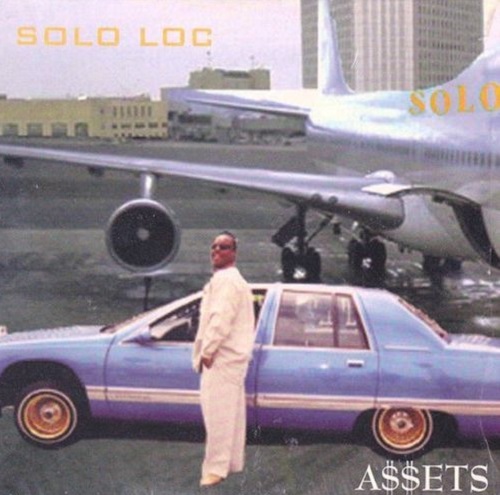
リリース年は1998年。DiscogsではジャンルをHip Hop、スタイルをGangstaおよびG-Funkとして登録している。収録時間は約4分42秒とされており、今回の音源も約4分42秒で、ほぼ同じ長さだった。
1998年という時期は、西海岸のG-Funkが最盛期を過ぎ、ロサンゼルスのラップがより細分化していた頃でもある。
大手レーベル作品では、より洗練されたシンセサウンドやR&B色の強い楽曲が増えていた。一方、ローカル作品では、簡素なドラムマシン、サンプル感の強いボーカル、低予算ながら個性的なミックスを持つ楽曲が数多く作られていた。
「Assets」は、その後者に位置する作品である。
華麗なG-Funkリードや重厚なストリングスを備えた曲ではない。むしろ限られた音を何度も反復し、ラッパーのキャラクターと歌詞によって曲を成立させている。
その素朴な作りが、本曲を単なる時代遅れのG-Funkではなく、ワッツのローカル文化を直接封じ込めた作品として印象づけている。
第一印象
最初に耳を引くのは、女性ボーカルによる軽快なフレーズだ。
「Come on, get down」「Everybody get down」と聞こえる声が、曲の冒頭から繰り返される。ファンクやダンスミュージックに通じる明るい呼びかけであり、犯罪や貧困を背景に持つギャングスタラップとしては、意外なほど親しみやすい。
その上にSolo Locの低く乾いた声が入る。
ラップには過剰な迫力も、怒鳴るような攻撃性もない。むしろ誰かに自分の暮らしを説明しているような、話し言葉に近いフロウである。
トラックもラップも、一聴すると非常に単純だ。
しかし、女性声、ベース、スネア、Solo Locの声が一定の位置を保ちながら反復されることで、徐々に中毒性が生まれてくる。
派手な展開で引っ張る曲ではない。
同じ景色を繰り返し眺めるうちに、その場所の空気や温度が身体に染み込んでくるような楽曲である。
サウンド分析
ドラム
音源解析ではテンポは約97〜98BPM。
ミッドテンポながら、実際の体感は数字よりも軽い。これはキックを重く引き延ばさず、スネアを短く乾いた音で処理しているためだ。
キックは低域を大きく揺らすタイプではない。
一発ごとの重量より、ベースラインや声の隙間を埋める役割が強い。現代的なヒップホップのようにサブベースと融合するのではなく、比較的中低域寄りの硬い打点として置かれている。
スネアは乾燥しており、やや機械的。
残響が短く、曲の中で明確な区切りを作る。そのためラップが自由に揺れても、グルーヴの中心が崩れない。
ハイハットや細かなパーカッションは控えめである。
高速に刻むことで推進力を作るのではなく、キックとスネアの間に必要最低限の動きを加える程度。ビート自体は非常に簡素だが、その簡素さがSolo Locの言葉を聞き取りやすくしている。
特に印象的なのは、ドラムが「攻撃」を目的としていない点だ。
強く殴りつけるよりも、踊らせるための拍を淡々と刻む。ギャングスタラップでありながら、クラブや屋外パーティーにも自然に馴染むリズムである。
ベース
ベースは本曲のグルーヴを支える中心的な要素である。
極端な低音ではなく、輪郭の見える弾力性のある音色。短いフレーズを反復しながら、ドラムの隙間を縫うように動く。
音数そのものは多くない。
しかし、単純にルート音を伸ばすのではなく、わずかに上下することでファンク的な躍動感を作っている。
ベースの動きはSolo Locのラップとも相性が良い。
彼のフロウは拍の上を細かく駆け回るものではなく、フレーズの最後を少し引き延ばしたり、言葉を後ろへずらしたりする。ベースが一定の位置で弾むため、ラップが多少ルーズでも曲全体は崩れない。
低域の量感は現代の基準では控えめだが、これがかえってローカル作品らしい質感につながっている。
車内で巨大なサブウーファーを鳴らすための低音というより、家庭用スピーカーやラジカセでもリズムが伝わるような中低域中心の設計である。
シンセ/メロディ
この曲には、典型的なG-Funkを象徴する甲高いシンセリードがほとんど登場しない。
旋律を担当しているのは、薄い鍵盤系の音、短いファンク的なアクセント、そして何より女性ボーカルの反復である。
「Come on, get down」「Everybody get down」と聞こえる女性声は、通常のコーラスというより、楽器に近い使われ方をしている。
フルコーラスを歌うわけではなく、短いフレーズを何度も繰り返す。それによって楽曲に明るさと運動性を加え、Solo Locの低い声とのコントラストを作っている。
低い男性声だけで構成すれば、曲はもっと重く単調になっていただろう。
そこへ明るく軽い女性声を置くことで、内容の物質主義やストリート性が過度に深刻にならない。金や成功を語る曲でありながら、聴き手に説教をしているようには聞こえない理由の一つである。
旋律的な変化は少ない。
しかし、本曲ではその変化の少なさが欠点ではなく、タイトルの反復や資産の列挙を強調する装置になっている。
ミックス/グルーヴ
ミックスは現代的な意味で分離が良いわけではない。
ドラム、ベース、ボーカル、女性声が比較的狭い帯域に集まり、全体が平面的にまとまっている。奥行きや広大なステレオ感より、すべての音が前方に並んでいるような質感だ。
Solo Locの声は大きく前へ飛び出してはいない。
ビートの中へ半分溶け込んでおり、女性ボーカルやアドリブが頻繁に重なる。この一体感が、スタジオで丁寧に磨き上げた作品というより、仲間が集まった部屋で作られたローカル録音の生々しさを感じさせる。
グルーヴの根本にあるのは反復である。
大きなブレイクや転調、劇的な展開はない。ヴァースとフックの差も、トラックそのものの変化より、タイトルの反復と声の重なりによって示される。
それでも約4分43秒が長く感じにくい。
女性声が常に小さな運動を作り、Solo Locが次々と具体的な物や状況を並べるため、聴き手の注意が完全には途切れない。
単調なのではなく、一定のリズムの中で情報量を積み上げていくタイプの曲である。
ラップ/ボーカル分析
Solo Locのラップは、技術を誇示するスタイルではない。
韻を高速で畳みかけたり、声色を大きく変えたりすることはなく、低めの声で淡々と言葉を置いていく。
最大の特徴は、会話的なフロウである。
各ラインをきれいに同じ長さへ揃えるのではなく、短い文と長い文を混ぜながら進む。拍の中央へ正確に言葉を置くより、少し後ろへもたれながら自然に話す。
そのため、ラップというよりも「成功した現在の生活を横で説明している人物」の独白に近く聞こえる。
韻の使い方は分かりやすい。
「checks/sex/Lexus/neck/Rolex」「debt/depressed/blessed」など、短い単語を連続させながら比較を作る。複雑な多重韻ではないが、単語の響きが明確で、耳に残りやすい。
また、Solo Locは頻繁に対比を使う。
自分は資産を持ち、相手は借金を抱えている。
自分は会社を持ち、相手は最低賃金で雇われている。
自分はリーダーで、相手はフォロワー。
自分は勝者で、相手は不満を抱える従業員。
こうした二項対立を繰り返すことで、難しい比喩を使わなくても、主人公の優位性がはっきり伝わる。
一方で、声には過剰な怒りがない。
相手を罵倒していても、どこか楽しそうで、コミカルな空気が残る。これが本曲を、敵への本格的なディス曲ではなく、自信に満ちた成功談として成立させている。
女性ボーカルは、Solo Locの語りを包む背景役である。
彼の低く無愛想な声に対し、女性声は明るさと親しみやすさを加える。両者の温度差が、曲のキャラクターを決定している。
歌詞・テーマ
「資産」という成功の尺度
歌詞の中心は、タイトルどおり「Assets=資産」である。
Solo Locは現金、銀行口座、小切手、宝石、時計、車、不動産、会社などを列挙し、自分が経済的な成功を手に入れたことを強調する。
しかし、歌詞は単なる商品名の羅列ではない。
彼は常に、それらを「過去の貧困」や「他者の労働」と対比させている。
かつては貧しかった。
ドラッグを売っていた時期もあった。
周囲の人々は消耗し、地元には金が残らなかった。
そこから自分の会社を持ち、正当な小切手を書き、家や車を所有する立場になった。
この変化が、本曲の物語的な軸である。
資産とは派手な装飾品だけではない。
違法な現金をその場で使い切る暮らしから、継続的に価値を生むものを所有する暮らしへ移行した証拠でもある。
雇われる側と所有する側
歌詞では、「自分は会社を持っている」「相手は最低賃金で働いている」という対比が繰り返される。
ここには1990年代のギャングスタラップで重要だった、雇用者ではなく所有者になるという価値観が表れている。
他人の会社で働いて賃金を受け取るのではなく、自分の商売を持つ。
時間を売って金を得るのではなく、資産や信用によって金を動かす。
Solo Locはその違いを、学術的な経済論ではなく、車、時計、住宅、旅行といった具体的な物で説明する。
もちろん、相手を「敗者」として描く表現は誇張されている。
しかし、その誇張の奥には、ワッツのような貧困地域から抜け出すためには、単に一時的な現金を得るだけでは不十分だという認識がある。
その意味で「Assets」は、消費を称賛しながらも、所有と経営を重視する曲でもある。
ストリートからビジネスへの移行
第2ヴァースでは、過去にドラッグを売っていたことが語られる。
しかし、その行為を永遠に続けるべき成功モデルとしては描いていない。
仲間が煙に消え、地元が貧しいまま残ったことを述べたうえで、現在は自分の会社を運営し、正当な小切手を発行していると主張する。
ここは本曲の重要な部分である。
Solo Locはストリートでの経験を否定してはいないが、そこに留まり続けることも肯定していない。
違法な稼ぎから、社会的に認められる資産と事業へ。
短期的な現金から、長期的に残る所有物へ。
その移行こそが、「Assets」という言葉に込められた最も現実的な意味だろう。
成功と警察権力
成功を語る一方で、警察との緊張は消えていない。
高級車で走っていても、警察に止められる可能性がある。免許や保険を持っていても、地域や外見によって監視される。
Solo Locは豊かになったからといって、ストリートとの関係や警察からの視線がなくなったとは考えていない。
むしろ、犯罪者と見なされてきた人物が高級車に乗ることで、さらに警察の注目を集めるという皮肉が描かれる。
資産を持つことは自由の象徴だが、それだけで社会的な偏見から解放されるわけではない。
この現実感が、曲を単純な成功賛歌で終わらせていない。
ユーモアと誇張
本曲にはシリアスな背景がある一方、全体の語り口はかなりユーモラスだ。
レストランで料理を注文する短い会話、保険会社名を挙げる場面、税務当局による監査まで「資産の一部」として処理する結末など、誇張された成功談の中に小さな笑いが配置されている。
特に、税務調査すら自分が資産を持っている証明のように語る終盤は象徴的だ。
金を持てば新たな問題も生まれる。
それでもSolo Locは、その問題まで含めて成功者の生活として楽しんでいる。
トリビア
EP『A$$ets』は1998年にWatts World Entertainmentからリリースされた4曲入り作品で、本曲「Assets」はその1曲目に収録されている。DiscogsではCD、カードボード・スリーブ仕様として登録されている。
4曲目の「Criminals In The House」にはWatts Town Criminalsが参加しており、Solo Locのソロ活動とグループ活動が完全に切り離されていなかったことが確認できる。
Solo Locが所属していたWatts Town Criminalsは、ワッツのJordan Downs Housing Projectsを背景とするグループで、Solo Loc、Big D、Lee O.G.の3名で構成されていたとされる。
制作メモ
確認できる情報
- 音源時間:約4分42秒
- 音源解析上のテンポ:約97〜98BPM
- リリース年:1998年
- 収録作品:EP『A$$ets』
- レーベル:Watts World Entertainment
- EP収録位置:1曲目
- Discogs上の分類:Gangsta/G-Funk
聴感ベースの解釈
トラックは、ドラムマシンを中心にした比較的簡素な制作である。
各楽器を豪華に重ねるより、短いベースフレーズ、乾いたスネア、女性ボーカルの反復を中心に構成している。
女性声はコーラスとして録音された可能性と、既存音源から抽出された可能性の両方が考えられるが、クレジットが確認できないため断定できない。
ミックスは中域が強く、現代的なリマスター作品に比べると音の分離や低域の深さは控えめである。
一方、その平面的で粗い質感が、Solo Locの会話的なラップやユーモアとよく合っている。
洗練しすぎていないからこそ、地元の人物が自分の成功をそのままマイクへ吹き込んだような近さが残っている。
総評
Solo Locの「Assets」は、富と成功を題材にしながら、威圧よりも軽快さを選んだローカル・ギャングスタラップである。
約97〜98BPMの弾むビート、簡素なベース、乾いたスネア、反復される女性ボーカル。
その上でSolo Locは、高級車、時計、家、会社、旅行、現金を次々と並べ、自分が貧困から抜け出したことを語る。
だが、本曲の価値はブランド名や所有物の多さだけにあるのではない。
ドラッグを売る生活から、自分の会社を持つ生活へ。
一時的な現金から、継続して価値を残す資産へ。
雇われる立場から、所有し、決定する立場へ。
「Assets」という言葉には、そうした人生の転換が込められている。
ラップは技巧的ではなく、トラックも複雑ではない。それでもSolo Locの声、女性コーラス、ベースの弾みが強いキャラクターを作り、約4分43秒を独自の空気で満たしている。
大手西海岸作品のような壮大さはない。
しかし、簡素な音作り、地元意識、ユーモア、具体的な生活描写には、ローカルGラップでしか味わえない魅力がある。
エディターズノート
「Assets」を聴いて印象に残るのは、金を語る曲でありながら、必要以上に殺伐としていないことである。
Solo Locは他者との差を強調し、時に露骨な言葉で優位性を示す。それでも、女性ボーカルの明るい反復と、少し力の抜けたフロウによって、曲全体にはどこか人懐っこさがある。
その人懐っこさこそ、本曲の最大の個性かもしれない。
富を得た人物の冷たい自慢話ではなく、昔を知る仲間に向かって「今はこんな暮らしをしている」と楽しそうに報告しているように聞こえる。
また、資産というタイトルから硬いビジネス論を想像すると、その音楽的な軽さに驚かされる。
しかし、真面目な内容を深刻な音で表現しなければならない理由はない。
むしろ、過去の困難を抜け出した喜びを、踊れるリズムとユーモアに変えた点にSolo Locらしさがある。
「Assets」は、派手なG-Funkシンセや巨大な低音がなくても、声とリズムとキャラクターだけで曲を成立させられることを示した作品である。
ワッツという土地の厳しい現実を背景に持ちながら、最後まで明るく、軽く、したたかに進んでいく。
その独特の温度感が、今もこの曲を忘れにくいものにしている。
Solo Loc – “Assets” | A Funky Watts Street-Rap Statement About Wealth, Ownership, and Moving Beyond Survival
In 1990s gangsta rap, songs built around displays of wealth and success were hardly unusual.
Luxury cars, jewelry, home ownership, cash, overseas travel, VIP sections in clubs—artists frequently lined up these symbols of success while emphasizing the distance between themselves and those still trapped in poverty. On the surface, Solo Loc’s “Assets” clearly belongs to that tradition.
What makes the song different, however, is how little menace or heaviness it carries.
Across roughly four minutes and forty-two seconds, the track moves on a bouncing bassline, dry drums, a repeatedly looped female vocal, and Solo Loc’s relaxed delivery. He talks about street-earned success, but the music itself feels surprisingly light on its feet, even humorous.
The title, “Assets,” literally refers to things of value.
Yet here, assets mean more than bank accounts or real estate. They include his business, cars, watches, financial credibility, associates, experience, and even the practical intelligence required to survive the streets. In that sense, the title refers to the total value Solo Loc believes he has accumulated as a person.
“Assets” is therefore more than a simple wealth-boasting record.
It is an unusual piece of local Watts G-rap in which a man who has experienced poverty and illegal hustling describes his transition into business ownership and material stability, turning that story into a playful, danceable slice of funk.
Artist Introduction
Solo Loc is a rapper best known as a member of Watts Town Criminals, a gangsta rap group based in Watts, Los Angeles, California.
Watts Town Criminals has been documented as consisting of Solo Loc, Big D, and Lee O.G., with the group connected to the Jordan Downs Housing Projects in the Watts section of South Los Angeles. The group released the EP Watts Is The Town in 1991, suggesting that Solo Loc had already been involved in the local Watts rap scene since the early 1990s.
Solo Loc’s solo EP A$$ets was released in 1998 through Watts World Entertainment.
The CD edition listed on Discogs contains four tracks: “Assets,” “We Moving,” “Baby Can I Cum,” and “Criminals In The House.” Watts Town Criminals appears on “Criminals In The House,” showing that while A$$ets was a Solo Loc release, it still maintained a clear connection to his group activity.
Background
“Assets” is the title track of the EP A$$ets and serves as the project’s opening number.
The EP was released in 1998. Discogs categorizes it under Hip Hop, with Gangsta and G-Funk listed as styles. The track length is listed at approximately four minutes and forty-two seconds, which closely matches the audio examined here.
By 1998, West Coast G-Funk had already moved beyond its commercial peak, and Los Angeles rap had become increasingly fragmented.
Major-label productions were becoming more polished, often leaning toward smoother synthesizers and stronger R&B elements. Meanwhile, local releases frequently continued to use comparatively simple drum-machine programming, conspicuous vocal loops, and low-budget but highly individualistic mixes.
“Assets” belongs much more clearly to the latter category.
This is not a track dominated by dazzling G-Funk leads or cinematic strings. Instead, it repeatedly cycles through a limited number of sounds, relying heavily on Solo Loc’s personality and lyrics to sustain the record.
That simplicity prevents the track from feeling like merely an outdated imitation of earlier G-Funk. Instead, it gives the music the character of a direct document of local Watts rap culture.
First Impression
The first thing that grabs the ear is the lively female vocal phrase.
A voice that sounds like “Come on, get down” and “Everybody get down” repeats from the beginning of the track. It has the bright, inviting quality of funk and dance music, making the record unexpectedly approachable for gangsta rap rooted in an environment associated with poverty and crime.
Solo Loc’s low, dry voice then enters over the top.
There is little forced aggression in his performance. He does not shout or attempt to overwhelm the listener. Instead, the flow feels conversational, almost as though he were casually explaining his current lifestyle to someone sitting beside him.
Both the beat and the rapping initially seem extremely simple.
Yet as the female vocal, bassline, snare, and Solo Loc’s voice remain locked into roughly the same positions throughout the track, the repetition gradually becomes addictive.
This is not a song driven by dramatic arrangement changes.
It works more like repeatedly looking at the same neighborhood scene until the temperature, atmosphere, and personality of the place begin to sink into you.
Sound Analysis
Drums
Audio analysis places the tempo at approximately 97–98 BPM.
Although this technically puts the song in a mid-tempo range, it feels lighter than the numbers suggest. A major reason is that the kick is not stretched into an enormous low-frequency impact, while the snare is short and dry.
The kick is not designed to shake the deepest part of the frequency spectrum.
Rather than emphasizing weight on every hit, it mainly fills the spaces between the bassline and vocal phrases. Unlike modern hip-hop production, where kick drums frequently blend into massive sub-bass, the kick here sits more in the low-mid range as a relatively hard rhythmic point.
The snare is dry and somewhat mechanical.
Its short decay creates clear divisions within the beat, helping maintain the groove even when Solo Loc’s delivery drifts loosely around the rhythm.
Hi-hats and smaller percussive details remain understated.
The production does not generate momentum through rapid subdivision. Instead, those elements provide only the minimum amount of movement needed between the kick and snare. The beat is extremely economical, but that economy leaves plenty of space for Solo Loc’s words.
Most strikingly, the drums do not seem designed primarily for aggression.
Rather than hitting the listener as hard as possible, they simply mark out a rhythm meant to move bodies. Despite the gangsta rap context, the groove would fit naturally into a club or outdoor neighborhood party.
Bass
The bassline is one of the central elements holding the song together.
It does not rely on extreme sub-bass. Instead, the tone is springy and clearly defined, repeating a short phrase while moving between the spaces left by the drums.
There are relatively few notes.
Yet rather than simply holding a root note, the bass rises and falls just enough to create a funky sense of motion.
That movement works particularly well with Solo Loc’s flow.
His delivery does not rapidly attack every subdivision of the beat. He often stretches the ends of phrases slightly or places words a little behind the beat. Because the bass continues bouncing in a stable position, the track remains grounded even when his delivery becomes loose.
By modern standards, the amount of deep low end is restrained.
That limitation actually contributes to the local character of the recording. Instead of sounding engineered around massive car-audio subwoofers, the bass feels focused enough in the low-mid range to remain audible through home stereos and boom boxes.
Synths / Melody
The track contains very little of the high-pitched synthesizer lead usually associated with classic G-Funk.
Melodic responsibility falls instead to thin keyboard tones, short funk-like accents, and—most importantly—the repeating female vocal.
The phrases that sound like “Come on, get down” and “Everybody get down” function less like a conventional sung chorus and more like instrumental material.
The woman does not perform a long melodic hook. Instead, a short phrase is repeated again and again, adding brightness and motion while creating a contrast with Solo Loc’s lower voice.
Had the track consisted entirely of low male vocals, it would likely feel considerably heavier and more monotonous.
The lighter female voice keeps the materialism and street-centered subject matter from becoming overly serious. It is one reason the song never sounds like Solo Loc is lecturing the listener about money or success.
There is very little melodic development.
In this particular track, however, that lack of development functions less as a weakness than as a structural device. The repetition reinforces both the repeated title and Solo Loc’s ongoing catalog of possessions and accomplishments.
Mix / Groove
The mix is not especially separated by modern standards.
Drums, bass, lead vocal, and female vocal all occupy a relatively compact frequency range, giving the recording a somewhat flat, forward-facing quality. Rather than creating great depth or a wide stereo field, the track feels as though most of its elements have been placed directly in front of the listener.
Solo Loc’s voice is not pushed dramatically above the instrumental.
It sits partially inside the beat, with female vocals and ad-libs frequently overlapping it. That blend contributes to the rawness of a local recording rather than the feeling of an extensively polished studio production.
The foundation of the groove is repetition.
There are no major breakdowns, key changes, or dramatic transitions. The distinction between verse and hook is communicated more through repetition of the title and the layering of voices than through changes in the instrumental itself.
Even so, the roughly four-minute-and-forty-three-second runtime rarely feels excessively long.
The female vocal constantly supplies small rhythmic movement, while Solo Loc keeps introducing new objects, comparisons, and situations. As a result, the listener’s attention is never completely allowed to drift away.
The track is not merely repetitive.
It is built around accumulating information inside an unchanging rhythmic framework.
Rap / Vocal Analysis
Solo Loc’s performance is not based on technical exhibitionism.
He does not fire off rapid rhyme patterns or constantly change his vocal tone. Instead, he delivers his lines steadily in a low register.
The defining feature is the conversational flow.
Rather than shaping every bar into exactly the same length, he mixes short and long sentences. Instead of landing every word precisely in the center of the beat, he often leans slightly behind it and allows the language to feel naturally spoken.
The result can sound less like a traditional rap performance than the monologue of a man casually describing how successful his life has become.
His rhyme patterns are easy to follow.
Sequences such as “checks / sex / Lexus / neck / Rolex” or “debt / depressed / blessed” create comparisons through short, clearly recognizable sounds. They are not elaborate multisyllabic structures, but their simplicity makes them immediately memorable.
Solo Loc also relies heavily on contrast.
He has assets while someone else has debt.
He owns a business while someone else works for minimum wage.
He is a leader while someone else is a follower.
He is a winner while someone else remains an unhappy employee.
By repeating this binary structure, he makes his supposed superiority immediately understandable without requiring complicated metaphors.
At the same time, his voice rarely carries overwhelming anger.
Even when insulting others, he sounds as though he is enjoying himself. A comic quality remains present, preventing the track from turning into a truly hostile diss record.
The female vocal provides the complementary background.
Against Solo Loc’s low, somewhat unemotional tone, the brighter female voice adds warmth and approachability. The difference in emotional temperature between the two is central to the personality of the song.
Lyrics / Themes
“Assets” as a Measure of Success
As the title suggests, the central concept is “assets.”
Solo Loc lists cash, bank accounts, checks, jewelry, watches, cars, real estate, and business ownership as evidence of his financial success.
Yet the lyrics are not merely a catalog of expensive products.
He consistently places those possessions against memories of past poverty and the working lives of others around him.
He was once poor.
He spent time selling drugs.
People around him were consumed by that lifestyle while little money remained in the neighborhood.
Now, he claims to own a business, write legitimate checks, and possess homes and vehicles.
That transformation forms the narrative foundation of the song.
Assets therefore mean more than flashy accessories.
They represent a transition away from a life in which illegal cash is earned and immediately spent toward one based on ownership of things capable of retaining or generating value.
Employee Versus Owner
The lyrics repeatedly contrast business ownership with working for minimum wage.
This reflects an idea that became important in certain strands of 1990s gangsta rap: becoming an owner rather than remaining an employee.
Instead of working for someone else’s company and collecting wages, build your own operation.
Instead of selling your time for money, use ownership, credit, and assets to make money move differently.
Solo Loc does not explain this through academic economic language. He communicates it through cars, watches, houses, vacations, and other concrete images.
Naturally, his depiction of the other person as a “loser” is exaggerated.
Behind the boastfulness, however, sits an understanding that escaping a poor area such as Watts requires more than temporarily obtaining cash.
In that sense, “Assets” celebrates consumption while simultaneously emphasizing ownership and entrepreneurship.
From the Streets to Business
The second verse refers to Solo Loc’s past involvement in selling drugs.
Importantly, he does not portray that activity as the ideal model of success that should continue forever.
After describing people around him disappearing into smoke while the neighborhood remained poor, he contrasts the past with his current claim that he operates his own business and issues legitimate checks.
This is one of the most important sections of the track.
Solo Loc does not completely reject his street experience, but neither does he celebrate remaining permanently trapped within it.
From illegal income to socially recognized property and business.
From short-term cash to ownership that can retain long-term value.
That movement may be the most practical meaning behind the title “Assets.”
Success and Police Power
Even after material success, tension with law enforcement has not disappeared.
A person may be driving an expensive car and still attract police attention. A valid license and insurance do not necessarily remove suspicion associated with neighborhood, appearance, or social background.
Solo Loc does not suggest that becoming wealthy automatically erases his relationship with the streets or the scrutiny of police.
Instead, there is an irony in the idea that a man once viewed as a criminal may attract even more attention after beginning to drive visibly expensive vehicles.
Assets can represent freedom, but they do not automatically eliminate social prejudice.
That element of realism keeps the song from becoming a completely uncomplicated celebration of success.
Humor and Exaggeration
Despite the serious background, much of the song is delivered with considerable humor.
A brief restaurant-ordering exchange, references to insurance companies, and even the idea of an IRS audit being folded into the discussion of “assets” add small comic moments to the exaggerated success narrative.
The ending is especially revealing.
Even the possibility of tax scrutiny becomes another sign that Solo Loc possesses enough wealth to matter.
Money creates new problems.
Yet he seems willing to accept those problems as part of the lifestyle of someone who has finally become financially successful.
Trivia
The EP A$$ets was released in 1998 through Watts World Entertainment. It contains four tracks, with “Assets” appearing as the opening song. Discogs lists the release as a CD issued in a cardboard sleeve.
The fourth track, “Criminals In The House,” features Watts Town Criminals, confirming that Solo Loc’s solo work remained connected to his earlier group activity.
Watts Town Criminals, the group with which Solo Loc was associated, has been described as a Watts-based group connected to the Jordan Downs Housing Projects and consisting of Solo Loc, Big D, and Lee O.G.
Production Notes
Confirmed Information
Track length: approximately 4:42
Audio-analysis tempo: approximately 97–98 BPM
Release year: 1998
Release: A$$ets EP
Label: Watts World Entertainment
Track position: Track 1
Discogs classification: Gangsta / G-Funk
Listening-Based Interpretation
The track appears to be built around relatively simple drum-machine-centered production.
Rather than stacking large numbers of instruments, the arrangement focuses on a short bass phrase, dry snare, and the repeated female vocal.
The female voice may have been recorded specifically as a chorus element or extracted from another source, but without confirmed credits, either interpretation would be speculative.
The mix strongly emphasizes the midrange, while separation between instruments and deep low-frequency extension remain modest compared with contemporary remastered productions.
That somewhat flat and rough texture, however, fits Solo Loc’s conversational delivery and sense of humor extremely well.
Because the production has not been polished excessively, the recording retains the feeling of a local figure simply stepping up to a microphone and talking directly about how his life has changed.
Overall Assessment
Solo Loc’s “Assets” is a local gangsta rap record about wealth and success that chooses bounce and humor over intimidation.
The approximately 97–98 BPM groove, simple bassline, dry snare, and repeated female vocal establish the track’s basic identity.
Over that foundation, Solo Loc runs through luxury cars, watches, houses, business ownership, travel, and cash, presenting them as evidence that he has escaped poverty.
Yet the value of the track lies in more than its brand names and possessions.
From selling drugs to owning a business.
From temporary cash to assets capable of retaining value.
From being employed by others to owning, deciding, and controlling.
The word “Assets” contains that broader transition in life.
The rapping is not technically extravagant, and the instrumental is far from complex. Nevertheless, Solo Loc’s voice, the female vocal, and the bouncing bass create a strong enough character to fill roughly four minutes and forty-three seconds with a distinctive atmosphere.
There is none of the cinematic scale associated with major-label West Coast productions.
What it offers instead is the appeal that local G-rap often captures best: economical production, a strong sense of place, humor, and very specific descriptions of everyday life.
Editor’s Note
What remains most memorable about “Assets” is that, despite being a song about money, it never becomes excessively grim.
Solo Loc constantly emphasizes the distance between himself and others, sometimes using deliberately harsh language to assert his superiority. Yet the cheerful repetition of the female vocal and his slightly relaxed flow give the entire track an unexpectedly personable quality.
That friendliness may be the song’s greatest distinguishing feature.
It does not feel like the cold boasting of a wealthy man trying to intimidate everyone around him. It sounds more like someone happily reporting back to people who remember his earlier life: this is how I’m living now.
The title “Assets” might lead the listener to expect a rigid lesson in business or money.
Musically, however, the song is remarkably light.
There is no reason serious subject matter has to be expressed through serious-sounding music.
In fact, Solo Loc’s ability to transform the experience of escaping hardship into rhythm, humor, and something genuinely danceable is a major part of the track’s charm.
“Assets” demonstrates that a record does not need towering G-Funk synths or enormous low end to establish a memorable identity.
Voice, rhythm, repetition, and character are enough.
Against the difficult reality associated with Watts, the track keeps moving with brightness, humor, and resilience until the very end.
That unusual emotional temperature is precisely what continues to make “Assets” memorable.
コメント