車を走らせることを題材にした西海岸ラップは数多い。
しかし、New Breed Of Hu$tlasの「Whoo Ryde?」が鳴らす“ライド”は、青空の下を悠々と流す爽快なクルージングとは少し違う。
低く沈むベース、乾いたドラム、暗い色調を持ったシンセ、そして複数のラッパーが交互に前へ出るマイクリレー。
そこにあるのは、ドライブそのものの快楽だけではなく、「誰と動くのか」「誰がこちら側なのか」というクルー意識まで含んだ、よりストリート寄りのライド感覚である。
今回の音源は約4分07秒。解析上は約172BPM付近を検出するものの、実際のグルーヴはその半分となる約86BPM前後で捉えるのが自然だ。
ゆったりしている。しかし軽くはない。
むしろ、この遅さだからこそ一音一音の重量が増し、Riverside/Inland Empire産ギャングスタラップ特有の、乾いているのにどこか薄暗い空気が浮かび上がってくる。
「Whoo Ryde?」は、G-Funkの華やかな表層よりも、その下にあるストリート・ファンクの重量感を楽しむ一曲である。
アーティスト紹介
New Breed Of Hu$tlasは、カリフォルニア州Riversideを拠点としたギャングスタラップ・グループ。
資料上ではBaby Fresh、Cas-Loc、G. Bubs、Silkらを中心としたグループとして紹介され、1993年に『Ratha B-A Hustla』、続いて『Streetz Got Me Gone』を発表している。『Streetz Got Me Gone』はMobstyle Recordsからリリースされ、1994年作品として扱う資料が確認できる。
彼らの重要なポイントは、Compton、Long Beach、South Centralといった西海岸ヒップホップの代表的な地名ではなく、Riverside/Inland Empireを背景としていることだ。
同じ南カリフォルニアでも、地域が変われば音楽の質感も変わる。
New Breed Of Hu$tlasには、メジャーG-Funkに見られる派手な艶や洗練とは異なり、インディペンデント作品らしい粗さ、低域の重さ、ローカル・クルーならではの閉鎖的な緊張感がある。
「Whoo Ryde?」は、その個性が非常にわかりやすく表れた一曲だ。
作品背景
「Whoo Ryde?」はアルバム『Streetz Got Me Gone』の4曲目に収録されている。
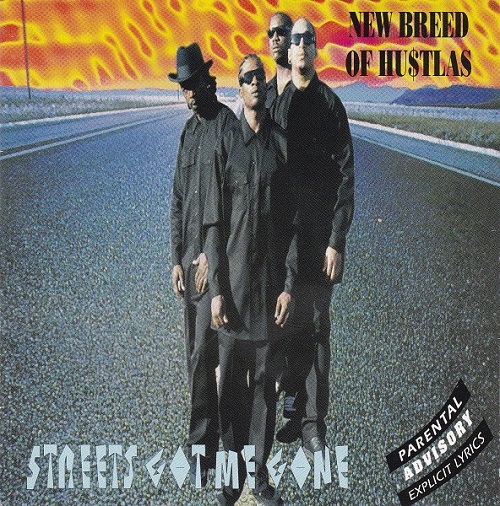
収録時間は4分07秒。クレジット資料ではBaby Fresh、Cas-Loc、G. Bubsが参加し、プロデュースはRoland & Goldfingersと記載されている。
アルバム序盤は、
Intro
City Of Thugstas
No Luv
Whoo Ryde?
G A Day
という順番で進む。
つまり「Whoo Ryde?」は、アルバムの世界観を提示するイントロ部分を抜け、New Breed Of Hu$tlasというグループのストリート性が本格的に定着してくる位置に置かれている。
タイトルの“Ryde”という綴りも象徴的だ。
単なる移動手段としての“ride”ではなく、西海岸ラップにおいては車、仲間、地区、行動、忠誠心といった意味が複雑に結びつく言葉として機能する。
そのため「Whoo Ryde?」という問いは、
「誰が乗る?」
だけではなく、
「誰が俺たちと一緒に動く?」
というニュアンスまで含んでいるように聞こえる。
第一印象
最初に強く残るのは、派手さではなく重心の低さである。
一般的なG-Funkのイメージにつきまとう、高く伸びるシンセリードや、甘く広がるコード、爽快なサマー・クルージング感は前面に出てこない。
代わりに中心となるのは、
重く丸い低音
硬めのスネア
乾いたリズム
暗めのシンセ
複数の男性ラップ
である。
楽曲全体が低い位置に張り付いている。
車でたとえるなら、海沿いを流すコンバーチブルではなく、夕方から夜へ向かう市街地を低速で流しているような感覚に近い。
音数自体は多くない。
にもかかわらず空間が薄く感じないのは、ベースと中低域の上物が常に曲の底を埋めているからだ。
余白はある。
しかし、その余白は開放感ではなく、警戒心を生む。
ここが非常に面白い。
サウンド分析
ドラム
ドラムは曲全体の雰囲気を決定している重要な要素だ。
テンポ感は約86BPM前後。
キックは必要以上に派手ではないが、低域の芯が太く、一発ごとにしっかりと地面を押す。
スネアは比較的硬質。
明るく抜けるタイプではなく、短く乾いたアタックでリズムを区切っている。
その結果、グルーヴには弾むような軽快さより、
ズシッ、ズシッ
と一定速度で前進していく重量感が生まれている。
ハイハットも細かく動きすぎない。
現代ヒップホップのように16分や32分でリズムを埋め尽くすのではなく、ビートの間に十分な空間を残す。
だからこそラップの子音、ベースの余韻、シンセの残響がよく見える。
この空白の使い方が90年代前半〜中盤の西海岸ラップらしい。
ベース
「Whoo Ryde?」の最大の魅力のひとつがベースだ。
ベースラインは派手なフレーズを連発するタイプではない。
むしろ短い動きを繰り返しながら、トラックの下部に太い帯を作っている。
音色は丸いが軽くない。
中低域よりさらに下へ沈み込むような質感を持ち、キックと組み合わさることでトラック全体の重量を支えている。
特に重要なのは、ベースが単なる低音補強ではなく、曲の“歩き方”そのものを決めていることだ。
ラップが多少前後しても、ベースは一定速度で淡々と進む。
そのため聴き手には、
車が一定速度で街を流れている
ような身体感覚が残る。
これがタイトルの“Ryde”と非常に強く結びついている。
シンセ・メロディ
上物はG-Funk的ではあるものの、典型的な「ピーヒャラ系」の高音シンセを主役にした構成ではない。
むしろ低〜中域に置かれたシンセや電子音が、曲全体を暗く染めている。
メロディそのものは複雑ではない。
短いモチーフを反復し、ラップの邪魔をしない。
しかし、この単純さが効果的だ。
何度も同じフレーズが回ることで、催眠的な感覚が生まれる。
景色は大きく変わらない。
同じ道路、同じ街灯、同じブロックを繰り返し通過しているような感覚。
メロディで物語を展開するのではなく、
一定の環境を作り、その中でラッパーを動かす
という発想に近い。
Roland & Goldfingersによる制作クレジットが確認できるが、特定のサンプリング元については今回確認できる信頼性の高い資料が見つからなかったため、元ネタの断定は避けたい。
ミックス・グルーヴ
ミックスは現代的な意味でクリアではない。
むしろ中域の密度が高く、ラップ、スネア、上物が比較的近い位置に集まっている。
しかし、この少し詰まった質感が曲にはよく合っている。
音を広大なステレオ空間へ展開するより、
狭い車内から鳴っているような一体感
が強い。
低域はしっかり出ているが、現代のサブベースのように極端に深く広げるのではなく、ベースラインそのものの存在感で重さを作っている。
音圧も常に一定に近い。
大きなブレイクや劇的な展開は少なく、約4分07秒の間、同じムードを維持する。
これは欠点ではない。
むしろ「Whoo Ryde?」の場合、変化しないことがグルーヴになっている。
車で街を流す感覚に近く、目的地へ急ぐのではなく、その時間そのものを味わわせるトラックだ。
ラップ/ボーカル分析
クレジット上、「Whoo Ryde?」にはBaby Fresh、Cas-Loc、G. Bubsが参加している。
この複数MC構成が非常に重要だ。
一人のラッパーが楽曲を支配するのではなく、声が入れ替わることで曲にクルー感が生まれる。
低めで太い声。
少し鼻にかかった声。
語尾を強く落とすフロウ。
比較的前のめりなフレーズ。
それぞれの声色には差があるが、全員がビートに対して必要以上に急がない。
基本的にはビートの後方へ少し体重を預けるようなラップだ。
この“後ろにもたれる”感覚が、西海岸特有のレイドバック感につながっている。
ただし、リラックスしているからといって柔らかいわけではない。
声には常に緊張感が残っている。
だから、
レイドバックしているのに威圧感がある。
ここが「Whoo Ryde?」のラップの面白さだ。
フック部分も歌唱的な美しさを狙うのではなく、タイトルを印象づける反復によって集団性を強めている。
聴き手に問いかけるというより、仲間同士で確認し合う掛け声に近い。
歌詞・テーマ
歌詞の中心には、タイトル通り“ride”という概念がある。
ただし、この曲で描かれるライドは単なるドライブではない。
音源全体から読み取れるのは、
誰と行動するのか
誰が仲間なのか
どの場所を動くのか
どのような態度で街に出るのか
といったストリート上の連帯感だ。
車は移動手段であると同時に、自分たちの存在を街へ示す装置にもなる。
90年代の西海岸ラップでは、
車
地区
仲間
音楽
服装
武器
評判
といった要素が互いに独立せず、ひとつのライフスタイルとして結びついている。
「Whoo Ryde?」もその文脈上にある。
タイトルを繰り返すことで、
「お前は誰と走る?」
という問いが曲全体を貫いているように感じられる。
そこには楽しさもある。
だが同時に、誰を信用するかという緊張もある。
この二重性が、単純なクルージング・ソングとは異なるところだ。
トリビア
『Streetz Got Me Gone』は全14曲構成で、「Whoo Ryde?」は4曲目。
資料では1994年のMobstyle Records作品として整理され、2022年には再発盤も流通している。再発盤では「B.G. Thang (Cool Down Remix)」を追加収録した仕様も確認できる。
また、アルバム制作スタッフとしては、ミックス/エンジニアにSteve Warwick、マスタリングにBig Bass Brian、エグゼクティブ・プロデューサーにG. BubsとO.G. Freshなどのクレジットが確認できる。
「Whoo Ryde?」単体では、
Producer:Roland & Goldfingers
Featuring / Written By:Baby Fresh、Cas-Loc、G. Bubs
というクレジットが掲載されている。
制作メモ
今回の音源を解析すると、長さは約247.5秒=約4分07.5秒。
これは既存資料に記録された4分07秒という収録時間ともほぼ一致する。
テンポ検出では約172BPM付近が得られたが、これはビートを倍テンポで検出した数値と考えるのが自然で、実際の身体的なグルーヴは約86BPM前後。
この速度感が、「Whoo Ryde?」の重さを決定している。
また音響的には、極端に高域へ寄せず、中低域を中心に構成されている。
そのためイヤホンよりも、低音をしっかり再生できるスピーカーや車内環境で聴いたとき、トラックの魅力がより明確になるタイプだろう。
特にベースとキックの組み合わせは、単純な“低音の強さ”ではなく、前へ進む速度そのものを作っている。
ここが制作面で最も印象的だった。
総評
「Whoo Ryde?」は、一聴して巨大なフックを持つタイプのG-Funkではない。
派手なシンセソロもない。
大きな展開も少ない。
しかし、聴けば聴くほど、
ベース
ドラム
複数MC
反復する上物
がひとつの塊になり、独特のライド感を作っていることがわかる。
何より魅力的なのは、Riverside産という地域性がサウンドから感じられることだ。
同じ南カリフォルニアでも、Long Beachの滑らかさとも、Comptonの攻撃性とも少し違う。
もっとローカルで、もっと閉鎖的で、もっと地下に近い。
その薄暗いストリート感が、約86BPMのビートと非常によく合っている。
「Whoo Ryde?」はG-Funkという言葉から想像する華やかなサウンドより、
G-Funkとギャングスタラップが本来持っていた“ストリートを走るためのファンク”
に近い一曲である。
エディターズノート
New Breed Of Hu$tlasを聴く面白さは、90年代West Coast Rapを「L.A.中心の物語」から少し外側へ広げられるところにある。
Riverside。
Inland Empire。
Mobstyle Records。
Roland & Goldfingers。
「Whoo Ryde?」を掘っていくと、90年代西海岸ラップにはメジャー作品だけでは見えてこない別の地図が浮かび上がってくる。
そしてこの曲は、その入口として非常に優秀だ。
低いベースに身を預け、3人の声が入れ替わっていくのを聴いていると、音楽が単なる録音物ではなく、その土地、その車、その仲間、その時間帯まで含めた生活の一部として存在していたことがよくわかる。
派手ではない。
しかし、こういう曲こそ90年代ローカルG-Rapを掘る楽しさを教えてくれる。
「Whoo Ryde?」は、そんな一曲だ。
今回ご紹介の楽曲の購入はこちらから
New Breed Of Hustlas – Streetz Got Me Gone
New Breed Of Hu$tlas – Whoo Ryde? | Dark, Heavy Riverside Street Funk Built for the Ride
However, the kind of “ride” heard in New Breed Of Hu$tlas’ “Whoo Ryde?” is a little different from the carefree image of cruising beneath clear blue skies.
A low-slung bassline, dry drums, dark-toned synths, and a mic relay in which multiple rappers take turns stepping to the front.
What emerges is not simply the pleasure of driving. It is a more street-oriented sense of riding—one tied to crew identity, loyalty, and questions of who moves with whom and who truly belongs on your side.
The audio analyzed here runs approximately 4 minutes and 7 seconds. Tempo detection places it around 172 BPM, but the groove is much more naturally felt in half-time at roughly 86 BPM.
It is laid-back, but never lightweight.
In fact, that slower pace gives every individual sound more weight, bringing out the dry yet faintly ominous atmosphere associated with Riverside and Inland Empire gangsta rap.
“Whoo Ryde?” is a track that draws its power less from the glossy surface of G-Funk than from the heavy street-funk foundation underneath it.
Artist Introduction
New Breed Of Hu$tlas were a gangsta rap group based in Riverside, California.
Available sources identify Baby Fresh, Cas-Loc, G. Bubs, and Silk among the group’s central members. They released Ratha B-A Hustla in 1993, followed by Streetz Got Me Gone. The latter was released through Mobstyle Records and is listed by available sources as a 1994 release.
One of the most important things about New Breed Of Hu$tlas is their geography.
Rather than coming from the familiar West Coast hip-hop centers of Compton, Long Beach, or South Central Los Angeles, the group represented Riverside and the Inland Empire.
Even within Southern California, a change in location can produce a noticeable change in musical character.
New Breed Of Hu$tlas lack some of the glossy polish and flamboyant sheen associated with more commercially visible G-Funk. Instead, their music carries the roughness of independent production, a strong emphasis on the low end, and the enclosed, almost insular tension of a local crew operating within its own environment.
“Whoo Ryde?” captures those qualities particularly well.
Background
“Whoo Ryde?” appears as the fourth track on Streetz Got Me Gone.
The track runs approximately 4:07. Available credits list Baby Fresh, Cas-Loc, and G. Bubs on the song, with production credited to Roland & Goldfingers.
The opening sequence of the album runs:
- Intro
- City Of Thugstas
- No Luv
- Whoo Ryde?
- G A Day
In other words, “Whoo Ryde?” arrives just after the album has finished establishing its initial atmosphere, at a point where the street identity of New Breed Of Hu$tlas begins to settle firmly into place.
The spelling of the title—“Ryde” rather than “Ride”—is itself significant.
Within West Coast rap, “ride” can carry meanings extending far beyond transportation. Cars, crew affiliation, neighborhoods, action, movement, and loyalty can all become interconnected through the concept.
Because of that, the question “Whoo Ryde?” can be heard as meaning more than simply:
“Who’s riding?”
It also carries the implication:
“Who’s rolling with us?”
That distinction is central to the character of the song.
First Impression
The first thing that stands out is not flashiness, but how low the track’s center of gravity feels.
The soaring synth leads, sweet expansive chords, and sunny cruising atmosphere commonly associated with stereotypical G-Funk are not pushed to the foreground.
Instead, the track is built around:
- heavy, rounded low end
- relatively hard snares
- dry rhythmic textures
- dark synth tones
- multiple male rap voices
The entire record seems to sit close to the ground.
If translated into a driving image, this is less like cruising along the coast in a convertible and more like moving slowly through city streets as late afternoon turns into night.
There are not actually that many sounds competing for attention.
Yet the track never feels empty because the bass and lower-midrange instrumentation continuously fill its foundation.
There is space in the beat.
But that space does not create openness.
It creates tension.
And that is one of the track’s most compelling characteristics.
Sound Analysis
Drums
The drums are one of the most important elements in establishing the song’s atmosphere.
The groove feels approximately 86 BPM.
The kick is not excessively flashy, but it has a thick low-frequency core, with each hit seeming to press firmly into the ground.
The snare is relatively hard and dry.
Rather than cutting through with a bright, explosive character, it uses a short attack to divide the rhythm into clearly defined sections.
As a result, the groove does not bounce forward with lightness.
Instead, it moves with a steady, heavy:
thump… thump…
There is also restraint in the hi-hat programming.
Rather than filling every available space with rapid sixteenth- or thirty-second-note patterns, as is common in much contemporary hip-hop, the beat leaves considerable room between its rhythmic elements.
That space allows the consonants of the rappers’ voices, the decay of the bass, and the lingering synth textures to remain clearly perceptible.
This use of negative space is very characteristic of early-to-mid-1990s West Coast rap production.
Bass
The bass is one of the strongest features of “Whoo Ryde?”
It is not the type of bassline designed around constant melodic movement or technical flourishes.
Instead, short patterns repeat while creating a thick band of sound underneath the entire track.
The tone is rounded, but not soft.
It seems to sink beneath the lower mids, combining with the kick to support the physical weight of the production.
More importantly, the bass is doing more than simply reinforcing the low frequencies.
It determines the way the song walks.
The rappers may move slightly ahead of or behind the beat, but the bass continues forward at a steady pace.
That leaves the listener with an almost physical sensation of:
a car moving through the city at a constant speed.
This connects directly to the “Ryde” concept in the title.
Synths & Melody
The instrumentation contains G-Funk characteristics, but it does not rely on the stereotypical high-pitched whistling synth lead as its main attraction.
Instead, synths and electronic textures positioned primarily in the low and midrange give the entire track its darker coloration.
The melodic material itself is relatively simple.
Short motifs repeat without interfering with the rappers.
Yet that simplicity is precisely what makes the production effective.
As the same phrases cycle again and again, the track develops an almost hypnotic quality.
The scenery never changes dramatically.
It feels like passing the same roads, streetlights, and blocks over and over again.
Rather than using melody to tell a constantly developing story, the production takes a different approach:
create a fixed environment, then allow the rappers to move inside it.
Production credits for Roland & Goldfingers can be confirmed. However, no sufficiently reliable source identifying a specific sample could be verified, so it would be inappropriate to claim a particular sample source.
Mix & Groove
The mix is not “clean” by contemporary standards.
The midrange is relatively dense, with the rappers, snare, and instrumental elements occupying fairly close positions in the sonic field.
Yet that slightly compressed, crowded quality works extremely well for the track.
Rather than spreading every element across a huge stereo image, the production creates the sensation that everything is coming from:
inside the same enclosed car interior.
The low end is strong, but it does not depend on the extremely deep sub-bass extension common in modern hip-hop.
Instead, the weight comes from the physical presence of the bassline itself.
The overall intensity also remains relatively consistent.
There are few dramatic breaks or major structural transformations. For roughly four minutes and seven seconds, the track maintains essentially the same atmosphere.
That is not a weakness.
In “Whoo Ryde?”, the lack of dramatic change becomes part of the groove itself.
It resembles cruising through the city without rushing toward a destination—the point is to experience the ride itself.
Rap / Vocal Analysis
According to the available credits, “Whoo Ryde?” features Baby Fresh, Cas-Loc, and G. Bubs.
This multi-MC structure is crucial to the track.
Rather than allowing a single rapper to dominate the entire performance, the changing voices reinforce the sense that this is a crew record.
There are lower, heavier voices.
Slightly nasal tones.
Flows that drop hard at the ends of bars.
Others that lean a little further forward rhythmically.
Although their vocal characters differ, none of the rappers seems interested in unnecessarily rushing the beat.
For the most part, they place their weight slightly behind the rhythm.
That “leaning back” creates the relaxed rhythmic character associated with West Coast rap.
But relaxed does not mean soft.
There is still tension in the voices.
That creates one of the most interesting contradictions in “Whoo Ryde?”:
it sounds laid-back while still feeling intimidating.
The hook similarly avoids conventional melodic beauty.
Instead, repetition of the title strengthens the collective identity of the performance.
It feels less like a question directed toward an anonymous listener and more like a call exchanged among members of the crew.
Lyrics & Themes
At the center of the lyrics is the concept suggested directly by the title: the ride.
But the ride portrayed here is not simply a drive.
What emerges from the track is a broader sense of street solidarity involving questions such as:
Who do you move with?
Who belongs to your crew?
What territory are you moving through?
What attitude do you carry when you enter the streets?
The car therefore functions as both transportation and a means of projecting identity into the surrounding city.
In 1990s West Coast rap, elements such as cars, neighborhoods, crews, music, clothing, weapons, and reputation often existed not as isolated symbols, but as interconnected parts of a broader lifestyle.
“Whoo Ryde?” belongs within that context.
Through the repetition of its title, the song seems to return constantly to one underlying question:
“Who are you riding with?”
There is pleasure in that idea.
But there is also tension—the question of who can actually be trusted.
That duality separates “Whoo Ryde?” from a straightforward cruising anthem.
Trivia
Streetz Got Me Gone contains 14 tracks, with “Whoo Ryde?” appearing at number four.
Available discographical information identifies it as a 1994 Mobstyle Records release. A reissue also circulated in 2022, with versions including “B.G. Thang (Cool Down Remix)” as an additional track.
Album production credits also list Steve Warwick for mixing/engineering, Big Bass Brian for mastering, and G. Bubs and O.G. Fresh among the executive producers.
For “Whoo Ryde?” specifically, the available credits include:
Producer: Roland & Goldfingers
Featuring / Written By: Baby Fresh, Cas-Loc, G. Bubs
Production Notes
Analysis of the audio used for this review gives a running time of approximately 247.5 seconds, or around 4:07.5.
This closely matches the 4:07 duration documented in existing discographical sources.
Tempo analysis detects a pulse around 172 BPM, but this is most naturally interpreted as a double-time reading. In physical and rhythmic terms, the groove is better understood at approximately 86 BPM.
That tempo is fundamental to the weight of “Whoo Ryde?”
Sonically, the track also avoids excessive emphasis on the upper frequencies, concentrating much of its energy in the low and lower-midrange.
For that reason, this is the kind of track whose character becomes especially clear through speakers capable of reproducing the bass properly—or, appropriately enough, inside a car.
The interaction between bass and kick is particularly important.
It does more than make the record sound “heavy.”
It establishes the actual sensation of forward movement.
That may be the most impressive aspect of the production.
Overall Assessment
“Whoo Ryde?” is not the kind of G-Funk track built around an immediately enormous hook.
There is no spectacular synth solo.
There are relatively few dramatic transitions.
But repeated listening reveals how the:
bass, drums, multiple MCs, and looping instrumentation
gradually merge into a single unit, creating a distinctive sensation of riding through the streets.
Most importantly, the track carries a sense of regional identity.
Even within Southern California, this does not quite sound like the smoothness associated with Long Beach, nor does it simply reproduce the aggression associated with Compton.
It feels more local.
More enclosed.
Closer to the underground.
That dimly lit street atmosphere fits perfectly with the approximately 86 BPM groove.
Rather than representing the glossy sound many listeners immediately imagine when they hear the term G-Funk, “Whoo Ryde?” feels closer to:
the street-driving funk that originally existed at the intersection of G-Funk and gangsta rap.
Editor’s Note
One of the most rewarding things about listening to New Breed Of Hu$tlas is how their music expands the story of 1990s West Coast rap beyond an L.A.-centered narrative.
Riverside.
The Inland Empire.
Mobstyle Records.
Roland & Goldfingers.
Digging into “Whoo Ryde?” reveals another map of 1990s West Coast rap—one that is difficult to see if attention is limited only to major-label releases and famous cities.
And this track is an excellent entry point into that world.
As the low bass rolls underneath and three voices rotate across the beat, the music begins to feel like more than a recording. It reflects a particular place, a particular car, a particular crew, and even a particular time of day.
It is not flashy.
But tracks like this are exactly what make digging through obscure 1990s local G-Rap so rewarding.
“Whoo Ryde?” is one of those records.

コメント