低く沈むピアノと、地面を強く踏みつけるようなドラム。
その無骨なビートの上でLil Robは、自分の名前を表す数字「1218」を何度も叩き込んでいく。
テンポは約96BPM。
メロウな歌声や滑らかなシンセを前面に出すのではなく、重いリズム、短く切られた声ネタ、攻撃的なラップだけで押し切るハードなチカーノ・ラップだ。
ここで語られるのは、新しい自分への変化ではない。
周囲から何を言われても、自分のスタイルを失わず、再び最前線へ戻ってきた男の宣言である。
「1218」は単なる数字ではない。
Lil Robという存在そのものを、音と数字に刻み込んだセルフ・アンセムだ。
アーティスト紹介
Lil Robは、カリフォルニア州サンディエゴを拠点に活動してきたチカーノ・ラッパー。
本名に由来する「L.R.」を、アルファベットの順番に置き換えた「12=L」「18=R」から、Ese 1218という別名でも知られている。公式YouTube Musicのプロフィールでも、Lil Robの別名として「Ese 1218」が記載されている。
ソウルやオールディーズの影響を受けたメロウな曲から、ストリート色の強いハードな楽曲まで幅広く手がけているが、「1218」では後者の側面が強く表れている。
穏やかに夜を流すLil Robではなく、マイクを握り、自分の名前と実力を改めて証明するLil Robが前面に出た一曲だ。
作品背景
「1218」は、Lil Robが2004年に発表したアルバム『Neighborhood Music』に収録されている。
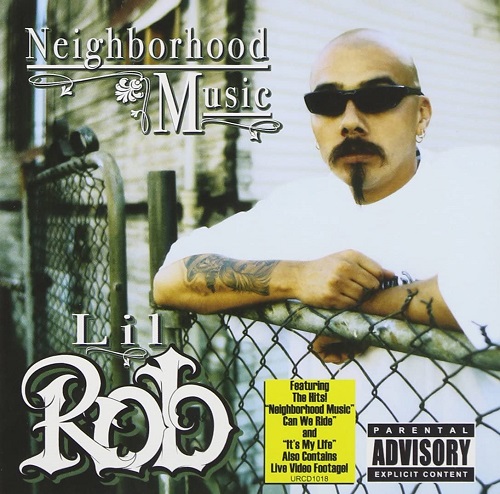
同作は2004年2月17日にUpstairs Recordsから発売され、「1218」も正式な収録曲として確認できる。
タイトルの「1218」は、
- 12番目のアルファベット=L
- 18番目のアルファベット=R
を組み合わせたもの。
つまり、L.R.=Lil Robを数字に変換した名称である。
曲中でも「L.R. the Great」「one-two-one-eight」と繰り返し、自分の名前、ラップ、キャリアをひとつの数字へ結びつけている。
後に『Twelve Eighteen, Pt. 1』や『1218 Part II』というアルバム名にも使われており、「1218」はLil Robのキャリアを象徴する重要なコードへ発展していった。『1218 Part II』は2008年10月21日に発売されている。
第一印象
イントロから感じるのは、華やかさよりも威圧感だ。
低いピアノが一定の間隔で打ち込まれ、その隙間を太いキックと乾いたスネアが埋めていく。
背景には細く高い電子音が漂っているが、旋律を美しく聴かせるためのものではない。冷たさと緊張感を加えるための音として配置されている。
冒頭で反復される、
“Looking hella mean in my twelve eighteen”
という声ネタも、通常の歌唱フックとは異なる。
意味を細かく伝えるというより、「1218」という数字を聴き手の頭へ刻み込むための標語として機能している。
曲全体に余白はあるが、決して軽くはない。
一音ごとの圧力が強く、Lil Robのラップが始まった瞬間、トラック全体が前へ押し出される。
サウンド分析
ドラム
ドラムはシンプルだが非常に力強い。
キックは低域を長く伸ばすタイプではなく、短く硬いアタックでビートの芯を作っている。重さはあるが濁りすぎず、Lil Robの声が埋もれないよう整理されている。
スネアも乾いており、鋭い音で一定の位置を打ち続ける。
細かなゴーストノートや複雑なフィルを多用せず、基本のリズムを崩さないことで、軍隊の行進のような統制された感覚を生み出している。
テンポは約96BPM。
数字だけを見ると中速だが、Lil Robが細かく言葉を詰め込むため、実際にはさらに速く、攻撃的に感じられる。
ドラム自体が派手に動くのではなく、Lil Robのフロウがビートの速度感を作っている。
ベース
低域はピアノとキックを支えるように配置されている。
滑らかなファンク・ベースや、長くうねるG-Funk系のベースラインではない。
短い低音がビートの節目を補強し、曲全体を下から押さえ込んでいる。
そのため、音数が少ないにもかかわらずトラックが薄く感じられない。
ベースはメロディを牽引する役割よりも、ピアノ、キック、Lil Robの低い声を一体化させる土台として機能している。
低域を過度に膨らませないミックスも特徴的で、車内向けの重さを保ちながら、ラップの輪郭を優先した作りになっている。
シンセ・メロディ
主旋律を担うのは、低い音域で反復されるピアノだ。
コードを豊かに展開するのではなく、短く区切られた暗いフレーズを何度も繰り返す。
この反復が、曲に逃げ場のない緊張感を与えている。
高音域には細いシンセ音や電子的な装飾音が入り、低いピアノとの対比を作る。
ただし、明るさや浮遊感を加える音ではない。
夜の路上で警告音が鳴っているような、不穏さを強めるための高音として聞こえる。
メロディの変化は最小限で、コード進行によって感情を展開するタイプではない。
同じ景色を繰り返し見せることで、その上に乗るLil Robの言葉とフロウの変化を際立たせている。
ミックス・グルーヴ
ミックスは中央に集約されている。
キック、スネア、ピアノ、声が中心に置かれ、左右へ大きく広がる音は少ない。
この狭さが閉塞感を生み、Lil Robが目の前でラップしているような近さにつながっている。
ボーカルは非常に前へ出ており、ピアノやドラムよりも一段高い位置に置かれている。
バックグラウンドの声やアドリブは左右や後方へ配置され、メイン・ボーカルの存在感を補強する。
グルーヴはファンクの軽快さではなく、首を前後に振らせる直線的なノリ。
一定のビートを維持しながら、Lil Robが言葉の切れ目やアクセントを変えることで抑揚を作っている。
ラップ/ボーカル分析
Lil Robのラップは、低く鼻にかかった独特の声を生かした攻撃的なスタイル。
普段のメロウな楽曲で見せる穏やかな語り口とは異なり、声を強く押し出し、一語一語をビートへ打ち付けている。
冒頭では、
“There ain’t no stopping, I’m dropping the bomb shit”
と宣言し、活動をやめるつもりも、勢いを失ったつもりもないことを示す。
フロウは完全に一定ではない。
短い言葉を連続させる部分と、語尾を少し伸ばして余韻を残す部分を切り替え、単調なトラックの上に細かな変化を作っている。
特に韻の運びが印象的だ。
“lost it / cost it”
“like it or not / like it a lot / how could you not”
“quiet / giant / violent”
といった近い響きの言葉を連続させ、意味だけでなく発音そのものでも勢いを作っている。
また、声を荒らしすぎず、比較的明瞭に発音している点も重要だ。
感情的に叫ぶのではなく、技術と余裕を保ったまま相手を圧倒する。
その冷静さが、曲の威圧感をさらに強めている。
歌詞・テーマ
歌詞の中心にあるのは、復帰、自己証明、オリジナリティである。
Lil Robは、自分がラップの力を失ったと考える者や、活動をやめると思っていた者へ向けて言葉を投げている。
“if you thought that I lost it”
“or think that I would quit”
というフレーズからも、周囲にあった疑いを意識していることが分かる。
しかし、Lil Robは弁解しない。
自分がまだ実力を持っていることを、ラップそのもので証明しようとする。
「1218」という自己証明
曲中では「1218」という数字が繰り返される。
これは単なるニックネームではなく、Lil Robの名前、音楽、ストリートでの存在をまとめた象徴だ。
数字で名前を表すことにより、通常の署名よりも暗号的で、仲間だけが理解するコードのような感覚が生まれている。
曲の冒頭と終盤で同じ声ネタを繰り返す構成も、この数字をブランドとして定着させる役割を持つ。
オールドスクールへのこだわり
“I keep it old school like locking and popping”
というラインでは、Lil Robが自分のスタイルをオールドスクールなダンス文化と結びつけている。
ここでの「old school」は、単に古い音楽を好むという意味だけではない。
流行に合わせて自分を変えるのではなく、自分が育った文化や美学を守り続ける姿勢を示している。
さらに、
“till the day I’m dropped in the coffin”
と続けることで、そのスタイルを死ぬまで変えないという強い意志を示す。
本物と偽物
後半では、
“so you could tell the real from the fake”
と語り、自分を「real」と明言する。
この曲における本物らしさは、犯罪歴や暴力性だけで測られるものではない。
長年同じ名前とスタイルを背負い、批判や停滞を経験しても音楽を続けることが、本物である証明として描かれている。
攻撃性の裏にあるユーモア
歌詞は攻撃的だが、完全に深刻一辺倒ではない。
“I spit so sick I think I might need Listerine”
というラインでは、自分のラップが病的なほど強烈だという表現を、口臭予防薬のListerineへ結びつけている。
こうした言葉遊びが入ることで、Lil Robの余裕と遊び心が見える。
相手を威嚇しながらも、言葉の面白さを失わない点がLil Robらしい。
トリビア/制作メモ
「1218」は「L.R.」を数字化したLil Rob自身のコードであり、この曲だけに使われた名称ではない。
Lil Robは「Ese 1218」という別名でも活動し、後のアルバム・タイトルにも「Twelve Eighteen」「1218」という数字を使用している。
本作が収録された『Neighborhood Music』の翌年には、『Twelve Eighteen, Pt. 1』が発表された。
そのため「1218」は一曲のタイトルを超え、Lil Robの名前、キャリア、音楽性を表す看板へ発展していったと考えられる。
また、歌詞には自身のCDを「45」にたとえるラインが登場する。
これは円盤状のCDと、拳銃の口径を示す“.45”を重ねた言葉遊びで、音楽作品そのものを武器のように表現している。
なお、今回確認した範囲では、使用サンプルの確定情報は確認できなかったため、サンプリングに関する記述は省略する。
総評
「1218」は、Lil Robが自分の名前、実力、キャリアを真正面から提示したハードなセルフ・アンセムだ。
約96BPMの無骨なビートは、重いピアノ、乾いたスネア、短く沈む低音を中心に構成されている。
大きな展開や華やかなメロディはない。
その代わり、同じフレーズを執拗に繰り返し、Lil Robの声と「1218」という数字を聴き手の記憶へ刻み込む。
歌詞では、自分が勢いを失ったという見方を否定し、オールドスクールな姿勢とオリジナリティを守り続ける意志を表明している。
ここにあるのは、成功を祝う派手な勝利宣言ではない。
何度疑われても前線へ戻り、自分の名前をもう一度地面へ刻み直す男の執念だ。
メロウなLil Robしか知らない聴き手にとっては、彼のラッパーとしての鋭さと攻撃性を確認できる一曲。
「1218」という四つの数字だけで、自分が何者なのかを証明してみせた重要曲である。
今回ご紹介の楽曲の購入はこちらからどうぞ

Lil Rob – 1218 | A Hard Chicano Rap Anthem Built Around His Own Name
Low, sinking piano.
Drums that hit like heavy footsteps against the pavement.
Over that stripped-down beat, Lil Rob repeatedly drives the number “1218” into the listener’s head.
The tempo sits at approximately 96 BPM.
Instead of relying on mellow singing or smooth, floating synths, the track pushes forward with heavy drums, short vocal cuts, and aggressive rapping.
This is the harder side of Chicano rap.
And the message is not about becoming someone new.
It is about refusing to lose your identity no matter what people say—and stepping back to the front to prove that you are still there.
“1218” is more than a number.
It is a self-anthem that turns Lil Rob’s identity into a code and stamps that code directly into the music.
Artist Introduction
Lil Rob is a Chicano rapper based out of San Diego, California.
He is also known as Ese 1218, a name built from the numerical positions of the letters in his initials:
12 = L
18 = R
Together:
1218 = L.R. = Lil Rob.
The alias “Ese 1218” has also appeared in official profile information connected to Lil Rob.
His catalog covers a wide range of styles.
Some songs lean heavily into soul and oldies influences, creating the mellow cruising atmosphere for which he is often recognized.
Others move toward a much harder street-rap sound.
“1218” belongs firmly to the second category.
This is not Lil Rob quietly cruising through the night.
This is Lil Rob gripping the microphone and reasserting his name, identity, and ability as a rapper.
Background
“1218” appears on Lil Rob’s 2004 album Neighborhood Music.
The album was released through Upstairs Records on February 17, 2004, with “1218” included as one of its tracks.
The title comes from Lil Rob’s initials:
12th letter of the alphabet = L
18th letter of the alphabet = R
Therefore:
L.R. = Lil Rob = 1218.
Throughout the song, phrases such as “L.R. the Great” and “one-two-one-eight” repeatedly connect his name, his rap identity, and his career to those four digits.
The number later became even more closely associated with his musical identity through album titles including Twelve Eighteen, Pt. 1 and 1218 Part II.
1218 Part II was released on October 21, 2008.
What begins as a numerical version of Lil Rob’s initials therefore becomes something larger across his career:
a personal code, a name, and eventually a brand.
First Impression
The introduction communicates intimidation before anything else.
A low piano strikes at regular intervals.
Heavy kicks and dry snares fill the spaces between those notes.
Thin electronic sounds remain in the background, but they are not there to create a beautiful melody.
They add coldness.
They add tension.
The repeated vocal phrase:
“Looking hella mean in my twelve eighteen”
also functions differently from a conventional sung hook.
Its purpose is not simply to communicate a detailed message.
It acts almost like a slogan designed to burn the number 1218 into the listener’s memory.
There is plenty of empty space in the production.
But none of it feels light.
Each sound carries pressure.
And when Lil Rob begins rapping, the entire track suddenly feels as though it has been pushed forward.
Sound Analysis
Drums
The drums are simple but extremely forceful.
The kick does not rely on a long, booming tail.
Instead, it uses a short, hard attack to establish the center of the beat.
There is plenty of weight, but the low frequencies remain controlled enough to prevent Lil Rob’s voice from disappearing underneath them.
The snare is similarly dry.
It repeatedly strikes the same position with a sharp, disciplined sound.
There are few elaborate ghost notes or complicated fills.
By refusing to disturb the fundamental rhythm, the drums develop an almost military sense of control.
The tempo sits at approximately 96 BPM.
On paper, that is a moderate tempo.
But Lil Rob frequently packs smaller rhythmic phrases into the available space, making the song feel faster and more aggressive than the BPM might suggest.
The drums do not create the speed.
Lil Rob’s flow does.
Bass
The low end mainly supports the piano and kick.
This is not a smooth funk bassline.
Nor is it the kind of long, rolling bass commonly associated with more melodic G-Funk.
Short low-frequency hits reinforce important points in the beat and keep the entire track firmly grounded.
As a result, the production never feels thin despite using relatively few elements.
The bass is less interested in providing melody than in connecting three things:
the piano, the kick, and Lil Rob’s low voice.
The mix also avoids excessively inflating the bottom end.
There is enough weight for the track to hit inside a car, but vocal clarity remains the priority.
Synths & Melody
The main melodic element is the low, repeating piano.
Instead of developing rich chord progressions, it repeatedly strikes short, dark phrases.
That repetition creates a sense of confinement.
There is nowhere for the track to escape.
Thin synth tones and electronic details occasionally appear in the upper frequencies, contrasting with the low piano.
But they do not bring brightness or the floating sensation associated with smoother West Coast production.
They sound more like warning signals somewhere in the distance at night.
Melodic movement is intentionally limited.
The track does not depend on chord changes to create emotion.
Instead, it keeps showing the listener essentially the same musical landscape while allowing Lil Rob’s words and rhythmic variations to provide the movement.
Mix & Groove
The mix is heavily centered.
Kick.
Snare.
Piano.
Voice.
Very few elements spread dramatically across the stereo field.
That narrowness creates a sense of confinement and makes Lil Rob sound physically close to the listener.
His lead vocal sits far forward in the mix.
Background voices and ad-libs are positioned further behind or around him, reinforcing the main performance without reducing its impact.
The groove is not built around loose funk bounce.
It moves in a much straighter line.
The beat stays consistent while Lil Rob creates momentum by changing accents, phrase lengths, and the placement of his words.
The instrumental provides the wall.
Lil Rob provides the movement against it.
Rap / Vocal Analysis
Lil Rob uses his distinctive low, slightly nasal voice in a much more aggressive way than on his mellow material.
Instead of the relaxed delivery heard on some of his smoother songs, he pushes his voice forward and drives individual words directly into the beat.
Early in the track, he declares:
“There ain’t no stopping, I’m dropping the bomb shit.”
The message is immediate.
He has no intention of stopping.
And he does not believe his momentum is gone.
His flow is not completely uniform.
At certain moments, he fires off short words in rapid succession.
Elsewhere, he allows the final word of a phrase to stretch slightly and hang over the rhythm.
Those small changes keep the repetitive instrumental from becoming static.
His rhyme movement is especially noticeable.
Pairs and sequences such as:
“lost it / cost it”
“like it or not / like it a lot / how could you not”
and
“quiet / giant / violent”
build momentum through sound as much as meaning.
Another important detail is his clarity.
Lil Rob does not completely roughen or distort his voice in order to sound threatening.
He remains relatively controlled and understandable.
Rather than losing control emotionally, he uses technique and confidence to dominate the track.
That calm control makes the aggression even more convincing.
Lyrics & Themes
The central themes of “1218” are return, self-validation, and originality.
Lil Rob addresses people who may believe he has lost his ability or that he is ready to disappear.
Lines built around ideas such as:
“if you thought that I lost it”
and
“or think that I would quit”
show that he is aware of those doubts.
But he does not spend the track defending himself through explanation.
He uses the rap itself as the answer.
“1218” as Self-Validation
The number 1218 appears repeatedly throughout the song.
It is more than a nickname.
It compresses Lil Rob’s name, musical identity, and street presence into a single numerical symbol.
Turning his initials into numbers also gives the name a coded quality.
It feels less like an ordinary signature and more like something understood by those already familiar with what it represents.
The repeated vocal sample at the beginning and later in the track strengthens that function.
The song is not merely called “1218.”
It actively works to establish 1218 as a recognizable identity.
Staying Old School
Lil Rob states:
“I keep it old school like locking and popping.”
The line connects his identity to old-school dance culture.
But “old school” means more here than simply preferring older music.
It represents loyalty to the culture and aesthetic that shaped him.
Rather than changing himself every time a new trend appears, Lil Rob presents consistency as a strength.
The following reference to continuing:
“till the day I’m dropped in the coffin”
pushes that idea further.
This is not a temporary image.
He presents it as something he intends to carry until death.
Real vs. Fake
Later, Lil Rob refers to being able to:
“tell the real from the fake.”
Authenticity becomes another major theme.
But being “real” in this song is not defined solely through violence or a criminal reputation.
It is also about longevity.
Keeping the same name.
Maintaining the same identity.
Continuing to make music despite criticism, changing trends, or periods of reduced momentum.
Consistency itself becomes evidence.
Humor Beneath the Aggression
The track is aggressive, but it is not completely humorless.
One of the clearest examples is:
“I spit so sick I think I might need Listerine.”
Lil Rob turns the familiar idea of having a “sick” rap style into a joke involving mouthwash.
Small moments like this reveal another side of his performance.
Even while challenging doubters, he still leaves room for wordplay.
The aggression never completely removes the personality.
Trivia / Production Notes
“1218” represents the numerical form of L.R., Lil Rob’s initials, and the identity extends beyond this single track.
Lil Rob has also used Ese 1218 as an alias, while later releases incorporated “Twelve Eighteen” and “1218” directly into their titles.
The year after Neighborhood Music, he released Twelve Eighteen, Pt. 1.
The number therefore grew beyond the title of one song.
It became a recognizable sign for Lil Rob himself.
The lyrics also contain a line comparing his CD to a “.45.”
The wordplay connects the physical disc with the caliber designation of a firearm, metaphorically turning the music itself into something with impact.
No sufficiently reliable information confirming a specific sample used in the track has been established.
For that reason, no sampling source is claimed here.
Final Thoughts
“1218” is a hard self-anthem in which Lil Rob places his name, ability, and career directly in front of the listener.
The production is stripped down:
a rugged beat at approximately 96 BPM,
heavy piano,
a dry snare,
short low-frequency hits,
and Lil Rob’s forceful voice.
There are no huge melodic developments.
There is no glossy chorus designed to soften the record.
Instead, the same musical ideas are repeated until Lil Rob’s voice—and the number 1218—become impossible to ignore.
Lyrically, he rejects the idea that he has lost his momentum.
He reaffirms his old-school mentality and his determination to preserve his originality.
This is not an extravagant victory lap.
It is something harder.
A man returning to the front line and carving his name back into the ground after others may have doubted him.
For listeners who know Lil Rob mainly through his smoother, more melodic material, “1218” reveals the sharper and more aggressive side of his identity as a rapper.
Four digits are all he needs to tell you exactly who he is: 1218.
コメント