GIPPERの「For My People feat. HI-D」は、家族、友人、恋人、そして自分の人生に関わってきたすべての人へ感謝を伝えるメロウなヒップホップ・ナンバーだ。
約89BPMでゆったり進むビート、柔らかく反復されるギター、穏やかな低音、そしてHI-Dの温かい歌声。そこへGIPPERが、過去の衝突や何気ない日常を振り返るように言葉を重ねていく。
曲の中心にあるのは、格好をつけた成功談でも、自分の強さを誇示する言葉でもない。
家族に育てられたこと。
仲間とくだらない話をしながら笑ったこと。
恋人が自分のそばにいてくれること。
普段は当たり前に感じてしまう人とのつながりを、一つずつ確かめながら「ありがとう」と伝えていく。
「For My People」は、人生を支えてくれた人たちへ向けて書かれた、GIPPERからの率直な手紙である。
アーティスト紹介
GIPPERは、横浜を拠点とするヒップホップ・グループ、NORAのメンバーとしても知られるラッパーだ。
ウェストコースト・ヒップホップやローライダー文化の影響を受けたスタイルを基盤に、ストリート色の強い楽曲だけでなく、恋愛、家族、仲間とのつながりを描いたメロウな楽曲も数多く発表してきた。
GIPPERのラップには、低く落ち着いた声と、言葉を急がず一つずつ置いていくような安定感がある。
「For My People」では、その声の重さが威圧感ではなく、人生を振り返る大人の説得力として機能している。
客演のHI-Dは、ヒップホップとR&Bをつなぐシンガーとして長く活動してきた人物だ。
本作でもHI-Dは、GIPPERがラップで語った個人的な思いを、誰にでも届く普遍的な感謝の歌へ広げる役割を担っている。
作品背景
「For My People feat. HI-D」は、GIPPERのアルバム『Gip’up』に収録された楽曲で、配信情報では2012年4月11日の作品として掲載されている。

Apple Musicでは同曲のシングル版も確認できる。
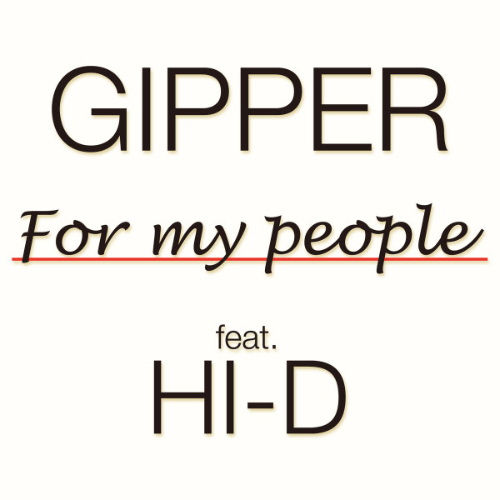
ジャンル表記はHip-Hop/Rap。作詞クレジットにはGIPPERとHI-D、作曲者にはZETTONが記載されている。
今回確認した音源の長さは約3分54秒。テンポは音源解析で約89BPMだった。
激しく押し進める曲ではなく、一定のテンポを保ちながら、歌詞と歌声をゆっくり受け止めさせるミドルテンポの構成である。
ジャンルとしては、メロウ・ヒップホップ/ヒップホップR&Bに分類するのが近い。
ウェストコースト由来の滑らかな感触はあるものの、派手なシンセリードや極端に太いファンク・ベースを前面に出した典型的なG-Funkではない。
むしろ、ギターとボーカルを中心にした温かいサウンドが特徴だ。
第一印象
曲の冒頭で最初に耳へ入ってくるのは、軽く揺れるクリーンなギターである。
音数は多くない。
柔らかなギターのフレーズが同じ場所を回るように反復され、その後ろから「Hey」という複数の声とドラムが加わる。
この導入には、豪華さや緊張感よりも、人が集まった場所の親しみやすさがある。
仲間や家族が同じ部屋に集まり、順番に思い出を語っていくような空気だ。
GIPPERが最初に発するのも、自分を大きく見せる言葉ではない。
「Thank you, thank you for my people」
この一言によって、曲が始まった瞬間から目的が明確になる。
本作は最初から最後まで、自分のためではなく、自分を支えた人のために歌われている。
サウンド分析
ドラム
ドラムは約89BPMの落ち着いたミドルテンポ。
キックは重すぎず、短く丸い音でリズムの土台を作っている。低音を過剰に膨らませないため、歌詞の聞き取りやすさが保たれている。
スネアは乾いた鋭さよりも、少し広がりを持つ柔らかな音だ。
強く叩きつけるのではなく、一定の間隔で曲をゆっくり前へ運ぶ。ラップの後ろで目立ちすぎず、HI-Dの歌が入った場面でもボーカルの伸びを邪魔しない。
ハイハットは細かな装飾を詰め込まず、基本的な刻みを保っている。
そのためグルーヴは複雑ではないが、安定している。言葉を追いながら自然に首を揺らせるリズムだ。
曲中では、短いフィルや打楽器の変化が節目に入るものの、ビートそのものは大きく崩れない。
この変化の少なさが、曲全体に「変わらずそこにいてくれる人」のような安心感を与えている。
ベース
ベースは低い位置に収まりながら、キックの隙間を埋めるように動いている。
G-Funkで聞かれるような大きくうねるシンセベースではなく、コードの根音を支える比較的素直な低音だ。
音量も極端には大きくない。
ヘッドホンで聴くと確かな厚みがあるが、スピーカー全体を揺らすほど前へ出てこない。ギター、ラップ、歌の下に静かに敷かれている。
この控えめなベースによって、曲は重苦しくならず、穏やかな温度を保っている。
家族への後悔や感謝を扱いながらも、悲しみに沈みすぎない理由の一つが、この低音設計にある。
シンセ・メロディ
本作の中心的な旋律は、シンセよりもギターが担っている。
冒頭から聞こえるクリーンギターは、細かく刻みながら同じフレーズを反復する。音には薄い空間系の処理が加えられており、乾いた生演奏というより、少し遠くから響いてくる記憶のように聞こえる。
フレーズそのものは明るさを持っているが、完全に陽気というわけではない。
メロディの中にはわずかな切なさが残されている。
過去を懐かしみながら、今になって大切さに気づく歌詞と、この明るさと寂しさが混ざったギターの響きがよく合っている。
背景には薄いパッド系の音も感じられるが、存在を強く主張しない。
音を幾重にも重ねるのではなく、必要な空間だけを埋めることで、GIPPERとHI-Dの声を主役にしている。
ミックス・グルーヴ
ミックスはボーカル中心。
GIPPERのラップは中央に太く配置され、言葉の輪郭がはっきりしている。声の低域は残されているが、ベースとぶつからないように整理されており、一語一語が聞き取りやすい。
HI-DのボーカルはGIPPERよりも広く配置されている。
メインの歌声にコーラスや重ね声が加わることで、フックに入った瞬間に音場が横へ広がる。
GIPPERのヴァースでは一人の個人的な回想として聞こえ、HI-Dのフックではその感情が多くの人へ開かれていく。
その違いが、ミックスの広がりによって表現されている。
全体のグルーヴは滑らかだが、過度に洗練されてはいない。
ドラムの生々しさと、GIPPERの少しざらついた声が残されているため、綺麗なだけのR&Bにはならない。ストリートで生きてきた人間が、自分の言葉で感謝を語っている感触が残っている。
ラップ/ボーカル分析
GIPPERのラップは、力を入れて押し込むのではなく、会話に近い自然なフロウで進む。
一つ目のヴァースでは家族。
二つ目では友人。
後半では恋人と、自分を支えてくれたすべての人。
対象が変わるたびに「Thank you, thank you for my family」「Thank you, thank you for my friends」「Thank you, thank you for my baby」と呼びかける。
この反復によって、曲は感謝の対象を少しずつ広げていく。
フロウはビートに対して極端に細かく刻まず、一つの小節へ言葉を落ち着いて収めている。
韻の技巧を目立たせるよりも、内容をまっすぐ届けることが優先されている。語尾を強く切らず、次の言葉へ自然につなげるため、昔話を聞いているような親密さが生まれる。
GIPPERの低い声には、若さだけでは出せない時間の重みがある。
特に家族について語る場面では、子供の頃に親と衝突した記憶と、年齢を重ねてから理解できるようになった感謝が同じヴァースの中に置かれている。
声を震わせたり、感情的に叫んだりはしない。
それでも、抑えた語り口だからこそ、本心から出た言葉に聞こえる。
対するHI-Dは、滑らかで伸びのあるボーカルを聞かせる。
フックでは、言葉だけでは足りないほど大きな感謝を「ありがとう」という一言へ集約していく。
HI-Dの声は明るいが、単純な祝福だけではない。
音の伸ばし方や柔らかな揺れの中に、感謝を直接口にする照れ、失いたくない人への切実さ、いつか伝えられなくなるかもしれないという意識がにじむ。
後半の「ありがとう」を繰り返すブリッジでは、HI-Dの歌声が曲の中心へ完全に移る。
ここでは歌詞を説明するのではなく、感情そのものを反復している。
その後にGIPPERが再び入ることで、曲は恋人への感謝から、最後には「みんな」への感謝へと着地する。
歌詞・テーマ
家族への感謝
最初のヴァースで描かれるのは、家族との血のつながりだ。
GIPPERは、子供は親を選べないこと、子供時代には親と衝突したこと、当時は素直に理解できなかったことを振り返る。
ここで重要なのは、過去を美化していない点である。
最初から理想的な家族関係だったとは語らない。
ぶつかり、反発し、距離が生まれた時期があったことを認めたうえで、今になってその愛情の大きさへ気づいている。
「親孝行してえのにもういねえ」という言葉からは、感謝を伝えたい時には相手がそばにいないかもしれないという後悔が感じられる。
だからこそ、この曲の「ありがとう」は軽くない。
何度言っても足りない言葉として繰り返される。
友人との時間
二つ目のヴァースでは、友人たちとの関係が描かれる。
ここで語られるのは、劇的な成功や大きな事件ではない。
くだらない話をして笑うこと。
酒を飲むこと。
一緒に馬鹿なことをして過ごすこと。
そうした何気ない時間が、自分にとっての「財産」だと語られる。
この部分には、仲間を過剰に神格化しないリアルさがある。
完璧な人間だから大切なのではない。
「最低だけど最高」と言えるような、不完全さまで含めて受け入れられる関係だから大切なのだ。
さらにGIPPERは、何年後も変わらず笑っていようと呼びかける。
現在の友情だけでなく、その関係が未来にも続いてほしいという願いが込められている。
恋人への感謝
後半では、感謝の対象が恋人へ移る。
相手を知れば知るほど感じる安らぎ。
自分に似合う相手はこの人しかいないという確信。
これからも二人で新しいページを書いていきたいという意志。
家族や友人のパートが過去を振り返る内容だったのに対し、恋人への言葉は未来へ向けられている。
家族から受け取った愛。
友人と共有してきた時間。
恋人とこれから作っていく人生。
この三つを並べることで、曲は過去、現在、未来を一本につないでいる。
「ありがとう」の意味
歌詞では何度も「ありがとう」が繰り返される。
しかし、この反復は言葉が思いつかなかった結果ではない。
むしろ、複雑な感情を最後まで突き詰めた結果、最も簡単な言葉しか残らなかったと考えられる。
家族への後悔。
友人との笑い。
恋人への愛情。
それぞれの関係は異なるが、最後に返したい言葉は同じである。
「ありがとう」
本作は、普段は照れくさくて言えないその一言を、音楽の力を借りて伝える曲になっている。
トリビア/制作メモ
「For My People feat. HI-D」は、GIPPERのアルバム『Gip’up』に収録されている。配信ページでは2012年4月11日付の作品として確認できる。
作詞はGIPPERとHI-D、作曲はZETTON。
今回の音源計測では、曲尺は約3分54秒、テンポは約89BPM。
構成は、おおむね以下の流れになっている。
イントロ
GIPPERによる家族へのヴァース
HI-Dのフック
GIPPERによる友人へのヴァース
HI-Dのフック
HI-Dによる「ありがとう」のブリッジ
GIPPERによる恋人とすべての人へのヴァース
最後のフック
ギターを残したアウトロ
同じフックを繰り返しながら、GIPPERのヴァースごとに感謝の対象を変えることで、曲のメッセージが段階的に広がっていく。
また、アルバムの最後を締める曲として配置されている点も印象的だ。
作品の最後で自分の強さや成功を誇るのではなく、自分がここまで来られたのは周囲の人たちのおかげだと語る。
その構成によって、「For My People」はアルバム全体を締めるエンドロールのような役割を持っている。
総評
GIPPERの「For My People feat. HI-D」は、派手な展開や強烈な音像で引きつける曲ではない。
約89BPMの落ち着いたドラム。
静かに反復するギター。
曲の底を支える控えめなベース。
飾らずに語るGIPPERのラップ。
そして、感情を大きく包み込むHI-Dの歌声。
すべての要素が、「ありがとう」という言葉を伝えるために配置されている。
家族とぶつかった過去も、友人と笑った夜も、恋人とこれから歩いていく未来も、人生の中では別々の出来事に見える。
しかしGIPPERは、それらすべてが今の自分を作っていると捉えている。
そのため本作は、単なる仲間賛歌や家族愛の曲には収まらない。
自分は一人で生きてきたのではないと認め、支えてくれた人たちへ感謝を返す曲である。
日常では、親しい相手ほど感謝を言葉にする機会が少ない。
いつでも会える。
いつでも話せる。
そう思っている間に、伝える機会を失うこともある。
「For My People」は、その前に言葉にしておくことの大切さを静かに伝えている。
聴き終わったあとに残るのは、強い興奮ではない。
しばらく連絡していない家族や仲間の顔を思い出し、自分も「ありがとう」と伝えたくなるような、穏やかで温かい余韻だ。
今回ご紹介の楽曲の購入はこちらから

GIPPER – For My People feat. HI-D | A Mellow Thank-You Letter to Family, Friends and the People Who Made Him
GIPPER’s “For My People feat. HI-D” is a mellow hip-hop track dedicated to family, friends, a lover, and everyone who has played a part in his life.
A relaxed beat moving at approximately 89 BPM.
A softly repeating guitar.
Warm, restrained low end.
And HI-D’s gentle singing.
Over that foundation, GIPPER looks back on old conflicts and seemingly ordinary moments from everyday life.
At the center of the song is neither a glamorous success story nor an attempt to prove how strong he is.
It is about being raised by family.
Laughing with friends over stupid conversations.
Having someone you love remain by your side.
One by one, GIPPER revisits the human connections that are easy to take for granted and simply says:
Thank you.
“For My People” is a sincere letter from GIPPER to the people who helped carry him through life.
Artist Introduction
GIPPER is a rapper also known as a member of NORA, a hip-hop group based in Yokohama, Japan.
His style has been strongly connected to West Coast hip-hop and lowrider culture, but his music is not limited to street-oriented material.
Throughout his career, he has also explored relationships, family, friendship, and personal connection through smoother and more reflective songs.
GIPPER’s rap voice is low and controlled.
Rather than rushing through his words, he tends to place them deliberately on the beat.
On “For My People,” that vocal weight does not create intimidation.
Instead, it gives his reflections the credibility of someone looking back on his life with maturity.
Featured vocalist HI-D has long worked at the intersection of hip-hop and R&B.
On this track, his role is especially important.
GIPPER begins with highly personal memories.
HI-D takes those feelings and opens them outward, transforming one man’s gratitude into a message almost anyone can understand.
Background
“For My People feat. HI-D” appears on GIPPER’s album Gip’up, which digital release information dates to April 11, 2012.
A single version of the track can also be found on Apple Music.
The genre is listed as Hip-Hop/Rap.
Songwriting credits list GIPPER and HI-D, while ZETTON is credited as composer.
The recording examined here runs approximately 3 minutes and 54 seconds.
Audio analysis places the tempo at roughly 89 BPM.
This is not a track designed to force itself forward.
The beat maintains a steady pace, giving the listener enough room to absorb both the lyrics and the singing.
Stylistically, it fits most naturally within mellow hip-hop / hip-hop R&B.
There is a smoothness that reflects GIPPER’s West Coast influences, but this is not stereotypical G-Funk built around piercing lead synths and an oversized funk bassline.
The warmth comes primarily from guitar, vocals, and an understated rhythm section.
First Impression
The first thing that enters the track is a gently moving clean guitar.
There are not many notes.
The same soft phrase circles repeatedly until drums and several voices calling “Hey” begin to join it.
There is no sense of luxury or tension in the introduction.
Instead, it feels familiar.
Almost like family and friends have gathered in the same room and are about to take turns telling old stories.
GIPPER’s first words do not attempt to make himself sound larger than life.
He begins with:
“Thank you, thank you for my people.”
That one line immediately establishes the purpose of the entire song.
From beginning to end, “For My People” is not really about GIPPER himself.
It is about the people who helped him become who he is.
Sound Analysis
Drums
The drums move at a relaxed mid-tempo pace of approximately 89 BPM.
The kick is rounded and relatively short.
It establishes the rhythmic foundation without excessively expanding the low end.
That restraint leaves the lyrics clear and easy to follow.
The snare is softer than the sharply dry snares found in harder street rap.
It has a little more width and gently moves the track forward rather than striking aggressively.
That becomes especially important when HI-D begins singing.
The drums support the vocal without interfering with its sustained notes.
The hi-hats are similarly restrained.
There is no attempt to fill every available space with detailed programming.
The rhythm remains simple but dependable.
It is the kind of beat that allows the listener to follow the words while naturally nodding along.
Short fills and small percussion changes appear at transitions, but the fundamental rhythm rarely changes.
That consistency almost mirrors one of the song’s central ideas:
the people who remain there for you even as everything else changes.
Bass
The bass stays relatively low in the mix and moves through the spaces around the kick.
Rather than the large, heavily rolling synth bass associated with certain forms of G-Funk, it mainly supports the root movement of the chords.
It is also not excessively loud.
Headphones reveal a definite thickness, but the bass never attempts to shake the entire mix.
Instead, it sits quietly underneath the guitar, rap, and singing.
That controlled low end helps preserve the track’s warmth.
Even when GIPPER addresses regret and family memories, the production never becomes overwhelmingly sad.
The bass gives the record emotional weight without pulling it into darkness.
Synths & Melody
The main melodic voice is not a synthesizer.
It is the guitar.
From the opening, a clean guitar repeats a small figure with gentle rhythmic movement.
A subtle sense of space surrounds the sound.
Rather than feeling like a completely dry live performance, the guitar seems slightly distant—almost like a memory being heard from another room.
The phrase itself contains brightness.
But it is not completely cheerful.
A faint sense of sadness remains underneath it.
That mixture fits the lyrics perfectly.
GIPPER is remembering people and moments with affection, while also realizing how important some of them became only after time had passed.
There are subtle pad-like textures in the background, but they never demand attention.
The arrangement does not attempt to stack layer upon layer.
It fills only the space it needs.
GIPPER and HI-D remain the focus.
Mix & Groove
The mix is strongly vocal-centered.
GIPPER’s rap sits firmly in the middle.
The lower part of his voice remains intact, but it is separated carefully from the bass so that each word stays understandable.
HI-D’s vocals are wider.
His lead is supported by harmonies and layered voices, causing the soundstage to expand as soon as the hook begins.
That difference has an emotional effect.
During GIPPER’s verses, the song feels like one man privately remembering his life.
When HI-D enters, that private emotion suddenly becomes something larger and more universal.
The groove is smooth without becoming overly polished.
There is still enough rawness in the drums and texture in GIPPER’s voice to prevent the track from becoming clean, anonymous R&B.
It still sounds like someone shaped by street culture speaking in his own voice.
He just happens to be using that voice to say thank you.
Rap / Vocal Analysis
GIPPER’s rap moves with a natural, conversational flow.
He does not force the words into the beat.
Instead, the subjects gradually change:
family,
friends,
his partner,
and eventually everyone who has supported him.
Each shift is reinforced by a similar expression of gratitude:
“Thank you, thank you for my family.”
“Thank you, thank you for my friends.”
“Thank you, thank you for my baby.”
The repetition gradually expands the circle of people being addressed.
His flow does not rely on extremely dense rhythmic patterns.
Technical rhyme schemes are less important than making the message understandable.
Phrase endings are rarely cut off harshly.
One thought naturally connects to the next.
That gives the verses the intimacy of listening to someone tell stories from his past.
There is also a sense of age and experience in GIPPER’s low voice.
This becomes especially noticeable when he talks about family.
Memories of arguing with his parents as a child sit alongside the gratitude he only fully understands after growing older.
He does not need to make his voice shake.
He does not need to shout.
The restraint makes the emotion feel more personal.
HI-D provides the opposite vocal texture.
His voice is smooth, warm, and sustained.
The hook takes feelings too complicated to explain completely and reduces them to the simplest possible expression:
thank you.
His performance is bright, but it is not merely celebratory.
The softness in his sustained notes carries several emotions at once:
the awkwardness of saying something deeply sincere,
the fear of losing someone important,
and the awareness that one day there may no longer be another chance to say it.
During the later bridge, HI-D’s repeated expressions of gratitude move completely to the center of the song.
At that point, the lyrics stop explaining the emotion.
They simply repeat it.
When GIPPER returns afterward, the song expands from gratitude toward a lover into gratitude toward everyone.
Lyrics & Themes
Gratitude Toward Family
The first verse focuses on blood and family.
GIPPER reflects on the fact that children cannot choose their parents.
He remembers conflicts from childhood and moments when he could not understand or accept what his parents were trying to tell him.
What matters is that he does not rewrite the past as an ideal family relationship.
There were disagreements.
Resistance.
Distance.
Only later does he fully recognize the size of the love he received.
A line expressing the desire to repay his parents even though they are no longer there carries one of the song’s heaviest emotions.
It introduces the possibility that by the time we truly understand what someone has done for us, we may no longer have the opportunity to tell them.
That is why the repeated “thank you” does not feel casual.
It is a phrase that can never be said enough.
Time With Friends
The second verse turns toward friendship.
There is no dramatic story of victory or some life-changing event.
Instead, GIPPER remembers ordinary things.
Talking nonsense.
Laughing.
Drinking together.
Doing stupid things.
Those seemingly insignificant moments become what he describes as a kind of personal treasure.
There is an important realism in the way he talks about his friends.
They are not valuable because they are perfect.
The affection includes their flaws.
They can be terrible and still be the best people to have around.
GIPPER then looks toward the future, hoping that years from now they will still be laughing together.
The verse therefore celebrates not only the friendship they have now, but the possibility that it can survive time.
Gratitude Toward a Lover
Later, the focus shifts toward his partner.
The more he knows this person, the more comfort he finds in the relationship.
He becomes convinced that no one else fits him in quite the same way.
And he wants the two of them to continue writing new pages together.
This section differs subtly from the family and friendship verses.
Those earlier sections are largely retrospective.
They look backward.
The words directed toward his partner look forward.
Love received from family.
Time already shared with friends.
A future still waiting to be created with someone he loves.
By placing these relationships together, the song connects past, present, and future.
What “Thank You” Means
The phrase “thank you” appears again and again.
That repetition is not the result of having nothing more complicated to say.
It works almost in the opposite way.
After reducing several complicated relationships to their emotional core, the simplest phrase is the only one left.
Regret involving family.
Laughter shared with friends.
Love for a partner.
These relationships are completely different.
But the answer GIPPER wants to give each of them is the same:
Thank you.
“For My People” becomes a song about using music to say something that can feel surprisingly difficult to say in ordinary life.
Trivia / Production Notes
“For My People feat. HI-D” appears on GIPPER’s album Gip’up, with digital release information dating the project to April 11, 2012.
Songwriting is credited to GIPPER and HI-D, while ZETTON is credited as composer.
The recording examined here runs approximately 3 minutes and 54 seconds at roughly 89 BPM.
Its structure broadly follows this sequence:
Intro
→ GIPPER verse about family
→ HI-D hook
→ GIPPER verse about friends
→ HI-D hook
→ HI-D “thank you” bridge
→ GIPPER verse addressing his partner and everyone around him
→ final hook
→ guitar-led outro
The same hook returns throughout the song, but the subject of GIPPER’s gratitude changes with each verse.
That allows the emotional scope to gradually expand.
Another meaningful detail is its placement at the end of the album.
Rather than closing the project by celebrating his own strength or success, GIPPER finishes by acknowledging that he did not reach this point alone.
That gives “For My People” the feeling of an end-credit sequence for the album, where the people who mattered along the way are finally recognized.
Final Thoughts
GIPPER’s “For My People feat. HI-D” does not depend on dramatic production or an overwhelming sound to make its point.
Relaxed drums at approximately 89 BPM.
A quietly repeating guitar.
Restrained bass underneath the track.
GIPPER speaking without unnecessary decoration.
HI-D wrapping those words in a warm melodic hook.
Every element exists to support one phrase:
Thank you.
Arguments with family.
Nights spent laughing with friends.
A future still waiting to be built with someone he loves.
These may look like separate parts of life.
GIPPER treats them as pieces of the same story.
Each relationship helped create the person he eventually became.
That is why “For My People” is more than a family song or a friendship anthem.
It is an acknowledgment that none of us reaches the present completely alone—and a thank-you to the people who helped us get there.
The people closest to us are often the people we forget to thank.
We assume there will always be another conversation.
Another meeting.
Another chance.
Sometimes there is not.
“For My People” quietly reminds the listener to say those words before that opportunity disappears.
The feeling left behind is not excitement.
It is warmth.
The kind that makes you think about a family member or an old friend you have not contacted in a while—and makes you want to tell them:
Thank you.
コメント