Big Mikeの「Creepin’ & Rollin’」は、磨き上げた車で街を流す高揚感と、ストリートで生きてきた男の警戒心を同時に描いた一曲だ。
ゆったりと揺れるファンク・ビート、厚みのある女性コーラス、低い位置を滑るベース。その上でBig Mikeは、自分を誇示するように声を荒らげるのではなく、すでに結果を出した男の落ち着きで言葉を運んでいく。
歌詞には新しい家、クロームを磨いた車、キャンディ・ブルーのボディ、ゴールドのホイール、大音量のカー・オーディオといった成功の象徴が並ぶ。
しかし、華やかな車自慢だけで曲は終わらない。
ドラッグを売っていた過去、敵への警戒、銃を携帯する生活、危険の残る街。そして、そこから生活を変えようとする意志が同じ車内に積み込まれている。
「Creepin’ & Rollin’」は、成功を祝う曲であると同時に、過去を背負ったまま次の段階へ走り出すBig Mikeの再出発宣言でもある。
アーティスト紹介
Big Mikeは、ニューオーリンズ出身のラッパーMichael Barnettによる名義で、Mr. 3-2とのユニットConvictsで活動したのち、Geto Boysにも参加した人物だ。
Convictsは1991年にRap-A-Lot Recordsからアルバム『Convicts』を発表。その後Big Mikeは、Willie Dが一時離脱していた時期のGeto Boysに加入し、1993年のアルバム『Till Death Do Us Part』に参加した。
低く太い声、語尾を強く押し込む発声、南部特有のゆったりした間の取り方が大きな特徴である。
Big Mikeは言葉を細かく詰め込むタイプではない。
むしろ、ひとつひとつの言葉をビートの上へ重く置き、声そのものの圧力で曲を支配する。そのラップは、激しく動き回るというより、重量のある車体が一定速度で進んでいくような感覚を持っている。
「Creepin’ & Rollin’」では、その特徴が曲のテーマと完璧にかみ合っている。
作品背景
「Creepin’ & Rollin’」は、Big Mikeが1994年に発表したソロ・デビュー・アルバム『Somethin’ Serious』に収録されている。
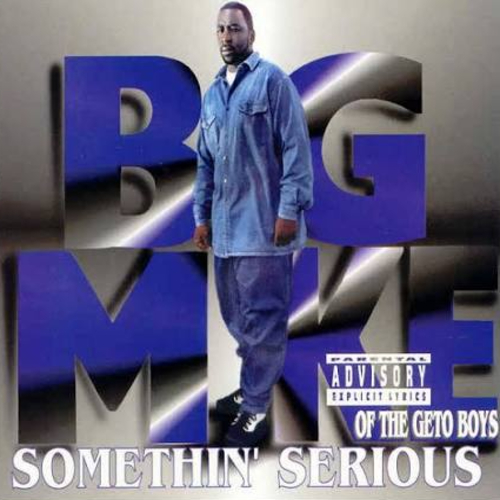
同作はRap-A-Lot RecordsとPriority Recordsから1994年6月28日に発売され、UGK、Scarface、Mr. 3-2らも参加した。Big MikeがConvictsとGeto Boysで積み上げてきた経験を、ソロ・アーティストとして展開した作品である。
「Creepin’ & Rollin’」はアルバムの4曲目に置かれ、収録時間は約4分21秒。プロデュースは、当時Rap-A-Lot周辺のエンジニア、ミキサー、プロデューサーとして活動していたMike Deanが担当している。
音源を解析した結果、テンポは約92 BPM。
速さで押し切るのではなく、車体の揺れを感じさせる中速域に設定されている。このテンポが、タイトルにある“Rollin’”という動作を音楽として表現している。
なお、表記は資料によって「Creepin’ & Rollin’」「Creepin – Rollin」などの違いが見られる。本記事では一般的なアポストロフィー入りの表記を使用する。
第一印象
曲が始まると、短い会話のあと、女性コーラスによるタイトル・フレーズがすぐに入る。
冒頭から強いドラムや攻撃的なラップを突きつけるのではなく、先にメロディと空気を提示する構成だ。
女性コーラスは、
“Creepin’ and rollin’, you know what time it is”
というフレーズを繰り返す。
この反復が、車で同じ通りを何度も回るような円運動を生み出している。
第一印象は滑らかでファンキーだが、明るく開放的なパーティー・ソングではない。コードや低音には落ち着いた陰りがあり、Big Mikeの声が入ると、穏やかな走行感の内側に緊張が残っていることが分かる。
窓を開けて高速道路を飛ばす曲というより、夜の街を低速で流しながら、周囲の様子を確認して進む曲だ。
サウンド分析
ドラム
ドラムは約92 BPMの中速テンポを保ち、曲全体を一定の速度で前進させている。
キックは極端に硬くなく、低域に丸みを持たせた音色。ベースと一体になり、車のタイヤが路面を押すような重さを作っている。
スネアは明確に輪郭を持っているが、鋭く突き刺さるほど前には出ていない。乾いたスネアを強く打ち鳴らす西海岸系のトラックと比べると、全体のミックスへ少し埋め込まれている印象だ。
そのため、リズムは攻撃的に跳ねるのではなく、腰を落としてゆっくり揺れる。
ハイハットも細かな連打で速度を演出するのではなく、主要な拍を安定させる役割に徹している。
この抑制されたドラムが、Big Mikeの低い声と余裕のあるフロウを受け止めている。
ベース
ベースはこの曲の走行感を支える重要な要素だ。
音数は多くないが、太く丸い低音がキックの隙間へ入り、一定の周期で地面を押していく。
細かく動くファンク・ベースではなく、長めに伸びる音を中心に組み立てられているため、トラック全体に粘りが生まれている。
ベースラインは強く自己主張しない。
しかし、これを取り除けば「Creepin’ & Rollin’」特有の低速走行感は失われるだろう。
車の外装やホイールを歌詞が担当しているとすれば、このベースはエンジンにあたる。常に低い位置で鳴り続け、曲を止めずに前へ進ませる。
シンセ・メロディ
上物には、明るさと陰りが同居した柔らかなシンセが使われている。
音源解析ではFの音が強く現れるが、明確なメジャー感や爽快感を前面に出した構成ではない。周辺音との組み合わせによって、落ち着きとわずかな不穏さが残る。
シンセは長く伸びるパッド状の音を中心に構成され、鋭いリード・シンセが主旋律を支配するタイプではない。
そのため、西海岸G-Funkの影響を感じさせながらも、派手なシンセ・リードを前面に押し出した典型的なG-Funkとは少し異なる。
メロディの中心にいるのは、楽器よりも女性コーラスだ。
厚みのある歌声が曲のフックを担い、Big Mikeの無骨な声と対照を作る。男性ラップと女性コーラスの質感差によって、ストリートの硬さと快楽的な滑らかさが同時に成立している。
ミックス・グルーヴ
ミックスは、Big Mikeの声を中央に置きながら、コーラスと上物を左右へ広げている。
リード・ラップは明瞭だが、現代的な音源のように声だけが極端に前へ飛び出してはいない。ドラム、ベース、声が同じ空間を共有しており、トラック全体がひとつの車体のようにまとまっている。
女性コーラスが入る部分では横方向の広がりが増し、ヴァースではBig Mikeの声へ視点が絞られる。
この拡大と収縮が繰り返されることで、単調になりやすい中速トラックに呼吸が生まれている。
グルーヴの中心は、跳ねではなく持続だ。
一発ごとの派手さではなく、同じリズムに長く身を預けることで気持ちよさが増していく。数十秒だけ切り取るより、4分21秒を通して聴くことで完成するタイプの曲である。
ラップ/ボーカル分析
Big Mikeのラップは、低く太い声と、拍の中央を踏みつけるような発声が特徴だ。
フロウは基本的にストレートで、複雑なリズム変化や高速ラップを多用しない。それでも退屈に聞こえないのは、言葉の置き方と声の圧力に変化があるからだ。
ヴァースの冒頭では、
“What’s happenin’, my nigga”
と、仲間へ話しかけるような口調から入る。
これは聴き手へ向けた演説というより、車内や路上で交わされる会話に近い。Big Mikeは最初から“曲を歌っている人物”ではなく、“街で話している人物”として登場する。
そこから一行を長めに引っ張り、最後の単語を強く落とす。
特に、
“changing gears”
“brand new home”
“polishing up my chrome”
といった部分では、生活が変化していく内容と、車のギアを切り替える動作が重ねられている。
Big Mikeのフロウも、その内容に合わせて急加速するのではなく、ひとつ上のギアへ静かに移行するように進む。
声には余裕があるが、完全にリラックスしているわけではない。
敵への警告を語る場面では子音が強くなり、声の硬さが増す。成功を語る場面では少し間を取り、言葉を見せつけるように置く。
この切り替えによって、Big Mikeの中にある二つの人格が見える。
ひとつは、成功を楽しむプレイヤー。
もうひとつは、過去の危険から完全には離れていないストリートの生存者だ。
女性コーラスは、その緊張を和らげる働きを持つ。
“Creepin’ and rollin’”という滑らかな歌声がヴァースの間へ入るたび、曲は再びドライブの気持ちよさへ戻る。しかし、その直後にはBig Mikeの現実的な語りが始まる。
この往復が曲の核心になっている。
歌詞・テーマ
歌詞の中心にあるのは、車、成功、仲間、女性、ストリートからの変化である。
ただし、単純な自慢話としてまとめると、この曲の重要な部分を見落としてしまう。
過去からの方向転換
Big Mikeは序盤で、1994年になり、もうドラッグを売っていないと語る。
これは過去を完全に否定する告白ではない。
むしろ、ストリートで得た経験を背負いながら、生活の方向を変えたことを示している。
“changing gears”という表現は、車のギアを変える意味と、人生の段階を変える意味の両方に聞こえる。
続く「新しい家を買う」「クロームを磨く」という描写も、単なる浪費ではなく、違法な商売から音楽による成功へ移行したことを示す記号として機能する。
車が示す成功
歌詞には、キャンディ・ブルーの車体、ゴールドのホイール、4枚のドア、トランクに積んだアンプといった具体的な描写が登場する。
これらは抽象的な富ではない。
実際に街で目に見える形へ変換された成功である。
家の中に財産を隠すのではなく、車へ載せて街を走ることで、Big Mikeは自分が以前とは違う位置に到達したことを周囲へ示している。
カー・オーディオの大音量も重要だ。
音楽はBig Mikeの成功を生んだ手段であり、その音楽を車から街へ響かせる行為は、自分の存在を地域へ返す行為でもある。
成功しても消えない警戒心
一方で、Big Mikeは銃を持っていることや、敵に対する警告も語る。
新しい家や車を手にしても、過去の人間関係や危険が消えたわけではない。
成功したからこそ、嫉妬や敵意を向けられる可能性も増えている。
そのため、“rollin’”は自由なドライブであると同時に、周囲を警戒しながら移動する行為でもある。
曲のサウンドが完全には明るくならない理由も、ここにある。
Southern Wayという誇り
終盤では、自分が南部のやり方で生きていることを明確に宣言する。
Big Mikeは、他地域の成功モデルへ自分を合わせるのではなく、車、低音、仲間、街、ゆったりしたラップという南部独自の価値観を前面に出す。
さらにHouston, Texasへの言及を通して、自分が活動の基盤としてきた地域をはっきり示す。
Big Mike自身はニューオーリンズ出身だが、ConvictsやGeto Boys、Rap-A-Lotでの活動を通じてヒューストン・シーンと深く結びついている。
そのため本曲には、ルイジアナ出身者の視点と、ヒューストンのカー・カルチャーが交差した独特の南部感覚がある。
トリビア/制作メモ
「Creepin’ & Rollin’」のプロデュースを担当したのはMike Deanである。Mike Deanは同曲だけでなく、『Somethin’ Serious』全体のエンジニアリング、ミックス、マスタリングにも関わった人物としてクレジットされている。
現在はさまざまなメジャー・アーティストとの仕事で知られているが、1990年代前半にはRap-A-Lot周辺で、ヒューストン・ラップの音像を作る重要人物のひとりだった。
本曲では、後年の作品に見られる巨大で劇的なシンセ・サウンドよりも、低音、ドラム、コーラスを滑らかにまとめるミックス感覚が前面に出ている。
また、『Somethin’ Serious』には複数のプロデューサーが参加しているが、「Creepin’ & Rollin’」はMike Deanが単独でプロデューサーとして記載されている。
アップロード音源の実測値は以下のとおり。
- 収録時間:約4分21秒
- 推定テンポ:約92 BPM
- 構成:イントロ/コーラス/3ヴァース/反復コーラス/アウトロ
- 主な質感:中速ファンク、重い低音、女性コーラス、抑制されたシンセ
- ジャンル:Southern Hip Hop/Gangsta Rap/Player Rap
現在確認できる信頼性の高い資料では、本曲の明確なサンプリング元を特定できなかった。
そのため、類似する音色やコード感だけを根拠にサンプリング曲を断定することは避ける。
総評
Big Mikeの「Creepin’ & Rollin’」は、1990年代南部ラップにおける車の意味を、非常に分かりやすく伝える一曲だ。
この曲で車は、ただの移動手段ではない。
ストリートから抜け出した証明であり、成功を街へ見せる舞台であり、仲間と時間を過ごす空間であり、危険から身を守りながら移動するための装甲でもある。
Big Mikeはその車に、新しい生活への期待と、過去の記憶を両方載せている。
だから曲には余裕がある一方で、完全な安心感はない。
女性コーラスは滑らかで、ベースは心地よく、ドラムは一定の速度を保つ。しかしBig Mikeの低い声が入るたび、街にはまだ危険が残っていることを思い出させる。
約92 BPMというテンポも絶妙だ。
止まりそうなほど遅くはなく、興奮を煽るほど速くもない。周囲を見渡しながら、堂々と自分の道を進める速度である。
G-Funk的な滑らかさを持ちながら、派手なシンセ・リードへ頼らず、Rap-A-Lotらしい土臭さと重量感を残している点も大きな魅力だ。
「Creepin’ & Rollin’」は、車を見せびらかすだけの曲ではない。
かつてドラッグを売っていた男が、音楽によって新しい家と車を手に入れ、それでも過去を忘れずに街を流す。
その姿を、Big Mikeは大げさな感動物語にせず、低い声で淡々と語っている。
成功を叫ぶのではなく、成功した姿のまま静かに横を通り過ぎる。
その無言の説得力こそが、この曲の最も格好いい部分である。
今回ご紹介の楽曲の購入はこちらからどうぞ
Big Mike – Creepin’ & Rollin’ | Southern Funk, Chrome Cars and the Calm Confidence of a Street Survivor
Big Mike’s “Creepin’ & Rollin’” captures two feelings at the same time: the excitement of cruising through the city in a freshly polished car and the constant caution of a man shaped by the streets.
A slow-moving funk groove, thick female chorus, and bassline sliding through the lower register create the musical foundation.
Over that, Big Mike does not need to raise his voice or aggressively announce his status.
He raps with the calmness of someone who already believes he has proven himself.
The lyrics are filled with visible signs of success:
a new house,
polished chrome,
a candy-blue car,
gold wheels,
and a powerful sound system pushing music through the streets.
But “Creepin’ & Rollin’” is not simply a song about showing off a car.
Inside that same vehicle are memories of selling drugs, awareness of enemies, the reality of carrying a gun, and the danger that still remains in the neighborhood.
There is also a clear desire to move beyond that life.
The track celebrates success, but it also sounds like Big Mike declaring that he is entering a new stage without pretending the past has disappeared.
Artist Introduction
Big Mike is the stage name of Michael Barnett, a New Orleans-born rapper who first gained recognition as one half of the duo Convicts alongside Mr. 3-2 before later joining the Geto Boys.
Convicts released their self-titled album through Rap-A-Lot Records in 1991.
Big Mike later joined the Geto Boys during the period when Willie D had temporarily left the group and appeared on their 1993 album Till Death Do Us Part.
His voice is one of his defining characteristics.
Low.
Thick.
Heavy.
He often pushes the final words of his lines firmly into the beat while leaving the relaxed spaces associated with Southern rap.
Big Mike is not a rapper who depends on filling every bar with as many syllables as possible.
Instead, he places individual words heavily onto the rhythm and allows the physical weight of his voice to control the track.
His flow feels less like something moving rapidly across the beat and more like a heavy vehicle traveling forward at a steady speed.
On “Creepin’ & Rollin’,” that style fits the subject perfectly.
Background
“Creepin’ & Rollin’” appears on Big Mike’s 1994 solo debut album Somethin’ Serious.
The album was released through Rap-A-Lot Records and Priority Records on June 28, 1994.
It also features appearances from artists including UGK, Scarface, and Mr. 3-2, giving Big Mike a platform to expand the experience he had already built through Convicts and the Geto Boys into a full solo project.
“Creepin’ & Rollin’” appears as the fourth track.
Its listed running time is approximately 4 minutes and 21 seconds.
Production is credited to Mike Dean, who was already active around Rap-A-Lot as an engineer, mixer, and producer during this period.
Audio analysis places the tempo at approximately 92 BPM.
Rather than using speed to create excitement, the track sits in a mid-tempo range that allows the listener to feel the movement of the car itself.
In that sense, the tempo becomes part of the meaning of the word “Rollin’.”
Different sources use slightly different spellings of the title, including “Creepin’ & Rollin’” and “Creepin – Rollin.”
This article uses the common apostrophe version.
First Impression
The track opens with a brief conversation before the female chorus introduces the title phrase almost immediately.
Rather than beginning with a huge drum hit or an aggressive rap entrance, the song establishes melody and atmosphere first.
The chorus repeats:
“Creepin’ and rollin’, you know what time it is.”
That repetition creates a circular feeling.
It is almost like driving through the same streets again and again, slowly passing familiar corners.
The first impression is smooth and funky.
But this is not an open, carefree party record.
There is a slight shadow inside the chords and low end.
Once Big Mike enters, it becomes clear that tension is still present underneath the relaxed movement.
This is less a song for flying down the highway with no worries than one for moving slowly through the city at night while keeping an eye on everything around you.
Sound Analysis
Drums
The drums maintain a steady mid-tempo pace at approximately 92 BPM.
The kick is not extremely hard or sharply compressed.
It has a rounded low-end character and works together with the bass to create the sensation of tires pressing against the road.
The snare has a clear outline, but it is not pushed so aggressively to the front that it dominates the mix.
Compared with some West Coast productions built around extremely dry and forceful snares, this one feels slightly more integrated into the surrounding instrumental.
As a result, the rhythm does not bounce with exaggerated aggression.
It sits low and moves with a slow body sway.
The hi-hats also avoid rapid patterns designed to create the illusion of speed.
Their main purpose is to stabilize the major beats and keep the groove moving consistently.
That restraint gives Big Mike’s low voice and relaxed phrasing enough room to breathe.
Bass
The bass is essential to the song’s cruising sensation.
There are not many notes, but the low end is thick and rounded, entering the spaces between the kick and pushing downward at regular intervals.
Rather than using a highly active funk bassline, the arrangement relies on longer sustained tones.
That gives the entire instrumental a sticky, dragging quality.
The bass never demands attention in an obvious way.
But without it, the specific slow-moving character of “Creepin’ & Rollin’” would disappear.
If the lyrics describe the bodywork, paint, and wheels of the car, the bass functions like the engine.
It stays low.
It stays running.
And it keeps the track moving forward.
Synths & Melody
The upper layers use soft synthesizer textures that balance brightness with a slight sense of unease.
Audio analysis suggests a strong presence around F, but the track does not project an obvious major-key brightness or openly celebratory mood.
The surrounding tones keep the harmony calm while leaving a small amount of tension unresolved.
The synthesizers are built more around sustained pad-like sounds than sharp lead lines.
That means the track clearly carries some influence from G-Funk without relying on the high, piercing lead synth often associated with the most stereotypical version of the style.
The true melodic center is the female chorus.
Her layered vocals carry the hook and create a strong contrast with Big Mike’s rougher, heavier voice.
That difference between male rap and female singing allows two textures to exist at the same time:
street hardness and pleasurable smoothness.
Mix & Groove
The mix places Big Mike in the center while allowing the chorus and upper melodic layers to spread wider across the stereo field.
His lead vocal is clear, but it does not sit unnaturally far in front of the instrumental.
The drums, bass, and voice feel as though they occupy the same physical space.
The whole track behaves almost like one large vehicle rather than a collection of sharply separated parts.
When the female chorus appears, the sound expands sideways.
During the verses, attention narrows again toward Big Mike’s voice.
That repeated expansion and contraction gives the mid-tempo arrangement a natural sense of breathing.
The heart of the groove is not bounce.
It is continuity.
The pleasure comes from staying inside the same rhythm long enough for it to become physical.
This is not the kind of track that reveals everything in a thirty-second excerpt.
Its effect grows across the full 4 minutes and 21 seconds.
Rap / Vocal Analysis
Big Mike’s rapping is built around a low, thick voice and a delivery that seems to step directly onto the center of each beat.
His flow is generally straightforward.
He does not rely on constant rhythmic tricks or fast technical passages.
Yet the performance never feels flat because he varies the pressure of his voice and the placement of his words.
At the beginning of the verse, he enters conversationally:
“What’s happenin’, my nigga”
It sounds less like a performer addressing an audience and more like someone speaking to a friend inside a car or on the street.
From there, he stretches certain lines and then lands the final word with extra force.
Phrases such as:
“changing gears”
“brand new home”
“polishing up my chrome”
connect the transformation in his life with the physical movement and appearance of the car.
The phrase “changing gears” is especially effective because it can describe both driving and moving into a new phase of life.
Big Mike’s flow follows that idea.
He does not suddenly accelerate.
He seems to shift smoothly into the next gear.
There is confidence in his voice, but not complete relaxation.
When he talks about enemies, his consonants become harder and the delivery tightens.
When he talks about success, he creates slightly more space and lets the words sit in front of the listener.
That reveals two sides of Big Mike at once.
One is the player enjoying what he has earned.
The other is the street survivor who has not forgotten what danger feels like.
The female chorus reduces that tension.
Each time the smooth “Creepin’ and rollin’” hook returns, the track settles back into the pleasure of driving.
Then Big Mike comes back in and reminds the listener that the world outside the car is still real.
That movement between comfort and caution is the core of the record.
Lyrics & Themes
The song centers on cars, success, friends, women, and the transition away from street life.
But treating it as simple boasting would miss what makes it interesting.
Changing Direction From the Past
Early in the song, Big Mike makes it clear that by 1994 he is no longer selling drugs.
This is not presented as a dramatic rejection of everything that came before.
Instead, he acknowledges the experience of the streets while showing that his life has entered a different phase.
The phrase “changing gears” works on two levels.
It describes changing gears in a car.
It also suggests changing the direction of his life.
The images that follow—buying a new home and polishing chrome—therefore become more than signs of consumerism.
They can also be heard as visible evidence that he has moved from illegal hustling toward success through music.
The Car as Proof of Success
The lyrics include detailed descriptions of a candy-blue body, gold wheels, four doors, amplifiers in the trunk, and other parts of the car.
These are not abstract symbols of wealth.
They are success converted into something people in the neighborhood can actually see and hear.
Instead of hiding what he has achieved inside a house, Big Mike puts it on wheels and drives it through the city.
The sound system is especially important.
Music helped create his new position.
By blasting that music through the streets from his car, he is effectively returning the sound of his success to the community that shaped him.
Success Does Not Eliminate Caution
At the same time, Big Mike refers to carrying a gun and remaining alert to enemies.
A new house and a better car have not erased the relationships or dangers connected to his past.
Success may even create additional jealousy.
That gives “rollin’” a second meaning.
It is the freedom of cruising.
But it is also movement through an environment where a person still needs to watch what is happening around him.
That is one reason the production never becomes completely bright or carefree.
Pride in a Southern Way of Life
Toward the end of the song, Big Mike makes his Southern identity clear.
He does not reshape himself around another region’s version of success.
Cars.
Bass.
Friends.
The neighborhood.
A relaxed flow.
These become part of a specifically Southern idea of style and status.
References to Houston, Texas also reinforce the regional foundation of his career.
Big Mike was born in New Orleans, but his work with Convicts, Geto Boys, and Rap-A-Lot tied him deeply to Houston’s rap scene.
Because of that history, the song contains an interesting intersection:
the perspective of a Louisiana-born rapper moving through the car culture and musical environment of Houston.
That mixture gives the track its particular Southern identity.
Trivia / Production Notes
“Creepin’ & Rollin’” was produced by Mike Dean.
Dean is also credited with engineering, mixing, and mastering work across Somethin’ Serious.
Today he is widely known for work with major mainstream artists, but in the early 1990s he was already an important figure in shaping the sound of Rap-A-Lot and Houston rap.
On this track, the emphasis is not on the enormous cinematic synthesizers often associated with some of his later work.
Instead, his production skill is heard in the smooth balance between bass, drums, vocals, and chorus.
Although several producers contributed to Somethin’ Serious, “Creepin’ & Rollin’” is listed with Mike Dean as the sole producer.
The analyzed audio has the following characteristics:
- Running time: approximately 4 minutes and 21 seconds
- Estimated tempo: approximately 92 BPM
- Structure: intro / chorus / three verses / repeated chorus / outro
- Main sonic characteristics: mid-tempo funk, heavy low end, female chorus, restrained synthesizers
- Genre: Southern Hip Hop / Gangsta Rap / Player Rap
No clearly verified sample source has been identified in reliable documentation currently available.
For that reason, this article avoids naming a sample based only on similar chords or timbres.
Final Thoughts
Big Mike’s “Creepin’ & Rollin’” is one of those tracks that makes the role of the car in 1990s Southern rap immediately understandable.
The car is not simply transportation.
It is proof that someone escaped a previous stage of life.
It is a moving display of success.
It is a place to spend time with friends.
And it is also a kind of protective shell moving through a city where danger has not disappeared.
Big Mike puts both his hopes for a new life and the memory of his old one inside that vehicle.
That is why the song sounds confident without ever feeling completely safe.
The female chorus is smooth.
The bass is comfortable.
The drums maintain an easy pace.
But every time Big Mike’s low voice enters, the listener is reminded that the streets outside the car still contain risk.
The approximately 92 BPM tempo is almost perfect for that idea.
It is not slow enough to feel motionless.
It is not fast enough to create uncontrolled excitement.
It is the speed of someone moving confidently while still having enough time to look around.
The track carries some of the smoothness associated with G-Funk, but it avoids depending on a flashy lead synth.
Instead, it keeps the dusty weight and grounded feel associated with Rap-A-Lot and Southern gangsta rap.
“Creepin’ & Rollin’” is not just a song about showing off a car.
It is the sound of a man who once sold drugs, used music to reach a different level, bought a new house and car, and then returned to the same streets without pretending that his past had vanished.
Big Mike never turns that story into an exaggerated inspirational speech.
He simply tells it in a low voice while continuing to roll forward.
He does not need to shout about success. He lets the sound of the car, the bass, and the life he built speak as he quietly passes by.
コメント