柔らかな女性コーラスが宙を漂い、その下では太いベースと乾いたドラムがゆっくりと道路を転がっていく。
Frostの「East Side Rendezvous」は、派手に暴れるG-Funkではない。約83BPMのゆったりしたグルーヴに身を預け、南カリフォルニアの街をローライダーで流す感覚そのものを音にしたような一曲だ。
金曜日の朝に目を覚まし、車を洗い、ホワイトウォールを磨き、レコード店へ寄る。そしてEarth, Wind & Fireを鳴らしながら街へ。
やがて陽は落ち、仲間が集まり、SGVからSan Bernardino、Chinoへと夜のドライブは続いていく。
Frost、O.G. Enius、A.L.T.による3つのヴァースと、Diane Gordonの甘いコーラス。その組み合わせが描き出すのは、単なるストリートではない。
暑い金曜日の昼から深夜まで続く、East Sideの一日だ。
アーティスト紹介
Frostはロサンゼルスを代表するチカーノ・ラップの重要人物の一人。
Kid Frost名義で活動した初期から、メキシコ系アメリカ人としてのアイデンティティやLos Angelesのストリート文化をラップへ持ち込み、「La Raza」などを通じてChicano Rapの存在感を広げてきた。
「East Side Rendezvous」では、その強い地域性を残しながらも、政治的・社会的なメッセージを前面に出すのではなく、車、服、音楽、仲間、女性、街というEast Sideの日常に焦点を当てている。
参加するA.L.T.とO.G. Eniusも、それぞれ異なる視点から同じ夜を描き、曲全体を一つのクルージング・ストーリーに仕上げている。
作品背景
「East Side Rendezvous」は、Frostが1995年に発表したアルバム**『Smile Now, Die Later』**に収録された楽曲。
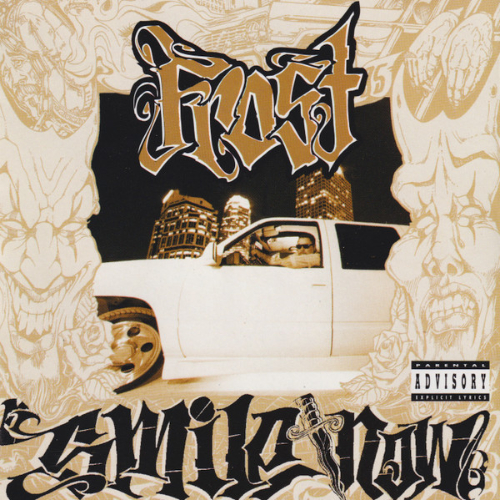
アルバムのオープニングを飾る曲であり、Frost、A.L.T.、O.G. Enius、Diane Gordonが参加。プロデュースはMonte Carlo。
90年代半ばのWest Coastらしい低く滑らかなグルーヴを持ちながら、チカーノ/ローライダー文化の空気が濃く流れている。
特に重要なのは、歌詞の中で車や道路、地名が単なる装飾ではなく、曲の世界そのものを作っていること。
Cadillac、L.A. Wires、whitewall tires、SGV、San Bernardino、Chino――。
こうした固有名詞の積み重ねによって、リスナーは抽象的な「West Coast」ではなく、実際に南カリフォルニアの道路を走っているような感覚へ引き込まれていく。
第一印象
最初に耳を奪われるのは、ラップではなく女性ヴォーカルだ。
「ああ……」と伸びる多重コーラスのような声がイントロいっぱいに広がり、その背後でシンセ/鍵盤系の柔らかな響きが漂う。
そこへドラムが入っても空気は壊れない。
むしろビートは景色を押し進める役割に徹しており、曲全体には真夏の夕方に窓を開けて車を走らせているような開放感がある。
明るい。
しかし、単純に陽気ではない。
低域にはGangsta Rapらしい重さがあり、その上だけが甘く滑らか。この**「ストリートの重量感」と「ソウルフルな甘さ」の共存**が「East Side Rendezvous」の大きな魅力になっている。
サウンド分析
ドラム
実測ではテンポは約83BPM。
かなりゆったりしたミドルテンポで、ローライダー系West Coast Rapと非常に相性のいい速度だ。
キックは必要以上に連打せず、一発一発を低い位置へ置く。スネアも鋭く攻撃するというより、乾いた音でバックビートを明確に刻んでいる。
そのためリズムには「走る」というより、
ゆっくり転がる。
という感覚がある。
細かなパーカッションやハイハットも前へ出すぎず、メインのキック/スネアの間に空間を残している。この余白がラップを聞き取りやすくすると同時に、クルージング向けのゆったりしたグルーヴを作っている。
ベース
低域はこの曲の土台。
ベースは派手に動き回るタイプではなく、ドラムの下を太く支えながら、曲全体を低い位置へ固定している。
ヘッドフォンよりも車内のスピーカーで鳴らしたときに気持ちよさが増しそうな作りで、歌詞に登場するwooferやローライダーの描写とも非常に自然につながる。
重要なのは、低音が重いのに曲が暗くならないこと。
上に乗る女性コーラスと明るいコード感によって、下はGangsta、上はSoul/R&Bという二層構造になっている。
シンセ・メロディ
メロディ面では、イントロから続く女性ヴォーカルと柔らかな鍵盤/シンセの響きが中心。
高域には細く滑らかな音が漂い、G-Funk的な感触はあるものの、甲高いリードシンセを主役にした典型的なG-Funkとは少し違う。
むしろSoulやR&Bの甘さをWest Coastのビートへ溶かしたような感触が強い。
特にヴァースではメロディを詰め込まず、ラップの背後に長く伸びる音を置くことで、道路の先へ景色が広がっていくような奥行きを作っている。
ミックス・グルーヴ
この曲のミックスで印象的なのは、中央のラップと、その周囲を包む女性ヴォーカルの対比。
Frostたちの声は比較的ドライで近い。
対してコーラスは広く、柔らかく、奥行きがある。
そのためヴァースでは車内にいるような近さがあり、フックへ入ると急に窓の外へ景色が開ける。
そして約83BPMという遅めのテンポもあって、4分半ほどある曲にもかかわらず急かされる感覚がほとんどない。
目的地へ急ぐ曲ではなく、移動そのものを楽しむ曲。
このグルーヴ設計がタイトルの「Rendezvous」と見事に噛み合っている。
ラップ/ボーカル分析
Frostのラップは低く落ち着いている。
声を張り上げることなく、まるで助手席に座った相手へ「今日はこんな一日だった」と話しているように言葉を置いていく。
冒頭からFriday、highway、car wash、whitewall tires、Cadillacと、目に見える物を次々に並べていくため、ラップを追うだけで映像が立ち上がる。
O.G. Eniusのパートになると、雰囲気はさらにプレイヤー寄りになる。
街、ウーファー、女性、仲間といった要素が増え、昼間のクルージングから人が集まり始めた夜のEast Sideへと場面が変化する。
A.L.T.のヴァースでは再びドライブの情景が強くなる。
“Friday night”から始まり、SGV、San Bernardino、Chinoと具体的な場所を通過していくことで、曲の終盤には本当に長い夜を走ってきたような感覚が残る。
そして3人の荒めの男性ラップをつなぐのがDiane Gordonの歌声。
甘く伸びやかなフックが入るたびに緊張感がほどけ、
「Come on and roll with me」
という曲の核心――「一緒に走ろう」という誘いが強く伝わってくる。
歌詞・テーマ
この曲の面白さは、大きな事件が起きないことだ。
Frostは金曜日に目を覚まし、車を走らせ、洗車する。
ホワイトウォールをきれいにして、レコード店へ行く。
オールドスクールのテープを買い、Earth, Wind & Fireを聴く。
服を買い、仲間と会い、夜になれば街へ出る。
それだけとも言える。
しかし、その「それだけ」を徹底的に描くことで、90年代のEast Sideにおける一つのライフスタイルが見えてくる。
特に音楽の描写がいい。
FrostはEarth, Wind & Fireを鳴らし、A.L.T.はTeddy Pendergrassを聴きながら走る。
彼らが聴いている音楽まで歌詞に入れることで、70年代Soul/Funkと90年代West Coast Hip-Hopが一本の文化としてつながっていることが伝わってくる。
さらに物語には時間の流れがある。
Fridayの昼 → 洗車 → 買い物 → クルージング → Friday night → SGV → San Bernardino → Chino。
曲が進むにつれて太陽が沈んでいく。
だから「East Side Rendezvous」は単なるローライダー賛歌ではない。
ある金曜日の一日を、車窓から切り取ったロードムービーのような曲なのである。
トリビア
「East Side Rendezvous」は『Smile Now, Die Later』の冒頭を飾る曲で、アルバムの世界へ入る入口として機能している。
歌詞にはCadillac、L.A. Wires、whitewall tiresなど、ローライダー文化を連想させる具体的な要素が数多く登場する。
さらにEarth, Wind & FireやTeddy PendergrassといったSoul/Funk系アーティストが歌詞に登場するのもポイント。
また、地名としてSGV(San Gabriel Valley)、San Bernardino、Chinoなどが登場し、南カリフォルニアの具体的な地理が曲の中に組み込まれている。
制作メモ
プロデュースはMonte Carlo。
今回の音源を聴くと、最大の特徴は音数を増やさずに雰囲気を作っていることにある。
約83BPMのビート、太い低域、柔らかな鍵盤/シンセ、そして女性コーラス。
一つひとつは派手ではない。
しかし、それぞれが十分なスペースを持って配置されているため、4分半を通して心地よいクルージング感が崩れない。
特にイントロとアウトロで女性ヴォーカルを長めに聴かせる構成が効果的。
ラップが終わったあとも「ああ……」という声とトラックだけが残り、車がそのまま夜の道路を走り去っていくような余韻を作っている。
総評
Frost「East Side Rendezvous」は、90年代West Coast/Chicano Rapの魅力を「強さ」ではなく空気で伝える一曲だ。
約83BPMのゆったりしたビート。
車内を揺らす低音。
柔らかな女性コーラス。
Cadillacとホワイトウォール。
Earth, Wind & Fireを鳴らす昼間から、Teddy Pendergrassを聴きながら走る金曜の夜へ。
そしてSGV、San Bernardino、Chinoへ。
すべてが一本につながり、曲を聴いているだけで南カリフォルニアの暑い道路が浮かんでくる。
派手なG-Funkではない。
凶暴なGangsta Rapでもない。
Soul/R&Bの甘さ、West Coastの重い低域、Chicano Rapの地域性、そしてローライダー文化。
それらをゆっくり混ぜ合わせた結果、生まれたのが「East Side Rendezvous」だ。
金曜の夕方、陽が傾き始めた頃に車へ乗り込む。
そんな瞬間に流したくなる、メロウ・クルージング系West Coast Rapの秀作である。
今回ご紹介の楽曲の購入はこちらからどうぞ

Frost – East Side Rendezvous | A Mellow Lowrider Cruise Through Southern California
Soft female harmonies float through the air while thick bass and dry drums slowly roll underneath.
Frost’s “East Side Rendezvous” is not the kind of G-Funk that explodes out of the speakers.
Instead, it settles into an approximately 83 BPM groove and captures the feeling of cruising through Southern California in a lowrider.
Wake up on a Friday morning.
Wash the car.
Clean the whitewalls.
Stop by the record store.
Then hit the streets with Earth, Wind & Fire playing through the speakers.
Eventually the sun goes down.
Friends begin gathering.
And the nighttime drive continues from the SGV toward San Bernardino and Chino.
Three verses from Frost, O.G. Enius, and A.L.T. are connected by Diane Gordon’s sweet chorus.
Together, they capture more than street life.
They capture an entire day on the East Side—from a hot Friday afternoon deep into the night.
Artist Introduction
Frost is one of the important figures in Los Angeles Chicano rap.
Beginning his career under the name Kid Frost, he brought Mexican-American identity and Los Angeles street culture directly into his music, helping expand the visibility of Chicano rap through records such as “La Raza.”
On “East Side Rendezvous,” that strong sense of regional identity remains.
But instead of placing political or social commentary at the center, the song focuses on everyday East Side life:
cars, clothes, music, friends, women, and the city itself.
A.L.T. and O.G. Enius each contribute their own perspective to the same environment.
Their verses do not feel like unrelated guest appearances.
Together, the three rappers turn the song into one continuous cruising story.
Background
“East Side Rendezvous” appears on Frost’s 1995 album Smile Now, Die Later.
The song opens the album and features Frost, A.L.T., O.G. Enius, and Diane Gordon, with production by Monte Carlo.
Musically, it carries the low, smooth groove associated with mid-1990s West Coast rap while surrounding it with the atmosphere of Chicano and lowrider culture.
One of the most important aspects of the song is how cars, roads, and place names function as more than decoration.
Cadillac.
L.A. Wires.
Whitewall tires.
SGV.
San Bernardino.
Chino.
The accumulation of these details pulls the listener away from an abstract idea of “the West Coast.”
Instead, the song begins to feel geographically real.
You are not simply hearing about Southern California.
You begin to feel as if you are actually driving through it.
First Impression
The first thing that captures the ear is not the rap.
It is the female vocal.
A layered, wordless voice stretches across the intro while soft keyboard and synth textures drift behind it.
Even when the drums arrive, they do not destroy that atmosphere.
The beat simply begins moving the scenery forward.
There is a sense of openness throughout the track, like driving with the windows down on a warm California evening.
It sounds bright.
But it is not simply cheerful.
There is still the weight of gangsta rap in the low frequencies.
The upper half of the track, however, remains sweet and smooth.
That coexistence is one of the great strengths of “East Side Rendezvous”:
street-level weight underneath, soulful sweetness above.
Sound Analysis
Drums
The tempo measures at approximately 83 BPM.
It is a relaxed midtempo pace that fits lowrider-oriented West Coast rap naturally.
The kick does not constantly fire through the pattern.
Each hit is placed deliberately in the lower part of the mix.
The snare is similarly restrained.
Rather than attacking aggressively, it establishes the backbeat with a dry, clearly defined strike.
The rhythm therefore feels less like it is running and more like it is:
rolling slowly.
Smaller percussion and hi-hat details remain controlled.
They leave plenty of space between the main kick and snare hits.
That space makes the verses easy to follow while creating the relaxed groove necessary for cruising.
The beat never seems interested in reaching the destination quickly.
It simply keeps the car moving.
Bass
The low end forms the foundation of the track.
The bass does not move through an elaborate series of notes.
Instead, it sits heavily underneath the drums and keeps the entire record anchored close to the ground.
This is the kind of low end that seems designed to become even more satisfying through a car sound system.
That makes it a natural match for the references to woofers, Cadillacs, and lowrider culture in the lyrics.
But the most important detail is that the heavy bass never makes the track feel excessively dark.
The female harmonies and brighter chord textures above it create a two-level sound:
Gangsta Rap weight below.
Soul/R&B sweetness above.
That balance defines much of the record’s atmosphere.
Synths & Melody
The melodic center comes from the female vocals and the soft keyboard and synth textures that remain present from the introduction onward.
Thin, smooth tones float in the upper register, giving the track a G-Funk-adjacent feeling.
But this is not classic G-Funk built around a piercing lead synth.
The sound is softer.
It feels closer to the sweetness of Soul and R&B being dissolved into a West Coast rap beat.
The verses are especially restrained melodically.
Instead of filling every open space, the production allows sustained sounds to remain behind the rappers.
That creates depth.
It almost feels as though the road continues far beyond what can be seen through the windshield.
Mix & Groove
One of the most effective aspects of the mix is the contrast between the centered rap vocals and the female harmonies surrounding them.
Frost and the other rappers sound relatively dry and close.
The chorus feels wider, softer, and further away.
During the verses, that creates the intimacy of sitting inside the car.
When the hook arrives, the scenery suddenly seems to open outside the windows.
The approximately 83 BPM tempo is equally important.
Even across roughly four and a half minutes, there is almost no sense of urgency.
This is not a song about reaching a destination.
It is a song about enjoying the movement itself.
That makes the groove a perfect match for the word “Rendezvous.”
Rap / Vocal Analysis
Frost’s delivery is low and relaxed.
He does not need to raise his voice.
Instead, he places the words into the beat almost as though he were telling someone in the passenger seat how his day unfolded.
From the beginning, the lyrics introduce visible objects and locations:
Friday.
The highway.
The car wash.
Whitewall tires.
A Cadillac.
Because the writing relies so heavily on concrete details, the scenes appear almost automatically while listening.
When O.G. Enius takes over, the atmosphere becomes more player-oriented.
Woofers, women, friends, and the streets begin filling the picture.
The song gradually shifts from daytime cruising toward an East Side night where people are beginning to gather.
A.L.T.’s verse returns strongly to the imagery of driving.
Beginning with “Friday night,” the verse moves through the SGV, San Bernardino, and Chino.
By the end, it genuinely feels as if the listener has spent hours on the road.
Connecting those three male perspectives is Diane Gordon.
Her sweet, extended hook repeatedly releases the tension created by the rougher rap voices.
And the central invitation—
“Come on and roll with me”
—captures the entire philosophy of the song.
Do not just listen.
Get in the car.
Come along.
Lyrics & Themes
One of the most interesting things about “East Side Rendezvous” is that nothing especially dramatic has to happen.
Frost wakes up on Friday.
He gets in the car.
He washes it.
He cleans the whitewalls.
He visits the record store.
He picks up some old-school music.
He listens to Earth, Wind & Fire.
He buys clothes.
He meets friends.
Then night arrives and everyone heads back into the streets.
That could sound uneventful on paper.
But by concentrating so intensely on those ordinary details, the song captures a specific lifestyle on the East Side during the 1990s.
The references to music are especially revealing.
Frost rides with Earth, Wind & Fire.
A.L.T. cruises while listening to Teddy Pendergrass.
By naming the music playing inside the cars, the song connects 1970s Soul and Funk directly to 1990s West Coast Hip-Hop.
They do not feel like separate cultures.
They become different generations of the same musical lifestyle.
There is also a clear passage of time throughout the lyrics:
Friday afternoon
→ car wash
→ shopping
→ cruising
→ Friday night
→ SGV
→ San Bernardino
→ Chino.
The sun seems to set as the record progresses.
That is why “East Side Rendezvous” feels like more than a lowrider anthem.
It plays like a road movie capturing one Friday through the windshield.
Trivia
“East Side Rendezvous” opens Smile Now, Die Later, making it the listener’s entrance into the album.
The lyrics contain numerous references associated with lowrider culture, including Cadillacs, L.A. Wires, and whitewall tires.
Soul and Funk artists are also directly referenced.
Earth, Wind & Fire and Teddy Pendergrass are not random name-drops.
They help establish the musical world inside the cars being described.
The geography is equally important.
SGV—San Gabriel Valley—along with San Bernardino and Chino places the song inside a recognizable Southern California landscape.
These details give “East Side Rendezvous” a sense of place that would disappear if the lyrics simply said “West Coast.”
Production Notes
The track was produced by Monte Carlo.
One of the strongest qualities of the production is its ability to create atmosphere without overcrowding the arrangement.
An approximately 83 BPM beat.
Thick low end.
Soft keyboards and synths.
Female harmonies.
None of those elements are especially extravagant on their own.
But each is given enough space that the cruising atmosphere remains intact throughout the track.
The extended use of the female vocal in the intro and outro is particularly effective.
After the final rap section ends, the wordless voice and instrumental continue to linger.
The rappers may have stopped talking.
But the car seems to keep moving.
The effect is almost cinematic:
the lowrider disappears further down the road while the music remains hanging in the night air.
Final Thoughts
Frost’s “East Side Rendezvous” captures the appeal of 1990s West Coast and Chicano rap through atmosphere rather than aggression.
An easy 83 BPM groove.
Low frequencies moving through the car.
Soft female harmonies.
Cadillacs and whitewalls.
Earth, Wind & Fire during the day.
Teddy Pendergrass on a Friday night.
Then the SGV, San Bernardino, and Chino.
Everything connects into one continuous journey until the listener can almost feel the heat rising from the Southern California pavement.
This is not flashy G-Funk.
It is not brutally aggressive gangsta rap.
It exists somewhere between several worlds:
the sweetness of Soul and R&B,
the heavy low end of West Coast rap,
the regional identity of Chicano rap,
and the lifestyle of lowrider culture.
“East Side Rendezvous” blends all of them together at a slow, effortless pace.
It is the kind of track that makes you imagine getting into the car on a Friday afternoon just as the sun begins to drop.
A mellow West Coast cruising classic where the ride itself matters more than the destination.
コメント