JCDの「Been A Long Time」は、長い空白期間を経て再び姿を現した男が、変わってしまったラップ・ゲームを冷静に見渡す一曲だ。
ゆったりとしたファンク・グルーヴ、丸みのあるベース、明るさを残したシンセ、その上を走る力強いラップ。表面的には滑らかで聴きやすいが、JCDの視線は鋭い。
彼が批判するのは、週末だけ派手に振る舞う者、金持ちのふりをする者、映像の中だけ高級車に乗る者、ブランド品や高価な酒を成功の証明として見せつける者たちだ。
長い間シーンから離れていたJCDが戻ってきたとき、目の前にあったのは本物と偽物の境界が曖昧になった世界だった。
「Been A Long Time」というタイトルは、単に「久しぶり」という意味ではない。
それは、しばらく表舞台から離れていたJCDによる帰還の宣言であり、同時に、長く見てきた者だからこそ語れるラップ・ゲームへの警告でもある。
アーティスト紹介
JCDは、ミズーリ州セントルイスを拠点としたGangsta Rapアーティストである。
1990年代初頭から活動していたとされ、2001年にはアルバム『One Foot In The Grave』を発表。「Been A Long Time」は同作の10曲目に収録されている。
アルバムの資料上では、B&B ProductionsとM.I.D.T. Recordsがレーベルとして記載され、Carl B.がプロデューサーとしてクレジットされている。また、エグゼクティブ・プロデューサーにはJames BellとTony Jonesの名前が確認できる。
セントルイスは南部と中西部の両方の文化が交わる地域であり、そのラップには西海岸的なファンク感覚、南部ラップの重さ、Midwest特有の硬質なフロウが混ざり合うことがある。
JCDの「Been A Long Time」にも、滑らかなG-Funk的音色と、言葉数の多い攻撃的なラップが同居している。
ただし、西海岸G-Funkをそのまま模倣した作品というより、セントルイスのローカル・ラップがG-Funk的なサウンドを独自に取り込んだ一曲として捉える方が適切だろう。
作品背景
「Been A Long Time」は、JCDが2001年に発表した全13曲入りのアルバム『One Foot In The Grave』に収録されている。
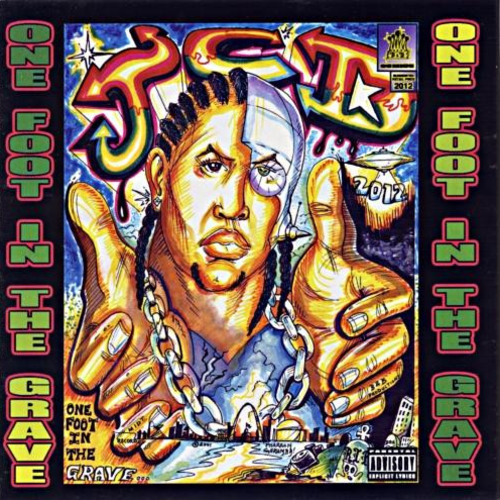
曲順は10曲目。後半に配置され、その後に「Love Song」「What The F–k?」、そしてアルバム表題曲「One Foot In The Grave」が続く。
音源の長さは約4分47秒。
タイトルどおり、楽曲の中心にあるのは「長い時間を経て戻ってきた」という感覚である。
冒頭ではJCDと仲間と思われる人物との会話が入り、久しぶりの再会を喜ぶやり取りから始まる。そこで繰り返される「long time」という言葉が、そのまま曲本編への導入になっている。
会話の中では、M.I.D.T.の存在を再び前へ押し出そうとしていることも語られる。
つまり本作は、JCD個人の帰還だけでなく、自分たちの陣営や地元の存在を再び示すための再始動曲としての性格も持っている。
ただし、歌詞内で言及される人物や団体の詳しい関係については、公開資料だけでは確認できない部分がある。
第一印象
最初に感じるのは、堂々とした余裕だ。
曲は約96BPM前後のミドルテンポで進み、焦って相手を威圧するような作りではない。
むしろ、JCDが時間をかけて周囲を観察し、「誰が本物で、誰が演じているだけなのか」を一人ずつ見抜いていくような落ち着きがある。
ビートには明るさがあり、ベースも滑らかだ。しかし、その上で展開されるラップはかなり攻撃的である。
この聴きやすいファンク感と辛辣な言葉の対比が、本作の大きな特徴になっている。
タイトルだけを見ると、過去を懐かしむ回想曲のようにも思える。
実際には、懐古よりも現在への批判が中心だ。
JCDは過去を美化するのではなく、長い時間を経て戻った自分の目に、現在のラップ・ゲームがどう映っているのかを語っている。
サウンド分析
ドラム
ドラムは、約96BPM前後の安定したミドルテンポを作っている。
キックは極端に重く潰すような音ではなく、ベースの動きを支えるように配置されている。スネアは乾いた硬さを持ち、一定の位置で明確に鳴る。
細かい打ち込みで緊張感を作るタイプではなく、基本的には大きなグルーヴを維持する構成だ。
そのため、JCDが言葉数を増やしてもビートが窮屈にならない。
ヴァースではラップの情報量が多い一方、ドラムは必要以上に主張せず、声が前に出る空間を残している。
ハイハットも派手な連打ではなく、一定のリズムを刻みながら曲全体を前へ運ぶ。
2000年代以降の南部ラップに多い細かなハイハット・ロールではなく、90年代型のファンク/Gangsta Rapに近い組み方である。
ベース
ベースは、本作のサウンドを支える中心的な要素だ。
低域をただ長く伸ばすのではなく、フレーズとして上下しながらドラムの隙間を埋めている。
音色には丸みがあり、強い歪みや攻撃性はない。そのため、歌詞の内容が厳しくても、トラック全体には滑らかな聴き心地が残る。
このベースの動きが、曲にG-Funk的な感触を与えている。
ただし、Dr. Dre周辺のような巨大で立体的な低音というより、ローカル・ラップらしい少し乾いた質感がある。
豪華に磨き上げるよりも、ラップを前に出しながらファンクの粘りを加える役割だ。
フックでは同じ低音パターンが繰り返されることで、「戻ってきた」「長い時間が経った」という言葉の反復をより印象的にしている。
シンセ・メロディ
メロディ面では、高域のシンセと鍵盤系の音が重要な役割を果たしている。
イントロから聴こえるシンセは、暗黒的というより、やや明るく開放的だ。短い音の反復がベースと絡み、都会的なファンク感を作っている。
背景には持続音や柔らかなコードも配置されているが、メロディが複雑に展開するわけではない。
基本的には少数のモチーフを繰り返し、JCDのラップを中心に据えている。
推定上はAメジャー周辺、またはその近親調に感じられる明るい響きがあり、一般的なGangsta Rapの暗さとは少し異なる。
この明るい音色があるため、曲は復讐や絶望を語る作品には聞こえない。
むしろ、長い不在を経ても自信を失っていない男が、再び表舞台へ歩き出すような前向きな力を持っている。
終盤ではシンセの反復とフックが重なり、JCDの帰還を何度も強調する。
ミックス・グルーヴ
ミックスはラップを最前面に置いた作りだ。
JCDの声は中央に大きく配置され、ベースとドラムはその下を安定して支えている。
現代の作品と比べると音圧は極端に高くなく、それぞれの音の間に空間がある。特にヴァースでは、声の細かな抑揚や語尾が聞き取りやすい。
フックでは複数の声が重なり、ヴァースよりも横に広がる。
メインのラインに低い声や合いの手が加わることで、JCD個人の独白から、仲間たちを含む集団の宣言へと変化する。
グルーヴは終始安定しており、大幅なビートチェンジはない。
同じ土台を保ちながら、ヴァース、フック、語り、シャウトアウトを切り替えていく構成である。
派手な展開ではなく、一定のビートに乗り続けることで説得力を生むタイプの楽曲だ。
ラップ/ボーカル分析
JCDのラップは、太く押し出す声と、細かく言葉を詰め込むフロウを組み合わせている。
声質には低さと硬さがあるが、単調ではない。
強調したい単語では声を前へ突き出し、パンチラインの後には短く間を作る。そこへ合いの手が入り、会話のようなリズムが生まれている。
ヴァースでは、一つの話題を長く説明するというより、偽物のギャング、高級品への執着、女性関係、金、ラップの実力といった題材を次々に切り替える。
連想的に言葉をつなぎながら、自分が相手より一段上にいることを示していくスタイルだ。
フロウはビートの後ろへ大きくもたれるタイプではなく、比較的前へ進む。
ミドルテンポのビートに対して言葉数が多いため、トラックの滑らかさとラップの勢いの間に緊張感が生まれている。
特に印象的なのは、単に自分を大きく見せるだけでなく、見せかけの成功を具体的な場面によって暴いていく点だ。
映像では高級車に乗っていても、実生活では古い車の支払いに追われている。
高価な服や酒を見せても、実際には金がない。
そうした矛盾を次々に指摘することで、JCDは相手のイメージを崩していく。
フックは複数の声で繰り返される。
「長い間離れていた」「待たせて悪かった」という内容が歌われ、ヴァースの攻撃性に対して、帰還のテーマを明確に整理する役割を果たしている。
メロディアスに歌い上げるフックではないが、言葉の反復と声の重なりによって強い記憶性を持っている。
歌詞・テーマ
本作の中心的なテーマは、帰還、本物と偽物の対立、そして変化したラップ・ゲームへの批判である。
長い不在からの帰還
タイトルの「Been A Long Time」は、JCDが長く表舞台から離れていたことを示す言葉として機能している。
冒頭の会話でも、久しぶりの再会や、長い時間が経過したことが強調される。
フックでは、自分がしばらく姿を見せていなかったことを認めながら、待たせた相手に帰還を告げる。
しかし、その態度に弱さはない。
謝罪というより、待たせたが、ついに戻ってきたという自信に満ちた宣言だ。
偽物への批判
JCDが特に強く否定するのは、一時的にギャングや成功者を演じる者たちである。
週末だけ派手に振る舞う者、子どものように本物をまねる者、ブランドや高級酒によって地位を示そうとする者。
彼はそうした人物を「リアル」とは認めない。
JCDが評価するのは、実際に動き、状況を変え、結果を残す者たちである。
ここで重要なのは、単なる物質主義批判ではない点だ。
JCD自身も金、車、女性、成功について語っている。
つまり、富そのものを否定しているのではなく、手にしていないものを持っているように演じる行為を否定している。
ラップの内容と技術
第2ヴァースでは、当時のラップに不足しているとJCDが感じる「歌詞の内容」を、自分のフロウで補うという姿勢が示される。
これは本作の重要な自己定義だ。
JCDは、ブランド名や高価な酒を並べることではなく、言葉、経験、現実を語ることによって自分の価値を示そうとする。
ラップの技術についても、自分を模倣する者や表面だけをコピーする者を批判する。
本物の経験を持たない者は、状況が深刻になった瞬間に正体を現すという考え方だ。
そのため本作における「リアル」とは、単に犯罪歴や暴力性を指すのではない。
発言と生活が一致していること、自分の経験を自分の言葉で語れること、見せかけに頼らないことが「リアル」の条件になっている。
成功という演出
第3ヴァースでは、ミュージック・ビデオの中で演出される成功と、現実の生活との落差が描かれる。
映像では高級車を運転していても、実際には別の車の支払いに苦しんでいる。
富豪のように振る舞っていても、本当は金がない。
高価な服やバッグを持っていても、その中身は空に近い。
JCDは、2000年代初頭のヒップホップに広がっていた派手な成功イメージを、現実との比較によって解体していく。
これは現在のSNS文化にも通じるテーマである。
画面に映る生活と、実際の生活が同じとは限らない。
「Been A Long Time」は2001年の作品だが、成功した人物を演じることが価値として消費される状況への批判は、今聴いても古びていない。
地元と仲間への忠誠
終盤では、South Side、West Side、North Side、East Sideといった各地域への言及が入り、地元全体を代表するような姿勢が示される。
これは単なる個人の自慢で終わらせず、自分を支えてきた地域や仲間へ曲を返す場面だ。
複数の人物名も読み上げられ、JCDの帰還が個人的な出来事ではなく、コミュニティに関係する出来事として描かれる。
最後に新しい時代へ入ったことを示す言葉が置かれることで、本作は過去への回帰ではなく、新しい千年紀における再出発として締めくくられる。
トリビア/制作メモ
「Been A Long Time」は、2001年のアルバム『One Foot In The Grave』の10曲目に収録されている。
資料上ではアルバムのプロデューサーとしてCarl B.、エグゼクティブ・プロデューサーとしてJames BellとTony Jonesが記載されている。ただし、「Been A Long Time」単曲の詳細な個別クレジットまでは、今回確認できた公開資料からは判別できない。
曲尺は音源上で約4分47秒、テンポは解析上およそ96BPM。
構成は以下のように整理できる。
- 会話形式のイントロ
- JCDによる語り
- 第1ヴァース
- フック
- 第2ヴァース
- フック
- 短いブリッジ/語り
- 第3ヴァース
- フックとシャウトアウトを重ねたアウトロ
特にアウトロが長く、同じフックを繰り返しながら、地元の地域名や仲間の名前を次々に加えていく。
そのため、曲の終盤は通常のフックというより、JCDとM.I.D.T.の帰還を周囲へ知らせるロールコールに近い。
具体的なサンプリング元については、信頼できる資料で確認できなかった。
音源には70年代から80年代のファンクを思わせるベースやシンセの感触があるものの、既存曲の直接的なサンプリングなのか、新たに演奏・打ち込みされた音なのかは断定できない。
総評
JCDの「Been A Long Time」は、長い不在を経て戻ってきたラッパーの復帰曲である。
しかし、その内容は単純な自己紹介や近況報告ではない。
JCDは、自分が離れていた間に広がった偽物の成功、演じられたギャング像、中身を失ったラップを一つずつ批判していく。
約96BPMの滑らかなファンク・トラックは聴きやすいが、言葉の内容は鋭い。
丸みのあるベース、明るいシンセ、乾いたドラムという組み合わせが、攻撃的な歌詞に余裕と風格を与えている。
JCDは大声で自分の帰還を誇示する必要がない。
長くシーンを見てきた経験、現実を見抜く視点、そしてビートの上で途切れず言葉を運ぶ技術そのものが、彼の存在を証明しているからだ。
「Been A Long Time」というタイトルには、待たせたリスナーへの言葉だけでなく、偽物が増えたラップ・ゲームへの宣告が込められている。
長い間姿を消していた男が戻ったとき、最初に行ったのは自分を飾ることではなく、周囲の化けの皮を剥がすことだった。
セントルイスのローカルG-Rapが持つファンク、硬さ、地域への忠誠を一曲に凝縮した、静かだが力強い帰還宣言である。
JCD – Been A Long Time | A St. Louis Comeback Built on Funk, Authenticity and a Warning to Fake Rappers
JCD’s “Been A Long Time” is the sound of a man returning after a long absence and calmly surveying how much the rap game has changed.
A laid-back funk groove, rounded bass, bright synthesizers, and forceful rapping give the track an immediately smooth and accessible surface.
But JCD’s perspective is much sharper than the production suggests.
He takes aim at people who only act flashy on the weekends, those pretending to be rich, rappers driving luxury cars only in their videos, and anyone using designer clothes or expensive liquor as proof of success.
When JCD returns after spending years away from the scene, he finds a world where the line between what is real and what is performed has become increasingly blurred.
The title “Been A Long Time” therefore means more than simply “it’s been a while.”
It is a declaration of JCD’s return.
At the same time, it is a warning about the rap game from someone who believes he has been around long enough to recognize the difference between reality and image.
Artist Introduction
JCD is a gangsta rap artist associated with St. Louis, Missouri.
He is documented as having been active from the early 1990s, and in 2001 he released the album One Foot In The Grave.
“Been A Long Time” appears as the tenth track on that project.
Album documentation lists B&B Productions and M.I.D.T. Records as labels, with Carl B. credited as a producer.
James Bell and Tony Jones are also listed as executive producers.
St. Louis sits at a cultural crossroads between the Midwest and the South.
As a result, rap from the area can combine the funk influence of the West Coast, the weight of Southern rap, and the harder rhythmic delivery often associated with the Midwest.
“Been A Long Time” reflects that mixture.
The production carries smooth G-Funk-influenced textures while JCD delivers a dense, forceful rap performance.
Rather than describing it as a simple imitation of West Coast G-Funk, however, it makes more sense to hear the track as St. Louis local rap absorbing G-Funk language and reshaping it around its own regional identity.
Background
“Been A Long Time” appears on JCD’s 2001 album One Foot In The Grave, a 13-track release.
It is positioned as track ten, followed by “Love Song,” “What The F–k?,” and the title track “One Foot In The Grave.”
The version examined here runs for approximately 4 minutes and 47 seconds.
As the title suggests, the central idea is the feeling of returning after a long period of time.
The song begins with a conversation between JCD and what sounds like an associate, with both acknowledging that it has been a long time since they last connected.
The repeated phrase “long time” then becomes the natural entry point into the song itself.
The conversation also suggests an effort to bring M.I.D.T. back to the forefront.
That gives the track a broader meaning.
It is not simply about JCD returning as an individual.
It also carries the feeling of reintroducing his camp, his circle, and his local identity to the scene.
However, the exact relationships between some of the people and organizations mentioned in the lyrics cannot be fully confirmed from the available public information.
First Impression
The first impression is confidence without urgency.
The song moves at approximately 96 BPM, creating a steady mid-tempo groove.
There is no sense that JCD needs to rush or aggressively force his presence onto the listener.
Instead, he sounds like someone taking his time, watching the people around him and deciding who is real and who is only acting.
The beat retains a certain brightness, and the bass remains smooth.
The rapping over it, however, is considerably more confrontational.
That contrast between easygoing funk and cutting criticism is one of the defining characteristics of the track.
Judging by the title alone, “Been A Long Time” might sound like a nostalgic record about the past.
In reality, nostalgia is not the main focus.
JCD does not spend the song romanticizing an earlier era.
He uses his time away from the scene as a vantage point from which to criticize what the rap game has become.
Sound Analysis
Drums
The drums establish a steady mid-tempo groove at roughly 96 BPM.
The kick is not overwhelmingly heavy or crushed.
Instead, it supports the movement of the bass and gives the track a stable low-end foundation.
The snare has a dry, firm quality and lands clearly in a consistent position.
This is not a beat that creates tension through extremely detailed programming.
Its main purpose is to preserve a large, steady groove.
Because of that, JCD can increase the density of his lyrics without making the track feel overcrowded.
The verses contain a large amount of information, but the drums remain controlled enough to leave space for his voice.
The hi-hats are similarly straightforward.
Rather than rapid rolls associated with later Southern rap production, they maintain an even pattern closer to the funk-oriented and gangsta rap rhythms of the 1990s.
Bass
The bass is one of the central elements holding the track together.
Rather than simply sustaining low notes, it moves as an actual phrase, rising and falling through the gaps in the drums.
Its tone is rounded and relatively clean, without heavy distortion or excessive aggression.
That gives the track a smooth listening quality even when JCD’s lyrics become confrontational.
The bass movement is also one of the strongest sources of the track’s G-Funk feel.
But it does not have the enormous, highly polished depth associated with the biggest Dr. Dre productions.
There is a slightly drier quality more typical of independent local rap.
The goal is not to overwhelm the listener with luxurious low-end production.
It is to keep the rap in front while adding a persistent funk pull underneath.
During the hook, the repeated bass pattern reinforces the repeated idea that JCD has returned after a long absence.
Synths & Melody
In the melodic layer, high-register synthesizers and keyboard sounds play an important role.
The synth heard from the intro onward is not particularly dark.
Instead, it carries a slightly bright and open character.
Short melodic phrases interact with the bass to create an urban funk atmosphere.
Sustained tones and softer chords are also present in the background, although the arrangement never develops into a highly complex melody.
A small number of motifs are repeated while JCD’s rapping remains the primary focus.
The tonal center feels relatively bright, giving the record a quality that differs from darker forms of gangsta rap.
Because of that brightness, “Been A Long Time” does not feel like a song built around revenge or despair.
It sounds more like a man returning after a long absence with his confidence completely intact.
Toward the end, the repeated synth phrases combine with the hook to emphasize that return again and again.
Mix & Groove
The mix places the rap vocals firmly in the foreground.
JCD’s voice is large and centered, while the bass and drums form a stable foundation underneath.
Compared with modern recordings, the overall loudness is not excessively compressed.
There is still audible space between the different elements.
That is especially useful during the verses, where small changes in JCD’s phrasing and emphasis remain easy to hear.
During the hook, multiple voices are layered together and the mix becomes wider.
Low voices and ad-libs join the main line, shifting the song from JCD’s individual voice toward something closer to a collective statement.
The groove remains stable from beginning to end.
There are no dramatic beat switches.
Instead, the arrangement moves between verses, hooks, spoken sections, and shout-outs while preserving the same underlying foundation.
This is a track that builds authority through consistency rather than spectacle.
Rap / Vocal Analysis
JCD’s performance combines a thick, projecting voice with a flow capable of packing a large number of words into the beat.
His tone is low and hard, but never completely flat.
When he wants to emphasize a phrase, he pushes his voice forward.
After certain punchlines, he leaves a short pause.
Ad-libs fill those spaces, creating a conversational rhythm inside the performance.
Rather than explaining one subject for an extended period, the verses move quickly between fake gangstas, designer culture, women, money, status, and rap ability.
JCD links those ideas associatively, using each one to reinforce the belief that he operates on a higher level than the people he is criticizing.
His flow does not lean heavily behind the beat.
It tends to move forward.
Because he delivers a large number of words over a relaxed mid-tempo instrumental, a useful tension develops between the smoothness of the track and the pressure of his delivery.
One of the most effective parts of the performance is the way JCD exposes fake success through specific everyday examples.
A rapper may drive an expensive car in a music video, yet struggle to make payments on an older vehicle in real life.
Someone may display expensive clothing or liquor while having little actual money.
By pointing out these contradictions, JCD gradually destroys the image his targets are trying to present.
The hook is repeated by multiple voices.
Its message centers on having been gone for a long time and acknowledging that the audience has had to wait for his return.
It is not a melodic R&B chorus.
Its memorability instead comes from repetition and the weight of the combined voices.
Where the verses attack false images, the hook keeps bringing the song back to its central idea:
JCD is back.
Lyrics & Themes
The main themes of the song are return, the conflict between authenticity and fakery, and criticism of a rap game that has changed during JCD’s absence.
Returning After a Long Absence
The phrase “Been A Long Time” functions as a direct acknowledgment that JCD has been away from the public eye.
The opening conversation repeatedly emphasizes how much time has passed.
The hook also recognizes that listeners have not seen or heard from him for a while.
But there is no weakness in the way he frames that absence.
It does not sound like an apology.
It sounds more like:
I know I kept you waiting, but now I’m finally back.
Criticism of Fake Personas
JCD’s strongest criticism is reserved for people who temporarily perform the role of a gangsta or successful rapper.
He mocks those who only become flashy on weekends.
He criticizes people who imitate the real thing like children playing dress-up.
He also takes aim at anyone using designer labels and expensive liquor as shortcuts to status.
To JCD, those things do not make someone real.
He respects people who actually move, change their circumstances, and produce real results.
Importantly, this is not a complete rejection of material wealth.
JCD himself talks about money, cars, women, and success.
The problem is not having luxury.
The problem is pretending to possess a lifestyle that does not match reality.
Rap Content and Skill
In the second verse, JCD positions himself as someone bringing back what he believes the rap game is missing:
substance.
This is an important part of how he defines himself.
He does not want his value to come from naming designer brands or expensive bottles.
He wants it to come from words, experience, and the ability to describe reality.
He is equally critical of people who imitate his style or copy only the visible surface of what he does.
In his worldview, anyone without real experience will eventually expose themselves when circumstances become serious.
That means “realness” in “Been A Long Time” is not simply about violence or criminal history.
It means that what a person says matches how that person actually lives.
It means speaking from personal experience.
It means refusing to rely entirely on image.
Success as Performance
The third verse becomes especially focused on the difference between success shown in music videos and actual daily life.
Someone may be driving a luxury vehicle on screen while struggling to pay for a completely different car at home.
A person may act wealthy while having little real money.
Expensive clothes or bags may look impressive, but the lifestyle behind them may be empty.
JCD uses those comparisons to tear apart the highly visible success imagery that had become increasingly important in hip-hop by the early 2000s.
That theme also feels surprisingly modern.
The life shown on a screen is not always the life being lived.
Although “Been A Long Time” was released in 2001, its criticism of performing success for public consumption easily connects with the social-media era.
Loyalty to His City and His People
Toward the end of the track, references to the South Side, West Side, North Side, and East Side expand the song beyond individual self-promotion.
JCD begins to sound as though he is representing the wider local community.
Several names are also shouted out, making his return feel less like a private event and more like something involving his entire circle.
The final references to a new era reinforce that idea.
This is not simply an attempt to recreate the past.
It is framed as a new beginning in a new millennium.
Trivia / Production Notes
“Been A Long Time” appears as the tenth track on JCD’s 2001 album One Foot In The Grave.
Album-level documentation lists Carl B. as a producer, while James Bell and Tony Jones are credited as executive producers.
However, the available public information does not clearly establish the exact individual production credit for “Been A Long Time” itself.
The version analyzed here runs for approximately 4 minutes and 47 seconds, with a measured tempo of roughly 96 BPM.
Its structure can be organized as follows:
- Conversational intro
- Spoken section from JCD
- Verse 1
- Hook
- Verse 2
- Hook
- Short bridge / spoken section
- Verse 3
- Extended hook and shout-out outro
The outro is especially long.
As the hook continues, JCD adds local area references and names of people from his circle.
Because of that, the final section feels less like a conventional chorus and more like a roll call announcing the return of JCD and M.I.D.T.
No reliable source confirming a specific sample has been identified.
The recording contains bass and synthesizer textures reminiscent of 1970s and 1980s funk, but it cannot be confirmed whether those sounds come from direct sampling or newly played and programmed instrumentation.
Final Thoughts
JCD’s “Been A Long Time” is a comeback record from a rapper returning after a lengthy absence.
But it is much more than a simple reintroduction.
JCD uses his return to criticize fake success, manufactured gangsta personas, and the lack of substance he believes has spread through the rap game while he was away.
The smooth funk production at roughly 96 BPM makes the song easy to listen to.
The lyrics are much sharper.
Rounded bass, bright synthesizers, and dry drums give JCD’s attacks a sense of space and confidence.
He does not need to scream that he has returned.
His experience, his ability to recognize false images, and his control over a word-heavy flow already make that point for him.
The title “Been A Long Time” is therefore aimed at more than the listeners who had been waiting to hear from him.
It also sounds like a message to a rap game full of people he believes have forgotten the difference between image and reality.
When a man who had been gone for years finally returned, his first move was not to decorate himself—it was to strip away everyone else’s disguise.
With its combination of funk, toughness, regional loyalty, and skepticism toward false success, “Been A Long Time” stands as a quiet but forceful comeback statement from the St. Louis underground.
コメント