Kedy、Alsco、Dogg Masterによる「On Ride」は、アメリカ西海岸のG-Funkを表面的に模倣しただけの楽曲ではない。
約91BPMのゆったりとしたビート、車体の下から響くようなベース、細く伸びる高音シンセ、幾重にも重ねられたコーラス、そしてRoger Troutman以降の系譜を感じさせるトークボックス。その上をフランス語のラップが流れ、Californiaを思わせる景色とフランスの都市生活が一つの車内で混ざり合っていく。
歌詞に描かれるのは、Impala、Cadillac、煙、酒、仲間、女性、警察への反発、そして夜通し街を走り続ける若者たちだ。
ただし「On Ride」の魅力は、そうしたWest Coast的な記号の多さだけではない。
荒々しいストリート描写を含みながら、トラック自体は驚くほど滑らかで、コーラスにはどこか夢見心地の甘さがある。威圧感と解放感、危険な夜と穏やかなドライブ感覚が同時に存在している。
「On Ride」は、フランスのラッパーたちがG-Funkという様式を借り、自分たちの街、自分たちの仲間、自分たちの夜を映し出したクルージング・アンセムである。
アーティスト紹介
Kedyは、フランス語ラップとアメリカ西海岸系サウンドを結びつけるアーティストである。
「On Ride」が収録された『Les contes de la street』は2010年に発表された作品で、全18曲を収録。「On Ride」はアルバムの10曲目に配置されている。配信上ではKedy、Alsco、Dogg Masterの連名で表記され、楽曲時間は約4分39秒となっている。
アルバムにはDogg Master、Alsco、Aelpéachaら、フランスのG-Funk/West Coast系統と関係の深い人物が参加している。
Kedyの特徴は、硬質なストリートラップだけに偏らず、歌、コーラス、ファンク、R&B的な甘さを積極的に取り入れる点にある。「On Ride」でも、ラップだけで押し切るのではなく、メロディックなフックやトークボックスを使い、楽曲全体を一つの夜景のように組み立てている。
Alscoは、Kedyと同じ車に乗り込む仲間として機能するラッパーだ。
同作では「Qui」「On Ride」「Realz Recognize Realz」など複数曲でKedyと共演している。単発の客演というより、同じ街や価値観を共有するクルー的な存在として捉えるほうが自然だろう。
Dogg Masterは、フランスのG-Funkを語るうえで欠かせないプロデューサー、シンガー、トークボックス奏者である。
「On Ride」における彼の役割は、単なるゲストボーカルではない。高音シンセ、ファンク的なコード、歌声、トークボックスを通じて、楽曲の世界をWest Coastへ接続する案内役となっている。
作品背景
「On Ride」は、2010年のアルバム『Les contes de la street』に収録された楽曲である。
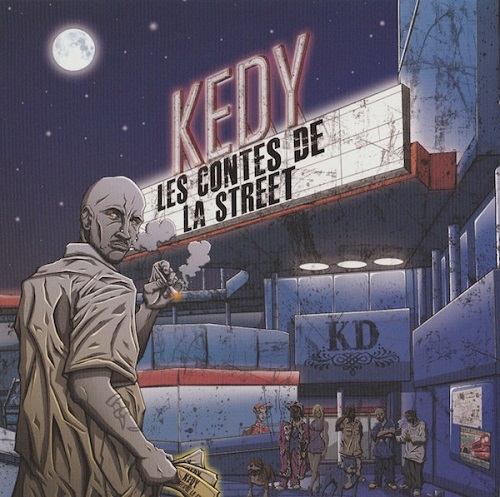
アルバムの配信情報には多少の表記差があり、再配信版では別年が表示される場合もあるが、複数の音楽サービスではオリジナルのリリース日を2010年としている。曲名は「On Ride」、参加者はKedy、Alsco、Dogg Master、ジャンルはHip-Hop/Rapとして登録されている。
タイトルに使われた「Ride」は、単に自動車に乗る行為だけを意味していない。
G-FunkやWest Coast Rapにおける“ride”は、仲間と街を流すこと、車内で音楽を鳴らすこと、自分の地域を示すこと、敵や警察の視線をかわしながら夜を過ごすことまで含んだ文化的な言葉である。
「On Ride」は、その文化をフランスの都市空間へ置き換えている。
歌詞にはCadillacやImpala、OG、G-Funk、West Coastといった直接的な言葉が登場する。その一方で、フランス語のスラング、警察を指す表現、地元の仲間や街の描写が混ざる。
したがって本作は、Californiaの風景をそのまま演じる楽曲ではない。
アメリカ西海岸の様式を使いながら、フランスの若者たちが自分たちの夜を語った作品である。
第一印象
冒頭から聞こえるのは、加工された声による反復フレーズだ。
低く沈んだ男声が「ride」という言葉を繰り返し、その後方では高音のコーラスが薄く揺れている。まだラップが始まっていない段階で、楽曲はすでに車内を思わせる閉じた空間を形成している。
ビートが入っても、音は前へ強く突進しない。
テンポは実測で約91BPM。歩く速度より少し速く、車で一定速度を保ちながら街を流すのに適したテンポである。
第一印象を決定づけるのは、ベースの太さよりも、全体の横揺れだ。
キック、スネア、ベース、シンセが縦に強く打ちつけるのではなく、各音が少し後ろへもたれながら進んでいく。聴き手の身体は上下に跳ねるより、左右へゆっくり揺らされる。
攻撃的な言葉が並ぶ一方、音楽そのものはどこか心地よい。
この言葉とサウンドの落差が、「On Ride」の重要な魅力である。
サウンド分析
ドラム
ドラムは、典型的なミドルテンポのG-Funk設計である。
キックは低域を極端に膨らませた808型ではなく、短く丸い音で置かれている。アタックは明確だが、余韻を引きすぎない。そのためベースラインと衝突せず、低域に一定の空間を残している。
スネアは乾いたクラップに近い質感を持ち、2拍目と4拍目をはっきりと示す。
このスネアが非常に重要だ。
音量は大きいものの、耳を刺すほど鋭くはない。中域に密度があり、車内のスピーカーで鳴らしたときに、ビートの位置が失われないよう設計されている。
ハイハットは控えめである。
細かな刻みで緊張感を作るのではなく、キックとスネアの間を静かにつないでいる。現代的なトラップのような高速ロールはなく、空白そのものがグルーヴとして機能する。
ところどころに短い効果音やフィルが挿入されるものの、基本パターンは大きく変わらない。
この反復性によって、「On Ride」は曲を聴かせるというより、一定の速度で聴き手を運び続ける。
ベース
ベースは、楽曲全体の重心を決める重要な要素である。
低音は深いが、サブベースだけで構成されているわけではない。中低域にも輪郭があり、小型スピーカーでも存在が分かるような音色になっている。
ラインは複雑に動き回らない。
コードの根音を中心に、短い移動や音程変化を加えながら、ドラムと一体化している。その結果、ベースはメロディというより、車体を支えるサスペンションのように機能する。
キックがタイヤの回転だとすれば、ベースは車そのものの重量である。
特にコーラスでは、重い低域の上に高い声とトークボックスが重なるため、上下の周波数差が大きくなる。この広い音域が、楽曲に開放的なスケール感を与えている。
また、低域は強いものの、過度に歪ませてはいない。
荒々しい歌詞に対し、ベースは比較的滑らかだ。この滑らかさが、楽曲を単なる威圧的なストリートラップではなく、長時間流せるクルージング・ナンバーにしている。
シンセ・メロディ
上物の中心は、細い高音シンセ、柔らかなコード、声のレイヤー、トークボックスである。
高音シンセは、1990年代のG-Funkを象徴するような細く長い音色を持つ。ただし、常に派手なソロを弾くわけではない。
むしろ背景で短く鳴り、曲の輪郭を青白く照らしている。
主役は、シンセ単体ではなく複数の音が重なって生まれる空気感だ。
低い男性コーラス、甲高く加工された声、薄いパッド、トークボックスが互いに隙間を埋め、車の窓から流れ込む夜風のような層を作っている。
コーラスの「Ride dans le centre-ville / toute la nuit / entre OG」というフレーズは、旋律自体は単純である。
しかし、背後で英語の「We ride」「Just move and let me ride」のようなフレーズが重なることで、単純な反復が立体的になる。
後半に入るとDogg Masterのトークボックスが前面へ出る。
英語のフレーズ、ファルセット、アドリブが混ざり、楽曲はフランス語ラップからP-Funk的なボーカルショーへ移行する。ここは「On Ride」の中で最も音楽的な高揚が大きい場面である。
ミックス・グルーヴ
ミックスは、低域と中域に重心を置いている。
ボーカルは楽器より極端に前へ出されておらず、トラックの中へ半分沈み込んでいる。そのため、言葉を一語ずつ聞かせるというより、声もグルーヴの一部として響く。
複数のラップが切り替わっても、音像が急激に変化しない。
声質やフロウには違いがあるが、リバーブや音量感を揃えることで、全員が同じ車内にいるような一体感を作っている。
ステレオ空間では、主旋律やラップが中央に置かれ、コーラス、トークボックス、効果音が左右へ広がる。
この配置によって、中心には道路があり、その両側を街の光や人の声が流れていくような感覚が生まれる。
全体のダイナミクスは比較的一定である。
大きなブレイクや劇的な展開は少なく、最初から最後まで同じ速度を維持する。そのため単曲としては変化が少なく感じられる可能性もあるが、クルージング曲としてはむしろ正しい。
「On Ride」は目的地へ到着する曲ではない。
走り続けること自体を目的とした曲である。
ラップ/ボーカル分析
冒頭のヴァースは、荒々しく硬い声によって始まる。
最初のラッパーは、ビートの後方へもたれるのではなく、言葉を前へ押し出す。子音を強く発音し、短い行を連続させることで、楽曲に緊張感を与えている。
ここではCadillac、銃、警察、酒、煙、仲間といった言葉が次々に提示される。
フロウは細かく変化するより、強いアクセントを一定間隔で打つタイプである。ドラムのスネアと語尾が重なるため、ラップ自体がパーカッションのように聞こえる。
次のパートでは、声の圧力が少し弱まり、より会話的なフロウへ移る。
「街を通り抜ける」「最後のスタンドで酒を買う」「夜通し走る」「G-Funkで頭を振る」といった描写が中心になり、最初のヴァースよりも景色が見えやすい。
このパートでは、ラッパーが自分を誇示するだけではない。
同乗者、車内の匂い、スピーカーから鳴る低音、過ぎていく街といった要素が加わり、聴き手も車内へ招き入れられる。
中盤のヴァースは、朝の場面から始まる。
「頭を洗面台に入れた状態で目覚める」「太陽が部屋へ入る」「音楽を流す」「Alscoへ電話する」という流れは、それまでの抽象的な夜のイメージに具体的な物語を与えている。
ここでは、“ride”が単なる威嚇ではなく、日常の延長として描かれる。
仲間に電話し、車を出し、街へ向かう。
この自然な始まりがあるからこそ、その後のImpala、女性、駐車場、夜のパーティーといった描写が一つの物語としてつながる。
後半では再び硬いフロウが戻る。
West Coast、OG、仲間、金、女性、自分の地域といった言葉が並び、ラップは個人的な物語から集団の宣言へ変わる。
Dogg Masterの歌とトークボックスは、ラップとは異なる役割を担っている。
彼の声は意味を明確に伝えるというより、サウンドそのものとして機能する。母音を長く伸ばし、機械的な倍音を加え、ラップの硬さを溶かしていく。
特に終盤では、トークボックスの即興的なフレーズと高音の歌声が重なり、ストリートの夜が一瞬だけ幻想的な空間へ変わる。
歌詞・テーマ
歌詞の中心にあるのは、夜のドライブと仲間意識である。
コーラスでは、街の中心を夜通し走り、OGたちと時間を過ごす姿が繰り返される。
この反復は、目的地や事件を説明するためのものではない。
「自分たちは今夜も走っている」という状態そのものを確認する儀式に近い。
ヴァースでは、Cadillac、Impala、低音の鳴る車、酒、煙、女性、金、警察、仲間など、G-Funkに典型的なモチーフが連続する。
ただし、すべてが華やかな成功の象徴として描かれているわけではない。
歌詞には敵意、暴力の気配、警察への反発、地域間の緊張も含まれる。夜のドライブは自由であると同時に、危険と隣り合わせだ。
興味深いのは、強い言葉の中に日常的な描写が混ざる点である。
目覚める、電話する、仲間を誘う、車に乗る、街を流す、音楽を鳴らす。
こうした場面によって、G-Funk的なライフスタイルは遠いCaliforniaの神話ではなく、登場人物たちの生活として描かれる。
また、この曲では「仲間と走る」という行為が、自分の所属を確かめる方法になっている。
車に誰を乗せるのか。
どの音楽を鳴らすのか。
どの街を走るのか。
誰を“OG”と呼ぶのか。
それらすべてが、登場人物のアイデンティティを形作っている。
表面的には車と女性と煙の曲だが、その奥には、仲間と同じ場所にいることで自分の存在を確認する若者たちの姿がある。
サンプリング&トラックメイキング
「On Ride」は、Dr. Dre『The Chronic』前後のG-Funkや、Roger Troutman/Zapp以降のトークボックス・ファンクを強く想起させる。
特に、曲名、低く跳ねるビート、反復される“ride”という言葉、ファンク的な声の処理から、Dr. Dre「Let Me Ride」との精神的な近さを感じることは自然である。
ただし、今回確認できた公式クレジットや主要配信情報には、具体的なサンプリング元は記載されていない。
したがって、「Let Me Rideを直接サンプリングしている」と断定することはできない。
現時点では、
Dr. DreやP-Funk系G-Funkの様式を踏まえたオマージュ的トラック
と表現するのが妥当である。
Deezerのクレジットでは、「On Ride」の作曲者としてFabrice D’Aversaが記載されている。配信上でDogg Masterの本名表記とみられるFabrice D’Aversaが参加者として表示される場合もある。
トラックメイキングの特徴は、音を増やすことより、G-Funkの記号を適切な位置へ配置している点にある。
丸いキック。
乾いたスネア。
太いベース。
細い高音シンセ。
低い男声コーラス。
甲高いバックボーカル。
トークボックス。
一つひとつはよく知られた要素だが、それらを同時に鳴らしすぎず、ヴァースとコーラスで前後関係を調整している。
特にトークボックスを終盤まで完全には解放しない構成が効果的である。
冒頭から加工声は聞こえるが、後半になるほど歌とトークボックスの存在感が増す。そのため、楽曲は大きなコード展開を持たなくても、徐々にファンクの濃度が上がっていく。
トリビア
「On Ride」は『Les contes de la street』の10曲目に収録されている。
直前には15秒ほどの短い「Interlude Izidique」が置かれ、その直後に「On Ride」が始まる。アルバムの前半と後半をつなぐ、本格的なクルージング場面として配置された可能性がある。
楽曲は配信サービスによって、Kedy、Alsco、Dogg Masterというアーティスト名で表記される場合と、Ali Benali、Fabrice D’Aversaという実名と思われる表記で表示される場合がある。
音源は約4分39秒、テンポは約91BPM。
歌詞には「G-Funk」「West Coast」「Impala」「Cadillac」「OG」といった、アメリカ西海岸文化を直接示す単語が多く登場する。
その一方で、ラップはフランス語で行われ、フランス独自のスラングや都市感覚が加えられている。この二重性こそ、本作を単なるUSラップのコピーではなくFrench G-Funkとして成立させている。
制作メモ
確定情報
- 楽曲名は「On Ride」。
- 名義はKedy、Alsco、Dogg Master。
- 2010年のアルバム『Les contes de la street』に収録。
- アルバムでは10曲目。
- 楽曲時間は約4分39秒。
- 主要配信サービスではHip-Hop/Rapとして分類。
- Deezerでは作曲者としてFabrice D’Aversaが記載されている。
聴感ベースの分析
- テンポは約91BPM。
- ミドルテンポのG-Funk/クルージング・ラップ。
- 丸いキックと乾いたスネアを中心とするシンプルなドラム。
- 中低域に輪郭を持つ太いベース。
- 高音シンセ、低い男声、高音コーラス、トークボックスを重ねた構成。
- ヴァースではラップを中央に置き、コーラスでは声を左右へ広げている。
- 後半になるほどDogg Masterの歌とトークボックスが強くなる。
- Dr. Dre「Let Me Ride」やP-Funk系G-Funkの美学を想起させるが、直接的なサンプリングは未確認。
- 荒々しい歌詞と滑らかなサウンドの対比が大きな特徴。
総評
「On Ride」は、French G-Funkという言葉から想像される魅力を、ほぼすべて備えた一曲である。
低く構えたビート。
滑らかなベース。
車内を満たすコーラス。
細く伸びるシンセ。
フランス語のストリートラップ。
そして、Dogg Masterによる濃厚なトークボックス。
重要なのは、それらが単なる装飾として置かれていないことだ。
すべての音が「仲間と夜の街を走る」という一つの感覚へ向かっている。
ドラムは速度を保ち、ベースは車体の重さを作り、シンセは夜景を描き、ラップは車内の会話と外の街をつなぐ。コーラスは、同じ夜がいつまでも続いてほしいという願いのように反復される。
歌詞には荒っぽさがあり、女性や警察に対する表現には時代やジャンル特有の粗さも残る。
それでも、楽曲の核にあるのは暴力ではない。
音楽を大きく鳴らし、仲間と同じ車に乗り、自分たちの街を自分たちの速度で通り抜ける。その瞬間だけ得られる解放感である。
Californiaへの憧れを隠さず、それをフランス語のリズムと地元の感覚に置き換える。
「On Ride」は、G-Funkがアメリカ西海岸だけの音楽ではなく、遠く離れた街でも新たな生活のサウンドトラックになり得ることを示している。
派手な展開や複雑な構成で驚かせる曲ではない。
だが、ひとたび車内で鳴らせば、その一定の速度、重い低音、甘い声、夜の匂いが長く残る。
French G-Funkの魅力を知るうえで、非常に分かりやすく、同時に完成度の高いクルージング・ナンバーである。
エディターズノート
「On Ride」を聴いて最も印象に残るのは、G-Funkへの愛情が一切隠されていないことだ。
高音シンセ、Impala、OG、West Coast、トークボックス。
ここまで明確な記号を使えば、通常は過去作品の模倣に聞こえる危険もある。
しかし、フランス語の語感が入った瞬間、トラックは別の表情を見せる。
英語よりも子音が細かく、文章が長く流れるフランス語ラップは、重く単純なビートの上で独特の推進力を生む。アメリカ的なトラックとフランス語のリズムが完全には溶けきらず、少しずれたまま進む。そのずれが本作の個性になっている。
そして終盤、Dogg Masterの声が広がる瞬間が素晴らしい。
それまで街の現実を語っていた曲が、突然、現実と夢の中間へ入っていく。
夜の道路。
街灯。
煙の残る車内。
後部座席の仲間。
窓の外へ流れる光。
「On Ride」は、そうした具体的な風景を、音だけで自然に浮かび上がらせる。
G-Funkの本質が、特定のシンセ音やファッションではなく、車で音楽を鳴らしたときに生まれる空間そのものにあるとすれば、「On Ride」はその本質を正確に理解している。
今回ご紹介の楽曲の購入はこちらから
Dr. Dre の名盤
Kedy, Alsco & Dogg Master – On Ride | A French G-Funk Cruising Anthem Where West Coast Dreams Meet the Streets of France
“On Ride” by Kedy, Alsco, and Dogg Master is not simply a track that imitates the surface-level features of American West Coast G-Funk.
Built around a relaxed beat of roughly 91 BPM, a bassline that seems to resonate from beneath the body of a car, thin high-pitched synths, densely layered choruses, and talkbox work that clearly belongs to the lineage that followed Roger Troutman, the track creates a distinctly West Coast atmosphere. Over that foundation flows French-language rap, allowing California-inspired imagery and French urban life to coexist inside the same imaginary car.
The lyrics are filled with Impalas, Cadillacs, smoke, alcohol, friends, women, hostility toward the police, and young men driving through the city all night.
Yet the appeal of “On Ride” lies in more than the sheer number of West Coast references.
Despite its rough street imagery, the production itself is remarkably smooth, while the chorus carries an almost dreamlike sweetness. Intimidation and freedom, danger and relaxation, the uncertainty of the night and the peaceful sensation of cruising all exist at the same time.
“On Ride” is a cruising anthem in which French rappers borrow the language of G-Funk to reflect their own streets, their own friends, and their own nights.
Artist Introduction
Kedy is an artist who connects French-language rap with the sound and aesthetics of the American West Coast.
“On Ride” appears on the album Les contes de la street, released in 2010. The album contains 18 tracks, with “On Ride” positioned as track 10. On streaming platforms, the song is credited jointly to Kedy, Alsco, and Dogg Master, with a running time of approximately 4 minutes and 39 seconds.
The album also features Dogg Master, Alsco, Aelpéacha, and other artists closely associated with the French G-Funk and West Coast scene.
One of Kedy’s defining characteristics is his willingness to move beyond purely hard-edged street rap. He actively incorporates singing, choruses, funk, and the sweetness of R&B into his music. “On Ride” follows that approach. Rather than relying solely on rapping, it uses melodic hooks and talkbox passages to construct the entire track almost like a nighttime cityscape.
Alsco functions as the rapper riding in the same car as Kedy.
He appears alongside Kedy on several tracks from the album, including “Qui,” “On Ride,” and “Realz Recognize Realz.” Rather than viewing him as a one-off guest, it makes more sense to hear him as a crew member who shares the same environment and values.
Dogg Master, meanwhile, is an essential figure in any discussion of French G-Funk—a producer, singer, and talkbox player deeply connected to the style.
His role on “On Ride” goes far beyond that of a guest vocalist. Through high-pitched synth textures, funky chords, singing, and talkbox, he acts almost as a guide connecting the song’s world directly to the West Coast tradition.
Background
“On Ride” was included on Kedy’s 2010 album Les contes de la street.
There are slight differences in the release information shown by various streaming platforms, with some reissued versions displaying different years, but multiple music services list 2010 as the original release year. The song is titled “On Ride,” credited to Kedy, Alsco, and Dogg Master, and generally classified as Hip-Hop/Rap.
The word “ride” in the title does not simply refer to the physical act of sitting inside a car.
Within G-Funk and West Coast rap culture, “riding” can mean cruising through the neighborhood with friends, playing music loudly in the car, representing one’s area, and spending the night moving through the city while remaining aware of rivals and the police.
“On Ride” relocates that cultural idea into a French urban environment.
The lyrics contain direct references to Cadillacs, Impalas, OGs, G-Funk, and the West Coast. At the same time, they incorporate French slang, expressions referring to the police, and descriptions of local friends and streets.
For that reason, the track is not simply an attempt to perform an imaginary California lifestyle.
It uses the stylistic language of the American West Coast while allowing French young men to tell the story of their own nights.
First Impression
The track opens with a repeated processed vocal phrase.
A low male voice repeatedly emphasizes the word “ride,” while a faint, higher-pitched chorus hovers behind it. Before the rap even begins, the song has already created an enclosed space reminiscent of a car interior.
Even when the beat enters, the production never feels as though it is aggressively rushing forward.
The tempo sits at approximately 91 BPM. It is slightly faster than a walking pace, but ideal for maintaining a steady cruising speed through the city.
More than the sheer weight of the bass, what defines the first impression is the sideways sway of the entire groove.
The kick, snare, bass, and synths do not strike vertically with excessive force. Instead, each element seems to lean slightly backward as the track moves forward. Rather than making the body bounce sharply up and down, the rhythm encourages a slow side-to-side motion.
Aggressive language appears throughout the lyrics, yet the music itself remains strangely comfortable.
That contrast between words and sound is one of the most important qualities of “On Ride.”
Sound Analysis
Drums
The drums follow a classic mid-tempo G-Funk design.
The kick is not an exaggerated, sub-heavy 808 of the kind common in modern trap production. Instead, it is short, rounded, and relatively controlled. The attack is clearly defined, but the tail does not linger excessively. This prevents it from colliding with the bassline and leaves space in the lower frequencies.
The snare has a dry, clap-like character and clearly emphasizes beats two and four.
This snare is crucial to the groove.
Although it is prominent in volume, it is not painfully sharp. It has enough density in the midrange to remain clearly audible when played through car speakers, ensuring that the rhythmic position of the beat never disappears beneath the bass.
The hi-hats are restrained.
Rather than creating tension through rapid subdivisions, they quietly connect the spaces between the kick and snare. There are no modern trap-style machine-gun rolls. Here, silence itself becomes part of the groove.
Short sound effects and fills appear occasionally, but the fundamental drum pattern changes very little.
Through this repetition, “On Ride” does not feel like a song constantly trying to demand attention. Instead, it behaves like a vehicle maintaining a steady speed and carrying the listener forward.
Bass
The bass is one of the most important elements in determining the track’s center of gravity.
The low end is deep, but it is not constructed solely from sub-bass frequencies. There is also enough low-mid definition for the bass to remain noticeable even through smaller speakers.
The bassline does not move through complicated melodic phrases.
It mainly follows the root notes of the harmony, adding short movements and pitch changes while locking tightly with the drums. As a result, the bass functions less like a melody and more like the suspension supporting the body of a car.
If the kick represents the rotation of the tires, the bass represents the weight of the vehicle itself.
This becomes especially effective during the chorus, where high vocals and talkbox phrases sit above the heavy low frequencies. The wide gap between the lowest and highest frequencies gives the track an expansive sense of scale.
Despite its strength, the bass is not excessively distorted.
The lyrics may be rough, but the low end remains relatively smooth. That smoothness prevents the track from becoming purely intimidating street rap and instead turns it into a cruising number that can comfortably play for long periods.
Synths & Melody
The upper layers are built primarily from thin high-frequency synths, soft chords, vocal layers, and talkbox.
The high synth carries the elongated, narrow tone strongly associated with 1990s G-Funk. However, it does not constantly perform flashy lead solos.
Instead, it appears briefly in the background, illuminating the outline of the track with a cold bluish glow.
The real focus is not the synth by itself, but the atmosphere produced by several layers interacting together.
Low male choruses, highly processed high voices, subtle pads, and talkbox parts fill the gaps between one another, creating layers that resemble night air entering through an open car window.
The chorus phrase, “Ride dans le centre-ville / toute la nuit / entre OG,” is melodically simple.
However, English phrases such as “We ride” and “Just move and let me ride” overlap behind it, turning a straightforward repetition into something much more dimensional.
As the song enters its latter half, Dogg Master’s talkbox gradually moves toward the foreground.
English phrases, falsetto singing, and ad-libs begin to overlap, and the track shifts from French-language street rap toward something closer to a P-Funk vocal showcase. Musically, this is the point where “On Ride” reaches its strongest sense of elevation.
Mix & Groove
The mix places considerable emphasis on the low and mid frequencies.
The vocals are not pushed dramatically in front of the instrumental. Instead, they sit partially inside the track, allowing the voices to function as part of the overall groove rather than simply as vehicles for individual words.
Even as different rappers enter, the sonic image does not change drastically.
Their voices and flows differ, but similar reverb treatment and volume levels help create the impression that everyone is occupying the same car.
Within the stereo field, the main rap vocals and melodic elements remain near the center, while choruses, talkbox parts, and effects spread more widely across the left and right channels.
The result is almost cinematic: the road remains in the center while streetlights, voices, and passing scenery flow along both sides.
The overall dynamics remain relatively consistent.
There are few major breakdowns or dramatic structural changes. The song largely maintains the same speed and intensity from beginning to end. As a standalone track, some listeners may consider that lack of variation minimalistic, but for a cruising track, it is exactly the point.
“On Ride” is not a song about reaching a destination.
The act of continuing to drive is the destination.
Rap / Vocal Analysis
The opening verse begins with a rough, hard-edged voice.
Rather than leaning behind the beat, the first rapper pushes his words forward. Strong consonants and short consecutive lines create tension within the track.
References to Cadillacs, guns, police, alcohol, smoke, and friends arrive in quick succession.
The flow does not rely on constant rhythmic changes. Instead, it places strong accents at regular intervals. Because many line endings align with the snare, the rap itself begins to function almost like another percussion instrument.
The following section reduces some of that vocal pressure and adopts a more conversational flow.
The imagery becomes easier to visualize: moving through the city, buying alcohol at the last available store, cruising all night, and nodding along to G-Funk.
Here, the rapper is doing more than simply projecting confidence.
Passengers, the smell inside the car, bass coming through the speakers, and the streets passing outside all become part of the scene, effectively inviting the listener into the vehicle.
A verse in the middle of the song begins with a morning scene.
Waking up with his head near the sink, sunlight entering the room, putting music on, and calling Alsco adds a concrete narrative sequence to what had previously been a more abstract image of nightlife.
At this point, “riding” is no longer presented merely as a threatening gesture or street pose.
It becomes part of everyday life.
Call a friend, get the car, head into the city.
Because the sequence begins so naturally, the later references to the Impala, women, parking lots, and nightlife feel like connected scenes from a single story rather than disconnected G-Funk clichés.
In the latter part of the track, the harder flow returns.
West Coast references, OGs, friends, money, women, and local identity accumulate until the rap shifts from a personal story toward a collective declaration.
Dogg Master’s singing and talkbox serve an entirely different function.
His voice is less concerned with communicating literal meaning than with functioning as pure sound. He extends vowels, adds mechanical harmonics, and gradually softens the hardness of the rapping around him.
Toward the end, improvised talkbox phrases and high-pitched singing overlap, briefly transforming the street at night into something dreamlike.
Lyrics & Themes
The central themes of the lyrics are nighttime cruising and loyalty between friends.
The chorus repeatedly describes driving through the center of the city all night and spending time among OGs.
The repetition is not intended to explain a destination or a major event.
Instead, it operates almost like a ritual, repeatedly confirming a single condition:
“We are still out here riding tonight.”
The verses are packed with familiar G-Funk imagery—Cadillacs, Impalas, bass-heavy cars, alcohol, smoke, women, money, police, and friends.
However, these symbols are not all presented as uncomplicated signs of success.
The lyrics also contain hostility, the possibility of violence, resistance toward the police, and tensions connected to specific areas. The nighttime drive represents freedom, but that freedom exists beside risk.
What makes the song particularly interesting is how ordinary everyday moments are mixed into the harder imagery.
Waking up.
Making a phone call.
Inviting friends.
Getting into the car.
Driving through the city.
Turning the music up.
These scenes prevent the G-Funk lifestyle from feeling like a distant California myth. Instead, it becomes part of the characters’ everyday existence.
The act of “riding with the crew” also becomes a way of confirming identity.
Who is allowed inside the car?
What music is being played?
Which streets are being driven through?
Who is recognized as an “OG”?
Each of these details helps define where the characters believe they belong.
On the surface, “On Ride” may seem like a song about cars, women, and smoke.
Beneath that surface lies something more personal: young men confirming their own existence by remaining together in the same place, inside the same car, moving through the same city.
Sampling & Track Production
“On Ride” strongly evokes the G-Funk associated with the period surrounding Dr. Dre’s The Chronic, as well as the talkbox-driven funk tradition that developed from Roger Troutman and Zapp.
In particular, the title, bouncing low-end groove, repeated use of the word “ride,” and funky vocal processing naturally create a spiritual connection with Dr. Dre’s “Let Me Ride.”
However, the official credits and major streaming information examined so far do not identify a specific sample source.
For that reason, it would be inaccurate to state definitively that “On Ride” directly samples “Let Me Ride.”
At present, the most appropriate description would be:
A homage-oriented G-Funk production shaped by the aesthetics of Dr. Dre and P-Funk.
Deezer credits Fabrice D’Aversa as a composer on “On Ride.” On some streaming listings, Fabrice D’Aversa—apparently Dogg Master’s real name—is also displayed among the contributors.
The strength of the production lies not in adding more sounds, but in positioning familiar G-Funk elements effectively.
A rounded kick.
A dry snare.
A thick bassline.
A thin high-pitched synth.
Low male choruses.
High backing vocals.
Talkbox.
Each of these ingredients is familiar on its own, but the track avoids playing all of them at maximum intensity simultaneously. Instead, their relative prominence is adjusted between the verses and choruses.
The decision not to fully unleash the talkbox until later in the track is particularly effective.
Processed voices can be heard from the beginning, but Dogg Master’s singing and talkbox gradually become more prominent as the track progresses. As a result, even without major harmonic development, the density of funk steadily increases.
Trivia
“On Ride” appears as track 10 on Les contes de la street.
Immediately before it is the roughly 15-second “Interlude Izidique.” That positioning suggests that “On Ride” may have been intended as a major cruising sequence connecting the first and second halves of the album.
Depending on the streaming service, the track may appear under the artist names Kedy, Alsco, and Dogg Master, while other listings may display names such as Ali Benali and Fabrice D’Aversa, which appear to be real-name credits.
The track runs for approximately 4 minutes and 39 seconds at roughly 91 BPM.
The lyrics contain numerous direct references to American West Coast culture, including “G-Funk,” “West Coast,” “Impala,” “Cadillac,” and “OG.”
At the same time, the rapping is delivered in French and incorporates French slang and a distinctly local urban sensibility.
It is precisely this dual identity that allows the track to function as French G-Funk rather than merely an imitation of US rap.
Production Notes
Confirmed Information
The song title is “On Ride.”
The credited artists are Kedy, Alsco, and Dogg Master.
It appears on the 2010 album Les contes de la street.
It is track 10 on the album.
The running time is approximately 4 minutes and 39 seconds.
Major streaming platforms classify it as Hip-Hop/Rap.
Deezer credits Fabrice D’Aversa as a composer.
Listening-Based Analysis
The tempo is approximately 91 BPM.
The track is built around mid-tempo G-Funk and cruising rap aesthetics.
The drums are simple, centered on a rounded kick and dry snare.
The bass is thick but retains definition in the low-mid frequencies.
High synths, low male vocals, high backing vocals, and talkbox are layered throughout the production.
The verses place the rap near the center of the stereo image, while the choruses spread the vocal layers more widely.
Dogg Master’s singing and talkbox become increasingly prominent during the latter half of the song.
The track evokes the aesthetics of Dr. Dre’s “Let Me Ride” and P-Funk-derived G-Funk, although no direct sample has been confirmed.
One of the song’s defining characteristics is the contrast between its rough lyrical imagery and its remarkably smooth production.
Overall Review
“On Ride” contains almost everything a listener might hope to find in a track described as French G-Funk.
A low-slung beat.
Smooth bass.
Choruses filling the interior of the car.
Thin, elongated synthesizers.
French-language street rap.
And Dogg Master’s unmistakably rich talkbox.
What matters is that none of these elements feel like decorative references placed on top of the track.
Every sound points toward the same sensation: riding through the city at night with friends.
The drums maintain the speed.
The bass creates the weight of the car.
The synths paint the lights outside.
The rap connects the conversation inside the vehicle with the streets beyond the windows.
The chorus repeats almost like a wish that the night might continue forever.
The lyrics contain roughness, and some of the language concerning women and the police reflects the abrasive conventions of the genre and its era.
Yet violence is not truly at the center of the song.
The core feeling is freedom—the temporary release created by turning the music up, riding in the same car with friends, and moving through your own city at your own speed.
The song makes no attempt to hide its admiration for California.
Instead, it transforms that admiration through the rhythms of the French language and the sensations of its own local environment.
“On Ride” demonstrates that G-Funk does not belong exclusively to the American West Coast. The same musical vocabulary can become the soundtrack to everyday life in cities thousands of miles away.
It is not a song designed to surprise the listener with dramatic structural changes or complicated arrangements.
But once it starts playing inside a car, its steady speed, heavy low end, sweet voices, and nocturnal atmosphere linger long after the track has ended.
For anyone looking to understand the appeal of French G-Funk, “On Ride” is both an accessible and remarkably accomplished cruising number.
Editor’s Note
What stands out most when listening to “On Ride” is how openly it expresses its love for G-Funk.
High-pitched synths.
Impalas.
OGs.
The West Coast.
Talkbox.
When a track uses this many obvious references, there is always a danger that it will sound like a recreation of music from the past.
But the moment the French language enters the beat, the track develops an entirely different character.
Compared with English, French rap often contains denser consonants and longer flowing sentences. Over a heavy and relatively simple beat, that linguistic rhythm creates a distinctive sense of forward motion.
The American-style production and the rhythm of the French language never completely melt into one another.
They move together while remaining slightly misaligned.
That subtle friction becomes one of the track’s defining qualities.
And then there is the moment near the end when Dogg Master’s voice finally opens up.
Until that point, the track has largely been describing the physical reality of the streets.
Suddenly, it enters a space somewhere between reality and a dream.
A nighttime road.
Streetlights.
Smoke lingering inside the car.
Friends in the back seat.
Light moving past the windows.
“On Ride” evokes these images naturally through sound alone.
If the essence of G-Funk is not simply a particular synthesizer tone, clothing style, or set of lyrical references, but rather the unique space created when music is played loudly inside a moving car, then “On Ride” understands that essence perfectly.
コメント