「Hiroshima」という一語をタイトルに掲げる以上、この曲が背負う主題は決して軽くない。
しかし、Rappers Against Racismの「Hiroshima」は、原爆投下の恐怖を暴力的な音像や激しい言葉で再現する作品ではない。むしろ、柔らかな女性ボーカル、哀愁を帯びたコード進行、抑制されたラップを組み合わせることで、広島の記憶を静かに現在へと引き寄せていく。
音楽的には、2000年前後のヨーロッパで広く聴かれたポップ・ラップ、ユーロダンス、R&Bバラードの要素を持つ。だが、その親しみやすさは単なる商業的な装飾ではない。
重い歴史を直接的な恐怖として突きつけるのではなく、誰もが受け入れやすいメロディへ変換し、戦争や核兵器について考える入口を作る。
そこに、この曲ならではの意義がある。
アーティスト紹介
Rappers Against Racismは、1998年にドイツのカイザースラウテルン周辺で始動した、固定メンバー制ではないヒップホップ・プロジェクトである。
中心となったのはDown LowのJoe Thompsonと、K-Town Recordsに関係するRonald Bähr。複数のラッパーやシンガーを楽曲ごとに迎え、人種差別や肌の色に基づく差別への反対を打ち出すことを目的としていた。
参加者にはDown Low、La Mazz、Trooper Da Don、Jay Supreme、Dungeon Mastaz、Richeleなどが含まれ、作品ごとに編成が変化している。1998年には「I Want to Know What Love Is」「Key to Your Heart」「Only You」などを発表し、1999年にはアルバム『The Message』をリリースした。
プロジェクト名が示す通り、Rappers Against Racismの活動には明確な社会的理念がある。
ただし、その音楽性はPublic Enemyのような対決的な政治ラップとは異なる。ポップス、R&B、ユーロダンスの聴きやすさを利用しながら、平和、共生、差別への反対といったテーマを幅広い聴き手へ届けることが基本姿勢となっている。
作品背景
「Hiroshima」は2000年8月7日にリリースされたシングルで、Jay SupremeとLa Mazzが参加している。配信上では「Hiroshima (Radio Edit)」のほか、約5分の「Maxi Cut」も確認できる。
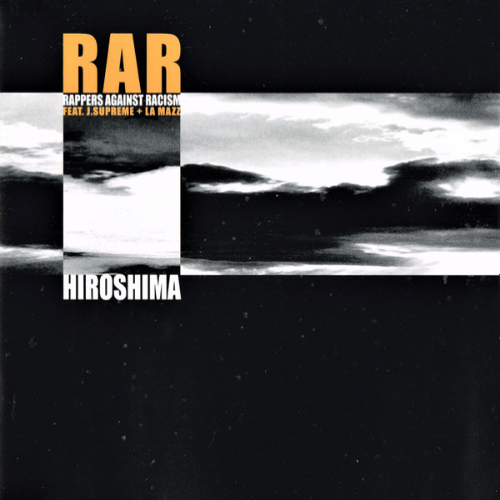
シングルには以下の4曲が収録された。
- Hiroshima(Radio Edit)
- Hiroshima(Maxi Cut)
- Memories(Radio Edit)
- Key To Your Heart(Radio Edit)
Radio Editは約3分48秒、Maxi Cutは約5分6秒である。
楽曲の作詞・作曲者としてはDavid Raymond Morganの名前が確認できる。
また、この曲は完全なオリジナル曲というより、イギリスのグループWishful Thinkingが1971年に発表し、その後Sandraなども取り上げた「Hiroshima」をもとに、ラップを加えて再構築した作品として理解する必要がある。
原曲が持つ核兵器への警告と哀悼のイメージを残しながら、Rappers Against Racismはそこへヒップホップ的な語りを加え、2000年前後のヨーロッパ向けポップ・ラップとして更新している。
第一印象
最初に感じるのは、「Hiroshima」という題名から想像されるほど音が激しくないということだ。
ビートは落ち着いており、テンポはおよそ88〜89BPM。リズムはヒップホップのミドルテンポとして捉えられる一方、スネアやハイハットの刻み方にはユーロ・ポップらしい端正さがある。
全体を包むのは、暗さだけではない。
確かにコードやボーカルには悲しみがある。しかし、その上には希望や祈りを思わせる明るさも残されている。完全な絶望へ沈むのではなく、過去の悲劇を記憶しながら、未来へ進もうとする感情が音楽の中に置かれている。
そのため、この曲は反戦歌でありながら、恐怖を煽る作品にはなっていない。
むしろ聴き手の感情をゆっくりと開き、曲の中へ導いていく。
サウンド分析
ドラム
ドラムは、1990年代後半から2000年代初頭のヨーロピアン・ポップ・ラップに典型的な、整然とした打ち込みを中心としている。
キックは極端に低域を誇張せず、各拍の土台を安定して支える。アメリカ南部のヒップホップのような巨大なサブベースや、東海岸のブーンバップのような荒いサンプリング感はない。
スネアは輪郭が明確で、残響を薄くまとっている。
そのため硬さよりも広がりが強く、軍隊的な緊張感ではなく、ポップ・バラードに近い整った拍感を作っている。
ハイハットも細かく跳ねるタイプではない。一定の刻みを保ち、ラップと歌を邪魔せず、曲全体を前へ進ませる役割に徹している。
ここで重要なのは、ドラムが悲劇を劇的に演出しすぎていないことだ。
重いテーマだからといって音圧や攻撃性を強めるのではなく、一定の距離を保つ。その抑制が、結果として言葉の重みを際立たせている。
ベース
ベースは派手に動くタイプではなく、コードの根音を中心に低域を支えている。
音色はシンセベース系だが、鋭いアタックよりも丸い持続感が強い。キックと一体化しながら、楽曲に静かな重さを与えている。
この低音は、身体を揺らすためのファンク・ベースではない。
むしろ、曲の下に沈み続ける記憶のような存在である。
表面では女性ボーカルやシンセが美しく響いているが、その下には常に暗い低音が残る。この二層構造によって、希望と悲劇が同時に感じられる。
シンセ・メロディ
楽曲の中心にあるのは、短調を基調とした哀愁のあるコード進行である。
音源解析上はE♭マイナー周辺の響きが中心となっており、B、D♭、G♭などを含む循環的な進行が繰り返される。外部のコード解析でもE♭マイナー、約88BPMと判定されている。
メロディを支えるシンセパッドは、輪郭をぼかした柔らかな音色を持つ。
このパッドが背景を広く埋めることで、楽曲には空間的な奥行きが生まれる。音数は決して多くないが、長く伸びる和音が声の後ろに残り、祈りや追悼を思わせる雰囲気を作っている。
さらに、高音域には淡いベル系、ストリングス系の成分が重ねられている。
これらの音は旋律を強く主張するのではなく、女性ボーカルの語尾やサビの広がりを補強する。光が差し込むような感触を加える一方で、その光は完全に明るいものではない。
どこか冷たく、遠い。
この距離感が、過去の出来事を振り返る曲の性格とよく合っている。
ミックス・グルーヴ
ミックスは非常にヴォーカル中心である。
ラップも歌も楽器より前に置かれており、言葉を聴き取らせることが最優先されている。
左右の広がりはパッドやコーラスが担当し、キック、ベース、メインボーカルは中央に集められている。Radio Editらしく、音の変化は分かりやすく整理され、イントロ、ラップ、サビ、次のラップという構造を迷わず追える。
グルーヴには強いスウィングやファンクネスはない。
リズムは直線的で、ユーロダンス由来の規則正しさを残している。ただし、完全な4つ打ちダンス曲ではなく、ラップが乗る余白を確保したハーフタイム感がある。
約88〜89BPMのテンポは、速すぎず遅すぎない。
歌詞を追うための時間を与えながら、楽曲を重苦しいバラードにはしない絶妙な速度である。
ラップ/ボーカル分析
Jay Supremeのラップ
Jay Supremeは、Culture Beatの活動で知られるアメリカ人ラッパーであり、Rappers Against Racismでは「Sorry」と「Hiroshima」に参加した。
この曲でのラップは、技巧を誇示するものではない。
複雑な内部韻、変則的なフロウ、声色の急激な変化を前面に出すのではなく、一語一語を明確に届けることが優先されている。
声には低く落ち着いた響きがあり、感情を爆発させない。
その抑制された語り口が、証言者や案内人のような役割を生んでいる。自分自身の武勇伝を語るのではなく、聴き手を歴史の記憶へ案内するラップである。
フロウは拍の中心へ素直に置かれ、行末を強く踏み込む。
言葉の密度も詰め込みすぎず、後ろのトラックとの間に空間を残している。そのため、ラップが加わってもサウンド全体の静けさは壊れない。
アメリカ的なヒップホップの声を持ちながら、ヨーロッパのポップ・プロダクションへ適応したパフォーマンスと言える。
La Mazzのボーカル
La Mazzの女性ボーカルは、楽曲の感情的な中心である。
ラップが歴史やメッセージを言葉として伝えるのに対し、歌はその言葉を感情へ変換する。
声は透明感が強く、高音でも過度に張り上げない。
サビでは複数のコーラスが重ねられ、単独の人物が歌っているというより、遠くから複数の声が響いてくるように聴こえる。
この重なりは、哀悼、祈り、呼びかけといった感情を増幅させる。
歌い方にはR&B的な装飾が多少含まれているが、メリスマを多用するタイプではない。メロディを崩さず、言葉の意味を保ちながら伸びやかに歌う。
その素直さが、原曲由来の印象的な旋律を際立たせている。
Jay Supremeの低い声とLa Mazzの高く柔らかな声の対比も重要である。
男性ラップが地上から歴史を語り、女性ボーカルがその上空を飛ぶ鳥や祈りを象徴するように響く。
この上下の対比が、曲の立体感を生んでいる。
歌詞・テーマ
歌詞の中心にあるのは、1945年8月6日に広島へ投下された原子爆弾と、その記憶である。
ただし、この曲は歴史的事実を細かく説明するドキュメンタリーではない。
「Hiroshima」という都市名、空を飛ぶ鳥、爆発する空、人の影、炎、記憶といった象徴的なイメージを使い、核兵器がもたらした破壊を描いている。
副題として扱われる「Fly Little Bird」という言葉は、一見すると自由や希望を想起させる。
しかし、この曲における鳥は、純粋に平和な存在とは限らない。
原曲の表現では、鳥のイメージが空を飛ぶ爆撃機や、爆弾を運ぶものと重ねられているようにも読める。美しい言葉が、破壊の記憶と結びついているのである。
この二重性が歌詞の大きな特徴だ。
「鳥」「魔法の言葉」「空」といった童話的なイメージが使われる一方、その先にあるのは爆発と死である。
無邪気な言葉と恐ろしい現実を並べることで、戦争が持つ不条理を強調している。
一方、Jay Supremeのラップが加わることで、曲は単なる過去の物語から、現代への警告へと変化する。
Rappers Against Racismというプロジェクトの理念を考えれば、広島は核兵器だけを示す固有名詞ではない。
人種差別、国家間の敵意、無関心、暴力が極限まで進んだ結果を象徴する場所として扱われている。
そのため、メッセージは「広島を忘れない」という一点だけにとどまらない。
異なる人種や国籍を敵として分類し、誰かの命を数字へ変えてしまう思考そのものへの警告が込められている。
ただし、曲は政治的な責任の所在や歴史認識を詳細に論じてはいない。
あくまでポップソングの形式を使い、記憶、悲しみ、平和への願いを普遍的な感情として提示している。
その分、歴史的・政治的な議論としては抽象的である。
しかし、特定の国や思想へ限定せず、多くの人に届く反戦歌として機能する強さも持っている。
サンプリング&トラックメイキング
本曲は、Wishful Thinkingが1971年に発表した「Hiroshima」を基礎としたカバー/再構築作品である。

したがって、一般的なヒップホップのように原曲の一部分をループさせる「サンプリング」というより、既存曲の主要メロディと歌詞を残し、ビート、ラップ、現代的なアレンジを加えたリメイクに近い。
原曲の核となる要素は、哀愁を持った短調のコード進行と、「Hiroshima」という言葉を繰り返す強いフックである。
Rappers Against Racism版は、そのメロディを保ちながら、以下の要素を追加している。
- 打ち込みによるヒップホップ・ビート
- シンセベース
- 2000年前後らしいデジタル・パッド
- Jay Supremeによるラップ
- La Mazzを中心としたR&B/ポップ・ボーカル
- ラジオ向けに整理された短い構成
原曲がロック/ポップスの反戦歌だったのに対し、こちらはユーロ・ラップ、R&B、ダンス・ポップの中間へ移されている。
特に重要なのは、ラップを後付けの装飾にしていないことだ。
ラップ・パートは、原曲が持っていた象徴的で抽象的な世界へ、現代的な語り手を加える役割を果たす。
過去の悲劇を歌う古いメロディと、現在の言葉で語るラップを共存させることで、「記憶を次の世代へ渡す」という構造が生まれている。
トリビア/制作メモ
シングルは2000年8月に発表
「Hiroshima」は2000年8月7日付でリリースされ、Rappers Against Racismが1999年の活動後に発表した主要シングルの一つである。
Radio EditとMaxi Cutが存在
Radio Editの長さは約3分48秒となっている。
Maxi Cutは約5分6秒あり、より長いイントロや展開を持つバージョンとなっている。
Jay Supremeは元Culture Beat
Jay Supremeは、ドイツのユーロダンス・グループCulture Beatの元ラッパーとして知られ、「Mr. Vain」「Got to Get It」「Anything」などの時期に活動した。
Culture Beat脱退後、Rappers Against Racismの「Sorry」と「Hiroshima」に参加している。
原曲の知名度
「Hiroshima」はWishful Thinkingによる楽曲として発表された後、1980年代にはSandraによるカバーでも知られるようになった。
そのためRappers Against Racism版は、ヨーロッパの聴き手にとって、すでに一定の記憶を持つ反戦歌をヒップホップ世代向けに更新した作品でもある。
聴感上の制作的特徴
今回の音源では、音の生々しさよりも、整えられたデジタル感が強い。
ドラム、ベース、パッド、コーラスはいずれも明確に分離され、ラジオや音楽テレビでの再生を意識したミックスに仕上げられている。
一方で、現在の基準から聴くと音圧は過度に高くなく、ボーカルのダイナミクスも比較的残されている。
2000年前後のポップ・プロダクションらしい、明瞭さと余白を持った音である。
総評
Rappers Against Racismの「Hiroshima」は、ヒップホップの攻撃性を前面に出した反戦歌ではない。
そこにあるのは、哀愁のあるメロディ、整ったビート、静かなラップ、柔らかな女性ボーカルによって、歴史の記憶を広い層へ届けようとする姿勢である。
音楽的な革新性だけを見れば、極端に実験的な作品ではない。
ドラムもコードも構成も、2000年前後のヨーロピアン・ポップ・ラップの枠内にある。ラップも高度なライミングや複雑なフロウを見せるタイプではなく、メッセージを届けるための直線的なものだ。
しかし、この曲の価値は技術的な奇抜さにはない。
聴きやすい音楽の中へ、広島、核兵器、戦争、人種差別、記憶という重いテーマを持ち込み、それを過度に娯楽化せず成立させている点にある。
美しい旋律だからこそ、その背後にある破壊がより強く感じられる。
穏やかなビートだからこそ、言葉の重さが耳に残る。
そしてラップと歌が交互に現れることで、歴史を語る声と、犠牲者を悼む声が一つの楽曲の中で共存している。
「Hiroshima」は、クラブで盛り上がるためのユーロダンスでも、政治的怒りを爆発させるハードコア・ラップでもない。
それは、ポップミュージックの親しみやすさを利用しながら、忘れてはならない出来事を静かに語り継ぐための曲である。
エディターズノート
広島を題材にした海外楽曲を聴く際には、その作品が歴史をどの程度具体的に理解し、どのような立場から描いているのかを慎重に見る必要がある。
Rappers Against Racismの「Hiroshima」は、原爆投下の歴史的背景や政治的責任を詳細に掘り下げる曲ではない。
その表現は象徴的であり、メッセージは普遍的な反戦と平和への願いにまとめられている。
だからこそ、歴史を深く説明する作品としてではなく、記憶への入口となるポップソングとして評価するのが適切だろう。
この曲を聴いたことで、「Hiroshima」という言葉の背景を知りたいと思う人が現れる。
それ自体が、音楽にできる重要な役割の一つである。
元ネタはこちら
Rappers Against Racism – Hiroshima | A Quiet Anti-War Song That Carries Memory Into the Present
By choosing the single word “Hiroshima” as its title, this song inevitably takes on a subject of immense weight.
Yet Rappers Against Racism’s “Hiroshima” does not attempt to recreate the terror of the atomic bombing through violent production or aggressive language. Instead, it combines a gentle female vocal, melancholy chord progressions, and restrained rap verses, quietly drawing the memory of Hiroshima into the present.
Musically, the track contains elements of the pop-rap, Eurodance, and R&B ballads widely heard across Europe around the turn of the millennium. Its accessibility, however, is not merely commercial decoration.
Rather than confronting listeners with historical trauma in its most horrifying form, the song translates that weight into an approachable melody, creating an entry point for reflection on war and nuclear weapons.
That is where the particular significance of this track lies.
Artist Introduction
Rappers Against Racism was a loosely organized hip-hop project formed around Kaiserslautern, Germany, in 1998 rather than a conventional group with a permanent lineup.
The project was centered around Down Low member Joe Thompson and Ronald Bähr, who was associated with K-Town Records. Different rappers and singers were recruited from song to song, with the stated purpose of opposing racism and discrimination based on skin color.
Participants included Down Low, La Mazz, Trooper Da Don, Jay Supreme, Dungeon Mastaz, and Richele, among others, with the lineup changing from release to release. In 1998, the project issued songs such as “I Want to Know What Love Is,” “Key to Your Heart,” and “Only You,” followed by the album The Message in 1999.
As the project’s name makes clear, Rappers Against Racism was built around an explicit social ideal.
Its musical approach, however, differed from the confrontational political rap associated with artists such as Public Enemy. Instead, the project used the accessibility of pop, R&B, and Eurodance to bring themes of peace, coexistence, and opposition to discrimination to a broad audience.
Background
“Hiroshima” was released as a single on August 7, 2000, featuring Jay Supreme and La Mazz. In addition to the “Hiroshima (Radio Edit),” a longer version titled “Maxi Cut,” running for approximately five minutes, is also available digitally.
The single contained the following four tracks:
- Hiroshima (Radio Edit)
- Hiroshima (Maxi Cut)
- Memories (Radio Edit)
- Key to Your Heart (Radio Edit)
The Radio Edit runs for approximately 3 minutes and 48 seconds, while the Maxi Cut lasts around 5 minutes and 6 seconds.
David Raymond Morgan is credited as a songwriter and composer.
The track should also be understood not as an entirely original composition, but as a rap-oriented reconstruction of “Hiroshima,” originally released by the British group Wishful Thinking in 1971 and later covered by artists including Sandra.
While preserving the original song’s sense of mourning and its warning against nuclear weapons, Rappers Against Racism added hip-hop narration and reshaped it as European pop-rap for the turn-of-the-millennium audience.
First Impression
The first thing that stands out is how restrained the music sounds compared with what one might expect from a song titled “Hiroshima.”
The beat is calm, and the tempo sits at approximately 88 to 89 BPM. Rhythmically, it can be understood as mid-tempo hip-hop, while the clean placement of the snare and hi-hats reflects the polished discipline of European pop production.
The overall atmosphere is not defined by darkness alone.
There is certainly sadness in the chords and vocals. At the same time, a sense of hope and prayer remains suspended above them. Rather than sinking into total despair, the song holds onto the feeling of remembering a past tragedy while still attempting to move toward the future.
For that reason, although “Hiroshima” is an anti-war song, it does not rely on fear.
Instead, it slowly opens the listener’s emotions and draws them into the song.
Sound Analysis
Drums
The drums are built around the orderly programmed rhythms typical of late-1990s and early-2000s European pop-rap.
The kick does not exaggerate the lowest frequencies. Instead, it provides a stable foundation beneath each beat. There is none of the enormous sub-bass associated with Southern hip-hop, nor the rough sample texture of East Coast boom bap.
The snare has a clearly defined attack and carries a light layer of reverb.
As a result, it creates width rather than hardness, producing a measured pulse closer to a pop ballad than to a militaristic rhythm.
The hi-hats are not especially busy or heavily syncopated. They maintain a steady pattern, allowing the rap and singing to remain unobstructed while moving the track forward.
What matters most is that the drums do not over-dramatize the tragedy.
Rather than increasing aggression or sonic pressure simply because the subject is heavy, the production maintains a certain distance. That restraint ultimately makes the words feel heavier.
Bass
The bass does not move flamboyantly. It mainly supports the lower register through the root notes of the chord progression.
Its tone resembles a synthesized bass, but its character is defined more by rounded sustain than by a sharp attack. It blends closely with the kick, giving the song a quiet sense of weight.
This is not funk bass designed primarily to move the body.
Instead, it feels like a memory that continues to remain beneath the song.
On the surface, the female vocal and synthesizers sound graceful and luminous. Underneath them, however, the dark low end never disappears. This two-layered structure allows hope and tragedy to be felt at the same time.
Synths and Melody
At the center of the track is a melancholy chord progression built primarily around a minor tonality.
Audio analysis suggests that the harmony is centered around E-flat minor, with a cyclical progression involving chords related to B, D-flat, and G-flat. External chord-analysis services have also identified the track as being in E-flat minor at approximately 88 BPM.
The synth pad supporting the melody has a soft tone with blurred edges.
By filling the background with sustained harmony, the pad gives the song a sense of depth and space. The arrangement is not especially dense, but the long chords remain behind the voices, creating an atmosphere associated with prayer and remembrance.
Faint bell-like and string-like elements are also layered in the upper frequencies.
These sounds do not assert themselves as dominant melodies. Instead, they reinforce the ends of the female vocal phrases and widen the chorus. They add the sensation of light entering the arrangement, although that light never feels completely warm.
It remains cold and distant.
That emotional distance suits a song looking back upon a historical event.
Mix and Groove
The mix is strongly centered on the vocals.
Both the rap and sung sections are positioned in front of the instrumentation, making lyrical clarity the highest priority.
The stereo width is largely carried by pads and backing vocals, while the kick, bass, and main vocal remain concentrated in the center. As expected from a Radio Edit, the changes are clearly organized, allowing the listener to follow the sequence of intro, rap verse, chorus, and subsequent verse without difficulty.
There is little heavy swing or funkiness in the groove.
The rhythm remains linear and retains the regularity associated with Eurodance. At the same time, it is not a full four-on-the-floor dance track. The beat leaves enough half-time space for the rap to sit comfortably.
The tempo of approximately 88 to 89 BPM is neither too fast nor too slow.
It gives the listener time to follow the lyrics without allowing the track to become an oppressively slow ballad.
Rap and Vocal Analysis
Jay Supreme’s Rap
Jay Supreme is an American rapper best known for his work with Culture Beat. Within Rappers Against Racism, he appeared on both “Sorry” and “Hiroshima.”
His performance here is not designed to display technical virtuosity.
Rather than emphasizing complex internal rhymes, unpredictable flows, or dramatic changes in vocal tone, he prioritizes the clear delivery of each word.
His voice is low and composed, and he avoids emotional outbursts.
That restraint gives him the role of a witness or guide. He is not narrating his own status or personal mythology, but leading the listener toward a historical memory.
His flow sits directly on the center of the beat, with firm emphasis at the ends of lines.
The lyrical density is also kept moderate, leaving space between the rap and the instrumental. As a result, the track’s sense of calm is not disrupted when the verses enter.
It is a performance that carries the voice of American hip-hop while adapting itself to European pop production.
La Mazz’s Vocal
La Mazz’s female vocal serves as the emotional center of the song.
Where the rap communicates history and message through language, the singing transforms those words into emotion.
Her voice has a strong sense of clarity, and even in the higher register she does not over-sing.
During the chorus, multiple vocal layers are stacked together, creating the impression not of a single singer, but of several distant voices resonating at once.
This layering amplifies feelings of mourning, prayer, and appeal.
Her delivery contains some R&B-style ornamentation, but it does not rely heavily on melisma. She sings expansively while preserving the shape of the melody and the meaning of the words.
That directness allows the memorable melody inherited from the original song to remain prominent.
The contrast between Jay Supreme’s low voice and La Mazz’s soft, elevated register is also essential.
The male rap sounds as though it is recounting history from the ground, while the female vocal seems to hover above it like a bird or a prayer.
This vertical contrast gives the arrangement a three-dimensional quality.
Lyrics and Themes
At the center of the lyrics is the atomic bomb dropped on Hiroshima on August 6, 1945, and the memory of that event.
The song, however, is not a documentary account that explains the historical details in depth.
Instead, it uses symbolic images such as the name “Hiroshima,” a bird flying through the sky, an exploding sky, human shadows, fire, and memory to depict the destruction caused by nuclear weapons.
The phrase “Fly Little Bird,” which is sometimes treated as a subtitle, may initially suggest freedom or hope.
Within the context of the song, however, the bird is not necessarily a purely peaceful image.
In the original song’s language, the bird can also be interpreted as overlapping with the image of an aircraft or something carrying a bomb through the sky. A beautiful image is therefore connected to the memory of destruction.
This dual meaning is one of the lyrics’ most important characteristics.
Fairy-tale-like images such as birds, magic words, and the sky are placed alongside explosion and death.
By setting innocent language against horrifying reality, the song emphasizes the absurdity of war.
With the addition of Jay Supreme’s rap, the track also changes from a story of the past into a warning addressed to the present.
Considering the ideals behind the Rappers Against Racism project, Hiroshima functions as more than a proper noun referring only to nuclear weapons.
It also becomes a symbol of what can happen when racism, hostility between nations, indifference, and violence are allowed to reach their extreme conclusion.
The message therefore goes beyond simply stating that Hiroshima must not be forgotten.
It warns against the very mode of thinking that classifies people of different races or nationalities as enemies and reduces human lives to numbers.
At the same time, the song does not examine political responsibility or historical interpretation in detail.
It uses the form of a pop song to present memory, grief, and the desire for peace as universal emotions.
As a historical or political argument, it is therefore abstract.
Yet that abstraction also gives it strength as an anti-war song capable of reaching listeners beyond any single country or ideology.
Sampling and Trackmaking
This track is a cover and reconstruction based on “Hiroshima,” released by Wishful Thinking in 1971.
It is therefore closer to a remake that preserves the main melody and lyrics while adding a new beat, rap verses, and contemporary arrangement than to conventional hip-hop sampling, in which a short fragment of an older recording is looped.
The central elements inherited from the original are the sorrowful minor-key chord progression and the powerful hook built around the repeated word “Hiroshima.”
While retaining that melody, the Rappers Against Racism version adds the following:
- A programmed hip-hop beat
- Synth bass
- Digital pads characteristic of the turn of the millennium
- Rap verses by Jay Supreme
- R&B and pop vocals centered around La Mazz
- A compact arrangement designed for radio
Where the original was a rock and pop anti-war song, this version relocates the material into the space between Euro-rap, R&B, and dance-pop.
Most importantly, the rap does not feel like a superficial addition.
The verses introduce a contemporary narrator into the symbolic and abstract world of the original song.
By placing an older melody about a past tragedy beside rap delivered in a modern voice, the track creates a structure based on passing memory from one generation to the next.
Trivia and Production Notes
Released in August 2000
“Hiroshima” was released on August 7, 2000, and was one of the project’s notable singles following its activity in 1999.
Radio Edit and Maxi Cut Versions
The Radio Edit runs for approximately 3 minutes and 48 seconds.
The Maxi Cut lasts approximately 5 minutes and 6 seconds, with a longer introduction and more extended development.
Jay Supreme’s Culture Beat Connection
Jay Supreme is known as a former rapper for the German Eurodance group Culture Beat, performing during the period associated with songs such as “Mr. Vain,” “Got to Get It,” and “Anything.”
After leaving Culture Beat, he participated in the Rappers Against Racism tracks “Sorry” and “Hiroshima.”
Recognition of the Original Song
After being released by Wishful Thinking, “Hiroshima” later became known through Sandra’s 1980s cover version.
For European listeners, the Rappers Against Racism version therefore represented an update of an already familiar anti-war song for the hip-hop generation.
Production Characteristics Heard in the Recording
In the version analyzed here, the production emphasizes polished digital clarity rather than rawness.
The drums, bass, pads, and backing vocals are clearly separated, resulting in a mix that appears designed for radio and music television.
By contemporary standards, however, the track is not excessively loud, and a relatively broad vocal dynamic range remains intact.
It carries the clarity and breathing room characteristic of turn-of-the-millennium pop production.
Overall Assessment
Rappers Against Racism’s “Hiroshima” is not an anti-war song built around the aggressive side of hip-hop.
Instead, it uses a melancholy melody, a polished beat, restrained rap verses, and a gentle female vocal to deliver historical memory to a wide audience.
In purely musical terms, it is not an especially experimental recording.
The drums, chords, and arrangement all remain within the established language of European pop-rap around the year 2000. The rap does not depend on advanced rhyme schemes or highly complex flows, but follows a direct path designed to communicate the message.
The value of the song, however, does not lie in technical novelty.
Its achievement is that it places heavy subjects—Hiroshima, nuclear weapons, war, racism, and memory—inside accessible music without turning them into empty entertainment.
Because the melody is beautiful, the destruction behind it feels even more severe.
Because the beat is calm, the words remain in the listener’s mind.
And because rap and singing alternate throughout the track, the voice recounting history and the voice mourning its victims are able to coexist within the same composition.
“Hiroshima” is neither Eurodance designed to ignite a club nor hardcore rap built around an explosion of political anger.
It is a song that uses the accessibility of pop music to quietly preserve the memory of an event that must not be forgotten.
Editor’s Note
When listening to international songs about Hiroshima, it is important to consider how deeply the work understands the history and from what position it approaches the subject.
Rappers Against Racism’s “Hiroshima” does not explore the historical background of the atomic bombing or questions of political responsibility in detail.
Its expression is symbolic, and its message is ultimately framed as a universal appeal for peace and opposition to war.
For that reason, it is most appropriately understood not as a work that explains history in depth, but as a pop song that serves as an entry point into memory.
A listener may hear this track and become interested in learning more about what lies behind the word “Hiroshima.”
That, in itself, is one of the important roles music can play.
コメント