1990年代半ばのベイエリア・ラップには、同時代のロサンゼルス産G-Funkとは少し異なる、独自の重量感がある。
滑らかなシンセサイザーや開放的なメロディを使いながらも、サウンドの中心にあるのは、華やかさよりも低く沈むベース、乾いたドラム、そしてローカルなストリート感覚だ。
The Fast 1の「Freak Da Fonk」は、そのベイエリア特有のファンク感覚を約4分06秒の中に凝縮した楽曲である。
曲を支配するのは、丸く膨らみながら反復するベースライン、短く切り込むギター、甲高く鳴るシンセ、そしてタイトルを繰り返す印象的なフックだ。
派手な展開や複雑なアレンジで聴かせる曲ではない。
同じグルーヴを粘り強く維持し、その上でラップと声の重なりを変化させながら、聴き手を徐々にファンクの中へ引き込んでいく。
「Freak Da Fonk」は、音数を増やすのではなく、ひとつのループをどこまで太く、怪しく、身体的に響かせられるかを追求したベイエリア・ファンクラップである。
アーティスト紹介
The Fast 1は、サンフランシスコのフィルモア地区にルーツを持つラッパーとして紹介されている。後にはFast Feady、Feady Crockaなどの名義でも活動したとされるが、本作が発表された1995年前後にはThe Fast 1、あるいはThe Fast Oneという表記が使われていた。
フィルモア地区は、サンフランシスコの中でも黒人音楽文化との結びつきが深い地域であり、The Fast 1の音楽にも、地元のラップ文化とファンクの身体性が強く反映されている。
The Fast 1の作品は、全国規模のメジャー市場で大きく展開されたものではない。そのため現在も情報量は限られているが、1990年代ベイエリア・ラップを掘るリスナーの間では、『Down 4 Tha Cause』と本曲「Freak Da Fonk」が重要なローカル作品として知られている。
作品背景
「Freak Da Fonk」は、1995年にG-Note Recordsから発表された楽曲である。
同年には「Freak Da Funk」と「Landed On A Mil’ Ticket」を組み合わせたシングルが流通し、「Freak Da Fonk」はThe Fast 1のアルバム『Down 4 Tha Cause』にも収録された。
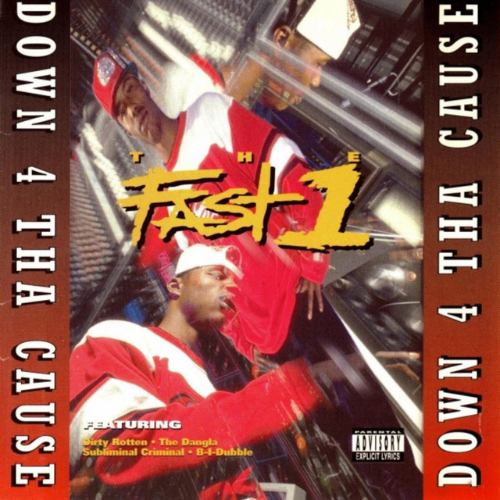
アルバムはG-Note RecordsおよびAir Wave Recordsから発表され、サンフランシスコ産のラップ作品として記録されている。
『Down 4 Tha Cause』では、本曲は7曲目に配置され、その直後に「Land It On A Mill Ticket」が続く。アルバム全体は1995年のベイエリア・ギャングスタラップに位置づけられており、作品の録音およびミックスにはG-Note Studioが使用されたと記録されている。
また、1995年7月14日付の音楽業界誌では、「Freak Da Funk」がベイエリアの楽曲として取り上げられており、当時実際にプロモーションされていた形跡も確認できる。
現在配信されている音源では2011年12月4日がリリース日として表示されるが、これはデジタル配信上の日付であり、楽曲自体の初出は1995年である。
第一印象
曲が始まった瞬間に感じるのは、低音の太さと音の距離の近さである。
冒頭から鳴るベースは、輪郭を鋭く切り取るタイプではない。やや丸みを持たせながら、スピーカーの下部を押し広げるように響いている。
その上に乗るのが、短く刻まれるファンクギターと、細く甲高いシンセサイザーだ。
低いベースと高いシンセが大きく離れた音域に配置されているため、トラックには上下方向の広がりが生まれている。一方、中音域は比較的空いており、その空間をThe Fast 1の声が埋める構造になっている。
第一印象だけを切り取れば、非常にシンプルなG-Funk系トラックに聞こえるかもしれない。
しかし、実際に聴き込むと、この曲の魅力はメロディそのものより、各パーツが微妙にずれながら作り出す粘りにある。
ベースは前へ突進せず、少し後ろへ引っ張る。
ドラムは強く打ちつけるのではなく、一定の間隔で身体を揺らす。
ラップもビートの上を高速で走るのではなく、その隙間に腰を下ろすように配置されている。
この「急がなさ」が、本曲のファンクを形作っている。
サウンド分析
ドラム
テンポは実測で約96BPM。
速すぎず遅すぎないミッドテンポで、首を大きく振るというより、上半身全体を左右に揺らしたくなる速さだ。
キックは低域に厚みを持つが、現在のヒップホップのようにサブベースと一体化した巨大な音ではない。比較的短く、ベースラインの動きを邪魔しない位置で鳴っている。
一方、スネアは乾いており、曲の中で明確な時間軸を作っている。
残響は控えめで、音が鳴った後に長く尾を引かない。そのため、スネアが入るたびにトラック全体がいったん引き締まり、次のベースの動きが強調される。
ハイハットも過度に細かく刻まれてはいない。
現代的なトラップのような高速ロールはなく、基本的にはベースとラップを支えるための規則的な配置である。
このドラムの簡潔さが、楽曲を古く感じさせるのではなく、むしろファンク本来の反復性を際立たせている。
ベース
本曲の中心は、間違いなくベースラインである。
低く伸びる音と、少し跳ねるように動く短い音が組み合わされ、単純な一音の反復ではない、うねりのあるフレーズを作っている。
音色は非常に丸い。
鋭いアタックよりも、音が膨らんでから沈んでいく感触が強く、ベースがリズム楽器であると同時に、楽曲のムードを決定する持続音として機能している。
また、ベースはキックと完全に同じ位置では動かない。
キックが拍を示し、ベースがその周囲を這うように動くことで、トラックに独特の粘りが生まれている。
このわずかなずれが重要だ。
すべての低音が同時に鳴れば、曲はより硬く、直線的になる。しかし「Freak Da Fonk」では、キックとベースの間に小さな空間を残すことで、身体が後ろへ引かれるようなレイドバック感を作っている。
シンセ・メロディ
高音域では、ベイエリアおよび西海岸ファンクラップを象徴するような、細く甲高いシンセサイザーが使用されている。
ただし、そのシンセは曲全体を旋律で導く主役ではない。
短いフレーズを繰り返しながら、ベースラインの重さに対するアクセントとして配置されている。
音程が滑るように聞こえる部分もあり、直線的な鍵盤フレーズというより、ホイッスルや電子音が空中を漂うような感覚に近い。
その下では、短く切られたギターのカッティングが鳴っている。
ギターは前面に押し出されず、低めの音量でビートの隙間に置かれているため、注意して聴かなければベースや声に埋もれてしまう。
しかし、このギターが存在することで、トラックは単なるシンセ主体のG-Funkではなく、より古典的なファンクの質感を残している。
フック周辺では声のレイヤーが増え、メロディというより掛け声に近い反復が曲を印象づける。
タイトルの「Freak Da Fonk」という言葉自体が、歌詞であると同時にリズム楽器として機能している。
ミックス・グルーヴ
ミックスは現在の作品ほど各音が完全に分離していない。
ベース、キック、声、シンセがそれぞれ少し重なり、ひとつの塊となって前方へ押し出されている。
特に低域は整理されすぎておらず、ベースの太さがキックの輪郭を部分的に包み込んでいる。
しかし、その粗さは欠点ではない。
むしろ音が完全に分離していないからこそ、トラック全体に湿度と密度が生まれ、ローカルなスタジオで作られた1990年代半ばのベイエリア作品らしい生々しさにつながっている。
ステレオの広がりも極端ではなく、主要な要素は中央付近に集められている。
左右に大きく展開する豪華な音像ではなく、狭い空間の中にラッパー、ベース、ドラム、シンセが集まり、同じ方向を向いて鳴っているようなミックスだ。
グルーヴの核となるのは、約96BPMというテンポそのものではない。
重要なのは、各音が拍の中心へ一斉に突っ込まず、少し後ろ側に重心を置いていることだ。
ドラム、ベース、ラップのすべてがわずかにレイドバックしているため、曲は前へ急がず、同じ場所で太く回転し続ける。
ラップ/ボーカル分析
The Fast 1のラップは、鋭い言葉を連続して詰め込むタイプではない。
声は中低域を中心としており、強く張り上げるというより、落ち着いた声量でビートに言葉を置いていく。
フロウには一定の速さがあるが、早口には聞こえない。
その理由は、各フレーズの終わりに余白があり、言葉を最後まで詰め込まずに次のドラムへ受け渡しているからだ。
一行ごとの区切りが比較的明確であり、リスナーはラップの意味を追うと同時に、声そのものをリズムとして感じることができる。
また、The Fast 1の声には、誇張された威圧感がない。
低く構えた態度はあるものの、叫び声や過剰な演技でストリート性を示すのではなく、すでに自分の立場が確立されているかのような落ち着きがある。
この抑制されたデリバリーが、トラックのレイドバック感とよく合っている。
フックでは複数の声が重なり、ヴァースの単独感から集団的な空気へ切り替わる。
タイトルを反復する声は、整った歌唱というより、仲間同士で声を合わせるチャントに近い。
ヴァースではThe Fast 1個人の存在感を聴かせ、フックではその場にいる全員でファンクを共有する。
この切り替えによって、楽曲は単なるソロラップではなく、ブロックパーティーや車内で複数人が同じフレーズを叫ぶような共同体的なムードを獲得している。
歌詞・テーマ
「Freak Da Fonk」というタイトルが示す通り、本曲の中心にあるのはファンクそのものだ。
ここでの「Fonk」という表記は、単なる綴りの崩しではない。
上品に整えられたFunkではなく、ストリートで鳴らされる、より濁り、より重く、より身体に直接作用するファンクを意味する言葉として使われている。
歌詞では、The Fast 1が自らのラップ、生活感覚、周囲の環境をファンクのグルーヴへ結びつけている。
楽曲全体から受ける印象は、深刻な物語を順番に語るストーリーテリングではない。
自分がどこから来たのか、どのように振る舞うのか、どのような音を鳴らすのかを、断片的なラインと反復されるフックによって示していくタイプの楽曲である。
重要なのは、歌詞の一文一文以上に、その言葉がどのような態度で発せられているかだ。
The Fast 1は焦らず、必要以上に声を荒らげず、ベースの上に自分の言葉を乗せる。
その落ち着いた姿勢が、歌詞に描かれる自信やストリート感覚を補強している。
また、本曲におけるファンクは、単なる音楽ジャンルとして扱われていない。
ファンクは、歩き方、話し方、車の走らせ方、仲間との時間、そして自分自身の見せ方まで含んだ生活様式として表現されている。
タイトルを何度も反復することで、The Fast 1は「この曲はファンクを使ったラップだ」と説明するのではなく、「これこそが自分たちのファンクだ」と身体的に提示している。
トリビア
「Freak Da Fonk」は、アルバム『Down 4 Tha Cause』の収録曲であると同時に、1995年に「Landed On A Mil’ Ticket」と組み合わせた単独シングルとしても流通した。シングル盤ではタイトルが「Freak Da Funk」と表記される例があり、アルバムおよび現在の配信では「Freak Da Fonk」という表記が確認できる。
シングルおよびアルバムはG-Note Recordsに関連しており、同レーベルはサンフランシスコを拠点とするレーベルとして記録されている。
『Down 4 Tha Cause』のジャケット制作には、1990年代のインディペンデント・ラップ作品を数多く手掛けたPhunky Phat Graph-Xの名前が記録されている。
また、The Fast 1はThe Fast Oneという別表記でもクレジットされており、後年にはFast FeadyやFeady Crockaという名前でも活動したとされる。
制作メモ
今回確認した音源の長さは約4分06秒で、1995年盤および現在の配信で記録されている演奏時間とほぼ一致する。
テンポは約96BPM。
構成は、短いイントロからフックへ入り、ヴァースとフックを交互に繰り返す比較的オーソドックスな形式である。
アレンジ上の変化は大きくないが、声の重なり、シンセの入り方、ギターの存在感、ヴァース終盤の空間処理を細かく変えることで、同じループが単調に聞こえないよう調整されている。
低域に重点を置いたミックスでありながら、高音シンセが常に耳へ残るため、暗く沈みすぎない。
ベースが地面を作り、シンセが空中を漂い、その間をThe Fast 1の声が移動する。
この三層構造が、本曲の音像を最も端的に表している。
なお、現時点で信頼できる一次情報から、使用された機材、プロデューサーの詳細、具体的なサンプリング元までは確認できなかった。
そのため、本記事ではサンプリング元を推測せず、音源から直接確認できる演奏、音色、構成のみを分析している。
総評
「Freak Da Fonk」は、1990年代ベイエリア・ラップの魅力を、非常に分かりやすい形で体感できる一曲だ。
太いベース、乾いたドラム、甲高いシンセ、短く切られるギター、落ち着いたラップ、複数人で反復されるフック。
構成要素だけを並べれば、当時のG-Funkやベイエリア・ファンクラップに見られる典型的な組み合わせである。
しかし、本曲が印象に残る理由は、それらの音を単に配置したからではない。
The Fast 1の声を含め、すべての要素が少し後ろへ重心を置き、曲全体が急がずに回転し続けることで、独自の粘りが生まれている。
約4分06秒の間、大きな転調も劇的な展開も起こらない。
それでも退屈しないのは、聴き手が曲の展開を待つのではなく、反復されるグルーヴそのものへ入り込めるからだ。
ベースラインが一周するたびに、シンセの響き方やラップの間が少し違って聞こえる。
繰り返しの中から細かな違いを発見する音楽であり、その感覚こそがファンクの本質でもある。
「Freak Da Fonk」は、洗練された大作ではない。
むしろ、狭いスタジオの中で低音を限界まで鳴らし、地元の仲間と声を重ね、その空気をそのまま録音したような生々しさを持つ作品だ。
そのローカルな質感を消さずに残しているからこそ、リリースから長い年月が経過した現在でも、1995年のサンフランシスコの空気を感じさせる。
派手さよりもベース。
展開よりも反復。
技巧よりも態度。
The Fast 1の「Freak Da Fonk」は、その三つを貫くことで成立した、重量感のあるベイエリア・ファンククラシックである。
エディターズノート
この曲を初めて聴いたとき、最も強く残るのは甲高いシンセかもしれない。
しかし、何度か繰り返して聴くと、本当に曲を支配しているのはベースと「間」だと分かる。
The Fast 1はビートの上へ大量の言葉を詰め込まない。
プロダクションも、必要以上に音を足さない。
それぞれの音が鳴った後に小さな空白を残し、その空白が次のキックやベースを待たせる。
現代の音楽は、空間を埋める方向へ進むことが多い。
低音をさらに深くし、ハイハットを細かく刻み、声を何層にも重ね、無音になる瞬間を減らしていく。
しかし「Freak Da Fonk」は逆である。
限られた音だけを使い、それらを何度も循環させることで、聴き手の身体にグルーヴを覚えさせる。
だからこそ、この曲は一度聴いただけでは終わらない。
最初はシンセが耳に残り、次にベースの動きが分かり、その後にギターや声の重なりが見えてくる。
聴くたびに中心が少しずつ移動する。
それが「Freak Da Fonk」の奥深さであり、1990年代ベイエリア・ファンクラップを掘り続けたくなる理由でもある。
The Fast 1 – Freak Da Fonk | A Heavy Bay Area Funk Classic Built on Bass, Space, and Repetition
Mid-1990s Bay Area rap carried a distinct sense of weight that differed slightly from the G-Funk coming out of Los Angeles during the same period.
Although it often used smooth synthesizers and open, melodic textures, its center of gravity was not necessarily glamour or polish. Instead, it was built around low-slung bass, dry drums, and a deeply local street sensibility.
The Fast 1’s “Freak Da Fonk” condenses that unmistakable Bay Area approach to funk into approximately four minutes and six seconds.
The track is dominated by a rounded, swelling bassline, sharply clipped guitar accents, a thin high-pitched synthesizer, and an immediately memorable hook that repeatedly chants the title.
This is not a song driven by dramatic transitions or complex arrangement.
It maintains the same groove with remarkable persistence, gradually pulling the listener deeper into the funk by changing the layering of the vocals and the positioning of the rap over the loop.
Rather than adding more and more sounds, “Freak Da Fonk” explores how thick, strange, and physical a single groove can become.
It is Bay Area funk rap built on repetition, weight, and attitude.
Artist Introduction
The Fast 1 has been identified as a rapper with roots in San Francisco’s Fillmore District. He is also said to have worked under names such as Fast Feady and Feady Crocka later in his career, although around the time this record was released in 1995, he was primarily credited as The Fast 1 or The Fast One.
The Fillmore District has long held a strong connection to Black music and culture in San Francisco, and The Fast 1’s music reflects both the local rap scene and the physicality of funk.
His catalog was never distributed or promoted on the scale of a major-label release. As a result, reliable information about his career remains limited.
Among listeners who dig deeply into 1990s Bay Area rap, however, the album Down 4 Tha Cause and the track “Freak Da Fonk” are recognized as important local recordings.
Background
“Freak Da Fonk” was released through G-Note Records in 1995.
A single pairing “Freak Da Funk” with “Landed On A Mil’ Ticket” circulated that same year, while “Freak Da Fonk” also appeared on The Fast 1’s album Down 4 Tha Cause.
The album was released through G-Note Records and Air Wave Records and is documented as a San Francisco rap release.
On Down 4 Tha Cause, the song appears as the seventh track and is followed by “Land It On A Mill Ticket.” The album as a whole is generally categorized as a 1995 Bay Area gangsta-rap recording, and G-Note Studio is credited in connection with its recording and mixing.
A music-industry publication dated July 14, 1995, also featured “Freak Da Funk” as a Bay Area track, providing evidence that the song was actively promoted at the time of its original release.
Current digital editions may display December 4, 2011, as the release date. That date refers to the digital distribution of the recording, not its original appearance, which dates back to 1995.
First Impression
The first thing that stands out is the thickness of the low end and the immediate closeness of the sound.
The bass enters with a tone that is not sharply defined or aggressively percussive. Instead, it has a rounded quality, expanding through the lower portion of the speakers as though it is physically pushing the sound outward.
Above it sit clipped funk-guitar accents and a narrow, high-pitched synthesizer line.
Because the bass and synth occupy widely separated frequency ranges, the track develops a strong vertical sense of space. The middle frequencies remain relatively open, allowing The Fast 1’s voice to occupy the center of the mix.
At first, the production may sound like a relatively simple G-Funk-oriented track.
After repeated listening, however, it becomes clear that the song’s appeal lies less in its melody than in the slight rhythmic misalignment between its individual elements.
The bass does not rush forward. It seems to pull backward.
The drums do not strike with overwhelming force. They move the body at a steady, controlled pace.
The rap does not race across the beat. It sits inside the spaces between the drums.
This refusal to hurry is what defines the song’s funk.
Sound Analysis
Drums
The measured tempo is approximately 96 BPM.
It is a mid-tempo pace that feels neither especially fast nor slow. Rather than encouraging a sharp nod of the head, it creates the sensation of moving the entire upper body from side to side.
The kick carries weight in the low frequencies, but it is not the massive, sub-heavy sound commonly heard in contemporary hip-hop.
It is relatively short and carefully positioned so that it does not interfere with the movement of the bassline.
The snare, by contrast, is dry and provides a clear rhythmic framework for the track.
Its reverb is restrained, and the sound does not linger for long after each hit. Every snare strike briefly tightens the production and makes the following bass movement feel more pronounced.
The hi-hats are not excessively detailed or busy.
There are no rapid, trap-style rolls. Instead, they are placed in a regular pattern designed primarily to support the bass and vocal performance.
The simplicity of the drums does not make the recording sound outdated. It strengthens the repetitive quality that has always been central to funk.
Bass
The bassline is unquestionably the core of the track.
Long, low notes are combined with shorter tones that move with a subtle bounce, creating a phrase with more motion than a simple one-note loop.
The tone is extremely rounded.
Rather than hitting with a sharp attack, each note seems to swell before sinking away. The bass therefore functions both as a rhythmic instrument and as a sustained tonal layer that determines the overall mood of the song.
It also does not move in perfect unison with the kick.
The kick establishes the beat, while the bass crawls around it. This relationship creates the distinctive stickiness of the groove.
That small amount of separation is essential.
Had every low-frequency element landed at exactly the same moment, the track would feel harder and more linear. In “Freak Da Fonk,” the space between the kick and bass creates a laid-back sensation, as though the listener’s body is being gently pulled backward.
Synths and Melody
In the upper register, the production uses a thin, high-pitched synthesizer associated with Bay Area and West Coast funk rap.
The synth does not lead the track with a fully developed melody.
Instead, it repeats a short phrase that acts as a bright accent against the weight of the bassline.
At certain moments, the pitch appears to glide, making the sound feel less like a conventional keyboard line and more like a whistle or electronic signal floating through the air.
Beneath it, brief guitar chops are placed into the gaps in the beat.
The guitar is not pushed to the front of the mix. Its volume is relatively low, and it can easily become hidden behind the bass and vocals unless the listener pays close attention.
Its presence is nevertheless important.
The guitar keeps the production connected to older funk traditions and prevents the track from becoming purely synth-driven G-Funk.
Around the hook, additional vocal layers enter, and the repeated phrase functions more like a chant than a conventional melody.
The words “Freak Da Fonk” operate simultaneously as lyrics and percussion.
Mix and Groove
The mix does not separate every element as cleanly as a contemporary production might.
The bass, kick, vocals, and synthesizer overlap slightly and move forward as a single mass.
The lower frequencies are not overly polished or controlled. The thickness of the bass partially surrounds the outline of the kick.
This roughness is not a flaw.
Because the sounds are not completely isolated from one another, the track develops a sense of humidity and density. That texture contributes directly to the rawness associated with mid-1990s Bay Area recordings made in small, local studios.
The stereo field is also relatively restrained, with the central elements clustered near the middle.
This is not a luxurious mix that spreads dramatically from left to right. It feels as though the rapper, bass, drums, and synth are all gathered in the same confined room, facing the same direction.
The groove does not come simply from the tempo of approximately 96 BPM.
What matters is that the sounds do not all attack the exact center of the beat. Their weight sits slightly behind it.
The drums, bass, and rap all feel subtly laid-back, allowing the track to rotate heavily in place rather than rush forward.
Rap and Vocal Analysis
The Fast 1’s delivery is not built around packing a large number of sharp syllables into every bar.
His voice sits primarily in the low-to-mid register, and rather than shouting, he places his words over the beat with a calm, controlled volume.
The flow maintains a steady pace without sounding especially fast.
This is partly because the ends of his phrases contain space. He does not fill every possible moment with words, instead handing each line back to the drums before beginning the next.
The boundaries between individual lines are relatively clear, allowing the listener to follow the lyrical content while also experiencing the voice as a rhythmic instrument.
The Fast 1’s performance also avoids exaggerated intimidation.
There is a low, composed toughness in his delivery, but he does not rely on shouting or theatrical aggression to establish his street presence.
He sounds as though his position is already understood.
That restraint complements the laid-back production.
During the hook, multiple voices are layered together, shifting the song from the solitary atmosphere of the verses into something more collective.
The repeated title sounds less like polished singing and more like a chant shared among a group of people.
The verses emphasize The Fast 1 as an individual performer, while the hook turns the funk into a communal experience.
Through that contrast, the song becomes more than a solo rap performance. It evokes the feeling of a block party or a group of passengers shouting the same phrase inside a car.
Lyrics and Themes
As the title suggests, the central subject of “Freak Da Fonk” is funk itself.
The spelling “Fonk” is more than a casual alteration of the word.
It suggests something less polished than conventional “funk”: something heavier, dirtier, more street-oriented, and more directly connected to the body.
The lyrics connect The Fast 1’s rap style, everyday environment, and way of life to the groove of the track.
The song does not give the impression of linear storytelling or a serious narrative unfolding from beginning to end.
Instead, it presents identity through fragments: where the rapper comes from, how he moves, how he carries himself, and the type of sound he represents.
These ideas are communicated through individual lines and the repetition of the hook.
More important than any single lyric is the attitude with which the words are delivered.
The Fast 1 does not rush or raise his voice unnecessarily. He simply lays his words across the bassline.
That calm posture reinforces the confidence and street awareness communicated by the lyrics.
Funk in this song is not treated merely as a musical genre.
It is presented as a way of living that includes movement, speech, driving, time spent with friends, and the way a person presents himself to the world.
By repeating the title again and again, The Fast 1 does not explain that he is making rap music influenced by funk.
He physically demonstrates: this is our funk.
Trivia
“Freak Da Fonk” appeared on the album Down 4 Tha Cause and was also distributed as a standalone 1995 single paired with “Landed On A Mil’ Ticket.”
Some editions of the single list the title as “Freak Da Funk,” while the album and current digital releases use the spelling “Freak Da Fonk.”
Both the single and album are associated with G-Note Records, which is documented as a San Francisco-based label.
The artwork for Down 4 Tha Cause credits Phunky Phat Graph-X, a design company connected to numerous independent rap releases during the 1990s.
The Fast 1 was also credited as The Fast One and is said to have later worked under the names Fast Feady and Feady Crocka.
Production Notes
The version examined for this article runs for approximately four minutes and six seconds, closely matching the duration documented for both the original 1995 release and current digital editions.
The tempo is approximately 96 BPM.
The arrangement follows a relatively conventional pattern, moving from a short introduction into the hook and then alternating between verses and repeated hooks.
There are no major structural changes, but subtle adjustments in vocal layering, synthesizer placement, guitar presence, and the use of space near the ends of verses prevent the loop from feeling completely static.
Although the mix is centered on the lower frequencies, the high-pitched synth remains consistently noticeable, keeping the track from becoming too dark or submerged.
The bass creates the ground.
The synthesizer floats above it.
The Fast 1’s voice moves through the space between them.
That three-layer relationship offers the clearest summary of the song’s sonic design.
At the time of writing, reliable primary sources have not confirmed the specific equipment used, detailed producer credits, or any particular sample source.
For that reason, this article does not speculate about sampling and limits its production analysis to the instrumentation, tones, arrangement, and structural features that can be heard directly in the recording.
Overall Review
“Freak Da Fonk” offers a direct and highly accessible example of what makes 1990s Bay Area rap so compelling.
A thick bassline, dry drums, a piercing synthesizer, clipped guitar, relaxed rapping, and a hook repeated by several voices.
Taken individually, these elements represent a familiar combination within the G-Funk and Bay Area funk-rap traditions of the period.
What makes the song memorable, however, is not simply the presence of those sounds.
Every element, including The Fast 1’s voice, places its weight slightly behind the beat. The entire track continues to rotate without rushing, generating a distinct sense of drag and resistance.
Across its four-minute-and-six-second runtime, there are no major key changes or dramatic transitions.
Yet the song does not become boring because the listener is not waiting for the arrangement to change.
Instead, the listener is invited to enter the repeated groove itself.
Each time the bassline completes another cycle, the synthesizer, vocal spacing, and rhythmic gaps begin to feel slightly different.
This is music that reveals small changes through repetition, and that experience is central to the nature of funk.
“Freak Da Fonk” is not a polished, large-scale production.
It has the rawness of a recording made in a confined studio with the bass pushed as far as possible, local friends layering their voices together, and the atmosphere of the room preserved rather than cleaned away.
Because that local texture remains intact, the track can still evoke the feeling of San Francisco in 1995 decades after its release.
Bass over spectacle.
Repetition over dramatic development.
Attitude over technical display.
By committing fully to those three principles, The Fast 1 created a heavy Bay Area funk classic.
Editor’s Note
On first listen, the high-pitched synthesizer may be the element that remains in the memory most strongly.
After several plays, however, it becomes clear that the true controlling forces are the bass and the empty space surrounding it.
The Fast 1 does not crowd the beat with unnecessary words.
The production does not add more sounds than it needs.
Each element leaves a small gap after it appears, and that gap creates anticipation for the next kick or bass note.
Contemporary music often moves in the opposite direction.
Producers deepen the low end, program increasingly detailed hi-hats, stack multiple vocal layers, and reduce the number of moments in which nothing is happening.
“Freak Da Fonk” does the reverse.
It uses a limited number of sounds and cycles them repeatedly until the listener’s body begins to memorize the groove.
That is why the song does not end after a single listen.
At first, the synthesizer captures the ear.
Then the movement of the bass becomes clearer.
After that, the guitar and vocal layers begin to reveal themselves.
The perceived center of the track shifts slightly with every replay.
That depth is what makes “Freak Da Fonk” so rewarding, and it is one of the reasons listeners continue digging through the deeper layers of 1990s Bay Area funk rap.
コメント