ギャングスタ・ラップにおける暴力表現は、必ずしも現実の犯罪をそのまま記録するためだけに使われるものではない。
威嚇、誇張、ブラックユーモア、架空の人物像、映画的な演技。そうした要素を組み合わせ、現実よりも過激なストリート像を作り上げることも、ラップにおける重要な表現方法のひとつである。
Psychopathic Rydasの「Killa Ova Nuttin’」は、その極端な例と言えるだろう。
タイトルを直訳すれば、「何でもないことで人を殺す者」。曲中で描かれるのは、筋の通った復讐劇でも、社会問題を冷静に告発する物語でもない。些細なきっかけすら必要としない暴力性そのものが、複数MCによるリレー形式のラップとして押し出されていく。
しかし、この曲を単純な凶悪ラップとして片づけるだけでは、その面白さを十分に捉えられない。
約3分59秒の中で展開されるのは、重い低音、乾いたドラム、不穏な鍵盤、荒々しい声、そして大人数ならではの掛け合いによって作られた、明確に演劇的なギャングスタ・ラップである。
アーティスト紹介
Psychopathic Rydasは、デトロイトを拠点とするPsychopathic Records周辺のアーティストによって1999年に結成されたギャングスタ・ラップ・プロジェクトである。
中心となったのは、Insane Clown PosseのViolent JとShaggy 2 Dope、TwiztidのJamie MadroxとMonoxide Child、Blaze Ya Dead Homie、Myzeryら。彼らはPsychopathic Rydasでは普段とは異なる別名義を使用し、それぞれギャングスタ・ラッパーとしてのキャラクターを演じた。
初期メンバーとRydas名義は以下の通り。
- Violent J:Bullet
- Shaggy 2 Dope:Full Clip
- Jamie Madrox:Lil’ Shank
- Monoxide Child:Foe Foe
- Blaze Ya Dead Homie:Cell Block
- Myzery:Twin Gatz
通常の活動ではホラーコアやダーク・カーニバル的な世界観と結び付けられる彼らだが、Psychopathic Rydasではより直接的なギャングスタ・ラップへ接近している。
ただし、その表現は本格的なストリート・ドキュメントというより、既存のギャングスタ・ラップが持つ暴力性、威嚇、誇張された男性性を、Psychopathic Records特有の劇場型エンターテインメントへ置き換えたものだ。
Psychopathic Rydasは、既存の有名ラップ曲のビートを正式な許諾なしで使用するという特殊な制作方針でも知られている。そのため、作品は一般的な商業アルバムというより、ミックステープやブートレグに近い性格を持っていた。
作品背景
「Killa Ova Nuttin’」は、Psychopathic Rydasのデビュー作『Dumpin’』の9曲目に収録されている。
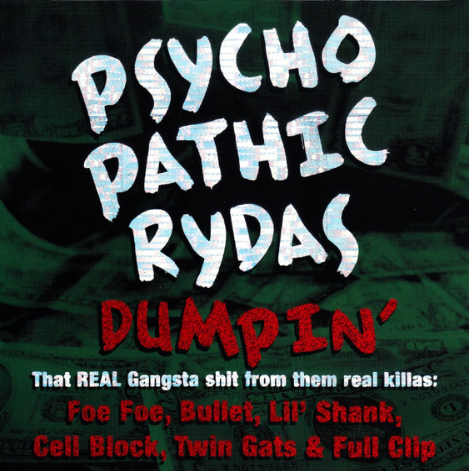
『Dumpin’』は1999年に制作・配布された作品とされる一方、現在の主要配信サービスや一部のデータベースでは2000年作品として扱われている。Spotifyでは2000年の全12曲入りアルバムとして掲載され、AllMusicでは2000年4月18日リリースと記録されている。
この年代表記の違いは、最初の流通方法と後年の再流通・データ登録時期が異なるためと考えられる。
『Dumpin’』は、Insane Clown Posseのアルバム『The Amazing Jeckel Brothers』封入物に掲載された企画と関連し、条件を満たしたファンへ提供された特殊な作品だったとされる。通常の全国流通盤とは異なる成り立ちを持っていた点も、Psychopathic Rydasのアンダーグラウンド性を強めている。
音源の長さは約3分59秒。実測したテンポはおよそ92BPMで、速さよりも一音ごとの重量を重視したミディアムテンポの楽曲である。
第一印象
最初に強く感じるのは、ビートの「暗さ」よりも「太さ」である。
メロディは不穏だが、ホラー映画のような幻想性が中心ではない。重いキックと沈み込む低域が曲の床を作り、その上に乾いたスネア、断片的な鍵盤、複数の声が乗せられていく。
全体の印象は、夜の路地裏を描く繊細なサスペンスというより、大人数のラッパーが狭い部屋に集まり、次々と攻撃的なヴァースを吐き出しているような圧迫感に近い。
ビートそのものは比較的反復性が高い。しかし、声質の異なるMCが短い間隔で交代するため、楽曲が単調には聞こえない。
つまり「Killa Ova Nuttin’」を動かしている最大の要素は、トラックの展開ではなく、ラッパーの交代と声の衝突である。
サウンド分析
ドラム
実測テンポは約92BPM。
ヒップホップとしては標準的なミディアムテンポだが、キックとスネアの間に適度な余白があるため、体感的には数字以上に重く、遅く感じられる。
キックは鋭く前へ飛び出すというより、低域をまとって下方向へ沈むタイプだ。音の立ち上がりよりも、その後に残る重量感が重視されている。
スネアは比較的乾いており、深い残響はほとんど感じられない。硬い打撃音が中央に置かれ、ラップの語尾を切断するように機能している。
ハイハットには現代的な細かなロールや複雑な変化はない。一定の刻みを維持することで、ラッパーたちが自由にフロウを変えられる余白を作っている。
ドラムの役割は、技巧を見せることではなく、曲全体を荒々しい行進へ変えることにある。
ベース
低音はこの曲の重要な支柱である。
ベースライン自体は派手に動き回らず、短いパターンを繰り返しながら、キックと一体化して曲の重心を低く保っている。
特にヘッドフォンや低域の出るスピーカーで聴くと、ベースが独立した旋律として聞こえるというより、トラック全体の底面を押し広げる圧力として感じられる。
この低域があることで、ラップが多少騒がしくなっても曲の軸がぶれない。
複数MCによる声の交代が上部で激しく起きる一方、低域はほぼ一定の姿勢を崩さない。この上下の役割分担が、楽曲に集団ラップらしい安定感を与えている。
シンセ/メロディ
メロディ面では、暗く濁った鍵盤系のループが中心となっている。
音程分析ではGシャープ・マイナー周辺の響きが強く検出されるが、旋律が明確なコード進行として動くタイプではない。そのため、調性よりも「同じ不穏な空間に閉じ込められている」という印象の方が強い。
鍵盤のフレーズは短く、反復的で、曲に感情的な起伏を与えるというより、落ち着かない空気を持続させている。
高音域にはやや細く刺激的な成分があり、低く太いベースとの対比が生まれている。明るさや開放感につながる音色ではなく、神経を逆なでするような緊張感を残す音だ。
G-Funkのような滑らかなシンセリードや、メロウなコードの広がりはほとんどない。
この曲が優先しているのは快楽的なファンクネスではなく、閉塞感と威圧感である。
ミックス
ボーカルはかなり前方に配置されている。
ビートが主役というより、ラップを押し出すための土台として扱われており、声の輪郭は常に明確だ。
それぞれのMCで声量や質感に差があるが、過度に均一化されてはいない。そのため、ラッパーが交代するたびに空気も変わる。
低い声はベースと一体化するように沈み、高い声や鼻にかかった声は中高域から鋭く飛び出してくる。このばらつきが、集団としての不穏さにつながっている。
左右方向の広がりはあるものの、全体としては中央に密集したミックスである。広大な風景を作るのではなく、複数の人物がリスナーの正面へ詰め寄ってくるような圧力が強い。
グルーヴ
グルーヴの核にあるのは、スウィング感よりも「踏みつける感覚」だ。
滑らかに腰を揺らすファンクではなく、一定の速度で重く前進し続ける。
ラップのフロウは細かく変化するが、ドラムとベースはそれに過剰反応せず、同じループを保ち続ける。この固定されたビートの上で複数の声が暴れ回ることによって、曲には制御された混乱が生まれている。
勢い任せに聞こえながら、トラックの基礎部分はかなり堅実である。
ラップ/ボーカル分析
「Killa Ova Nuttin’」の最大の魅力は、複数MCによる声のリレーにある。
曲中には、低く押し殺した声、鼻にかかった鋭い声、怒鳴るような声、会話に近い声など、明確に異なるキャラクターが登場する。
ひとりのラッパーが長い物語を展開するのではなく、各MCが短い時間で自分の危険性を印象づけ、次の人物へマイクを渡していく構成だ。
フロウも一様ではない。
ゆっくりと言葉を置くパートでは、低い声とビートの隙間が威圧感を生む。一方、音節を詰め込むパートでは、感情が制御不能になっていくような焦燥感が強まる。
技術的な見せ場として特に重要なのは、完璧に揃ったユニゾンではなく、個々の声の不揃いさである。
滑らかに統一されたグループではなく、それぞれが別の方向から危険性を持ち込む集団として聞こえる。そのため、曲全体に予測できない緊張が生まれている。
フックではタイトルと中心テーマが短い言葉で反復される。
歌唱的な美しさを求めるコーラスではなく、集団で唱えるスローガンに近い。ヴァースで描かれた暴力性を整理するというより、さらに単純化し、耳に焼きつける役割を果たしている。
「Pop」という銃声を模した掛け声もリズムの一部として使用され、言葉の意味と打楽器的な効果が重なっている。
歌詞・テーマ
タイトルの「Killa Ova Nuttin’」は、「何でもないことを理由に殺す者」「理由もなく人を殺す者」といった意味を持つ。
歌詞では、些細な対立や不機嫌さがすぐに銃撃へ発展する、極端に暴力的な人物像が描かれている。
ただし、ここで重要なのは、曲が一貫した犯罪物語を描いているわけではないという点だ。
それぞれのMCが、自分はどれほど危険なのか、どれほど簡単に武器を使うのかを誇張して語る。物語の現実性よりも、キャラクターの強度が優先されている。
確認できる歌詞では、「気分が悪い」という程度の理由から相手を撃つ人物像や、街の東側から西側まで銃撃しながら進むRydasの姿が描かれている。
内容だけを切り取れば極端に凶悪だが、表現方法にはコミック的な誇張が含まれている。
Psychopathic Rydasは、通常名義とは異なる架空のギャングスタ・キャラクターとして活動していた。その前提を踏まえると、本曲もメンバー個人の告白というより、演じられたストリート・ヴィラン像として読む方が自然だ。
同時に、単なるパロディとして軽く処理できない迫力もある。
低いテンポ、重い低音、攻撃的な声が組み合わされることで、誇張された内容が実際の脅威のように響く。その「冗談と本気の境界が曖昧になる感覚」こそ、Psychopathic Rydasの特徴である。
サンプリング&トラックメイキング
Psychopathic Rydasは、既存の有名ギャングスタ・ラップのビートを正式な許諾なしで使用するというコンセプトを持っていた。
そのため、作品は一般的な意味でのオリジナル・プロダクション集というより、既存ビートの上に新たなラップを乗せたミックステープ的作品として位置づけられる。
この制作方法により、Rydas名義の作品は通常の商業流通が難しく、Joe & Joey Recordsという別名義のレーベルから限定的に扱われたとされる。
ただし、「Killa Ova Nuttin’」が具体的にどの既存楽曲のビートを使用しているかについては、今回確認した信頼性の高い公開資料では特定できなかった。
したがって、本記事では元曲を断定しない。
音源から確認できる範囲では、1990年代後半のギャングスタ・ラップに多い、低速で重いドラム、短い鍵盤ループ、太いベースを中心とした設計である。
トラックそのものに大きな展開を設けず、MCの交代をアレンジ上の変化として利用する方法も、当時のクルー物やポッセカットに通じる。
トリビア/制作メモ
アルバム内での位置
「Killa Ova Nuttin’」は『Dumpin’』の9曲目。
アルバム後半に置かれた楽曲であり、作品全体がすでに作り上げてきたRydasの集団像を、最も単純で過激な言葉へ凝縮したような役割を果たしている。
初期編成ならではの音像
『Dumpin’』は、Twin GatzことMyzeryが参加した唯一のPsychopathic Rydasのフルアルバムとされている。
後年の作品よりも人数と声質の幅が広く、誰かひとりを中心に据えるというより、集団そのものを主役にした印象が強い。
ホラーコアとの違い
Psychopathic Records周辺の作品であるためホラーコアとしてまとめられる場合もあるが、「Killa Ova Nuttin’」の音楽的な中心はギャングスタ・ラップである。
怪物、超常現象、死後世界といったホラー的な物語より、銃、縄張り、威嚇、集団行動といったストリート・ラップの記号が前面に出ている。
ただし、現実を誇張してキャラクター化する感覚には、Insane Clown PosseやTwiztidの劇場型ホラーコアと共通する部分がある。
ジャンル
本曲の中心ジャンルは、ギャングスタ・ラップおよびミッドウェスト・ヒップホップ。
音楽的にはデトロイト周辺のアンダーグラウンド感を持ちながら、1990年代の西海岸や南部のハードコア・ラップで使われた重いミッドテンポ・ビートの様式も取り込んでいる。
ただし、G-Funkと呼べるほど滑らかなシンセ、陽性のファンク、メロディアスなコード感は強くない。
総評
「Killa Ova Nuttin’」は、Psychopathic Rydasというプロジェクトの性格を分かりやすく示す一曲である。
既存のギャングスタ・ラップ様式を利用しながら、Psychopathic Recordsのメンバーたちが別人格を演じ、過剰な暴力性と集団的な威圧感を作り上げる。
約92BPMのビートは、派手な技巧や大きな展開を持たない。重いキック、乾いたスネア、動きを抑えたベース、不穏な鍵盤が同じ緊張を維持し続ける。
その固定された土台の上で、声質もフロウも異なるMCたちが次々と登場する。
曲の面白さは、繊細な物語や感情表現ではなく、複数のキャラクターがどれだけ短時間で強烈な印象を残すかにある。
歌詞は極端で、暴力表現も露骨だ。しかし、それはリアリズムだけを目的としたものではない。ギャングスタ・ラップの記号を拡大し、コミックの悪役のような人物像へ変換することで、独自のエンターテインメントへ仕上げている。
音楽的に洗練された曲というより、粗さ、密度、声の衝突を楽しむ作品だ。
Psychopathic Rydasの成り立ちや、1990年代末のミックステープ文化、ホラーコアとギャングスタ・ラップの接点を知るうえでも、興味深い一曲である。
エディターズノート
「Killa Ova Nuttin’」を聴いて印象に残るのは、単純なビートが持つ持続力である。
トラックだけを取り出せば、構成は決して複雑ではない。同じ低音、同じドラム、同じ不穏な空気が、長い時間維持されている。
それでも約4分間を通して緊張が途切れないのは、MCが変わるたびに曲の表情も変わるからだ。
低い声が前に出れば、曲は重く沈む。甲高い声や早口のフロウが入れば、緊張が急激に高まる。フックへ戻れば、個人の暴力性が集団のスローガンへ変換される。
この曲では、声そのものがアレンジになっている。
また、Psychopathic Rydasの表現は、完全なパロディにも、完全なリアリズムにも収まらない。
ふざけているように聞こえる瞬間と、本気で威嚇しているように聞こえる瞬間が交互に訪れる。その判別しにくさが、Psychopathic Recordsらしい不気味さを生んでいる。
「Killa Ova Nuttin’」は、美しさや共感を求める曲ではない。
むしろ、誇張された危険人物たちが次々とマイクを奪い合う、その制御された混乱を味わうための一曲である。
Psychopathic Rydas – “Killa Ova Nuttin’” | Theatrical Gangsta Rap Driven by Violence, Exaggeration, and Collective Menace
Violence in gangsta rap is not always used simply to document real-life crime.
Intimidation, exaggeration, black humor, fictional personas, and cinematic performance can all be combined to create a street image more extreme than reality itself. This kind of heightened characterization has long been an important form of expression within rap music.
Psychopathic Rydas’ “Killa Ova Nuttin’” is an especially extreme example.
The title describes someone willing to kill over absolutely nothing. The song does not present a carefully justified revenge story, nor does it offer a measured examination of social conditions. Instead, violence itself—violence requiring no meaningful motive—is pushed to the forefront through a relay-style performance involving multiple MCs.
However, reducing the track to nothing more than vicious gangsta rap would overlook much of what makes it interesting.
Across approximately three minutes and fifty-nine seconds, the song builds an unmistakably theatrical form of gangsta rap through heavy low end, dry drums, ominous keyboard phrases, abrasive voices, and the confrontational chemistry created by a large cast of rappers.
Artist Introduction
Psychopathic Rydas were a gangsta-rap project formed in 1999 by artists associated with Detroit-based Psychopathic Records.
The original lineup included Insane Clown Posse’s Violent J and Shaggy 2 Dope, Twiztid’s Jamie Madrox and Monoxide Child, Blaze Ya Dead Homie, and Myzery. Under the Psychopathic Rydas name, the members adopted alternate aliases and performed as fictional gangsta-rap characters distinct from their regular identities.
The original members and their Rydas aliases were:
Violent J: Bullet
Shaggy 2 Dope: Full Clip
Jamie Madrox: Lil’ Shank
Monoxide Child: Foe Foe
Blaze Ya Dead Homie: Cell Block
Myzery: Twin Gatz
In their primary projects, these artists were closely associated with horrorcore and the Dark Carnival mythology surrounding Psychopathic Records. As Psychopathic Rydas, however, they moved toward a more direct form of gangsta rap.
Even so, the project was less concerned with creating authentic street documentation than with transforming the violence, intimidation, and exaggerated masculinity of established gangsta rap into the theatrical entertainment style characteristic of Psychopathic Records.
Psychopathic Rydas also became known for an unusual production concept: recording new performances over beats taken from well-known rap songs without obtaining formal permission.
As a result, their releases functioned less like conventional commercial albums and more like mixtapes or underground bootlegs.
Background
“Killa Ova Nuttin’” appears as the ninth track on Psychopathic Rydas’ debut album, Dumpin’.
Although Dumpin’ is generally understood to have been created and distributed in 1999, several modern streaming services and music databases list it as a 2000 release. Spotify presents it as a twelve-track album from 2000, while AllMusic records an April 18, 2000 release date.
The discrepancy most likely reflects the difference between its original distribution and the date on which it was later circulated or entered into commercial databases.
Dumpin’ was connected to a promotion included with Insane Clown Posse’s album The Amazing Jeckel Brothers. It was reportedly distributed to fans who fulfilled specific requirements, giving the project a highly unusual origin compared with a standard nationally released album.
That unconventional distribution model further strengthened the underground identity of Psychopathic Rydas.
The track runs for approximately three minutes and fifty-nine seconds. A measured tempo of roughly 92 BPM places it firmly in the midtempo range, with the production emphasizing the weight of each hit rather than speed.
First Impression
The first thing that stands out is not necessarily the darkness of the beat, but its sheer thickness.
The melodic elements are ominous, yet the track is not primarily built around the kind of supernatural atmosphere associated with horror-film scoring. Instead, a heavy kick and deeply seated low end establish the foundation, while dry snares, fragmented keyboard phrases, and multiple voices are layered above them.
The overall effect resembles a group of rappers packed into a confined room, aggressively throwing verses at one another, rather than a carefully constructed suspense scene unfolding in a nighttime alley.
The beat itself is highly repetitive. However, because the MCs change at short intervals and possess noticeably different vocal tones, the track never feels entirely static.
The main source of movement in “Killa Ova Nuttin’” is therefore not the instrumental arrangement, but the constant rotation of rappers and the collision of their voices.
Sound Analysis
Drums
The measured tempo is approximately 92 BPM.
That is a fairly standard midtempo pace for hip-hop, but the space between the kick and snare makes the track feel heavier and slower than the number might suggest.
The kick does not attack sharply or leap out of the mix. Instead, it carries a large amount of low-frequency weight and appears to sink downward. The emphasis is less on the initial transient than on the heaviness left behind after each hit.
The snare is relatively dry, with very little deep reverberation. Its hard impact is positioned near the center of the mix, functioning almost like a blade cutting through the endings of the rappers’ lines.
The hi-hats do not contain the rapid rolls or intricate variations common in more contemporary rap production. They maintain a steady pulse, leaving enough space for each rapper to alter their flow freely.
The drums are not designed to display technical complexity. Their purpose is to transform the entire track into a rough, relentless march.
Bass
The low end is one of the song’s most important structural supports.
The bass line does not move dramatically. It repeats a short pattern while locking closely with the kick and keeping the center of gravity low.
On headphones or speakers with strong bass response, the low end is experienced less as an independent melody and more as physical pressure expanding the floor beneath the entire track.
This consistent foundation prevents the song from losing its center, even when the performances above it become increasingly chaotic.
While the upper portion of the mix is constantly disrupted by changing MCs and conflicting vocal tones, the low end remains almost completely stable. This division of roles gives the song the structural strength associated with an effective posse cut.
Synths and Melody
The melodic foundation is built around a dark, murky keyboard loop.
Pitch analysis suggests a tonal center near G-sharp minor, although the melody does not develop through a clearly defined chord progression. The more important impression is not harmonic movement, but the feeling of being trapped inside the same threatening space.
The keyboard phrase is short and repetitive. Rather than creating emotional development, it sustains a constant sense of unease.
There is also a thin, slightly abrasive presence in the upper frequencies, which contrasts with the thick bass beneath it. The tone does not create brightness or openness. Instead, it leaves behind a nervous, irritating tension.
There are few traces of the smooth synthesizer leads, melodic chord movement, or relaxed atmosphere associated with G-Funk.
The production prioritizes confinement and intimidation rather than pleasurable funkiness.
Mix
The vocals are placed prominently at the front of the mix.
The instrumental functions less as the main attraction than as a platform designed to push the rapping forward. The outline of each voice remains consistently clear.
There are noticeable differences in volume, texture, and tone between the MCs, and these variations have not been completely smoothed out. As a result, the atmosphere changes each time a new rapper enters.
Low voices sink into the bass, while higher-pitched or nasal voices cut sharply through the middle and upper frequencies. This unevenness contributes to the sense of collective menace.
Although there is some stereo width, the overall mix remains densely concentrated around the center. Rather than creating a wide landscape, it gives the impression of several figures crowding directly into the listener’s personal space.
Groove
The core of the groove is not swing, but a sense of stomping forward.
This is not smooth, body-rolling funk. The track advances at a consistent, heavy pace.
The rappers vary their flows in considerable detail, but the drums and bass do not overreact to those changes. They continue repeating the same loop beneath the performances.
The result is a form of controlled chaos: multiple voices seem to run wild while the instrumental foundation remains fixed and disciplined.
The song may sound impulsive, but its rhythmic structure is remarkably stable.
Rap and Vocal Analysis
The greatest strength of “Killa Ova Nuttin’” is the relay of voices between multiple MCs.
The song features a clearly differentiated cast of vocal characters: low and restrained voices, sharp nasal tones, shouted deliveries, and performances closer to aggressive conversation.
Rather than allowing one rapper to develop a long narrative, the arrangement gives each MC a short period in which to establish their own dangerous persona before handing the microphone to the next character.
The flows are equally varied.
In slower sections, carefully spaced words and low voices use the gaps in the beat to create intimidation. In denser passages, tightly packed syllables generate the feeling of anger slipping beyond control.
One of the most important technical features is not perfectly synchronized group performance, but the deliberate irregularity between the voices.
Psychopathic Rydas do not sound like a polished group moving in complete unison. They sound like a collection of dangerous personalities arriving from different directions.
That lack of uniformity creates a persistent sense of unpredictability.
The hook repeats the title and central theme in short, direct phrases.
It is not a melodic chorus built around vocal beauty. It functions more like a group chant or slogan. Rather than organizing the violence described in the verses, the hook reduces it to its simplest form and forces it into the listener’s memory.
The shouted “pop,” imitating the sound of a gunshot, is also used rhythmically. The meaning of the word and its percussive function become inseparable.
Lyrics and Themes
The phrase “Killa Ova Nuttin’” refers to someone who kills over nothing—or who is willing to kill without any meaningful reason at all.
The lyrics depict an extremely violent persona in which minor conflict, irritation, or bad moods can immediately escalate into gunfire.
However, it is important to recognize that the song does not tell one continuous criminal narrative.
Each MC exaggerates how dangerous they are and how casually they would use a weapon. Character intensity takes priority over realism or narrative coherence.
Available lyrics describe a figure willing to shoot someone simply because they are in a bad mood, as well as the Rydas moving from the east side to the west side while firing weapons.
Taken literally, the subject matter is exceptionally vicious. Yet the performance also contains a comic-book level of exaggeration.
Psychopathic Rydas operated through fictional gangsta personas separate from the members’ regular stage identities. With that context in mind, the song is more naturally understood as a performed street-villain narrative than as a personal confession from the artists themselves.
At the same time, the performance possesses too much force to be dismissed as lightweight parody.
The slow tempo, heavy bass, and aggressive voices make the exaggerated material sound like a genuine threat. That unstable boundary between joke and seriousness is one of Psychopathic Rydas’ defining characteristics.
Sampling and Trackmaking
Psychopathic Rydas were built around the concept of using beats from established gangsta-rap songs without formal authorization.
Their releases therefore function less as collections of original productions in the conventional sense and more as mixtape-style projects featuring newly recorded vocals over pre-existing instrumentals.
Because of this production method, Rydas releases were difficult to distribute through normal commercial channels. The albums were reportedly handled in limited fashion through Joe & Joey Records, an alternate label name associated with the project.
However, the exact original track whose beat was used for “Killa Ova Nuttin’” could not be identified through the reliable public sources consulted for this article.
For that reason, no specific source track will be presented here as confirmed.
Based strictly on the recording itself, the beat follows a common late-1990s gangsta-rap design: slow and heavy drums, a short keyboard loop, and a thick bass foundation.
The decision to avoid major instrumental changes and instead use the rotation of MCs as the primary source of arrangement also reflects the structure of crew tracks and posse cuts from the period.
Trivia and Production Notes
Placement on the Album
“Killa Ova Nuttin’” is the ninth track on Dumpin’.
Its position in the latter half of the album allows it to function as a distilled expression of the collective Rydas identity already established across the earlier tracks. The group’s exaggerated menace is reduced to one of its simplest and most extreme statements.
The Sound of the Original Lineup
Dumpin’ is generally regarded as the only full Psychopathic Rydas album to feature Myzery under the Twin Gatz identity.
Compared with later releases, the album offers a broader range of voices and personalities. Rather than placing one dominant performer at the center, the recording presents the group itself as the main character.
Difference from Horrorcore
Because the project emerged from the Psychopathic Records circle, “Killa Ova Nuttin’” is sometimes grouped broadly with horrorcore.
Musically, however, gangsta rap is the track’s primary genre.
Instead of focusing on monsters, supernatural events, or the afterlife, the song relies on familiar street-rap symbols: guns, territory, intimidation, violence, and collective action.
Still, its method of exaggerating reality and transforming it into character-driven performance clearly shares DNA with the theatrical horrorcore of Insane Clown Posse and Twiztid.
Genre
The track is best classified as gangsta rap and Midwest hip-hop.
Its sound carries the underground atmosphere associated with Detroit, while also incorporating the heavy midtempo production style found in 1990s West Coast and Southern hardcore rap.
However, the song lacks the smooth synthesizers, bright funk elements, and melodic chord movement required to describe it convincingly as G-Funk.
Overall Review
“Killa Ova Nuttin’” is one of the clearest demonstrations of what the Psychopathic Rydas project represented.
The members of the Psychopathic Records roster use the established language of gangsta rap while adopting alternate identities and constructing an exaggerated world of violence and collective intimidation.
The approximately 92 BPM beat contains little flashy technique or dramatic progression. Heavy kicks, dry snares, restrained bass movement, and ominous keyboards sustain the same level of tension throughout the track.
Against that fixed foundation, MCs with different voices and flows enter one after another.
The song’s appeal does not lie in delicate storytelling or emotional complexity. It comes from the ability of several distinct characters to leave a powerful impression within a short period of time.
The lyrics are extreme, and the violence is explicit. Yet the song is not driven by realism alone. By enlarging the recognizable symbols of gangsta rap and transforming its performers into comic-book-like villains, Psychopathic Rydas turn the material into a distinctive form of entertainment.
This is not a track defined by musical refinement.
Its appeal comes from roughness, density, confrontation, and the physical collision of voices.
It also remains an interesting document for understanding the origins of Psychopathic Rydas, late-1990s mixtape culture, and the point at which horrorcore performance and gangsta-rap aesthetics could overlap.
Editor’s Note
What remains most striking about “Killa Ova Nuttin’” is the durability of its simple beat.
Taken on its own, the instrumental arrangement is not especially complex. The same bass weight, the same drums, and the same ominous atmosphere are sustained for most of the track.
Yet the tension never disappears across its nearly four-minute runtime because the song’s expression changes each time the MC changes.
When a low voice moves to the front, the track becomes heavier and sinks deeper. When a higher voice or faster flow enters, the tension rises sharply. When the hook returns, the violence of the individual is transformed into a collective slogan.
In this song, the voices themselves become the arrangement.
Psychopathic Rydas also resist being classified as either complete parody or complete realism.
Some moments sound deliberately ridiculous, while others sound genuinely threatening. The difficulty of separating the joke from the menace creates the particular unease associated with Psychopathic Records.
“Killa Ova Nuttin’” is not designed to offer beauty or emotional identification.
It is a track built around the experience of controlled disorder: a succession of exaggerated dangerous characters fighting to seize the microphone.
コメント