2000年代初頭のウェストコースト・ラップには、90年代G-Funkの遺産をそのまま再現するのではなく、よりインディペンデントで、より猥雑で、そしてクラブや車内で鳴らすことを意識した独自のファンクが存在する。
DJ SkratchがJamonを迎えた「Kome 2 Party」は、まさにその空気を濃縮したような一曲だ。
2003年発表のアルバム『Furturistic Fonk for the Millennium』に収録された本曲は、約3分28秒。音源を解析すると、テンポは約105.5 BPMと検出された。
数字だけを見れば比較的軽快だが、実際のポイントは速さそのものではない。
一定のビートを崩さず、ファンク由来の上物と低域を反復させながら、ヴォーカルを前面に押し出していく。その結果、90年代中盤の王道G-Funkほどメロウではなく、かといって2000年代半ば以降の硬質なウェストコースト・サウンドとも違う、絶妙な時代の狭間にある音になっている。
タイトルどおりパーティーをテーマにした曲でありながら、ただ明るく騒ぐだけではない。
そこにはDJ Skratchらしい、少し猥雑で、少し怪しく、そして徹底してファンキーな西海岸の夜がある。
アーティスト紹介
DJ Skratchは、ウェストコースト・ヒップホップを土台にDJ、プロデューサー、ラッパーとして活動してきた人物である。
公開されている経歴によれば、ラジオ局The Beat周辺で活動した後、1996年にはThe MackadelicsのDJを担当。その後DJ AladdinとミックスCD『The Shiznet』を制作し、1998年頃から自身のアルバム『Futuristic Fonk for tha Millennium』の制作に着手したとされている。
作品は2002年に完成し、翌2003年に発表された。つまり本作は、一時的な企画盤というより、DJ Skratchが「DJだけではなく、プロデューサー/ラッパーとしての自分を提示する」ために長期間制作していたアルバムだったことになる。
またDJ Skratch周辺にはPenthouse Players Cliqueとの接点も確認でき、アルバムには同グループをフィーチャーした「Cock Suckin Hoez」も収録されている。
この背景を踏まえると、DJ Skratchの音楽は単なる2000年代のG-Funkリバイバルではない。
90年代初頭から続いてきたLAのプレイヤー・ラップ、ファンク、DJカルチャーを2000年代まで持ち込んだ人物として捉えたほうが、「Kome 2 Party」の立ち位置も理解しやすい。
作品背景
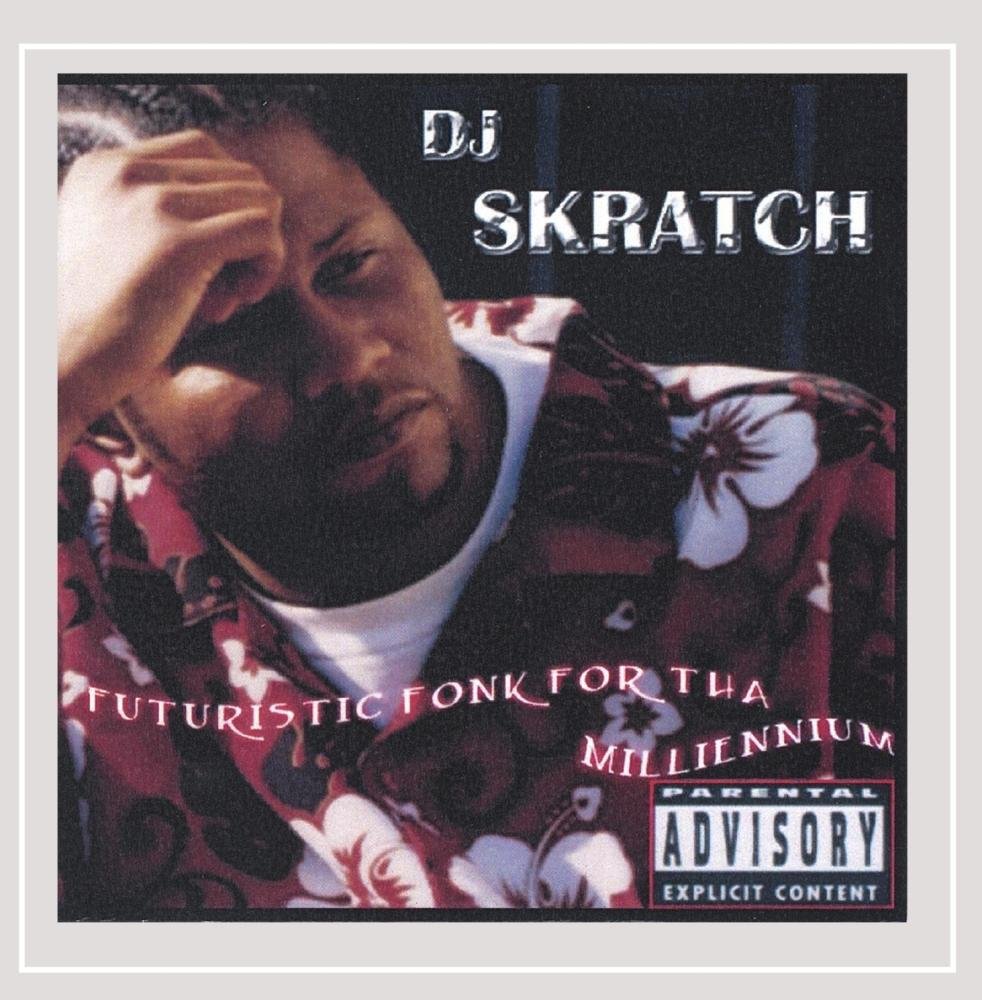
「Kome 2 Party」は、2003年発表の『Furturistic Fonk for the Millennium』収録曲。
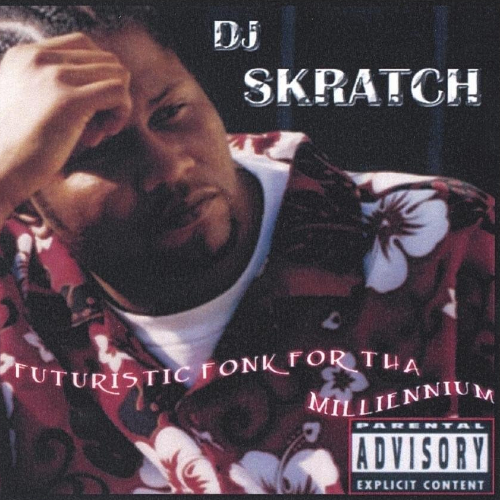
Tower Recordsでは同作の発売日を2003年7月10日、レーベルをFuturistic Fonk、規格品番をDJS2003として掲載している。
HMVのトラックリストでは、
「Intro」
「Need I Say More (Part 1)」
「I Lyke It Nasty」
「Pussy Manipulator」
「Puzzy Kat」
に続く6曲目が「Kome 2 Party」。
その後には、
「2 Min Man (Live)」
「She Lykez It Doggie Style」
「Reprezent」
「Cock Suckin Hoez」
「Juz Let It Ride」
「Freaky Bitchez」
と続く。
タイトルを並べるだけでも分かるように、アルバム全体にはセックス、女性、パーティー、プレイヤー文化を前面に押し出した世界観がある。
当時の紹介文でも、この作品は滑らかなファンク・プロダクションと性的なリリックを特徴とするアルバムとして紹介されていた。
その中で「Kome 2 Party」は、アルバムの猥雑な世界観を最も直接的に「パーティー」という形へ落とし込んだ曲のひとつと見ることができる。
Spotify上の表記では「Kome 2 Party fet: Jamon」となっているため、正式にはDJ Skratch名義、Jamon参加曲と整理するのが適切だ。
第一印象
第一印象は、とにかく「軽い」。
ただし、ここでいう軽さは音が薄いという意味ではない。
ドラムが一定の推進力を保ちながら進み、その上にファンク色の強いフレーズとヴォーカルが乗ることで、身体を横ではなく少し前へ押し出していくようなグルーヴが形成されている。
典型的な90年代G-Funkのように、70〜90 BPM程度のゆったりしたテンポで大きく横揺れさせるタイプではない。
解析値は約105.5 BPM。
このテンポ設定が「Kome 2 Party」に重要な意味を持っている。
ローライダーで夕暮れの街を流すというより、
夜が深まり、人が集まり、空間の温度が上がっていく場面
によく似合う。
だからタイトルの「Party」が単なる飾りになっていない。
最初から最後まで、楽曲自体が人を動かすための構造を持っている。
サウンド分析
ドラム
「Kome 2 Party」の中心にあるのは、かなり明確なビートの推進力だ。
解析上では約105.5 BPM。
ヒップホップとしてはやや速めだが、ドラムを細かく詰め込んでいるわけではないため、せわしなさは感じにくい。
むしろキックとスネアの位置関係を明確にし、その間をハイハットや細かなパーカッシブな要素で埋めることで、一定のダンス感を維持している。
重要なのは、ドラムが主役になりすぎないこと。
巨大なキックで空間を圧迫したり、スネアを極端に硬くしたりするタイプではない。
ファンク的な上物とラップを動かす「土台」に徹している。
このバランスが2000年代初頭らしい。
90年代のG-Funkほどドラムが丸く沈み込まず、後年のウェストコーストほど硬質でもない。
その中間地点にある、乾いたスナップ感が特徴だ。
ベース
低域についても、極端なサブベース依存ではない。
現代のヒップホップのように40〜60Hz付近を巨大化させて曲そのものを揺らすというより、中低域を中心にビート全体へ厚みを与える設計になっている。
キックとの分離も比較的分かりやすく、
ドラムが前へ進み、ベースがその下を滑る
という関係が作られている。
このベースの存在によって、105 BPM前後でも曲が軽くなりすぎない。
上半身はテンポに合わせて動くのに、腰から下にはしっかり重さが残る。
この感覚こそ「Kome 2 Party」のグルーヴを支える重要な部分だ。
シンセ/メロディ
メロディ面は、壮大なコード展開を聴かせる曲ではない。
基本的には短いフレーズを繰り返しながら、声やリズムと組み合わせてムードを維持していく。
その意味では、「メロディを聴かせる曲」というより、
音色そのものをファンクとして機能させる曲
と言ったほうが近い。
ここには90年代ウェストコーストから受け継がれた感覚がある。
ただし、Roger Troutman的な高音シンセを豪快に鳴らす王道G-Funkとは方向が違う。
もっとコンパクトで、少しチープで、少し猥雑。
だからこそインディー作品特有の味がある。
煌びやかさよりも、夜の室内、煙、酒、人の声が混ざったような密度を感じさせる。
ミックス・グルーヴ
今回の音源を区間ごとに解析すると、終盤のフェード/アウトロを除いて、曲中の平均的な音量エネルギーはかなり安定している。
つまり「Kome 2 Party」は、大きなブレイクや劇的なダイナミクス変化によって聴かせる曲ではない。
基本となるグルーヴを固定し、
ラップ
フック
声の重なり
細かな上物
によって変化を作っている。
これはパーティーチューンとして非常に合理的だ。
ビートそのものを止めたり、雰囲気を頻繁に変えたりすると身体の動きが途切れる。
そこでDJ Skratchは、土台をほぼ崩さず、ヴォーカル側で曲を展開する。
約3分28秒という比較的短い尺も、この構造と相性が良い。
長々と展開するのではなく、一つのグルーヴを集中して味わわせ、そのまま抜けていく。
アルバムの中間に置かれた曲としても非常に機能的である。
ラップ/ボーカル分析
「Kome 2 Party」で重要なのは、Jamonの存在だ。
正式表記でも「fet: Jamon」と明記されており、単なるバックコーラス要員ではなく、この曲のキャラクターを形成する参加者として扱われている。
ラップ/ヴォーカルのアプローチは、重量級のギャングスタラップとはかなり違う。
緊張感を張り詰めさせるというより、ビートの上で力を抜き、パーティーの空気へ自然に入り込んでいく。
ここでは「言葉を叩きつける」ことよりも、
声そのものをグルーヴの一部にすること
のほうが重要だ。
105 BPM前後のビートに対し、声を必要以上に前のめりに乗せない。
少し後ろへ体重を残しながらフロウすることで、テンポが速く感じすぎないよう調整されている。
このあたりは非常にウェストコースト的だ。
ラップがビートと競争しない。
ドラム、ベース、上物、声が同じ方向へ流れている。
そのため派手な技巧を前面に出す曲ではないにもかかわらず、繰り返し聴いても身体の揺れが途切れにくい。
歌詞・テーマ
タイトルはそのまま「Kome 2 Party」。
通常の「Come To Party」を崩した表記であり、曲そのものもパーティーへ人を誘い込むことを中心に成立している。
ただし、アルバム全体の文脈を考える必要がある。
『Furturistic Fonk for the Millennium』は、単純な「みんなで楽しく踊ろう」という健全なパーティー盤ではない。
収録曲には「I Lyke It Nasty」「Pussy Manipulator」「Puzzy Kat」「She Lykez It Doggie Style」「Freaky Bitchez」など、性的なニュアンスを露骨に打ち出したタイトルが並ぶ。
当時の作品紹介でも、性的なリリックがアルバムの特徴として明示されている。
したがって、この曲における「Party」も、
酒
女性
セックス
プレイヤー的な振る舞い
夜遊び
といった世界観と切り離して考えるべきではない。
90年代から西海岸ラップに存在してきた「プレイヤー・ライフスタイル」を、2003年のインディーG-Funkへ持ち込んだ曲と考えると分かりやすい。
重要なのは、殺伐としたストリート描写を中心に置いていない点だ。
脅しや抗争ではなく、遊び、欲望、女性、パーティー。
だからサウンドも暗く沈み込まず、ファンクが前面へ出ている。
トリビア/制作メモ
まずタイトルについて。
ネット上には「Kome 2 Party」とだけ掲載している資料もあるが、現在のSpotifyでは正式に**「Kome 2 Party fet: Jamon」**と表記されている。
また、同じアルバムの8曲目「She Lykez It Doggie-Slyle」にもJamonが参加しており、こちらはJamon & Taiyonをフィーチャーした曲として配信されている。
つまりJamonは「Kome 2 Party」だけの一度きりのゲストではなく、アルバム内で複数曲に関与する人物だったことが分かる。
さらに『Furturistic Fonk for the Millennium』は、DJ Skratchにとってプロデューサー/ラッパーとしての自己紹介的な意味を持った作品だった。
公開されている当時のプロフィールでは、制作開始は1998年頃、完成は2002年、リリースは2003年とされている。
つまり単純計算では数年にわたって構想・制作された作品である。
この点は非常に面白い。
1998年と2003年では、メインストリームのウェストコースト・ラップを取り巻く状況はかなり違う。
それでもDJ Skratchは作品名に堂々と「Fonk」を掲げ、ファンクを中心に据えた。
「Kome 2 Party」から感じられる少し90年代的なサウンドと2000年代的な処理の混在は、そうした長い制作期間とも無関係ではないのかもしれない。
ただし、これは作品制作時期と実際の音から考えられる解釈であり、「Kome 2 Party」が具体的に何年に録音されたかまでは公開資料から確認できていない。
総評
DJ Skratch「Kome 2 Party」は、G-Funkという言葉から連想される典型的な90年代サウンドとは少し違う。
もっとテンポが速い。
もっとコンパクト。
もっとパーティー寄り。
そして、いい意味でもっと猥雑だ。
約105.5 BPMという軽快な速度にファンク由来の低域と反復フレーズを組み合わせ、Jamonの声をグルーヴへ溶かしていく。
曲尺も約3分28秒と短く、大げさな展開はない。
しかし、その「変わらなさ」こそが魅力でもある。
最初に提示したグルーヴを最後まで大きく手放さないため、聴き手は楽曲構造を分析するより先に身体を預けることになる。
これはリスニング用のG-Funkというより、
実際の空間を温めるためのウェストコースト・ファンクだ。
90年代黄金期をそのまま再現しているわけではない。
しかし、その時代から受け継いだファンク、プレイヤー文化、猥雑さを、2003年という時代に合わせて再構築している。
「Kome 2 Party」は、そうした2000年代初頭LAアンダーグラウンドの面白さを、小さな曲の中に凝縮した一曲である。
エディターズノート
この曲を聴いて特に面白いと感じるのは、「G-Funkの残り香」がありながら、完全には90年代へ戻らないところだ。
105 BPM前後というテンポが象徴的である。
もっと遅くすれば、いかにも90年代的なローライダー・ファンクになったかもしれない。
逆にもっと硬いドラムと低音へ寄せれば、2000年代らしいギャングスタラップにもできた。
しかし「Kome 2 Party」はそのどちらにも振り切らない。
ファンクを残したまま、テンポだけを一段押し上げている。
そのため、夕暮れのクルージングというより深夜のハウスパーティー。
広い大通りというより、人の密集した部屋。
青空というより、照明を落とした室内。
そんな風景が似合う。
そしてJamonの声が入ることで、単なるDJ Skratchのプロデューサー作品ではなく、人間臭いパーティー感が加わっている。
派手なクラシックではない。
だが、2000年代初頭の西海岸インディーを掘っている人にとっては、こういう曲こそ忘れられなくなる。
「G-Funkが90年代で終わったわけではない」と感じさせてくれる、非常に興味深い一曲だ。
今回ご紹介の楽曲の購入はこちらからどうぞ

DJ Skratch – Kome 2 Party feat. Jamon | Futuristic West Coast Fonk Built for the Party
In the early 2000s, West Coast rap was home to a particular strain of funk that did not simply recreate the legacy of ’90s G-Funk.
It was more independent, more raunchy, and increasingly designed with clubs, parties, and car stereos in mind.
DJ Skratch’s “Kome 2 Party,” featuring Jamon, captures that atmosphere almost perfectly.
Included on the 2003 album Furturistic Fonk for the Millennium, the track runs approximately 3 minutes and 28 seconds. Analysis of the audio places its tempo at roughly 105.5 BPM.
On paper, that makes it relatively upbeat. But the real point is not the speed itself.
The track maintains a steady beat while repeatedly cycling funk-derived instrumentation and low-end elements, allowing the vocals to remain at the front of the mix. The result is neither as mellow as classic mid-’90s G-Funk nor as hard-edged as the West Coast sound that would become more prominent later in the 2000s.
Instead, “Kome 2 Party” occupies an intriguing space between eras.
And although the title makes its party theme obvious, this is not simply bright, carefree party music.
There is something distinctly DJ Skratch about it: slightly sleazy, slightly mysterious, and relentlessly funky—a snapshot of a particular kind of West Coast nightlife.
Artist Introduction
DJ Skratch is a DJ, producer, and rapper whose musical foundation is deeply rooted in West Coast hip-hop.
According to publicly available biographical information, he was active around the radio station The Beat before becoming the DJ for The Mackadelics in 1996. He later collaborated with DJ Aladdin on the mix CD The Shiznet, and around 1998 began working on his own album, Futuristic Fonk for tha Millennium.
The project was reportedly completed in 2002 and released the following year.
That timeline suggests the album was more than a temporary side project. It appears to have been a long-term statement through which DJ Skratch could establish himself not only as a DJ, but also as a producer and rapper in his own right.
Connections between DJ Skratch and Penthouse Players Clique can also be traced around this period, and the album includes “Cock Suckin Hoez,” featuring the group.
With that background in mind, DJ Skratch’s music should not be viewed simply as an early-2000s G-Funk revival.
It makes more sense to see him as an artist carrying the traditions of Los Angeles player rap, funk, and DJ culture from the early ’90s into a new decade.
That perspective also makes the position of “Kome 2 Party” much easier to understand.
Background
“Kome 2 Party” appears on DJ Skratch’s 2003 album Furturistic Fonk for the Millennium.
Tower Records lists the album’s release date as July 10, 2003, with Futuristic Fonk as the label and DJS2003 as the catalog number.
According to HMV’s track listing, “Kome 2 Party” appears as track six, following:
“Intro”
“Need I Say More (Part 1)”
“I Lyke It Nasty”
“Pussy Manipulator”
“Puzzy Kat”
It is followed by:
“2 Min Man (Live)”
“She Lykez It Doggie Style”
“Reprezent”
“Cock Suckin Hoez”
“Juz Let It Ride”
“Freaky Bitchez”
Even the titles alone reveal the album’s overall aesthetic: sex, women, partying, and player culture are placed unapologetically at the center of its world.
Contemporary descriptions of the project likewise emphasized its combination of smooth funk production and sexually explicit lyrics.
Within that context, “Kome 2 Party” can be heard as one of the album’s most direct transformations of that raunchy aesthetic into an actual party record.
Spotify currently lists the track as “Kome 2 Party fet: Jamon,” making it most appropriate to identify the recording as a DJ Skratch track featuring Jamon.
First Impression
The immediate impression of “Kome 2 Party” is that it feels remarkably light on its feet.
That does not mean the production sounds thin.
Rather, the drums maintain a consistent forward momentum while funk-heavy phrases and vocals sit above them, creating a groove that seems to push the body slightly forward instead of encouraging the broad side-to-side sway commonly associated with classic G-Funk.
This is not the stereotypical ’90s G-Funk formula built around a slow 70–90 BPM tempo and an exaggerated cruising motion.
The analyzed tempo is approximately 105.5 BPM.
That choice is crucial to the identity of “Kome 2 Party.”
Instead of evoking a lowrider rolling through the city at sunset, it feels better suited to:
the moment when the night gets deeper, more people arrive, and the temperature inside the room begins to rise.
That is why the word “Party” in the title never feels decorative.
From beginning to end, the track is structured around movement.
Sound Analysis
Drums
At the center of “Kome 2 Party” is a clearly defined rhythmic drive.
The analyzed tempo is approximately 105.5 BPM.
That is relatively quick for this style of hip-hop, but because the drums are not overloaded with intricate programming, the track never feels rushed.
Instead, the kick and snare establish an obvious rhythmic framework, while hi-hats and smaller percussive elements fill the spaces between them and maintain a consistent danceable pulse.
Importantly, the drums never try to dominate the entire production.
There are no enormous kicks crushing the mix, nor is the snare exaggerated into an aggressively hard attack.
The rhythm section functions primarily as a foundation for the funk instrumentation and vocals.
That balance feels characteristic of the early 2000s.
The drums do not sink as deeply into the groove as much of ’90s G-Funk, but neither do they have the harder, sharper character heard in some later West Coast production.
“Kome 2 Party” sits somewhere in between, defined by a relatively dry snap and steady forward momentum.
Bass
The low end is similarly restrained in its approach.
Rather than depending on oversized sub-bass in the modern sense—where frequencies around 40–60 Hz can dominate the physical experience of a track—the bass here is centered more around the low-mid region, adding weight to the entire beat.
The relationship between the kick and bass is relatively easy to distinguish.
The drums move forward while the bass seems to slide underneath them.
That bass presence prevents the track from becoming too lightweight despite its 105 BPM tempo.
Your upper body can respond to the quicker rhythm, while the lower half of the groove still retains a sense of weight.
That contrast is one of the most important elements behind the physical feel of “Kome 2 Party.”
Synths / Melody
Melodically, this is not a track built around expansive chord progressions.
Instead, short phrases repeat throughout the production, interacting with the vocals and rhythm to sustain the atmosphere.
In that sense, it is less about presenting a memorable melody than about:
making the actual timbre of the instruments function as funk.
That approach clearly retains something from ’90s West Coast production.
However, it does not follow the classic G-Funk formula of unleashing a huge, high-pitched Roger Troutman-style synth lead.
The sound is more compact, slightly cheaper in texture, and deliberately more raunchy.
That is also where much of its independent character comes from.
Instead of polished glamour, the production suggests the density of a dark room at night—smoke, alcohol, conversation, bodies, and music all occupying the same space.
Mix & Groove
Breaking the supplied audio into sections reveals that, aside from the closing fade/outro, the track maintains a relatively consistent level of energy throughout.
In other words, “Kome 2 Party” does not rely on major breakdowns or dramatic dynamic shifts.
The fundamental groove remains stable, while changes are created through:
- rap passages
- hooks
- layered voices
- smaller instrumental details
For a party record, this is an extremely practical arrangement.
If the beat repeatedly stopped or the atmosphere changed too dramatically, the listener’s physical momentum would be interrupted.
Instead, DJ Skratch keeps the foundation largely intact and allows the vocal elements to provide the movement.
The relatively short running time of approximately 3:28 also works perfectly with this structure.
Rather than stretching the concept into a long arrangement, the track concentrates on a single groove, lets the listener inhabit it, and then exits.
As a song positioned around the middle of the album, it is highly functional.
Rap / Vocal Analysis
Jamon’s presence is an important part of “Kome 2 Party.”
The official streaming title explicitly identifies the track as “fet: Jamon,” indicating that Jamon is more than a background vocalist. His presence helps define the personality of the record.
The vocal approach is noticeably different from heavyweight gangsta rap.
Rather than creating tension or attacking the beat aggressively, the performance stays relaxed and slips naturally into the party atmosphere.
Here, the priority is less about hammering words into the listener and more about:
turning the human voice into another part of the groove.
Against a beat running at around 105 BPM, the vocals avoid becoming unnecessarily frantic.
The flow retains a slight backward lean, preventing the tempo from feeling too fast.
That is a distinctly West Coast quality.
The rapper does not race against the beat.
Drums, bass, instrumentation, and voice all move in the same direction.
As a result, even without placing technical virtuosity at the center of the performance, the track maintains its physical swing remarkably well across repeated listens.
Lyrics & Themes
The title says it all: “Kome 2 Party.”
It is a stylized variation of “Come to Party,” and the track is fundamentally built around inviting people into that environment.
However, the broader context of the album matters.
Furturistic Fonk for the Millennium is not simply a wholesome “everybody get together and dance” party record.
Its track list includes titles such as “I Lyke It Nasty,” “Pussy Manipulator,” “Puzzy Kat,” “She Lykez It Doggie Style,” and “Freaky Bitchez.”
Contemporary descriptions of the album also explicitly highlighted sexually charged lyrics as one of its defining characteristics.
The “party” in “Kome 2 Party,” therefore, should be understood within a larger world involving:
alcohol,
women,
sex,
player behavior,
and nightlife.
One useful way of understanding the track is as a continuation of the player lifestyle that had long existed within West Coast rap, reconfigured through the language of independent G-Funk in 2003.
Another important point is what the track does not emphasize.
Violent street narratives, threats, and conflict are not at the center.
Instead, the focus is pleasure, desire, women, nightlife, and partying.
That is precisely why the funk remains so prominent and why the production avoids sinking into a darker atmosphere.
Trivia / Production Notes
First, there is the matter of the title.
Some online sources simply list the track as “Kome 2 Party,” while Spotify currently presents the official streaming title as “Kome 2 Party fet: Jamon.”
Jamon also appears elsewhere on the album.
The eighth track, “She Lykez It Doggie-Slyle,” is distributed as a track featuring Jamon & Taiyon.
This indicates that Jamon was not simply a one-off guest brought in exclusively for “Kome 2 Party,” but someone involved with multiple recordings on the project.
Furturistic Fonk for the Millennium also appears to have carried particular significance for DJ Skratch as a statement of his identity as a producer and rapper.
According to publicly available period biographical information, work on the album began around 1998, it was completed in 2002, and it was finally released in 2003.
That suggests a creative process extending across several years.
And that detail is particularly interesting.
The landscape surrounding mainstream West Coast rap had changed considerably between 1998 and 2003.
Yet DJ Skratch still placed the word “Fonk” proudly at the center of the album’s identity.
The mixture heard in “Kome 2 Party”—something slightly ’90s in its funk sensibility but unmistakably early-2000s in its presentation—may reflect that extended production period.
However, this should be treated as an interpretation based on the album’s reported production timeline and the audible qualities of the recording.
Publicly available information does not appear to establish the exact year in which “Kome 2 Party” itself was recorded.
Overall Assessment
DJ Skratch’s “Kome 2 Party” differs slightly from the stereotypical ’90s sound most listeners immediately associate with the term G-Funk.
It is faster.
More compact.
More explicitly designed for a party.
And, in the best possible sense, considerably more raunchy.
At approximately 105.5 BPM, the track combines a lively tempo with funk-derived low-end weight and repeating instrumental phrases, while Jamon’s voice becomes integrated directly into the groove.
At around 3 minutes and 28 seconds, it is concise and avoids unnecessary dramatic development.
Yet that relative lack of change is precisely part of its appeal.
Because the track never truly abandons the groove established at the beginning, listeners are encouraged to surrender to its physical movement before they ever start thinking about its arrangement.
This is less like G-Funk designed purely for attentive listening and more like:
West Coast funk made to heat up an actual room.
It does not simply recreate the golden age of the 1990s.
Instead, it takes the funk, player culture, and raunchiness inherited from that era and reshapes them for 2003.
“Kome 2 Party” compresses much of what makes early-2000s Los Angeles underground rap so fascinating into one small, tightly focused record.
Editor’s Note
What makes this track particularly interesting is the way it carries the lingering scent of G-Funk without fully retreating into the 1990s.
The tempo of around 105 BPM is symbolic of that tension.
Slow it down significantly and it could have become a much more stereotypical ’90s lowrider funk record.
Push it toward harder drums and heavier low end, and it might have resembled the tougher gangsta rap production increasingly associated with the 2000s.
But “Kome 2 Party” commits completely to neither direction.
Instead, it keeps the funk intact while simply pushing the tempo one step higher.
That changes the scenery.
This is less sunset cruising and more late-night house party.
Less wide boulevard and more crowded room.
Less blue sky and more dimmed interior lighting.
And with Jamon’s voice entering the mix, the track gains a human, slightly messy party energy that prevents it from feeling like merely a DJ Skratch production showcase.
It is not an obvious, larger-than-life classic.
But for listeners digging deep into independent West Coast rap from the early 2000s, tracks like this are often the ones that become difficult to forget.
“Kome 2 Party” is a fascinating reminder that G-Funk did not simply disappear when the 1990s ended.
コメント