車の屋根を開けて、軽快なG-Funkを鳴らす。
「Rag Top」というタイトルだけを見れば、そんな開放的なドライブ曲を想像するかもしれない。
しかし、Lil Flyの「Rag Top」で本当に鳴らされているのは、オープンカーの爽快感だけではない。
この曲に登場するのは、アルバム制作へ金を投じたLil Fly、裏方からマイクの前へ出てきたFranky J、そして長い下積みを振り返るRappin’ 4-Tay。それぞれが自分の経験を語りながら、Rag Topという名前をひとつのチーム、会社、そして生き方として掲げていく。
約99BPMのビートは明るく、フックも覚えやすい。それでも歌詞の中心にあるのは、成功を誇示するだけの華やかな物語ではない。
金を出さない人間、成功後に近づいてくる人間、若い頃のストリート生活、レコード制作への投資、そして評価されるまでの長い時間。
「Rag Top」は、仲間同士の会話と軽口に包まれながら、自分たちの力で居場所を作った者たちの記録を残している。
アーティスト紹介
Lil Flyは、カリフォルニア州サンフランシスコのFillmore地区を拠点としたラッパーで、Rappin’ 4-TayのRag Top Recordsに所属していたとされる人物である。Memphisで活動したPlaya Flyの旧名「Lil Fly」とは別人なので注意したい。
本作には、Rag Top Recordsを率いたRappin’ 4-TayとFranky Jが参加している。資料上でも「Rag Top」はLil Fly名義で、Franky JとRappin’ 4-Tayをフィーチャーした曲として記録されている。
単なるゲスト参加というより、曲中では三者が会話を交わし、順番にマイクを回している。そのため本作は、Lil Flyのソロ曲であると同時に、Rag Top Records周辺の結束を示すクルー作品としても聴くことができる。
作品背景
「Rag Top」は、Lil Flyが1995年に発表した6曲入りEP『Bonafied Playa』の2曲目に収録されている。資料では同作の発売日は1995年4月26日、レーベルはRag Topと記録されている。
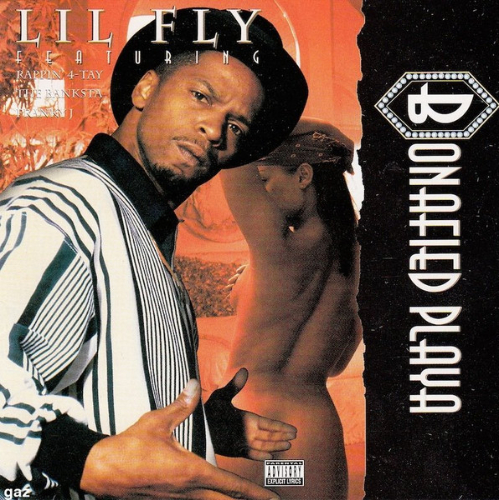
EPの収録曲は次の6曲である。
- California Funk
- Rag Top
- Now You Don’t Know Nobody
- 25-2-Life
- Stick & Move
- Somethin’ Kinda Smooth
「California Funk」「Bonafied Playa」「Somethin’ Kinda Smooth」といった題名からも、作品全体が1990年代半ばのカリフォルニア・ファンク、プレイヤー文化、ストリート感覚を強く意識していたことが伝わる。
また、Rappin’ 4-Tayの1994年作『Don’t Fight the Feelin’』にはLil FlyとFranky Jが制作陣として参加しており、三者の関係は「Rag Top」だけで突然生まれたものではない。
曲中でも「Playaz Club Tour」や「1995年」といった言葉が登場し、Rappin’ 4-Tayの成功を足場にしながら、次はLil Flyの作品を世に出そうとする流れが会話形式で示されている。
第一印象
最初に耳を引くのは、曲の始まりから漂う仲間内のスタジオ・セッションらしい空気である。
いきなりラップへ入るのではなく、Lil Fly、Rappin’ 4-Tay、Franky Jと思われる人物たちが、ツアー、アルバム、制作費、契約書などについて冗談を交えながら話している。
「アルバムを代表する」「Frankyに電話しろ」「Frankyはみんなのポケットに手を入れている」といったやり取りからは、音楽制作が単なる夢ではなく、金銭と契約が動く現実的な仕事でもあることが伝わってくる。
その会話を受けてビートが落ちると、軽快な鍵盤と太いベースが前へ出る。
明るく陽気なサウンドだが、歌詞は成功までの苦労、周囲の態度の変化、ストリートでの経験を扱っている。この楽しげな表面と現実的な内面の差が、「Rag Top」の大きな魅力である。
サウンド分析
ドラム
音源を解析すると、テンポはおよそ99BPM。速すぎず遅すぎない、身体を自然に揺らせるミドルテンポで進む。
キックは必要以上に重く沈ませず、一定の間隔で丸く打ち込まれている。スネアは乾いた質感で、各小節の背骨となる位置をはっきり示す。
複雑なドラム・プログラミングで緊張感を作るのではなく、ラッパーの言葉と会話を邪魔しない安定したループが中心だ。
ハイハットにも過剰な細かさはなく、全体としては1990年代半ばのBay Area Rapらしい、力を抜いて乗れる跳ね方を持っている。
ベース
ベースは曲全体を支える重要な要素である。
低音は長く伸び続けるというより、キックと連動しながら短いフレーズを反復する。輪郭は丸いが存在感は強く、スピーカーや車内で鳴らしたときに曲のグルーヴを体で感じられる作りだ。
低域を極端に濁らせず、ラップの声が聞き取りやすい位置に残されているため、重さと軽快さが両立している。
ベースライン自体は派手に動かない。しかし、その単純な反復が、三人の異なるフロウをひとつの曲としてまとめている。
シンセ・メロディ
曲の印象を決定づけているのは、冒頭から鳴る明るい鍵盤フレーズである。
高い音域のシンセまたは電子鍵盤が、短いコード・モチーフを繰り返す。その響きには少し華やかさがあり、Lil Flyたちが掲げる成功、金、レーベルの存在感を音で表現しているように聞こえる。
一方で、典型的なG-Funkで聴かれる高音のホイッスル・シンセを前面に押し出す構成ではない。
ファンク由来のベース、跳ねるドラム、明るい鍵盤という要素は備えているが、音数を絞ったループ主体の作りである。そのためジャンルとしては、Bay Area Rap/West Coast Hip-Hopを土台にG-Funk的な感触を加えた曲と表現するのが妥当だろう。
ミックス・グルーヴ
ミックスはボーカルを中心に組み立てられている。
各ラッパーの声が前方にはっきり配置され、楽器はその後ろで同じグルーヴを保つ。フックでは複数の声が重なり、「Rag Top」という言葉を集団の掛け声として強調する。
特に面白いのは、ラップ、フック、会話が明確に分断されていない点だ。
ヴァースが終わると再び仲間同士の会話が始まり、そこから次の人物へ自然にマイクが渡される。完成された楽曲を聴いているというより、スタジオの中に入り、彼らと同じ部屋でセッションを見ているような感覚がある。
このラフなつながりが、曲に人間味と親密さを与えている。
ラップ/ボーカル分析
最初のヴァースを担当するLil Flyは、強く怒鳴るのではなく、落ち着いた声で自分の立場を説明する。
彼は、誰も宣伝や制作に金を使おうとしなかったため、自分の持っていた金を仲間とともに投資したと語る。そして、成功が見え始めてから知人のように振る舞う“player haters”へ反発する。
フロウはビートの上を滑るように進み、語尾を無理に詰め込まない。若いラッパーらしい勢いはあるが、声の調子は冷静で、自分たちの計画が間違っていなかったことを証明しようとする姿勢が強い。
2番手のFranky Jは、曲中で「書類や契約を扱っている人物」として紹介された後、突然マイクを握る。
彼のヴァースはラッパーとしての技巧を誇示するものではなく、若い頃の生活からRag Topの代表になるまでを語る自伝的な内容だ。
18歳の頃、武器やドラッグを持ち、ストリートのゲームに関わっていた過去を振り返りながら、やがて金を使って“funky-ass keyboard”を購入したと語る。
ここには、ストリートでの危険な生活から、音楽制作と事業へ方向を変えた人物の転換が表れている。
終盤に登場するRappin’ 4-Tayは、三人の中で最も滑らかに韻をつなぐ。
ブロックでラップを始めた時代、近所の仲間が集まってきたこと、周囲から意味のない騒音だと思われたこと、そして後に『Yo! MTV Raps』へつながったことを振り返る。
長めのヴァースだが、言葉を細かく刻みながらビートのポケットを外さない。自分の成功だけを語るのではなく、DJへ12インチ盤を渡し、深夜の番組で曲をかけてもらった時代にも触れている。
三人のヴァースは、それぞれが異なる段階を担当している。
- Lil Fly:現在の挑戦と投資
- Franky J:裏方と経営側から見た人生
- Rappin’ 4-Tay:下積みから評価を得るまでの歴史
この役割分担によって、「Rag Top」という名前が単なるレーベル名ではなく、世代と経験をつなぐ共同体として描かれている。
歌詞・テーマ
表面的なテーマは、成功、金、仲間、プレイヤーとしての誇りである。
しかし歌詞を詳しく追うと、本作の中心には自分たちの音楽へ金と時間を投じる覚悟がある。
Lil Flyは、周囲が金を出そうとしなかったため、自分と仲間で資金を用意したと話す。これは成功後の豪華な暮らしを見せる表現ではなく、作品が完成する前の現実的な苦労を示している。
また、成功が近づいてから態度を変える人間への不信も語られる。誰も助けなかった時期を知っているからこそ、後から近づく“player haters”を簡単には信用しない。
Franky Jのヴァースでは、ストリートで生きた過去と音楽ビジネスへの転換が描かれる。
「脚本をひっくり返して、ファンキーなキーボードを買った」という趣旨のラインは、本作の重要な言葉だ。
危険なゲームの参加者であり続けるのではなく、自ら物語を書き換え、音楽を作る側へ移った。その選択が、現在のRag Topにつながっている。
Rappin’ 4-Tayは、さらに長い時間軸から同じテーマを語る。
最初は近所でラップしていた音が、周囲には無意味な騒音と思われていた。しかし、地道に曲を作り、DJへレコードを渡し、やがて広い世界へ届くようになった。
そのためフックの、
「Rag Top/Isaac Hayesのように病みつきになる/制作し、ラップし、金を得る」
という表現は、単なる自慢ではない。
自分たちで音を作り、自分たちで言葉を乗せ、それを仕事として成立させるという宣言である。
なお、タイトルの“ragtop”には一般的に幌付きのオープンカーという意味がある。しかし本作では、車そのものを細かく描写するよりも、Rag Top Recordsの名称と集団としての誇りが前面に出ている。
つまり「Rag Top」はドライブ曲の顔を持ちながら、その内側ではレーベルの成り立ちと仲間の歴史を語る曲なのである。
トリビア/制作メモ
『Bonafied Playa』の資料上のクレジットには、エグゼクティブ・プロデューサーとしてAnthony Forté、Frank Hudson Jr.、Erica Gilles、プロデューサーとしてAl EatonとRegi-Regの名前が掲載されている。
ただし、確認できた公開資料だけでは、「Rag Top」単曲を誰が制作したのかまでは明確に特定できなかった。
曲中ではFranky Jがキーボードを購入した経験や、書類、契約、レーベル運営について語っている。そのため制作面でも重要な立場だったことはうかがえるが、歌詞上の描写だけを根拠に「Rag TopのプロデューサーはFranky J」と断定することはできない。
また、曲中のFranky Jは「40歳」と名乗り、Rag TopのPresidentと宣言する。
若いLil Fly、経験を積んだRappin’ 4-Tay、さらに年長のFranky Jが同じ曲へ参加することで、当時のローカル・レーベルが単一世代だけで動いていたのではなく、制作、経営、ラップを異なる人物が支えていたことが見えてくる。
公式に確認できるサンプリング情報は見つからなかったため、本記事ではサンプリング元を断定しない。
総評
Lil Flyの「Rag Top」は、明るい鍵盤、丸いベース、跳ねるドラムを備えた、聴きやすいBay Areaファンクである。
約99BPMのビートと反復されるフックだけを聴けば、車内や街中で気軽に流せる曲に聞こえる。
しかし、その軽快な音の中では、アルバム制作への投資、契約、下積み、ストリートからの転換、成功後に変わる周囲の態度といった現実的な話が交わされている。
特に重要なのは、三人が同じ種類の成功談を繰り返していないことだ。
Lil Flyはこれから自分の作品を世に出そうとする若い挑戦者として語り、Franky Jは裏方と経営の経験を持つ年長者として語る。そしてRappin’ 4-Tayは、ブロックでラップしていた時代から広く知られるまでの過程を語る。
三つの視点が集まり、ひとつの「Rag Top」が完成する。
これはオープンカーの屋根を開けて走るだけの曲ではない。
仲間の名前を看板に変え、自分たちの音楽で稼ぐ場所を作った者たちのレーベル・アンセムである。
Lil Fly – Rag Top | Bay Area Funk Built on Hustle, Loyalty and an Independent Dream
Drop the top and let some smooth G-Funk play.
Judging by the title “Rag Top,” you might expect exactly that kind of carefree cruising record.
But Lil Fly’s “Rag Top” is about much more than the freedom of riding with the top down.
The track brings together Lil Fly, who put his own money behind an album project; Franky J, who steps from behind the scenes to the microphone; and Rappin’ 4-Tay, who looks back on the long road from neighborhood rapper to wider recognition.
Each man tells a different part of the story.
Together, they turn the name Rag Top into more than a label.
It becomes a team, a business, and a way of life.
The beat moves at approximately 99 BPM, with a bright groove and an instantly accessible hook.
But underneath that easygoing surface is a story that has little to do with simply showing off success.
People who refused to invest.
People who suddenly appeared after success became visible.
Street life at a young age.
Money invested into making records.
Years spent waiting for recognition.
Wrapped in jokes and relaxed conversation between friends, “Rag Top” ultimately documents a group of people who created their own place in the music business.
Artist Introduction
Lil Fly was a rapper associated with San Francisco’s Fillmore district and with Rappin’ 4-Tay’s Rag Top Records.
He should not be confused with the Memphis rapper who originally performed under the name Lil Fly before becoming known as Playa Fly.
“Rag Top” also features Rappin’ 4-Tay and Franky J.
Available documentation lists the track under Lil Fly’s name with Franky J and Rappin’ 4-Tay as featured artists.
Their involvement feels like more than a conventional guest appearance.
Throughout the song, the three men talk to one another and pass the microphone around.
As a result, “Rag Top” works both as a Lil Fly track and as a crew record representing the people surrounding Rag Top Records.
Background
“Rag Top” appears as the second track on Lil Fly’s six-song 1995 EP Bonafied Playa.
Available release information lists April 26, 1995 as the release date and Rag Top as the label.
The EP contains six tracks:
- California Funk
- Rag Top
- Now You Don’t Know Nobody
- 25-2-Life
- Stick & Move
- Somethin’ Kinda Smooth
Titles such as “California Funk,” Bonafied Playa, and “Somethin’ Kinda Smooth” immediately suggest the project’s connection to mid-1990s California funk, player culture, and street-oriented rap.
Lil Fly and Franky J were also involved in the production side of Rappin’ 4-Tay’s 1994 album Don’t Fight the Feelin’.
That means the relationship between the three men did not suddenly begin with “Rag Top.”
The track itself references the “Playaz Club Tour” and 1995.
Through the opening conversation, the song creates the impression of a team attempting to build on Rappin’ 4-Tay’s momentum and turn the attention toward Lil Fly’s own project.
First Impression
The first thing that stands out is the atmosphere of friends talking during a studio session.
The track does not immediately jump into a verse.
Instead, voices that appear to belong to Lil Fly, Rappin’ 4-Tay, and Franky J joke and talk about touring, albums, production money, and contracts.
Comments about representing the album, calling Franky, and Franky having his hands in everybody’s pockets make the business side of the situation impossible to ignore.
Making music is a dream.
But it is also a job involving money, paperwork, investment, and responsibility.
When the beat finally drops, bright keyboards and thick bass move into the foreground.
The production feels cheerful.
The lyrics do not always match that mood.
The verses discuss the struggle to become successful, changes in people’s attitudes, financial investment, and street experience.
That contrast between a fun surface and a very practical reality underneath is one of the strongest qualities of “Rag Top.”
Sound Analysis
Drums
Audio analysis places the tempo at approximately 99 BPM.
It sits comfortably in the middle: neither fast nor slow, but ideal for a relaxed body-moving groove.
The kick is rounded and controlled rather than excessively deep.
The snare has a dry texture and clearly marks the backbone of each bar.
There is little interest in creating tension through complicated drum programming.
Instead, the beat maintains a stable loop that leaves room for conversation and rap.
The hi-hats are similarly restrained.
Overall, the drums have the relaxed bounce associated with mid-1990s Bay Area rap.
They do not force the listener to move.
They simply make it difficult not to.
Bass
The bass is essential to the track’s groove.
Rather than sustaining extremely long low notes, it repeats short phrases in close relationship with the kick.
The tone is rounded but still strong enough to give the track physical presence through speakers or inside a car.
At the same time, the low end is not so muddy that it interferes with the voices.
That balance allows the production to feel both heavy and light on its feet.
The bassline itself does not move dramatically.
But that simplicity helps connect three rappers with noticeably different flows.
No matter who has the microphone, the bass keeps everyone inside the same pocket.
Synths & Melody
The bright keyboard figure heard from early in the track is one of the main elements defining its personality.
A high-register synth or electronic keyboard repeats a short chord motif.
There is a slight sense of celebration in the sound, matching the themes of money, success, and building the Rag Top name.
However, the track does not rely on the piercing whistle-style lead synth commonly associated with stereotypical G-Funk.
It has funk bass.
Bouncing drums.
Bright keyboards.
But the arrangement remains relatively sparse and loop-oriented.
For that reason, the most accurate description is Bay Area Rap / West Coast Hip-Hop with a G-Funk flavor, rather than a textbook example of G-Funk.
Mix & Groove
The mix is built around the voices.
Each rapper sits clearly toward the front, while the instrumental maintains the same relaxed groove behind them.
During the hook, several voices overlap and turn the words “Rag Top” into something closer to a crew chant.
One particularly interesting feature is the lack of rigid separation between verses, hooks, and conversation.
A verse ends.
The men start talking again.
Then the microphone naturally passes to someone else.
Instead of listening to a perfectly segmented studio recording, it can feel like entering the room and watching the session happen.
That looseness gives the record intimacy and personality.
Rap / Vocal Analysis
Lil Fly handles the first verse.
He does not shout.
Instead, he calmly explains his position.
He talks about how people were unwilling to put money into promotion and production, forcing him and the people around him to invest their own funds.
Then, once success begins to look possible, the “player haters” suddenly start behaving as though they know him.
His flow slides comfortably over the beat.
He does not force too many words into the endings of his lines.
There is youthful energy in the performance, but his tone remains controlled.
More than anything, he sounds determined to prove that the plan was worth the investment.
Franky J comes next.
The song first presents him as someone involved with paperwork and contracts.
Then he suddenly takes the microphone himself.
His verse is not primarily about demonstrating technical rap ability.
It is autobiographical.
He looks back on being 18, carrying weapons and drugs, and participating in the street game.
Eventually, however, he describes spending money on a “funky-ass keyboard.”
That detail is important.
It suggests a transition from dangerous street activity toward music production and business.
Franky J does not simply describe where he came from.
He describes changing direction.
Rappin’ 4-Tay arrives later and delivers the smoothest extended rhyme performance of the three.
He looks back on rapping around the block, people gathering around, outsiders dismissing the music as meaningless noise, and eventually reaching a level of visibility associated with Yo! MTV Raps.
His verse is long, but he remains comfortably inside the beat while using more tightly connected rhyme patterns.
Importantly, he does not jump directly from neighborhood rapper to celebrity.
He remembers handing 12-inch records to DJs and trying to get songs played during late-night radio shows.
The three verses therefore represent different stages of a larger story:
- Lil Fly: the current challenge and financial investment
- Franky J: the perspective of someone involved behind the scenes and in the business
- Rappin’ 4-Tay: the long history from local struggle to recognition
Together, those perspectives make Rag Top feel less like a simple record-label name and more like a community connecting different experiences and generations.
Lyrics & Themes
On the surface, “Rag Top” is about success, money, friends, and player pride.
Listen more closely, however, and the central theme becomes the willingness to invest money and time into your own music when nobody else will.
Lil Fly talks about people refusing to contribute financially.
So he and his people put up the money themselves.
That is not an image of luxury after success.
It describes the practical struggle before the record has even had a chance to succeed.
There is also deep suspicion toward people whose behavior changes once success becomes visible.
If they were absent when the money was needed, why should they suddenly be trusted once the project begins attracting attention?
Franky J’s verse approaches the same idea from another direction.
He contrasts his street past with his transition toward the music business.
The idea of flipping the script and buying a “funky-ass keyboard” is one of the track’s most revealing moments.
Instead of remaining a participant in a dangerous street game, he rewrites his own role and moves toward making music.
That decision becomes part of the foundation behind Rag Top.
Rappin’ 4-Tay tells the same broader story across an even longer timeline.
At first, he was simply rapping around the neighborhood.
To outsiders, it sounded like meaningless noise.
But he kept making records.
He handed music to DJs.
Eventually, that music traveled beyond the block.
That history changes the meaning of the hook.
When Rag Top is associated with producing, rapping, and getting paid, it is not merely a boast.
It becomes a declaration:
make the music ourselves, put our own voices on it, and turn that work into a business.
The word “ragtop” commonly refers to a convertible with a soft top.
But the lyrics do not spend much time describing the car itself.
Instead, the emphasis falls on Rag Top Records and pride in the group surrounding that name.
So while “Rag Top” has the surface feel of a cruising record, underneath it is a song about a label, a team, and the history that brought them together.
Trivia / Production Notes
Credits associated with Bonafied Playa list Anthony Forté, Frank Hudson Jr., and Erica Gilles as executive producers, with Al Eaton and Regi-Reg credited as producers.
However, the publicly available documentation examined here does not clearly establish who produced “Rag Top” specifically.
Franky J talks about buying keyboards and discusses paperwork, contracts, and label operations within the song.
That strongly suggests an important role in the broader operation.
But those lyrical details alone are not enough to claim that Franky J specifically produced “Rag Top.”
Franky J also identifies himself in the song as being 40 years old and as the president of Rag Top.
The presence of the younger Lil Fly, the already established Rappin’ 4-Tay, and the older Franky J gives the record an unusual multi-generational quality.
It offers a glimpse of how a local rap label could depend on different people handling different parts of the operation:
rapping,
production,
business,
investment,
and connections.
No officially verifiable sampling information could be confirmed, so no specific sample source should be claimed.
Final Thoughts
Lil Fly’s “Rag Top” is an accessible piece of Bay Area funk built from bright keyboards, rounded bass, and bouncing drums.
At approximately 99 BPM, with a repetitive hook and relaxed groove, it can easily work as something to play in the car or while moving through the city.
But underneath that lighthearted sound are conversations about album investment, contracts, years of struggle, leaving the streets behind, and people changing once success becomes visible.
Most importantly, the three men are not simply repeating the same success story.
Lil Fly speaks as the younger artist trying to push his own project into the world.
Franky J speaks from the perspective of an older figure with experience behind the scenes and in the business.
Rappin’ 4-Tay looks back on the road from rapping around the block to reaching a much wider audience.
Three perspectives come together.
One Rag Top emerges.
This is not simply a song about dropping the roof and cruising.
It is a label anthem for people who turned the names of their friends into a banner and built a place to make money from their own music.
コメント