Big Stalksの「Gangsta Funk」は、太いベースと高く揺れるシンセ、華やかなコーラスが絡み合う、王道のG-Funkナンバーだ。
約96BPMでゆったりと進むビートは重すぎず、車を流しながら聴きたくなるような軽快なバウンスを持っている。
そこへBig Stalksの低く落ち着いたラップと、フランス勢によるラップが交差する。
カリフォルニアで育ったG-Funkが海を越え、別の土地で鳴り続ける。
タイトル通り、最初から最後まで「Gangsta」と「Funk」の気持ちよさを貫いた一曲だ。
アーティスト紹介
Big Stalksは、ウェストコースト/チカーノ・ラップ周辺で活動してきたラッパー。
低く落ち着いた声質と、力みすぎずビートへ深く乗るラップが特徴で、G-Funkやローライダー文化と結びついたサウンドとの相性がいい。
特に『Cali Dippen』では、DJ AK、Dogg Master、Rocky Padilla、Gfunk、Big Cisco、Casualら複数のアーティストを迎え、メロウからファンク色の強い楽曲まで、ウェストコースト色の濃い世界を展開している。
作品背景
「Gangsta Funk」は、Big Stalksのアルバム**『Cali Dippen』**に収録されたオープニング・ナンバー。
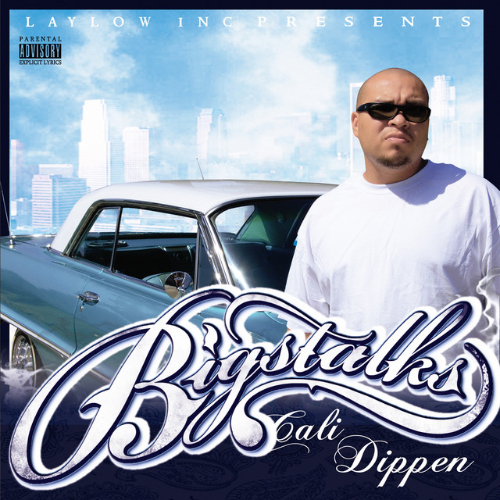
アルバムは2008年にLayLow Inc.からリリースされ、全15曲を収録。「Gangsta Funk」はその1曲目に配置されており、収録時間は約5分30秒となっている。
日本ではP-VINEから2009年1月9日にCDが発売されている。
本曲にはDJ AK & French Connectionが参加。
90年代に確立されたG-Funkの音楽語法を受け継ぎながら、アメリカとフランスをつなぐような国際色を持っている。
乾いたドラム、低く弾むベース、高音域を滑るシンセ、厚く重なるコーラス。
基本となる材料は王道のG-Funkだが、単なる90年代サウンドの再現ではない。
Big Stalksのウェストコースト感とフランス勢の感覚が同じビート上で交差することで、G-Funkが海を越えて広がっていった時代の空気まで感じさせる作品となっている。
第一印象
イントロから漂うのは、重苦しさよりも開放感だ。
高音のシンセが細く伸び、その後ろから厚いコーラスが広がる。
「Gangsta Funk」というタイトルから想像するような殺伐としたサウンドではなく、むしろ強い日差しの中、カリフォルニアの道路をゆっくり流しているような明るさがある。
しかし、その下では太いベースが低く動き続けている。
上ではシンセとコーラスが浮遊し、下ではベースが路面を這う。
この上下のコントラストが非常にG-Funkらしい。
そこへBig Stalksの低い声が入った瞬間、明るかったトラックにストリートの緊張感が加わる。
甘い。
しかし、決して軽くない。
その絶妙なバランスが「Gangsta Funk」の第一印象だ。
サウンド分析
ドラム
テンポは約96BPM。
速くも遅くもない中速テンポで、身体を激しく動かすというより、首や肩を自然に揺らしたくなるグルーヴになっている。
キックは極端に重くせず、ベースとぶつからない位置に配置。
対してスネアは乾いていて輪郭がはっきりしている。
上物が華やかだからこそ、ドラムは比較的シンプルにまとめられ、曲全体の骨格を支えている。
派手に叩き込むビートではない。
その余白が、ベースとシンセの動きをより気持ちよく聞かせている。
ベース
この曲の気持ちよさを支えているのが、太く丸いベースだ。
キックの間を縫うように低音が動き、短く跳ねる部分と滑らかに伸びる部分を組み合わせながら、ファンク特有の弾力を作っている。
特に印象的なのが、上に広がるコーラスとの距離感。
コーラスが空へ向かって広がる一方、ベースは地面へ張り付くように低い位置を走る。
車内で鳴らせば、低音だけが身体へ入り込み、その上をシンセと声が漂っていくような感覚。
まさにG-Funkらしい低音設計だ。
シンセ・メロディ
高音域を滑るシンセは、この曲を一聴してG-Funkだと感じさせる重要な要素。
細く高い音が伸びながら、音程を滑らかに動いていく。
強烈に前へ飛び出すというより、ラップの後ろを漂い続けることで、ウェストコースト特有の浮遊感を生み出している。
中音域には柔らかなコードが置かれ、そこへ厚いコーラスが重なる。
シンセだけでメロディを作るのではなく、コードと人間の声まで含めて一つの大きな旋律を形成しているのが特徴だ。
明るいのに、わずかな哀愁も残る。
この感触が、単なる陽気なファンクでは終わらせない。
ミックス・グルーヴ
中心にあるのはラップ、キック、スネア、ベース。
その周囲へシンセとコーラスを広げることで、横幅のある音像を作っている。
特にフックへ入ると声の層が一気に厚くなり、ヴァースから空間そのものが広がったように感じられる。
一方、ラップ部分ではボーカルを中央へ置き、Big Stalksの低い声をしっかり前へ出す。
大きくビートを切り替えて展開を作るのではなく、基本のグルーヴを維持したまま、ボーカルの人数や配置によって変化を作るタイプ。
約5分30秒という長さがありながら、同じバウンスへじっくり浸れる構成になっている。
ラップ/ボーカル分析
Big Stalksのラップは低く、落ち着いている。
言葉を急いで詰め込まず、ビートの隙間を残しながらフレーズを置いていく。
この「急がない」感覚が重要だ。
自分を大きく見せるために怒鳴るのではなく、すでに自分の立場を理解している男のような余裕を感じさせる。
一方、フランス語のラップへ移ると空気が変わる。
Big Stalksよりも音節を細かく刻み、同じトラックの上に別のリズムを作り出していく。
Big Stalksの低くゆったりしたフロウ。
そこへ対照的なフランス語のラップ。
言語そのものの響きの違いまで、曲のアクセントとして機能している。
さらに印象的なのがフックのコーラスだ。
何層にも重ねられた声が「Westside」「Gangsta Funk」という曲の核を繰り返し、ラップ以上に強烈な印象を残す。
ラップ、コーラス、電子的な質感の声。
それぞれを分離するのではなく、すべてをまとめて一つのG-Funkサウンドとして鳴らしている。
歌詞・テーマ
歌詞の中心にあるのは、ウェストコーストへの誇り、自分自身への自信、金、仲間、そして敵対者への警告だ。
Big Stalksは自分の存在を堂々と提示し、周囲からどう見られようと自分のスタイルを崩さない。
特に見えてくるのが、成功する者と、それを外から眺めて妬む者という対比。
彼にとって重要なのは、他人の成功を気にすることではない。
自分自身で金を手に入れ、自分の立場を作ることだ。
ただし、成功は安心を意味しない。
金や立場を手にすれば、それを狙う者や敵対する者も現れる。
そのため、華やかな生活と警戒心が同時に描かれている。
ここがサウンドとも重なる。
トラックの表面は明るく滑らか。
しかし、その内側にはストリートの緊張感が残っている。
そしてフランス語のラップが入ることで、テーマはカリフォルニアだけに留まらない。
場所も言葉も違う。
それでも車、街、仲間、金、地元への誇り、そしてファンクという共通項によってつながっていく。
「Gangsta Funk」というタイトルそのものが、この曲では単なるジャンル名ではなく、国境を越えて共有される合言葉のように響いている。
トリビア/制作メモ
『Cali Dippen』は全15曲、約1時間に及ぶアルバムで、「Gangsta Funk」はその幕開けを飾る1曲目。
アルバムにはDJ AKのほか、Dogg Master、Rocky Padilla、Gfunk、Big Cisco、Casualらも参加しており、ウェストコースト/G-Funk色の濃い顔ぶれが並んでいる。
「Gangsta Funk」は約5分30秒という比較的長い曲だが、Big Stalksだけで完結させず、英語からフランス語へとマイクを渡していくことで変化を作っている。
また、タイトルこそ「Gangsta Funk」だが、音そのものは必要以上に凶暴ではない。
厚いコーラス、高音シンセ、柔らかなコードによって、ギャングスタ・ラップの緊張感とファンクの快楽性を同時に成立させている。
総評
Big Stalksの「Gangsta Funk」は、G-Funkという音楽の気持ちよさを真正面から味わえる一曲だ。
約96BPMのゆったりしたビート。
地面を這う太いベース。
空を漂う高音シンセ。
何層にも重なるコーラス。
そしてBig Stalksの低く余裕のあるラップ。
音だけを切り取れば、カリフォルニアの道路を窓を開けて流したくなるような開放感がある。
しかし、その気持ちよさだけでは終わらない。
歌詞には金、成功、敵、仲間、自分の立場を守るというストリートの論理が刻まれている。
さらに英語からフランス語へラップが渡っていくことで、この曲は単なるウェストコースト再現ではなくなっている。
カリフォルニアで生まれたG-Funkが、海を越えて別の街へ届く。
場所が変わっても、言葉が変わっても、太いベースと高いシンセが鳴れば同じグルーヴへ戻ってくる。
「Gangsta Funk」は、その瞬間を約5分半に閉じ込めた、海を越えて響くウェストコースト・ファンクだ。
今回ご紹介の楽曲の購入はこちらからどうぞ

Big Stalks – Gangsta Funk | West Coast G-Funk Crossing the Atlantic
Big Stalks’ “Gangsta Funk” is classic G-Funk at its core: thick bass, high-pitched gliding synths, and lush layered vocals all moving inside the same groove.
The beat rolls at approximately 96 BPM.
It is relaxed without feeling heavy, carrying the kind of easy bounce that immediately feels suited to cruising.
Over that foundation comes Big Stalks’ low, controlled rap voice, followed by French-language verses that give the track an entirely different rhythmic texture.
G-Funk grew out of California.
Here, that sound crosses the ocean and continues in another language and another place.
Just as the title promises, “Gangsta Funk” remains committed to the pleasure of both Gangsta and Funk from beginning to end.
Artist Introduction
Big Stalks is a rapper associated with the West Coast and Chicano rap scenes.
His style is defined by a low, controlled voice and a relaxed approach to rhythm.
Rather than forcing himself aggressively onto the beat, he tends to settle deeply into the groove.
That delivery makes him particularly well suited to G-Funk and music connected to lowrider culture.
His album Cali Dippen brings together a number of artists including DJ AK, Dogg Master, Rocky Padilla, Gfunk, Big Cisco, and Casual.
Across the project, the sound moves from mellow material toward heavier funk while maintaining a strong West Coast identity.
“Gangsta Funk” immediately establishes that direction.
Background
“Gangsta Funk” is the opening track on Big Stalks’ album Cali Dippen.
The album was released in 2008 through LayLow Inc. and contains 15 tracks.
“Gangsta Funk” opens the project with a running time of approximately 5 minutes and 30 seconds.
A Japanese CD edition was also released through P-VINE on January 9, 2009.
The track features DJ AK & French Connection.
That collaboration gives the record an international character.
The basic musical vocabulary comes directly from the G-Funk tradition established during the 1990s:
dry drums,
low bouncing bass,
high-register synths,
and thick vocal harmonies.
But “Gangsta Funk” is more than a simple attempt to recreate a 1990s West Coast sound.
Big Stalks’ California identity meets the perspective and language of the French artists on the same beat.
As a result, the track captures something larger:
the moment when G-Funk had traveled far enough beyond California to become an international musical language.
First Impression
The first thing “Gangsta Funk” communicates is not darkness.
It is openness.
A thin high-register synth stretches through the track while thick chorus vocals spread behind it.
Despite the title “Gangsta Funk,” the production does not immediately suggest violence or claustrophobic street tension.
Instead, it feels bright.
There is something almost cinematic about it—the sound of slowly cruising down a California road under strong sunlight.
But underneath that brightness, the bass continues moving heavily.
The upper frequencies float.
The low end stays close to the ground.
That vertical contrast is unmistakably G-Funk.
Then Big Stalks’ low voice enters.
Suddenly, the bright instrumental gains a harder street presence.
Sweet.
But never lightweight.
That balance defines the first impression of “Gangsta Funk.”
Sound Analysis
Drums
The tempo sits at approximately 96 BPM.
It is neither particularly fast nor slow.
Rather than demanding intense movement, the rhythm naturally encourages the listener to move the head and shoulders with the groove.
The kick is controlled.
It does not attempt to overwhelm the low frequencies, leaving enough space for the bassline.
The snare, by contrast, is dry and clearly defined.
Because the melodic layers are already colorful, the drums remain relatively simple.
Their purpose is structural.
They hold the track together while leaving room for the bass, synths, vocals, and rappers.
This is not a beat built around dramatic drum programming.
Its strength comes from space.
And that space makes the funk feel better.
Bass
The thick, rounded bassline is one of the main reasons “Gangsta Funk” feels so satisfying.
Low notes move between the kicks, combining short bouncing phrases with smoother sustained movement.
That contrast creates the elasticity associated with funk.
The relationship between the bass and the chorus is particularly effective.
The chorus seems to expand upward into the air.
The bass remains close to the ground.
Played inside a car, the low frequencies feel almost physical while the synths and vocals seem to float above them.
That separation between heavy low end and airy melodic layers is one of the defining pleasures of classic G-Funk production.
Synths & Melody
The high-register synth is one of the elements that immediately identifies the track as G-Funk.
Thin notes stretch and glide smoothly between pitches.
Rather than aggressively dominating the mix, the synth remains behind the rappers, creating the floating sensation associated with West Coast funk.
Softer chords occupy the middle frequencies.
Then the layered chorus joins them.
The melody therefore does not come from the synthesizer alone.
Synths, chords, and human voices combine into one larger melodic texture.
The overall tone is bright, but there is still a faint trace of melancholy underneath it.
That detail prevents the track from becoming simple feel-good funk.
There is pleasure in the music, but there is still street tension around the edges.
Mix & Groove
At the center of the mix are the rappers, kick, snare, and bass.
Synths and chorus vocals spread around them, creating a wide soundstage.
The difference becomes especially noticeable when the hook arrives.
Additional vocal layers suddenly make the entire track feel larger.
During the verses, however, the vocals move firmly toward the center.
Big Stalks’ low voice is given enough space to remain clear and heavy.
The arrangement does not depend on dramatic beat switches.
Instead, it maintains the same fundamental groove while changing the number, language, and placement of the voices.
That approach is particularly effective on a track running approximately five and a half minutes.
Rather than constantly demanding something new, “Gangsta Funk” invites the listener to settle into the same bounce and stay there.
Rap / Vocal Analysis
Big Stalks raps in a low, controlled voice.
He does not rush to fill every space.
Instead, he allows gaps between phrases and gives the beat room to breathe.
That sense of not hurrying is essential to his presence.
He does not need to shout in order to make himself appear powerful.
His delivery carries the confidence of someone who already understands his position.
When the French-language rap enters, the rhythmic character changes.
The syllables become more tightly packed, creating a different pattern over the same instrumental.
Big Stalks provides the low, relaxed West Coast flow.
The French verses introduce a more rhythmically detailed contrast.
Even the sound of the language itself becomes part of the arrangement.
That is one of the track’s most interesting qualities.
The rappers do not need to sound identical for the collaboration to work.
Their differences make the groove richer.
The hook is equally important.
Multiple vocal layers repeat key ideas including:
“Westside”
and
“Gangsta Funk.”
At times, the chorus leaves an even stronger impression than the individual rap verses.
Rap voices.
Layered singing.
Electronic vocal textures.
Instead of separating these elements, the production blends them into one unified G-Funk sound.
Lyrics & Themes
The lyrics revolve around West Coast pride, confidence, money, loyalty, and warnings toward rivals.
Big Stalks presents himself without hesitation.
Whatever outsiders may think, he has no intention of changing his style.
One recurring idea is the contrast between people who create their own success and people who stand outside watching that success with jealousy.
For Big Stalks, the answer is not to obsess over what somebody else has achieved.
The goal is to make your own money and establish your own position.
But success does not create complete security.
Money and status attract attention.
And some of that attention comes from people who want what you have.
That means luxury and vigilance exist side by side.
This is also where the lyrics connect naturally with the production.
The surface of the track is smooth and bright.
Underneath it remains the tension of street life.
The French-language verses expand that idea beyond California.
The location changes.
The language changes.
But cars, streets, crews, money, local pride, and funk remain common ground.
In that sense, the title “Gangsta Funk” becomes more than a genre description.
It begins to sound like a shared code.
A musical language that can be understood across borders.
Trivia / Production Notes
Cali Dippen contains 15 tracks and runs for approximately one hour.
“Gangsta Funk” is positioned as the opening track.
The album also features artists including DJ AK, Dogg Master, Rocky Padilla, Gfunk, Big Cisco, and Casual, reinforcing its strong West Coast and G-Funk character.
At approximately 5 minutes and 30 seconds, “Gangsta Funk” is relatively long.
But it avoids relying entirely on Big Stalks for the full running time.
The microphone moves from English into French, giving the track a natural structural change without abandoning the underlying groove.
The title may be “Gangsta Funk,” but the music itself is never unnecessarily brutal.
Layered vocals.
High synths.
Soft chords.
Heavy bass.
Together, those elements allow street tension and the physical pleasure of funk to exist at the same time.
That balance is the heart of the track.
Final Thoughts
Big Stalks’ “Gangsta Funk” delivers the fundamental pleasure of G-Funk without trying to disguise what it is.
A relaxed beat at approximately 96 BPM.
Thick bass moving close to the ground.
High synths floating overhead.
Layer upon layer of chorus vocals.
And Big Stalks’ low, confident rap voice in the center.
Taken purely as sound, it carries the openness of driving through California with the windows down.
But the pleasure of the production is only part of the story.
The lyrics deal with money, success, enemies, loyalty, and protecting one’s position within the street environment.
Then the microphone moves from English into French.
At that moment, “Gangsta Funk” becomes more than a recreation of West Coast style.
G-Funk leaves California and reaches another city, another country, another language.
The location changes.
The words change.
But once the thick bass drops and the high synth begins to glide, everyone returns to the same groove.
“Gangsta Funk” captures that moment across five and a half minutes:
West Coast funk born in California, crossing the ocean and continuing to ride on the other side.
コメント