「誰もがギャングスタになりたがり、誰もが“G”を名乗りたがる」
Toombstoneの「Wanna B a G」は、そんな軽い憧れに冷水を浴びせる一曲だ。
約92 BPMで進む重いドラム、低い位置を反復するベース、夜の街を思わせる不穏なシンセ。そして何度も繰り返されるのは、ギャングスタとして生きることの代償を問うコーラスである。
この曲が描いているのは、街で強く見せるためのファッションや肩書きではない。仲間の死、警察や司法への不信、社会の混乱、祈りながら翌朝を待つ生活。その現実を生き抜く覚悟がなければ、“G”という言葉を軽々しく口にするべきではないという警告だ。
派手なG-Funkの快楽性よりも、ストリートの緊張と社会への問題意識を前面に出した、重く真剣なWest Coast Rapである。
アーティスト紹介
Toombstoneは、ロサンゼルス周辺のローカルなWest Coast Rap/Gangsta Rapの文脈で語られることの多いグループである。
Toombstoneは、SnippaとSpadezによる兄弟ユニットである。
広く知られたメジャー・グループではないものの、重いストリート描写とG-Funkを基調としたサウンドを残している。
「Wanna B a G」では、複数の声と視点を交差させながら、表面的なギャングスタ像ではなく、その生き方に伴う危険、責任、死、社会への怒りを描いている。。
威圧的なラップ、政治や司法制度への批判、亡くなった仲間への祈り、黒人社会を取り巻く状況への言及。それらが一曲の中で連続し、グループとしての視点を形作っている。
作品背景
「Wanna B a G」は、アルバム『Take A Fat Ass Hit』に収録され、約4分56秒の楽曲である。
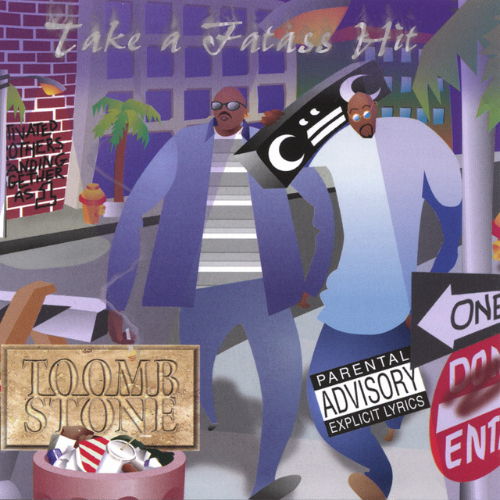
タイトルの“G”は、一般的には“Gangsta”を意味する言葉として使われている。しかし本作は、「ギャングスタになりたい」という願望を肯定する曲ではない。
むしろ中心にあるのは、
本当にその生活の代償を理解しているのか
という問いかけだ。
コーラスでは、「誰もがギャングスタになりたがる」「誰もがGになりたがる」と歌った後、その生き方には死や危険が伴うことを突きつける。
そのため、タイトルは単なる自己紹介ではなく、表面的にギャングスタ文化へ憧れる人物への皮肉と警告として機能している。
歌詞には警察、政治、裁判、収監、暴動、Rodney Kingなどを連想させる社会的な言及も登場する。個人的なストリート体験だけでなく、当時の黒人社会を取り巻いていた制度的な問題まで視野に入れた楽曲である。
第一印象
冒頭から漂うのは、華やかさではなく不安と警戒心だ。
高い音域で鳴る不穏なシンセの上に、男たちの会話が重なる。
「見ろよ」「あいつらはおかしい」「あそこにいる奴を見ろ」
そのようなやり取りによって、聴き手は街角で誰かを警戒している場面へ引き込まれる。
会話の後にコーラスが入ると、曲のテーマが一気に明確になる。
Everybody wanna be a gangsta
And everybody wanna be a G
このフレーズは非常に覚えやすい。しかし、明るい合唱ではなく、低い声を重ねた重苦しい響きになっている。
親しみやすいフックを使いながら、内容はむしろ警告的だ。そこに本作の大きな魅力がある。
サウンド分析
ドラム
テンポは聴感上、約92 BPM。
速すぎず遅すぎないミドルテンポで、ラッパーが言葉を明確に置ける速度に設定されている。
キックは低く太いが、派手に連打されるタイプではない。一定の間隔を保ちながら、曲全体をゆっくり前へ押し進める。
スネアは硬く乾いた音で、2拍目と4拍目を中心に強く響く。残響は短く、一発ごとの輪郭がはっきりしている。
この乾いたスネアが、楽曲に冷たさと緊張感を与えている。
ハイハットも細かく動きすぎず、基本的には一定のパターンを維持する。現代的なトラップのように細かいロールを多用せず、ラップと歌詞を前へ出すための簡潔な構成だ。
ベース
ベースは、低い音域で短いフレーズを繰り返している。
派手なスライドや複雑な動きは少なく、キックに寄り添いながらトラックの底を支える役割が中心だ。
音色は丸いというより、やや硬く暗い。陽気なG-Funkで聴かれる弾力の強いベースとは異なり、街の緊張や閉塞感を表現する方向へ使われている。
同じ低音のパターンが長く反復されることで、逃げ場のない感覚も生まれている。
大きな展開を作るベースではなく、同じ現実が毎日続いていくような重さを作るベースである。
シンセ・メロディ
この曲で最も印象的なのが、背景に流れる高音のシンセだ。
細く冷たい音が、一定の間隔で上昇と下降を繰り返す。音数は多くないが、曲の冒頭から最後まで強い存在感を残している。
このシンセは、West Coast Rapらしい電子音ではあるものの、開放的なドライブ感を生むものではない。
むしろ、
- 夜の住宅街
- 街灯の少ない路地
- 遠くから聞こえる警察車両
- 何かが起こる直前の静けさ
といった場面を連想させる。
コーラスでは声が重なり、メロディに多少の広がりが加わる。しかし、トラック自体は最後まで暗い空気を崩さない。
終盤には女性または高い声による「ラララ」というコーラスが重なるが、それも明るい救済というより、祈りや鎮魂を思わせる響きになっている。
ミックス・グルーヴ
ミックスは、ボーカル、スネア、高音シンセが前に出ており、低音はその下で安定して鳴っている。
現代的な音源ほど低域が巨大ではなく、各音の間にある程度の空間が残されている。そのため、MCの声と言葉が聞き取りやすい。
グルーヴは滑らかというより、重く直線的だ。
G-Funkの要素はシンセの音色やミドルテンポの構成に感じられるが、ファンク・ギターや甘いコードを中心にした典型的なパーティー系G-Funkとは異なる。
本作は、G-Funkの音響を一部使いながら、よりハードなGangsta Rapと社会派ラップへ接近したトラックだといえる。
ラップ/ボーカル分析
最初のヴァースは、低く落ち着いた声で始まる。
言葉を極端に詰め込まず、ビートの隙間を使いながら一行ずつ押し出していくスタイルだ。自分たちの地域や仲間を代表する姿勢を示しつつ、挑発してくる相手には容赦しないという態度を見せる。
次のヴァースでは、より言葉数が増え、政治、警察、裁判制度などへテーマが広がる。
フロウもやや鋭くなり、単なるストリートの対立から社会構造への批判へ移行していく。腐敗した政治家や警官、仲間が法制度の犠牲になる現実が語られ、曲の視野が大きく広がる部分だ。
後半のヴァースでは、祈りの言葉が強くなる。
「眠りにつく前に、魂を守ってほしいと祈る」という内容から始まり、亡くなった仲間への追悼、自分が選んだわけではない生活への苦悩が語られる。
ここでは強さを誇示する声よりも、疲労や恐怖、悲しみが前面に出る。
最後のMCは、再び社会的な視点を強める。
黒人としての誇り、暴動、戦争地帯、Rodney King、収監された仲間などに触れながら、自分の言葉を証言として残そうとする。
ヴァースごとにテーマが深くなり、最終的には個人のギャングスタ像を超えて、地域社会全体の問題へ到達している。
歌詞・テーマ
この曲の中心テーマは、“G”という生き方の現実である。
コーラスだけを聴けば、ギャングスタを名乗ることを面白がる曲にも聞こえる。しかしヴァースを追うと、その印象は大きく変わる。
Toombstoneが描く“G”は、格好いい服を着て、強い言葉を使い、街で威張る人物ではない。
そこには、
- 仲間を守る責任
- 地域を背負う覚悟
- 警察や司法との衝突
- 死と隣り合わせの生活
- 亡くなった仲間への悲しみ
- 神に救いを求める夜
- 黒人として生きる現実
が伴う。
特に重要なのは、ギャングスタ・ライフを完全には美化していない点だ。
歌詞の中では、「これは自分たちが生きるべきだった生活ではない」「自分で選んだ生活でもない」という趣旨の言葉が語られる。
つまり、彼らはストリートで生きる自分たちを肯定しながらも、その環境自体を理想とは考えていない。
この矛盾が、曲に深みを与えている。
強くなければ生き残れない。しかし、その強さを必要とする社会そのものには怒りを感じている。
「Wanna B a G」は、ギャングスタへの憧れを煽る曲ではなく、憧れている者に対して現実を見せる曲なのである。
トリビア/制作メモ
音源の長さは約4分56秒、テンポは解析上およそ92 BPM。
構成は、会話形式のイントロから始まり、コーラスと複数のヴァースを交互に配置する形になっている。
大まかな流れは以下のとおり。
- 会話によるイントロ
- コーラス
- 第1ヴァース
- コーラス
- 第2ヴァース
- コーラス
- 第3ヴァース
- 第4ヴァース
- コーラスの反復とフェードアウト
終盤ではコーラスが何度も繰り返され、その背後に高い声の「ラララ」が加わる。
物語を明確に完結させるというより、「誰もがGになりたがる」という警告を聴き手の頭に残しながら終わる構成だ。
総評
Toombstoneの「Wanna B a G」は、表面的なギャングスタ像と、実際のストリート生活との距離を描いた一曲だ。
約92 BPMの重いビート、不穏な高音シンセ、乾いたスネア、低く反復するベース。それらは派手な高揚感を作るのではなく、常に危険が近くにある生活の緊張を表現している。
語る内容も、強さの誇示だけには留まらない。
政治や警察への不信、法制度への怒り、亡くなった仲間への祈り、黒人社会が置かれた状況。それぞれのヴァースが異なる問題を持ち込み、最終的に“Gとして生きること”の重さへ集約されていく。
コーラスは単純で覚えやすい。
しかし、繰り返されるほど、その言葉は自慢ではなく警告に聞こえてくる。
誰もがギャングスタになりたがる。
だが、本当にその代償を背負えるのか。
「Wanna B a G」は、その問いを約5分間にわたって突きつける、暗く真剣なローカルWest Coast Rapである。
今回ご紹介の楽曲の購入はこちらからどうぞ

Toombstone – Wanna B a G | A Dark West Coast Warning About the Real Price of Being a Gangsta
“Everybody wants to be a gangsta. Everybody wants to call himself a G.”
Toombstone’s “Wanna B a G” is a song that throws cold water on that fantasy.
Heavy drums moving at approximately 92 BPM.
Bass repeating low in the mix.
Uneasy synthesizers that feel like a city at night.
And over and over again, a chorus questioning the real cost of living as a gangsta.
This is not a song about clothes, image, or using the right title to look dangerous in the street.
It is about dead friends.
Distrust of police and the justice system.
Social disorder.
And nights spent praying simply to make it to the next morning.
The message is clear:
if you are not prepared to carry the consequences of that life, then the word “G” should not be used casually.
Rather than emphasizing the pleasure and flash often associated with G-Funk, “Wanna B a G” places street tension, social criticism, and survival at the center.
It is dark, serious West Coast rap.
Artist Introduction
Toombstone is a local West Coast Rap / Gangsta Rap group associated with the Los Angeles area.
The group consists of brothers Snippa and Spadez.
They were never a widely known major-label act, but their music carries the heavy street imagery and G-Funk-influenced production associated with local West Coast rap of the era.
On “Wanna B a G,” multiple voices and perspectives are used to move beyond the surface image of gangsta identity.
The track deals with danger.
Responsibility.
Death.
Anger toward society.
Distrust of police and political institutions.
Prayer for fallen friends.
And the broader conditions affecting Black communities.
These themes build a collective perspective rather than a simple individual boast.
Background
“Wanna B a G” appears on the album Take A Fat Ass Hit and runs for approximately 4 minutes and 56 seconds.
In this context, the “G” in the title is most naturally understood as “Gangsta.”
But the track is not celebrating the desire to become one.
Its central question is closer to:
Do you really understand what that life costs?
The chorus repeats the idea that everybody wants to be a gangsta and everybody wants to be a G.
But the verses immediately challenge that fantasy by emphasizing death, danger, police pressure, prison, and social instability.
That makes the title less of a self-introduction and more of a warning aimed at people attracted to the image without understanding the reality behind it.
The lyrics also move beyond personal street conflict.
There are references to police, politics, trials, incarceration, riots, and social issues associated with the Rodney King era.
Because of that, “Wanna B a G” reaches beyond individual gangsta experience and addresses broader institutional problems affecting Black communities.
First Impression
The opening atmosphere is defined by anxiety and suspicion rather than excitement.
A thin, high-pitched synth sits in the background while male voices talk over it.
Their conversation feels like people standing on a street corner watching someone nearby:
look at that.
those people are crazy.
look at that guy over there.
That kind of exchange immediately places the listener inside an environment where everyone is being observed and evaluated.
Then the chorus arrives:
“Everybody wanna be a gangsta
And everybody wanna be a G”
The phrase is simple and extremely memorable.
But it is not delivered like a bright singalong.
The layered low voices make it sound heavy.
Almost accusatory.
That contrast is one of the song’s strongest features.
The hook is easy to remember.
The message behind it is a warning.
Sound Analysis
Drums
The tempo feels close to approximately 92 BPM.
It sits in a mid-tempo range that gives the rappers enough room to place their words clearly.
The kick is low and heavy, but it does not rely on rapid repetition.
It appears at controlled intervals and slowly pushes the track forward.
The snare is hard and dry.
It lands strongly around the second and fourth beats, with a short decay that keeps every hit clearly defined.
That dry snare contributes significantly to the track’s cold atmosphere.
The hi-hats remain relatively restrained.
There are no rapid modern trap-style rolls or elaborate rhythmic decorations.
The drum programming stays simple because the lyrics are meant to remain in front.
Bass
The bass repeats a short phrase in the lower register.
There are few dramatic slides or complicated movements.
Its main purpose is to reinforce the kick and provide a dark foundation underneath the track.
The tone feels less rounded and playful than the bass commonly heard in more celebratory G-Funk.
It is slightly harder.
Darker.
More closed-in.
Because the same low-frequency pattern repeats for long stretches, the track develops a trapped feeling.
The bass does not create large musical changes.
It creates the sense that the same reality continues day after day.
Synths & Melody
The high synth in the background is one of the most memorable parts of the production.
A thin, cold tone repeatedly rises and falls across the track.
There are not many notes.
But the sound remains present enough to define the atmosphere.
It is recognizably connected to West Coast electronic production.
But it does not create an open-road cruising feeling.
Instead, it suggests:
- dark residential streets
- poorly lit alleys
- distant police vehicles
- the stillness just before something happens
The chorus becomes wider because multiple voices enter.
But the instrumental itself never becomes truly bright.
Toward the end, a female or higher-pitched voice adds a repeated “la-la-la” figure.
Even that does not sound like simple relief.
It carries more of a prayer-like or memorial quality.
Mix & Groove
The mix pushes the vocals, snare, and high synth forward, while the bass remains stable underneath.
The low end is not as exaggerated as in many modern productions.
That leaves enough space for the MCs and their lyrics to remain clear.
The groove is not especially smooth.
It is heavy and direct.
There are G-Funk-related elements in the synth tone and mid-tempo structure.
But this is not the bright party-oriented side of G-Funk built around sweet chords and funk guitar.
The track sits closer to hard Gangsta Rap and socially conscious street rap while borrowing some West Coast G-Funk sonics.
Rap / Vocal Analysis
The first verse begins with a low, controlled voice.
The rapper does not overcrowd the beat.
Instead, he uses the spaces in the instrumental and pushes each line forward one at a time.
The verse establishes loyalty to his area and his people while warning anyone who chooses to challenge him.
The next verse becomes more verbally dense.
Its subject matter expands toward politics, police, and the court system.
The flow sharpens.
The song moves beyond individual street confrontation and begins criticizing broader social structures.
Corrupt politicians.
Police abuse.
Friends becoming victims of the legal system.
This section significantly widens the track’s perspective.
Later verses become increasingly reflective.
Prayer begins to play a larger role.
The lyrics move toward the idea of going to sleep while asking God to protect the speaker’s soul.
Dead friends are remembered.
There is frustration with a life that the narrator suggests he did not entirely choose for himself.
At this point, fear, exhaustion, and grief become more important than displays of strength.
The final MC expands the social perspective again.
Black pride.
Riots.
War-zone imagery.
Rodney King.
Friends in prison.
The verse begins to sound less like personal posturing and more like testimony.
Each section pushes the song deeper.
By the end, the idea of “being a G” has expanded far beyond individual image.
It becomes connected to the problems affecting an entire community.
Lyrics & Themes
The central theme is the reality behind being a “G.”
If someone heard only the chorus, the track could almost sound like it was making fun of gangsta obsession in a playful way.
The verses change that interpretation completely.
Toombstone’s version of a “G” is not simply someone who wears the right clothes, talks tough, and acts intimidating in public.
The identity comes with:
- responsibility toward friends
- loyalty to the neighborhood
- conflict with police and the legal system
- constant proximity to death
- grief for people who have been killed
- nights spent asking God for protection
- the larger reality of being Black in America
One of the most important elements is that the song does not fully romanticize gangsta life.
The lyrics suggest that this is not necessarily the life people were meant to live or even a life they freely chose.
That contradiction gives the song depth.
They understand why strength is necessary for survival.
At the same time, they are angry at the social conditions that make that strength necessary.
“Wanna B a G” is therefore not a song encouraging people to become gangstas.
It is a song confronting people attracted to the image and forcing them to look at the consequences.
Trivia / Production Notes
The analyzed version runs for approximately 4 minutes and 56 seconds.
The tempo is approximately 92 BPM.
The structure broadly follows:
- Spoken intro
- Chorus
- Verse 1
- Chorus
- Verse 2
- Chorus
- Verse 3
- Verse 4
- Repeated chorus and fade-out
Toward the end, the chorus repeats several times while a higher “la-la-la” vocal enters behind it.
The song does not end by resolving its story in a traditional way.
Instead, it leaves the warning in the listener’s head:
everybody wants to be a G.
That unfinished feeling fits the subject.
The problems being discussed have not disappeared simply because the song is ending.
Final Thoughts
Toombstone’s “Wanna B a G” is a track about the distance between the fantasy of gangsta identity and the actual conditions of street life.
Heavy drums at approximately 92 BPM.
An uneasy high synth.
Dry snares.
A low repeating bassline.
None of those elements are used to create flashy excitement.
They create the tension of a life where danger always feels close.
The lyrics move beyond displays of toughness.
Distrust of politicians and police.
Anger toward the justice system.
Prayer for dead friends.
The conditions surrounding Black communities.
Each verse introduces a different part of the same reality until the song’s meaning becomes much larger than one person claiming to be a gangsta.
The chorus remains simple:
everybody wants to be a gangsta.
Everybody wants to be a G.
But the more often it repeats, the less it sounds like a boast.
It becomes a warning.
Everybody wants the image. The real question is whether they could survive the price that comes with it.
“Wanna B a G” spends nearly five minutes forcing that question onto the listener, making it a dark and serious piece of local West Coast rap rather than a celebration of gangsta fantasy.
コメント